Māori culture can – and should – be experienced in all forms across the country: from the historical to the geothermal and, in some cases literally carved into the storied landscape
In a country steeped in mythology and history, one of the most important historic sites in New Zealand is the Waitangi Treaty Grounds. This is where the country’s founding document, Te Tiriti o Waitangi (Treaty of Waitangi), was signed on 6 February 1840 (this day is now a public holiday in New Zealand). The agreement, written in Māori and English, was made between the British Crown and some 540 Māori rangatira (chiefs) representing the Māori iwi (tribes) and hapū (sub tribes) in order to annex the country to secure British sovereignty over New Zealand, protect Māori, regulate the unruly behaviour of British subjects and secure commercial interests; it also trumped France, which was showing an interest in annexing the country as well. Neither a constitution nor a statute, the Te Tiriti o Waitangi (Treaty of Waitangi) is an exchange of promises between the parties that allowed for the founding of a nation state and the building of a government in New Zealand.
Overlooking the spectacular Bay of Islands in the Northland/Te Tai Tokerau region, the Treaty Grounds are home to two museums: the immersive and interactive Te Rau Aroha and Te Kōngahu Museum of Waitangi, which combines stories and taonga (treasured objects) to animate the history of Waitangi and New Zealand’s founding documents. (The original Treaty is housed in the National Library of New Zealand/ Te Puna Mātauranga o Aotearoa in the capital of Wellington/Te Whanganui-a-Tara).
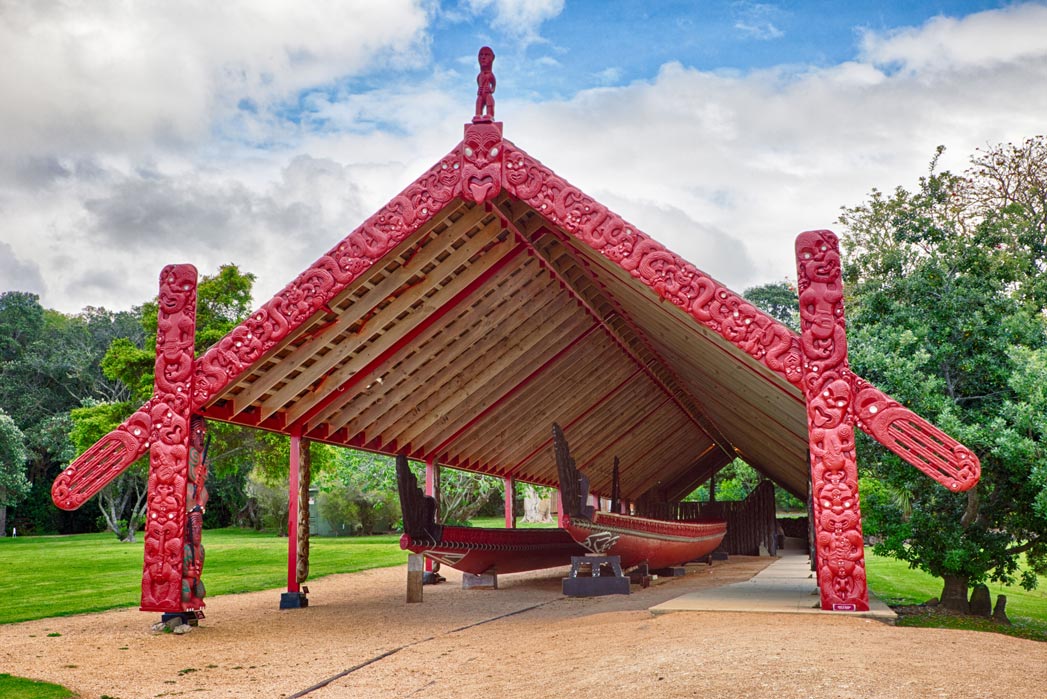
The site also includes the historic Treaty House (interesting fact: the house was actually pre-cut in Sydney, shipped to New Zealand and assembled in its current position in 1834), Te Whare Rūnanga, a carved meeting house opened in 1940, Whare Toi carving studio where visitors can meet kaiwhakairo (traditional carvers), and extensive grounds to explore. An all-inclusive pass grants access to the two interactive museums, a guided tour, and cultural performance, as well as the heritage buildings and the excellent museum shop. The on-site cafe and wide lawns are also worth making the most of while visiting.
The original Te Tiriti o Waitangi (Treaty of Waitangi) is housed in the National Library of New Zealand/Te Puna Mātauranga o Aotearoa in Wellington/Te Whanganui-a-Tara, and forms part of the He Tohu permanent exhibition along with two other culturally and historically significant documents. The He Whakaputanga o te Rangatiratanga o Nu Tireni, the Declaration of Independence of the United Tribes of New Zealand, was created in 1835 when rangatira (Māori leaders) confirmed Aotearoa as an independent Māori nation, while The Women’s Suffrage Petition contributed to New Zealand becoming the first country in the world where women gained the right to vote. Entry to the exhibition to view all three documents and learn more about their histories is free, and you can join a tour at 12.30pm, Monday to Friday and 11am on Saturday (also free).
Want to see more stories from International Traveller in your Google search results?
- Click here to set International Traveller as a preferred source.
- Tick the box next to "International Traveller". That's it.