Your guide to Japan, beyond The Golden Route
Explore beyond the Golden Route with InsideJapan. (Image: Getty/Chanawin88)
| THIS ARTICLE WAS CREATED IN PARTNERSHIP WITH InsideJapan & Japan National Tourism Organization |
Offering an intoxicating blend of inspiring creativity, world-renowned cuisine and historic sites, Japan’s balance of deep-rooted tradition and cutting-edge innovation makes it a magnetic destination.
Unsurprisingly, Japan is topping bucket lists and travel guides across the globe; its proximity and affordability have Australians hooked. According to the Australian Bureau of Statistics, it ranks among the top five destinations for Australians in 2025, with nearly triple the number of Aussie visitors than a decade ago. But don’t let the thought of overtourism deter you; the true heart of Japan lies between the hot spots.
From mountain towns to coastal communities, there’s a wealth of regions most international travellers have never set foot in. Japan is a trove of neighbourhoods and districts that are less about ticking boxes and more about being part of something meaningful.
InsideJapan makes ventures into the unknown seamless, with cultural adventures created by destination specialists who live and breathe the Land of the Rising Sun. Choose a small group tour or have a trip curated to your own pace, passions and priorities to see Japan through its local makers and storytellers. You’ll experience triple-checked logistics, a totally tailored InfoPack trip bible and 24/7 on-the-ground support.
Discover some of the best underrated Japanese destinations to add to your itinerary.
Toyama
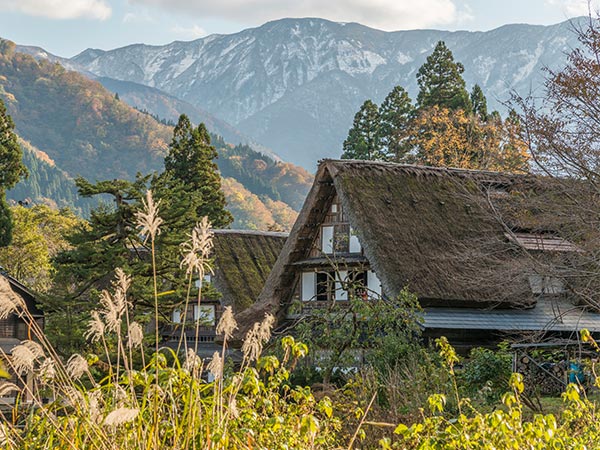
See traditional farmhouses around Gokayama.
This charming coastal city on Japan’s main island, Honshu, is still astonishingly off the tourist radar. Right now, 99 per cent of international tourists never set foot here – but you can be one of the special few.
Framed by some of the nation’s biggest mountains and the coast of the Sea of Japan, Toyama is an eye into rural life. Here, a rich culture and natural beauty are in abundance. You’ll find mountains and valleys that change colours through the seasons, deep blue rivers flowing from mountain to sea and a bustling city hub.
Ainokura is the most remote village in the Gokayama region, and one of the most spectacular. With 20 gassho-zukuri (traditional farmhouses) in the hills of Nanto, it feels like it’s frozen in time; discover a vivid yet rare glimpse into Japan’s history.
Toyama’s dedication to craft and artisanal flair also sets it apart. Uncover a living tapestry of shokunin – master artisans who dedicate their lives to perfecting their craft, preserving traditions passed down to the next generation. Wander the cobbled streets and find meticulously crafted keepsakes shaped by passion and patience, from glassblowing to the quiet precision of woodcarving.
Nagasaki
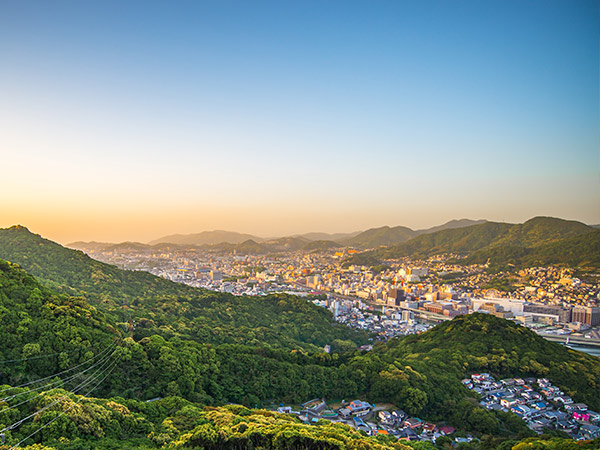
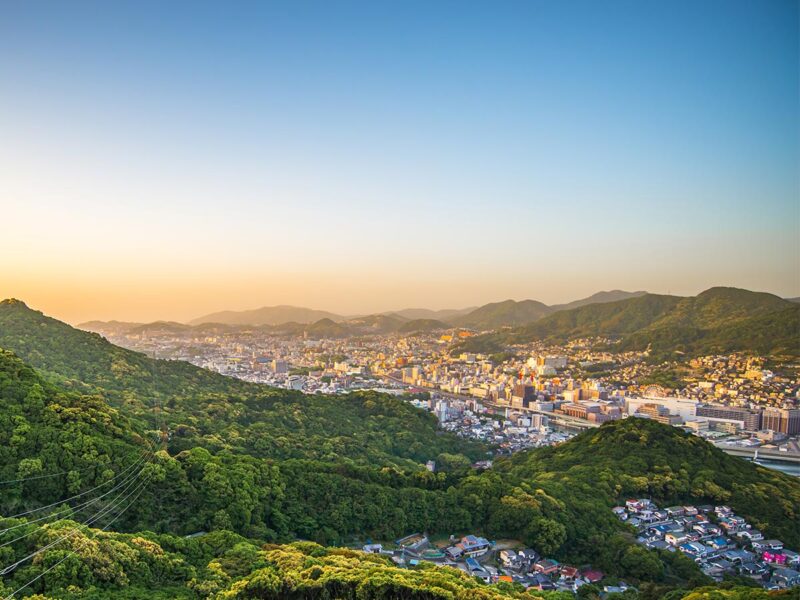
See this port town in a different light. (Image: Getty/Chanawin88)
On the north-west coast of the island of Kyushu, Nagasaki is a port city synonymous with the tragedies of the Second World War – but it’s so much more than its storied past.
Once considered Japan’s ‘window to the world’, this peaceful, historic city is now one of the country’s most multicultural destinations, with Japanese, Chinese and Dutch influences woven throughout. There’s even a word to describe its unique multicultural identity: wakaran.
Vibrant festivals, like Nagasaki Kunchi, are a kaleidoscopic expression of the wakaran culture. You can savour a slice of castella (sponge cake) as Dutch-inspired floats parade the streets alongside dancing Chinese-inspired dragon puppets.
The city is relatively walkable, but its retro tram system is a unique way to soak up its eclectic architecture. After a day of exploring, round it out with a cable car ride up Mt Inasa for a new view of the city, with lights twinkling across the hillside.
Yamaguchi

Explore the castle town of Hagi.
Stretches of sandy shorelines, limestone caves and coastal cliffs aren’t usually what springs to mind when imagining Japan. But the rural coastal town of Yamaguchi delivers them all in abundance.
Discover Hagi, an old castle town right on the coast that has remained largely unchanged for hundreds of years. Here you’ll find traditional samurai houses and architecture from when it was the capital of the Mori samurai clan. Or take a soak in the traditional (and Yamaguchi’s oldest) hot spring of Nagato Yumoto Onsen. Spend time in ryokan guesthouses, and sit down for tea and sweet baked treats at cafes in the traditional houses dotting the riverbanks.
No visit to Yamaguchi would be complete without a cinematic drive over Tsunoshima Bridge, or a taste of its famed fugu (the infamous blowfish delicacy).
Aomori
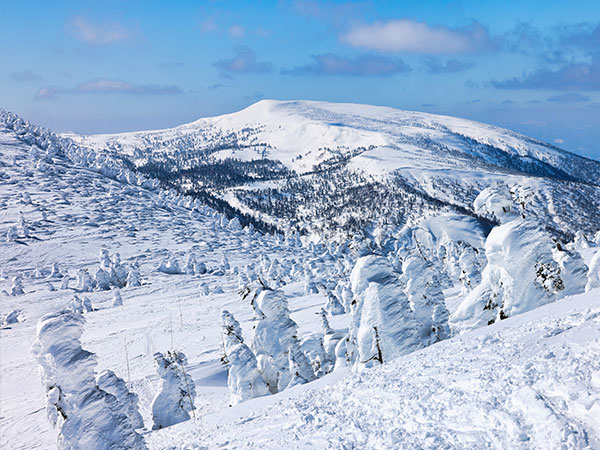
See the ‘snow monsters’ of the Hakkoda mountains. (Image: Getty/ Taka Mountain Gallery)
With one of the world’s longest and snowiest seasons, it’s no wonder winter sports enthusiasts flock to ski resort giants like Niseko and Hakuba. Yet few international travellers are aware of Aomori’s splendour.
At the northernmost tip of Honshu, it’s brimming with powdery snowfields, mineral-rich volcanic onsens and stunning caldera lakes, including Lake Towada.
During peak snow season, natural sculptures dubbed ‘snow monsters’ appear in the Hakkoda mountains; they’re truly an otherworldly phenomenon. Formed when strong winds blow water droplets onto the trees, where they freeze and accumulate, it’s as though you’re standing face-to-face with an army of silent sentinels.
Nagoya
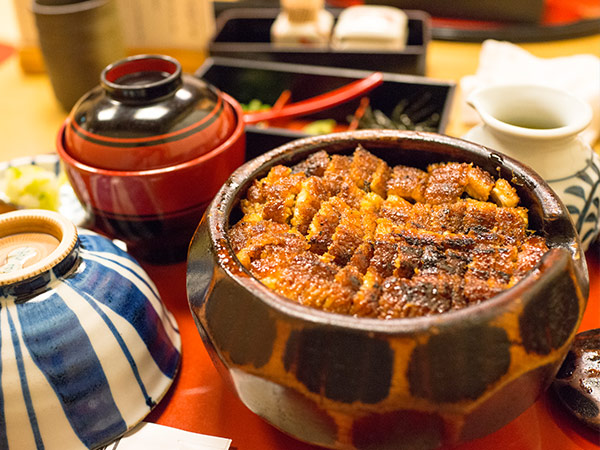
Sit down to hitsumabashi, and other local dishes. (Image: Getty/ Jyapa)
Flying firmly under the tourist radar is Japan’s third-largest city, Nagoya. With a blend of feudal and spiritual heritage with a bustling modern metropolis, there’s undoubtedly more to this city than meets the eye – and its thriving art scene plays a defining role in its allure.
The city’s streets may appear urban, but they hum with creativity for those who know where to look. Step into art museums and galleries and unearth rare Japanese vinyl in vintage boutiques. Or discover artisanal treasures – from intricate pottery to whimsical illustrations – at slow craft markets.
As for the food, Nagoya has its own unique regional cuisine, Nagoya-meshi, that’s well worth a shinkansen journey all on its own. Tuck into rich, salty dishes like miso katsu (deep fried pork cutlet), ogura toast (sweet adzuki bean jam) and hitsumabashi (grilled eel over rice).
Start planning your ultimate Japanese adventure, away from the crowds, with insidejapantours.com/au.








I was in Japan in October and loved it – we went west from Tokyo, and didn’t see any of these places. I am a solo traveller, but always go with groups!