hero media

8 of the most incredible wildlife encounters in Japan

International Traveller
From macaques bathing in hot springs to red-crowned cranes dancing in the snow, Japan’s wildlife is something else.

The lure of Japan’s bustling cities is almost magnetic. But beyond the country’s culturally rich urban jungles lies an equally alluring and lesser-known prospect: an overlooked yet devastatingly beautiful patchwork of mountains, forests, valleys and coastlines. All blessed with an array of wild animals, great and small. Come close to rare and elusive animals in Japan on these eight encounters and soak up the serenity of the untouched natural habitats they call home.

1. Wildlife night drive, Shiretoko National Park, Hokkaido

The word safari has become somewhat synonymous with Africa’s savannah. But pitch up to Shiretoko National Park, in Hokkaido’s northeastern-most corner and you’ll find that Japan, too, can rock a wildlife night drive.

Steal glimpses of all kinds of creatures slinking around under the cover of darkness on this two-hour journey through a pristine national park described by UNESCO as one of the “richest integrated ecosystems in the world".

Shiretoko’s primaeval forests offer a refuge for deer, foxes, bears, and even the largest living species of owl on the planet, Blakiston’s fish owl. Pause to marvel at these creatures, many of which are nocturnal, as Picchio’s naturalist guides scour the landscape for movement.

In this remote wildlife habitat – far from the neon-glow of Japan’s big cities – you might also feast your eyes on starry night skies, stealing glimpses of the Milky Way.
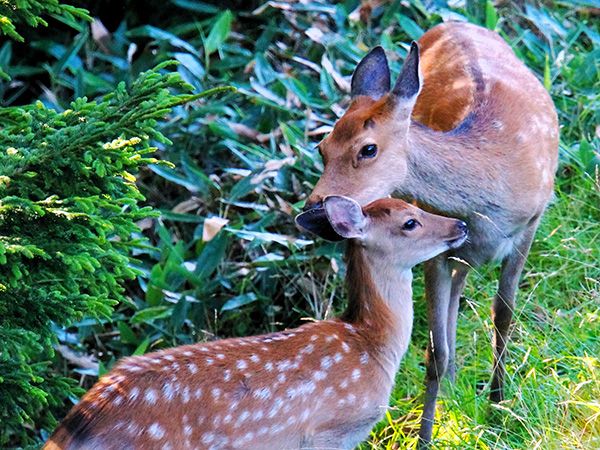
Two deers in Shiretoko. Some animals in japan
Spot majestic deer roaming freely in Shiretoko, Japan. (Image: Teo Romero)

2. Red-crowned cranes, Kushiro Shitsugen National Park, Hokkaido

More than 600 bird species have been recorded in Japan, yet few are as revered within Japanese culture as the red-crowned crane. A symbol of good luck, loyalty and longevity, the tancho features in the official logo of Japan Airlines, once featured in the design of ¥1000 banknotes and is among the country’s most famous origami models.

A conservation success story, the red-crowned crane once teetered on the brink of extinction. Today, nearly 2000 red-crowned cranes inhabit Japan’s largest wetlands; the Kushiro Shitsugen National Park, in East Hokkaido.

These tall, elegant creatures with their pure white primary feathers, long black neck and wings and namesake red crown, live on this marshland year-round. But witnessing the spectacle that is flocks of cranes prancing about, performing their elaborate ritual courtship dance against winter’s snowy backdrop is unforgettable.
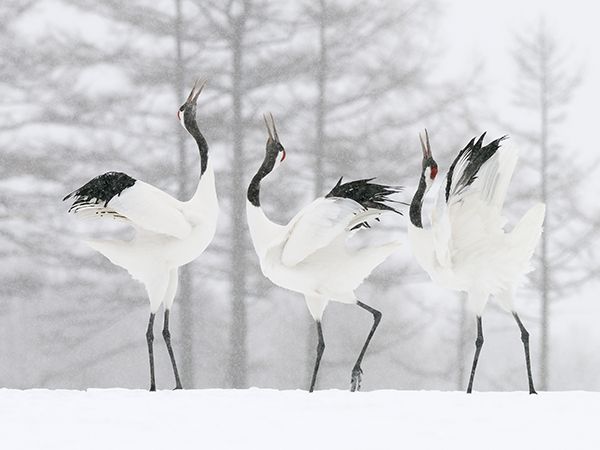
Red-crowned cranes dancing in Hokkaido
Witness the stunning comeback and graceful dance of the red-crowned cranes. (Image: JNTO)

3. Snow monkeys, Joshinetsu Kogen National Park, Nagano

Experiencing a Japanese onsen is bucket list material for many travellers. But head some 220 kilometres north of Tokyo, to the mountainscapes of Yamanouchi, Nagano Prefecture, and you’ll find a hot springs experience like no other.

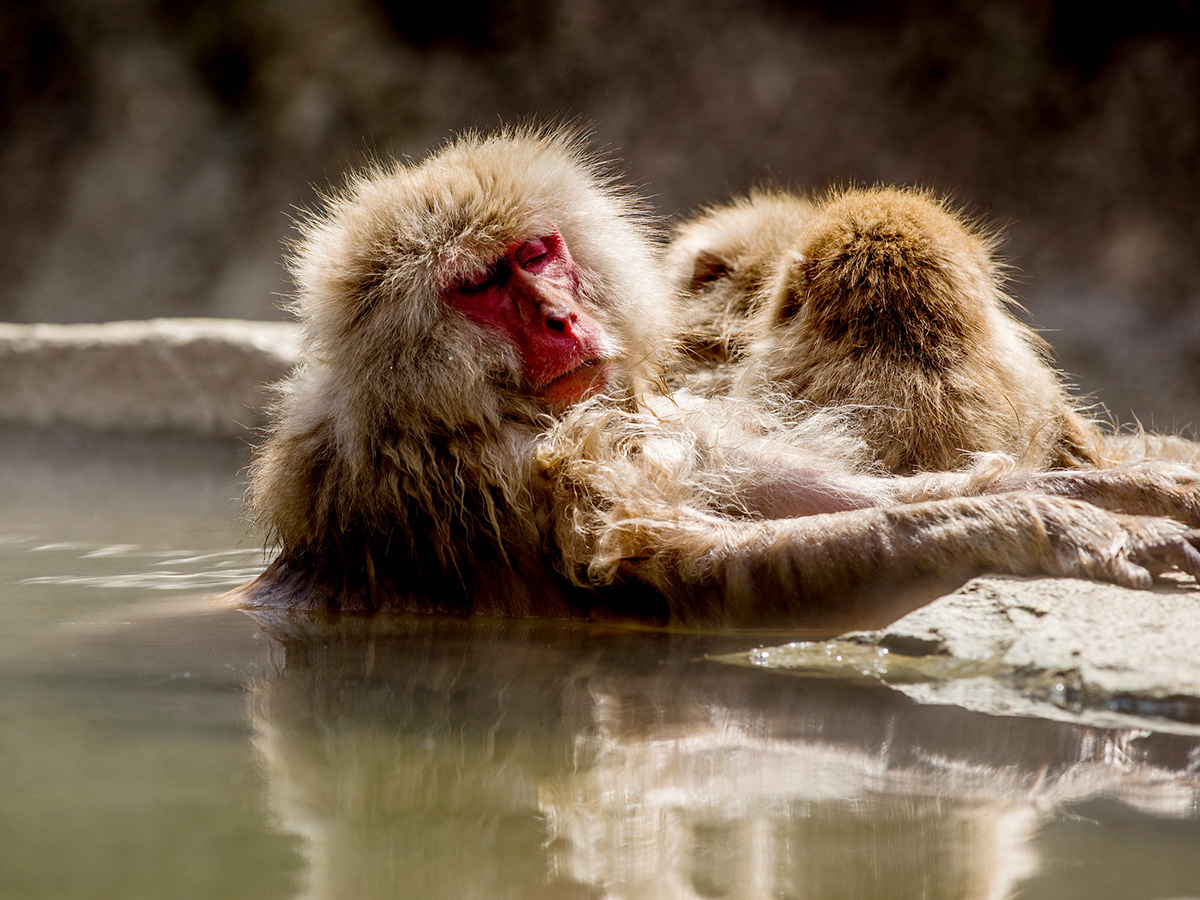
Instead of stripping off and plunging into the steaming waters yourself, at Jigokudani you’ll come face to face with a troop of wild Japanese macaques languorously soaking in the springs, their distinct rosy faces and furry grey/brown heads poking out of the water.

The world’s most northerly monkey, and the only species of monkey found in Japan, the Japanese macaque is a little bit special. While the park is open year-round, the scenery here is at its most dramatic come winter. This is when hot pools are framed by blankets of white, and snowflakes dissipate into the water.
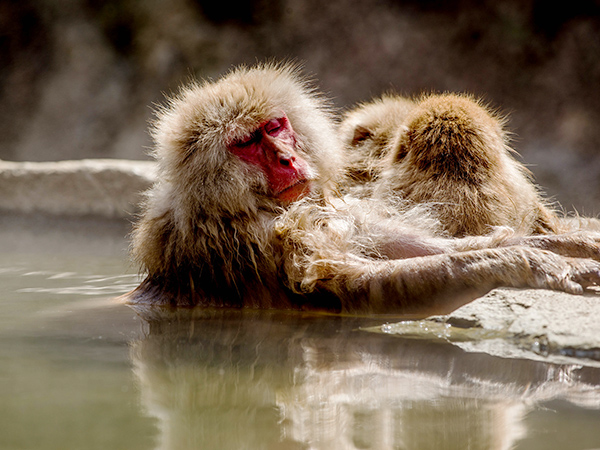
A snow monkey lounging in the pool
See wild Japanese macaques lounging in Jigokudani’s hot springs. (Image: Michael Davis Burchat)

4. Iriomote cats, Iriomote Island, Okinawa

Iriomote Island sits in Japan’s southwest. It’s one of several remote Yaeyama Islands that form part of Iriomote-Ishigaki National Park, but its landscape and wildlife are incredibly unique.

Subtropical mangrove forests, rushing rivers, flowing waterfalls and abundant sea life (including tropical fish and manta rays) can all be found here. But perhaps the most important creature calling this island home is the endangered Iriomote cat. Enter the Iriomote Wildlife Conservation Center.

Opened with the goal of educating visitors to the island on its natural environment and rare wildlife, discover what makes this island so special and the conservation efforts keeping it pristine before you explore the rest of the island.

5. Primeval forest wildlife tour, Shiretoko National Park, Hokkaido

Transforming into a winter wonderland every December, Shiretoko National Park remains a photographer’s (and nature lover’s) dream, year-round. While the park’s frozen landscapes might seem devoid of action and uninhabitable at first glance, guests on Picchio’s snowshoe and wildlife watching tour will soon discover that’s not quite the case.

Scan the surrounding carpet of snow and you could well chance upon pawprints, or scats, which lead to an animal peering back stealthily from behind a nearby tree. Among the creatures that brave the park’s icy climes are the Yezo sika deer, the Ezo red fox, the black woodpecker, the red squirrel and the Ezo flying squirrel.
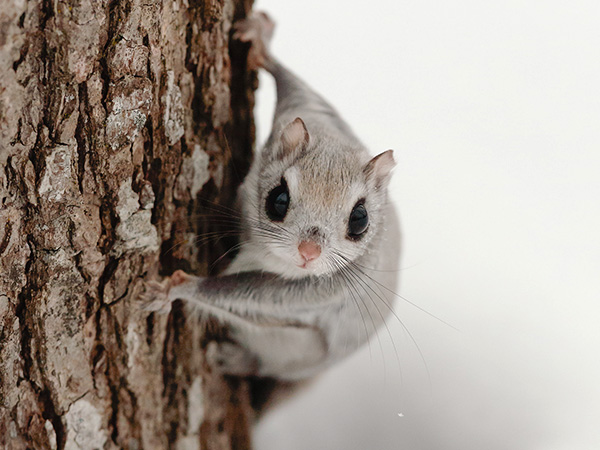
An Ezo Flying Squirrel in Japan
Look carefully at the snow-covered ground—you might catch a glimpse of an Ezo flying squirrel.(Image: Osamu Asami)

Weekly travel news, experiences
insider tips, offers,
and more.

6. Sea turtles, Hamamatsu, Shizuoka

As the sun dips below the horizon at Nakatajima Beach in late summer beyond the rolling dunes of Hamamatsu a crowd gathers on the sand. Cradled in the palms of their hands lie baby loggerhead turtles, measuring no longer than five centimetres and weighing only 20 grams.

These tiny hatchlings are released onto the sand, as the foamy white ocean laps at the shoreline, and use their flippers to toddle towards the open ocean as onlookers stand on, spellbound.

Between May and August, the endangered loggerhead sea turtle emerges from the Pacific Ocean onto the coastline of Hamamatsu to lay its eggs. They hatch a couple of months later under the supervision of volunteers from Sanctuary Nature Centre. It’s one of the few places on earth where you can witness loggerhead sea turtles hatching and being released. And by registering with the sanctuary, you too can participate in the next release.
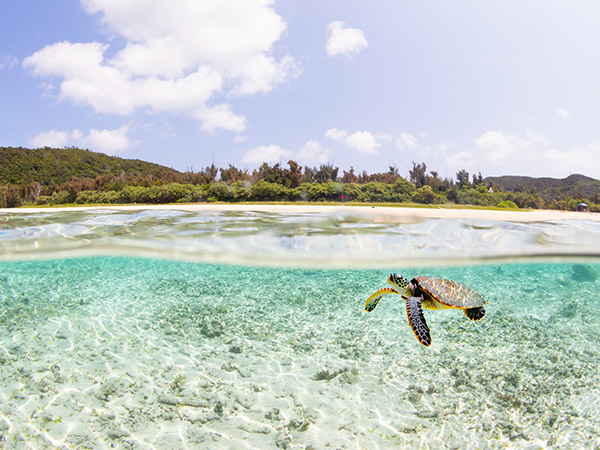
alf underwater view of a baby sea turtle swimming in the crystal clear waters of Zamami island in the Kerama island chain
Spot sea turtles in Okinawa. (Image: Getty/ Pete’s Photography)

7. Asiatic black bear, Karuizawa, Nagano

Among the forests and alpine meadows of Karuizawa (a popular weekend getaway for Tokyo locals), a formidable mammal lurks. All black with a white chest, the Asiatic Black Bear cuts an imposing figure. But its vulnerable status and inclusion on the International Union for Conservation of Nature (IUCN) Red List of Threatened Species shows they’re in need of help.

Threatened by deforestation and poaching (its body parts are used in traditional medicine around the world), Picchio Wildlife Research Centre are on a mission to help people coexist in a new harmony with these bears.

To help locals and visitors gain a deeper understanding of these creatures, Picchio run an Asiatic Black Bear Watching Tour from July to September. Hike to a mountainous observation point and spot these fascinating bears from a safe distance (for humans and bears alike), with lunch provided.
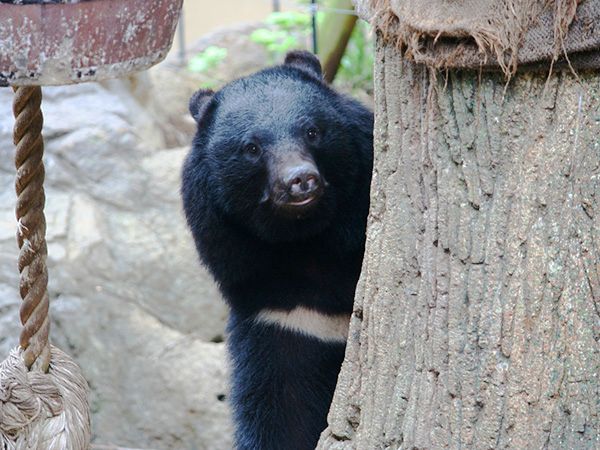
A seemingly smiling Asiatic black bear in Japan
Hike up, see bears, and enjoy a lunch with a view. (Image: Kumachii)

8. Japanese giant salamander, Gifu

With their flat head, huge mouth, tiny eyes, lumpy body and wrinkly, mottled black and brown skin, the Japanese Giant Salamander must register as one of the country’s kookiest creatures. These endemic amphibians are one of the world’s largest., They can measure up to 1.5 metres long and weigh up to a whopping 25 kilos.

Encounter these salamanders for yourself in the cool, clear and fast-flowing mountain streams of Gifu Prefecture. In summer you can slip into the stream, pop on a snorkel and survey these otherworldly creatures from within their own environment.
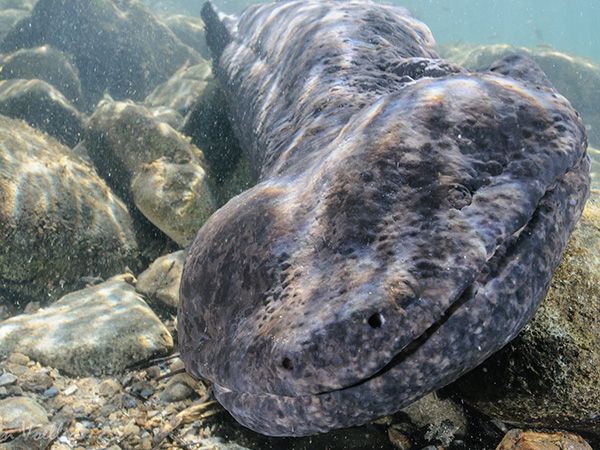
A smiling Japanese Salamander
Snorkel in Gifu’s streams and see salamanders up close. (Image: Martin Voeller)

Want to see more stories from International Traveller in your Google search results?

  1. Click here to set International Traveller as a preferred source.
  2. Tick the box next to "International Traveller". That's it.
hero media

5 things every hotel needs for a more restorative stay

    Kate Bettes Kate Bettes
    Wellbeing means different things to different travellers. Here’s how to pick a hotel that gets it right for you.

    The best wellness holidays aren’t necessarily spent wrapped in a spa robe. Sometimes they’re found around a dinner table in Cambodia, on a hiking trail in New Zealand or after finally beating jet lag on the other side of the world. The hotel you choose is what makes them happen.

    1. Easy access to good food

    meals from Novotel Bangkok Sukhumvit 20
    Taste delicious meals at Novotel Bangkok Sukhumvit 20.

    One of the quickest ways to derail healthy habits on holiday is to spend half of it working out where to eat instead of digging into the culture around you. Thankfully, Novotel has done much of the hard work already, with chefs building menus that lean into the flavours, ingredients and traditions of each destination.

    In Sihanoukville, Cambodia, Korkor soup – often dubbed ‘Cambodian ratatouille’ – sits alongside raw blue crab dressed with lime and chilli, best enjoyed with views across the Gulf of Thailand.

    In the lovingly chaotic city of Bangkok, the presence of food cranks up the sociability. At Novotel Bangkok Sukhumvit 20, you can settle in with mango sticky rice and stranger-turned-friends beside the pool at Sky on 20 rooftop bar, or bring them along to tackle river prawns and stir-fried crab with holy basil at the buzzing Crab Paradise Dinner Buffet.

    Then Novotel Dubai Al Barsha welcomes you with a laidback twist on the level of indulgence the Middle Eastern city is best known for up on Deck Se7en. Looking towards Burj Al Arab, the rooftop lounge has everything from Mediterranean-style dishes like seabass ceviche to Italian prosecco sundowners.

    At the other end of the scale, in the hills that surround the Novotel Bali Ubud Resort, calm comes from nature. At Siralada restaurant, Balinese traditions shape the menu while thunder rumbles over the surrounding jungle – proving the setting is as nourishing as the food itself.

    While at Novotel Nha Trang, chef Kieu Thi My Hanh and her team showcase Vietnam’s knack for balancing freshness, texture and fragrant herbs. Pho remains a favourite, while seafood salad with pomelo and mango brings those flavours together in one bright dish.

    It’s all an approach backed by partnerships with expert food creators such as Alfie Steiner, whose plant-forward recipes prove healthy food should never taste plain.

    2. Better sleep options

    Novotel Bali Ubud Resort room
    Sleep deeply with Novotel.

    There are few travel experiences more disappointing than arriving in a new country, determined to seize the day, only to fall asleep fully clothed by 3pm.

    For Australian travellers, jet lag is often an unavoidable part of the journey. That’s one reason Novotel runs sleep-focused initiatives that help guests adjust quickly without compromising on health. We’re talking partnerships with Sydney-based sleep specialist Olivia Arezzolo, known for her advice on everything from better sleep habits to beating jet lag, alongside features like pillow menus, in-room yoga content and tailored sleep guidance.

    The sooner you’re operating on local time, the sooner you can get back to more pressing matters – like deciding which spa treatment to book.

    3. More ways to move

    woman hiking around queenstown new zealand
    Stay at Novotel Queenstown Lakeside and explore local hiking trails. (Credit: GettyI mages/ naruedom)

    Every place in the world has its own way of getting you moving: whether that’s hiking up ice-bitten mountains before a sauna or gentle stretching by the pool before a facial. From fitness centres to spas, Novotel recognises that wellbeing rarely looks the same.

    At Novotel Queenstown Lakeside, activity is inescapable. Here, hiking trails, ski fields, bungee jumps, and white-water rafting have made the region famous. The hotel’s location on the shores of Lake Wakatipu means less time spent organising yourself and more time out there experiencing them. To top it all off, you can book a private hot tub for the evening before heading back into the wilderness tomorrow.

    Bali, of course, takes a softer approach. At Novotel Bali Ubud Resort or Novotel Bali Nusa Dua, movement is less about conquering a mountain and more about a dance class between the tropical gardens and lagoon pools. Afterwards, the spa takes over, with traditional treatments like a Lulur body scrub: a combination of rice, turmeric, sandalwood, ginger and jasmine that’ll soothe muscles already relaxed by the Balinese heat.

    4. Better connections

    Novotel Sharm El Sheikh
    Kids will love a stay at Novotel Sharm El Sheikh.

    One of the best things about travel is that it gives your family stories you’ll be telling for years. Novotel helps create them with activities that bring everyone together, whether that’s trying something new, learning a local skill, or simply spending more time together.

    Go for a distinctly Thai twist at Novotel Phuket Vintage Park, where many of the family activities draw on local culture. Kids can try everything from beginner Thai boxing and language lessons to umbrella painting and – a pastime beloved by children the world over – pool foam parties. Everyone is welcome to join in, whether that’s getting splashed, covered in paint, or simply watching their children discover a new side of Thailand during the dedicated Family & Kids Day.

    A different adventure awaits at Novotel Sharm El Sheikh. Kids could be perfectly content with discos, drawing classes and new holiday friends, but the Red Sea has other ideas. Sitting on the edge of Naama Bay, days here might involve snorkelling colourful reefs, taking a boat trip to Ras Mohammed National Park or heading into the desert by quad bike or camel for a Bedouin-style dinner beneath the stars.

    5. Location is everything

    Surin Beach, Choeng Thale, Thalang District, Phuket, Thaiföld
    Explore Phuket’s gorgeous beaches. (Credit: Bence Biczo)

    Everyone’s idea of wellness looks a little different. With more than 600 hotels across 65 countries, Novotel gives guests the freedom to choose the destination that suits them best. Whether that’s a beachside escape in Phuket, an alpine expedition in Queenstown or a city break in Bangkok, there’s a good chance a Novotel isn’t far away.

    All that’s left? Choosing your version of wellbeing.

    Discover stays to inspire your everyday at novotel.accor.com.