
More than a century on from the first world cruise, the journey still tops bucket lists – but today’s passengers are rethinking what it means to travel the globe by sea.
On a map, Panama appears as a frayed green ribbon that holds two continents together and two oceans apart. The country is both a bridge and a gateway – a narrow isthmus linking landmasses, with the Panama Canal, a scalpel-slice through its belly, carving a passage between the Atlantic and Pacific. It is the crossroads of the Americas – perhaps even of the world. I’m sailing through it now.
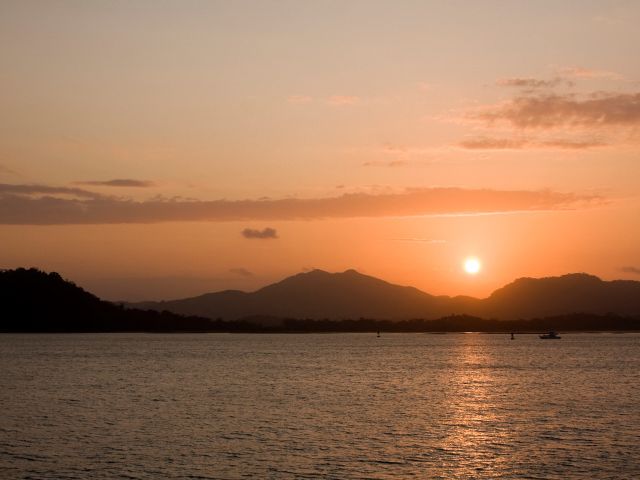
It’s sunset, and I’m gathered on the aft deck of Cunard’s Queen Anne with my fellow passengers. The transit through the Panama Canal has taken all day, and we’re watching as the gate to the final lock seals shut behind us.
Earlier, we’d been lifted up by the Miraflores Locks like a flowing, aquatic staircase to reach the man-made Gatun Lake. We’d spent hours sailing through its malachite green waters, the rainforest so close I could smell the resinous air and hear the birds calling from the guayacán trees.
Why are we still booking round-the-world cruises?
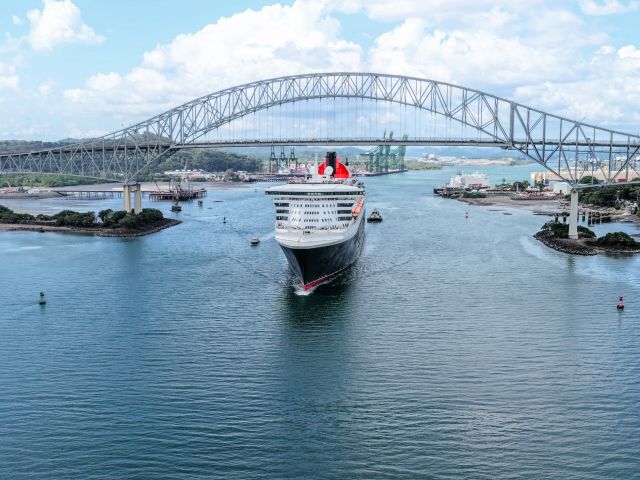
Queen Anne is nearing the end of her world voyage, and for many onboard, the Panama transit has been a long-awaited highlight. A century ago, the first-ever round-the-world cruise also passed through this canal – then newly opened.
That ship was a Cunard liner, the Laconia, carrying 347 leisure passengers on her 1922 world voyage. The allure of a world cruise has endured ever since. But in 2026, the way passengers relate to cruising the world is shifting.
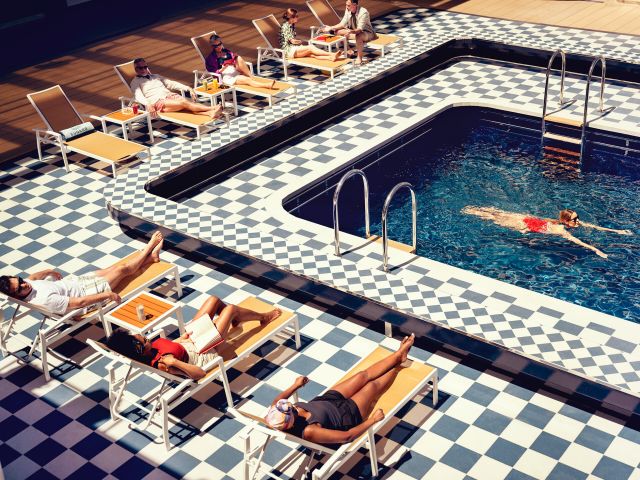
The Pavilion.
For some passengers, a world voyage is a community they return to year after year. For others, it’s a once-in-a-lifetime adventure. And for some – like Lizzie Webb – it’s something simpler: an opportunity to slow down, unwind and enjoy some rare time alone.
It’s here, on the aft deck overlooking the Panama Canal, that I meet her. We’ve both been caught off guard by how moving and profound the transit feels. “It’s overwhelming," she tells me. “To think about the people who made this happen – the joining of the Pacific and Atlantic. It’s just extraordinary."
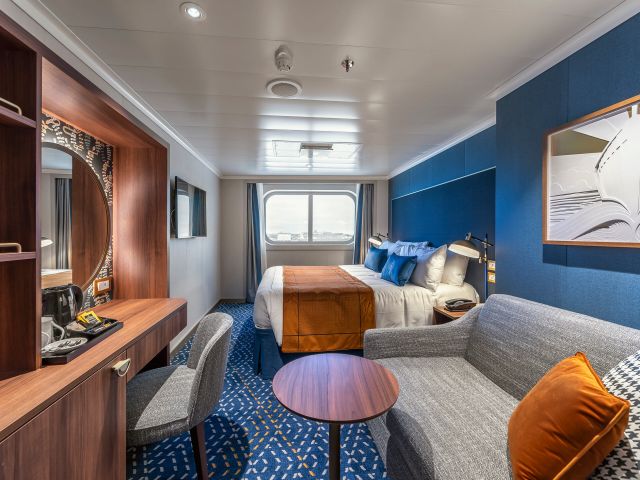
Having lost several close friends in recent months, Lizzie decided to book “the trip of a lifetime" that had been sitting on her bucket list. And although she’s loved every port, it’s the daily rituals onboard and rhythm of life at sea that she’s found most valuable.
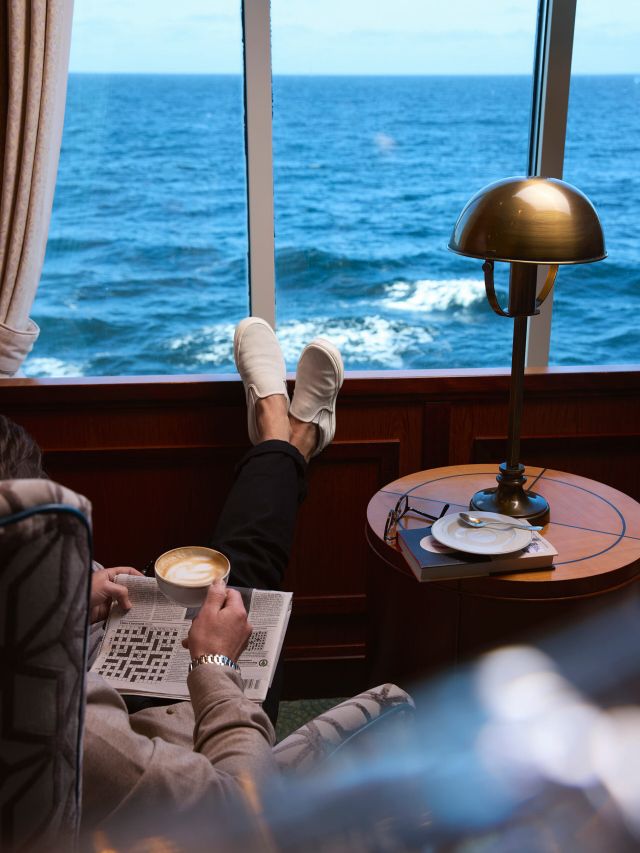
She spends her evenings on deck watching the sunset with a book, attends onboard lectures and leans into the ease of life, where the logistics of daily travel fall away. Initially, Lizzie was hesitant to travel alone. “But I thought, ‘I’m going to do this’," she says. “Fear can cripple you. You have to let go of it." And now, she’s certainly glad she did. “Being on my own has been a revelation."
A sense of community at sea
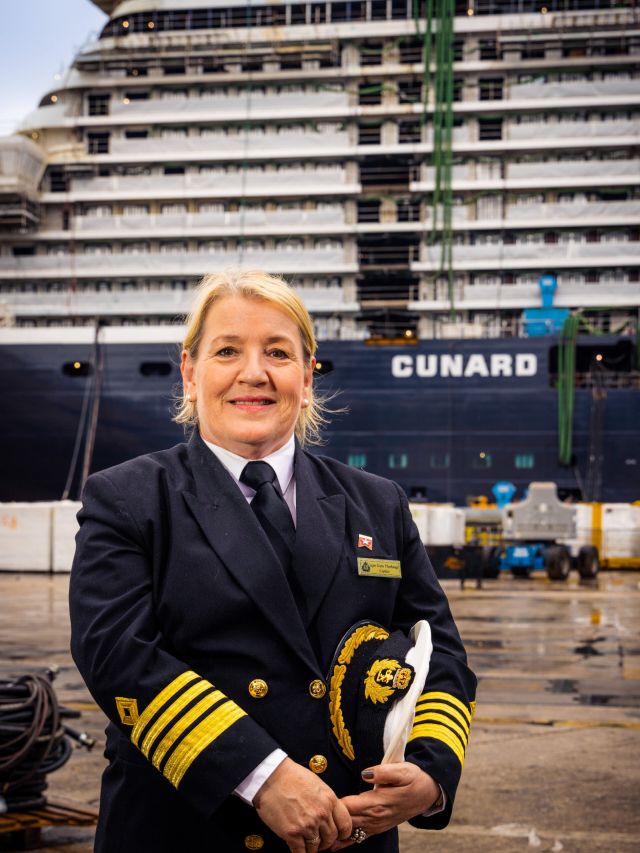
That sense of calm onboard is something ship captain Inger Klein Thorhauge sees often. “It’s very peaceful when you’re at sea," she says. “A lot of people come not just for the destinations, but for the tranquillity – the calm of moving through the world."
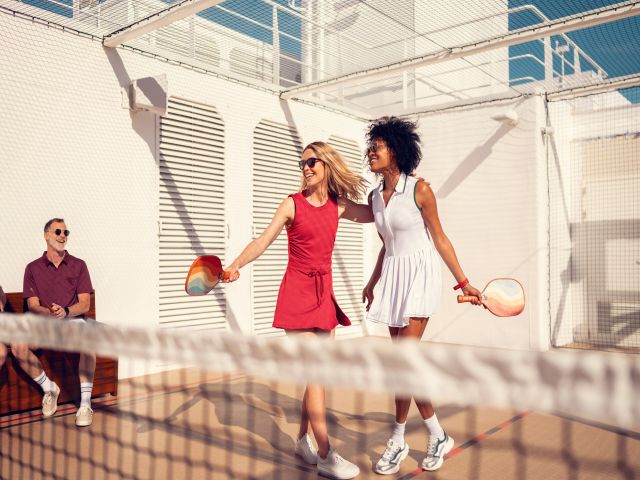
For others, that environment is what helps foster a sense of community onboard that acts as an anchor as they see the world. “To me, the cruise ship is a little village," says June Papadopoulos from Australia. “It’s a real community." June is on her third cruise aboard Queen Anne, and she’s already planning to return for the next world voyage.
One of the few female captains in the industry, Captain Thorhauge was the first woman in history to command a large cruise ship, taking charge of Cunard’s Queen Victoria in 2010. In 2024, she was named first captain of Queen Anne, the newest addition to the fleet.
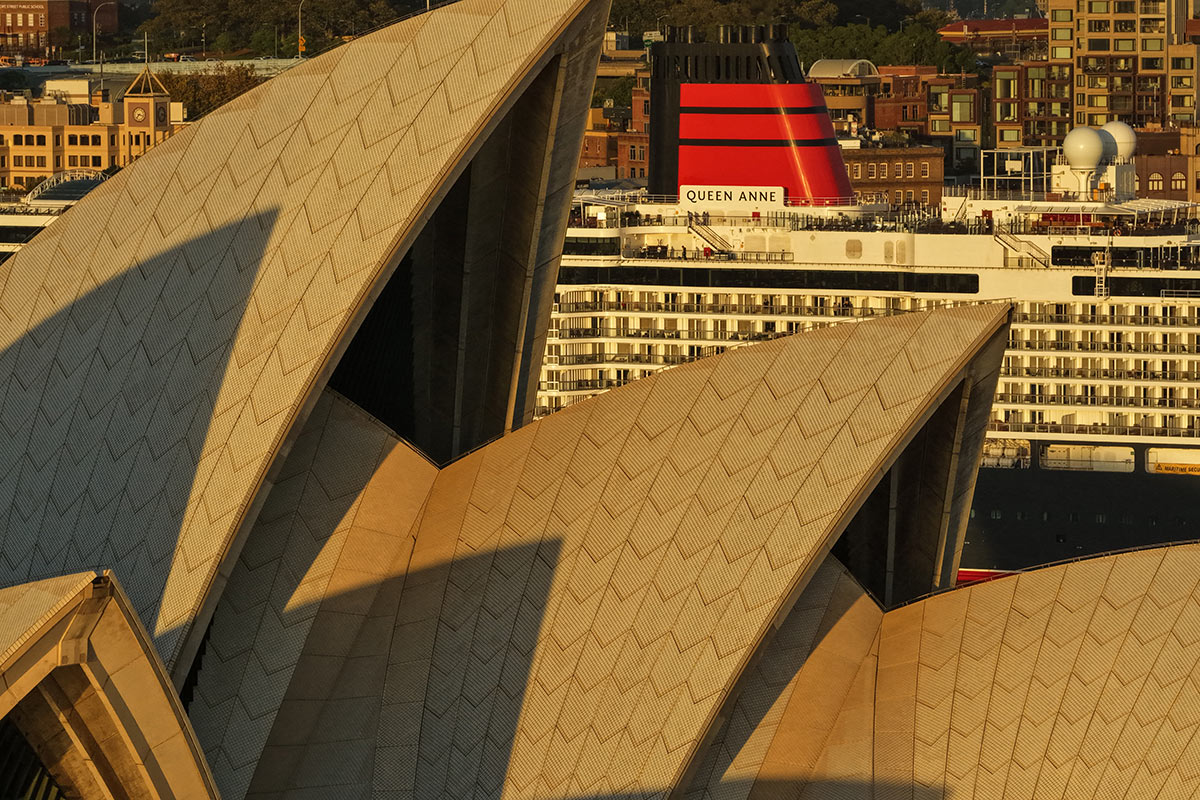
“I remember sailing Queen Anne into Sydney Harbour [on her inaugural visit to the port] and thinking, ‘So… do you want to see my new ship?’" she laughs.
Queen Anne brings a contemporary update to Cunard’s 185-year lineage, with a sleek modern design and less formal feel than the rest of the fleet.
The joy of coming full circle
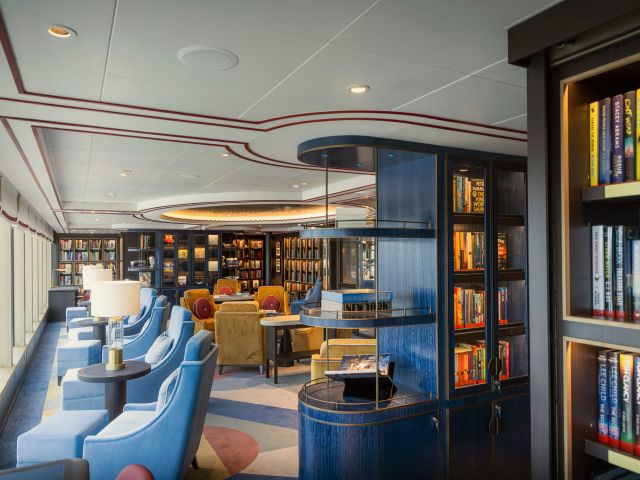
“We are a traditional line that’s embracing the future," says Captain Thorhauge. “We have the heritage, but we’re also modernising to welcome new cruisers."
Those cruisers come in all forms – and I meet them all onboard: multigenerational groups (including a group of 17), young families, and those who do things a little differently. This includes Lea and Ron Scott, an American couple travelling with their foldable bikes in tow.
“We thought about what we like to do when we travel – and that’s exploring neighbourhoods," Lea tells me. “With the bikes, we can be locals for the day."
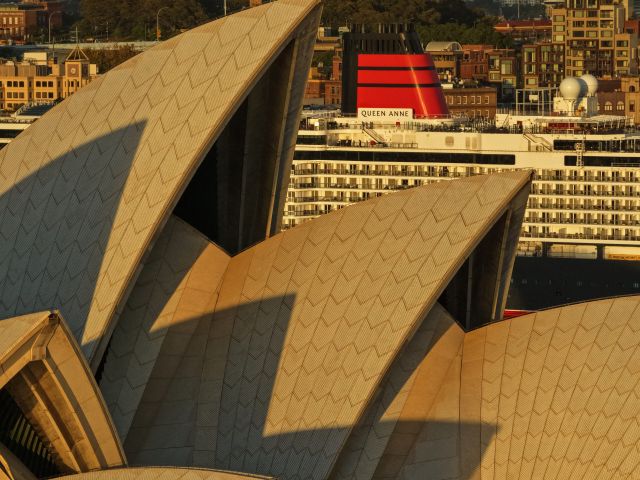
So far, they’ve been locals on nearly every continent: cycling in the shadow of Table Mountain in Cape Town, weaving through traffic in Manila and pedalling from city to beach in Sydney.
Now, they’re nearly home. Queen Anne’s next port of call is Miami, which is driving distance from the Scotts’ home. But despite the logic of disembarking, they’re staying on the extra week to complete the loop back to Southampton.
“We’re sailing all the way to England, just to fly home again," Ron shrugs. “But that’s the point. Part of the allure of this was to go all the way around the world."
Captain Thorhauge agrees that there’s something deeply symbolic about sailing back to the point of origin. “On a world voyage, when you come back to your home port, the loop is closed; the circle is complete. It’s like the ship is delivering you [back]."
But regardless of where the journey starts or ends, the pull of the ocean is a constant. “Human beings are always drawn to it – to see it, to hear it, to smell it," says Captain Thorhauge. A century on from Cunard’s Laconia completing the first-ever world voyage, that instinct certainly feels as alive as ever.
Weekly travel news, experiences
insider tips, offers, and more.
Want to see more stories from International Traveller in your Google search results?
- Click here to set International Traveller as a preferred source.
- Tick the box next to "International Traveller". That's it.