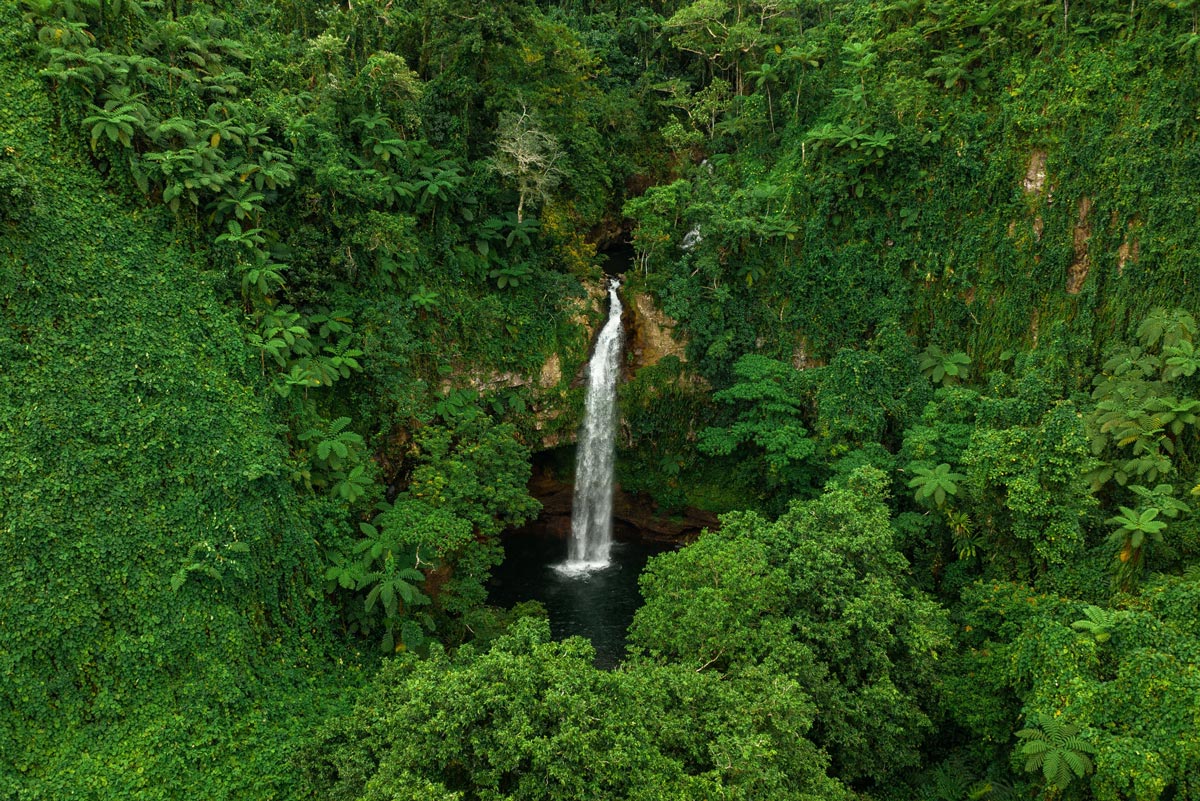

From natural rock slides and gentle rainforest strolls to challenging hikes, Fiji’s most beautiful waterfalls reward every kind of adventure seeker, writes Dilvin Yasa.
As the great TLC once sang (and we’re so brazenly butchering): Don’t go chasing waterfalls – unless it’s Fiji waterfalls where mountains and valleys are blanketed by tropical rainstorms, leading to tremendous – and oh-so-dramatic – cascading waterfalls carving their way through the country’s lush jungle interiors.
While waterfalls in Fiji are best during the rainy season (November to April), they can be enjoyed at any time of year, although it’s always helpful to remember to pack a sturdy park of hiking shoes or boots, insect repellent, sunscreen and plenty of water.
A final word? Some waterfalls might fall on private land so always check and seek permission before setting off. Remember, these are not the valleys and the lakes that you’re used to (sorry).
Here’s our roundup of some of Fiji’s finest.
Tavoro Waterfalls (Bouma Falls), Taveuni
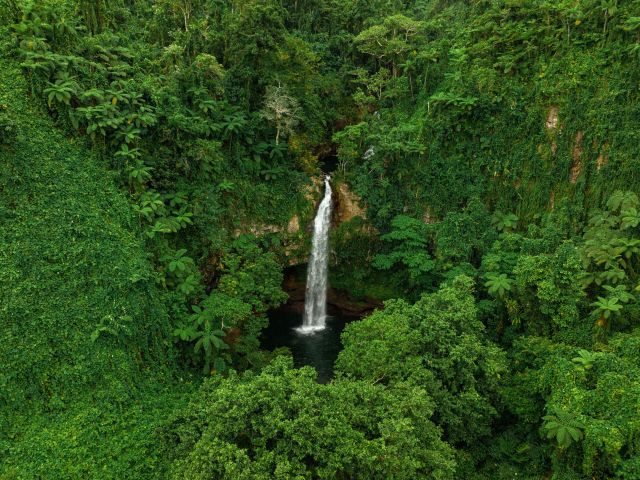
We’re calling it: if Fiji had a greatest hits album for waterfalls, this would be track one, two and three and that’s no small feat considering Taveuni – also known as the Garden Island – is home to hundreds of waterfalls.
Set inside Bouma National Heritage Park, Tavoro isn’t a single cascade, but a trio which asks day-trippers to question their commitment to adventure. Most will get to the first (and largest) cascade and commit to spending the day in its deep plunge pool and it’s easily done; unlike its sisters, it’s relatively easy to get to, and features both picnic tables and change rooms, setting the scene for the ultimate day out.
Our recommendation? Keep going. The track to the second waterfall is steeper and quieter, following a rough path uphill for around 30 minutes until the second waterfall comes into view, while the third involves a path that’s best described as ‘slippery, overgrown and more than a tad tricky’. The payoff? Sweeping views out to the ocean at the second, and a smug, ‘I have one of Fiji’s finest spots all to myself’ feeling for the third.
Waisila Falls, Viti Levu
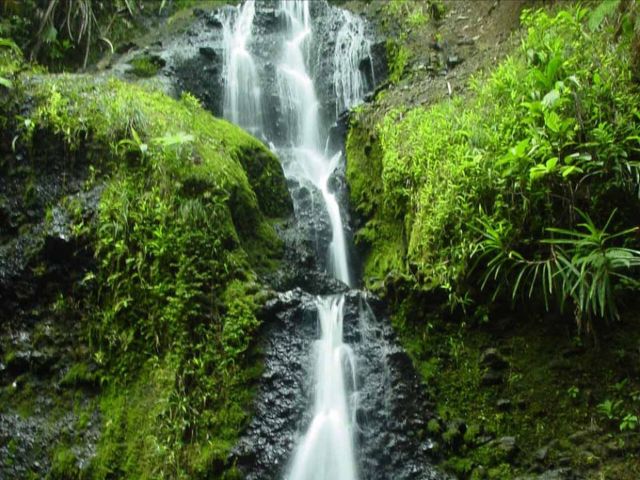
Not every waterfall needs to present a challenge. For those who prefer their waterfalls to maximum gain for minimal input, we present 10-metre-high Waisila Falls.
Located just outside Suva, Waisila Falls sits within Colo-i-Suva Forest Park, delivering a lush and wholly casual rainforest experience (no hiking boots – or mercifully, stamina – required). Expect an easy 750-metre walk through the jungle to the falls, with the upper areas of the Falls accessible by a set of stairs.
Aqua babies will be thrilled with the number of small swimming spots located along the path, all of them popular with picnicking families – particularly on weekends. Swimsuits and a small stash of snacks will make all the difference.
Waitavala Natural Waterslide, Taveuni
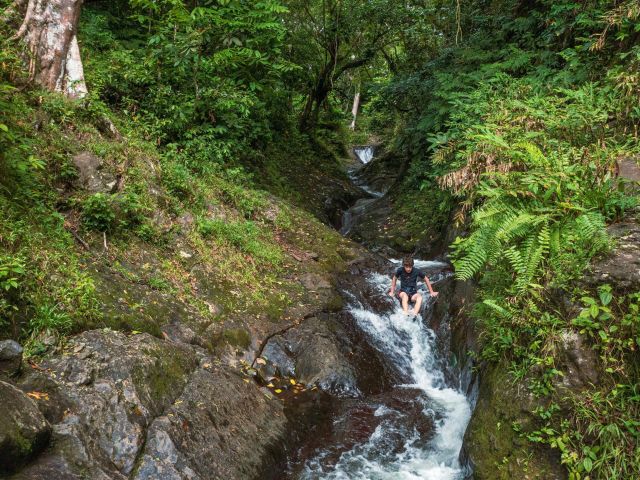
A waterfall for thrillseekers? Back on Taveuni, it’s a thing and Waitavala Natural Rock Water Slide does exactly what it says on the tin, offering not only a thing of beauty to look at, but something for folks to hurl themselves down, hooting and hollering as they go. Essentially, it’s a 50-metre, naturally formed and somewhat bumpy slide which winds its way through the jungle, its water-polished channels unceremoniously ‘depositing’ joyriders into a series of rock pools on the way down.
Accessible from the road via a 10-minute jungle walk, Waitavala is located on privately owned land, so it’s best to seek permission from the local village chief for access. Our top tip? Follow the locals; they know exactly where to sit, where to push off and how to avoid the less forgiving sections.
Wainibau Falls, Taveuni
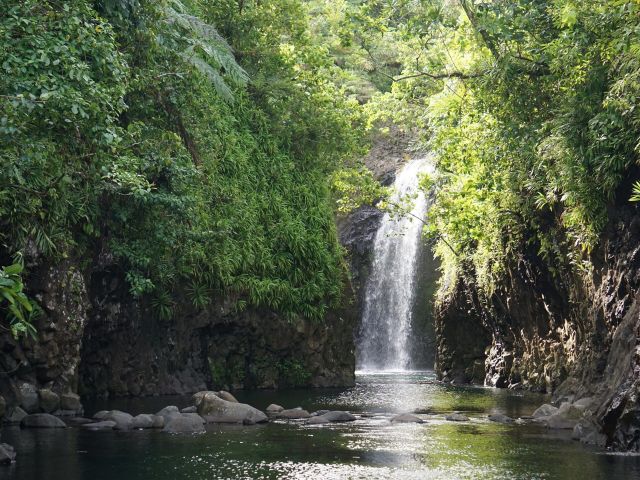
Sometimes everyone needs a waterfall adventure which feels like a Tough Mudder event – an experience Wainibau Falls proudly represents. Located at the end of the five-kilometre-long Lavena Coastal Trail on the southeastern coast of Taveuni, this isn’t a mere hike, but an adventure encompassing beach treks, rope-assisted river crossings, rickety bridges (is there any other kind?) and jungle trails. And that’s where it begins.
Wainibau rewards commitment and commitment it will take; to reach the fall, hikers become swimmers wading or freestyling their way up through a narrow gorge like a salmon on an upstream journey until the twin cascades pouring into a deep, emerald pool falls within reach (see that bit about ‘reward’).
Non-swimmers need not worry: there’s also an option to skip the walk and hire a boat from Lavena village directly to Wainibau. Phew.
Orchid Falls, Viti Levu
Short on time or enthusiasm for steep climbs? Orchid Falls has the market covered, offering not only Fiji’s most accessible waterfall located just a 30-minute drive north of Nadi just near the Sleeping Giant and Sabeto Hot Springs, but also its easiest. A small fee is payable to access the paved path, but the walk itself to the four falls is simple, quick and refreshingly low effort.
Visit during the wet season when water levels are higher and Orchid Falls will be at its best, with stronger flows and a more dramatic drop. There is a plunge pool at the bottom just begging for passersby to jump in for a splash – it wouldn’t be Fiji without it.
Biausevu Waterfall, Viti Levu
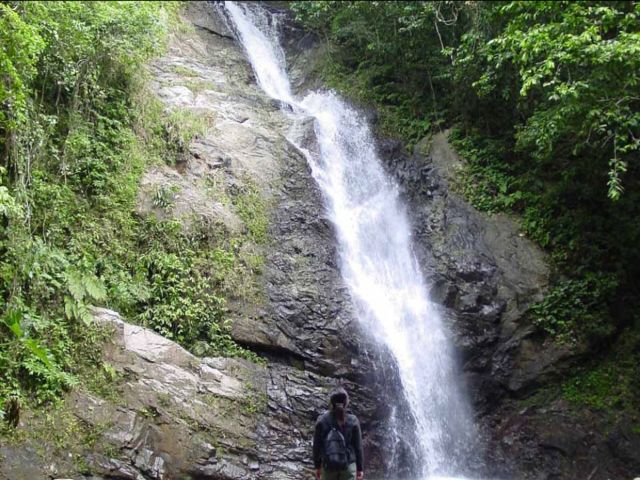
Still on (relatively) easy street, we present Biausevu Waterfall (also known as Savu Na Mate Laya Falls), celebrated as the most impressive, yet most accessible waterfall on Viti Levu’s Coral Coast.
Although Biausevu is a popular day tour option with guests of resorts nearby, travelling independently to the waterfall is possible and recommended. All it takes is a check-in at Biausevu village to pay a small entry and guide fee before setting off on the 30-minute, two-kilometre rainforest stroll to get to the 20-metre high, two-tiered waterfall tumbling cinematically into a postcard-perfect swimming hole.
The trail is mostly flat but features nine stream crossings requiring either sturdy sandals or water shoes (also available for hire at the village hall). For those who want to elevate their Biausevu Waterfall experience, an option to ride in on horseback.
Weekly travel news, experiences
insider tips, offers, and more.
Nakawaga Waterfall, Vanua Levu
Over on Vanua Levu, near the town of Savusavu, Nakawaga Waterfall brings a little bit of unpredictability to the mix, offering an altogether different experience for visitors depending on the season.
The hike itself is steep and slippery, calling for a 20-minute uphill commitment through jungle canopies. During the dry season when conditions are favourable, the option to enjoy a swim in its natural pool presents itself, but after heavy rains, 15-metre Nakawaga becomes something else entirely, a beast that’s faster, louder and best admired with caution from the sides.
Savu-i-One Falls, Viti Levu
At the other end of the spectrum to Viti Levu’s Orchid Falls is Savu-i-One Falls, considered one of Fiji’s biggest and most remote waterfalls. Located in Koroyanitu National Heritage Park in the north of the island, getting to Savu-i-One is an adventure in itself requiring a two-hour hike inland from Abaca Village, the initial 4WD journey itself, as well as considerable grit, since the terrain to reach the falls is far from what anyone would call ‘smooth’.
Expect an uneven, occasionally slippery trail where scrambling over rocks is part of the experience. The payoff is worth it; at the end, visitors will be greeted by a multi-tiered cascade and swimming hole that feels quiet, wild and a world away from the resorts (even though that poolside cocktail later on will taste all the sweeter).
Savulelele Falls, Viti Levu
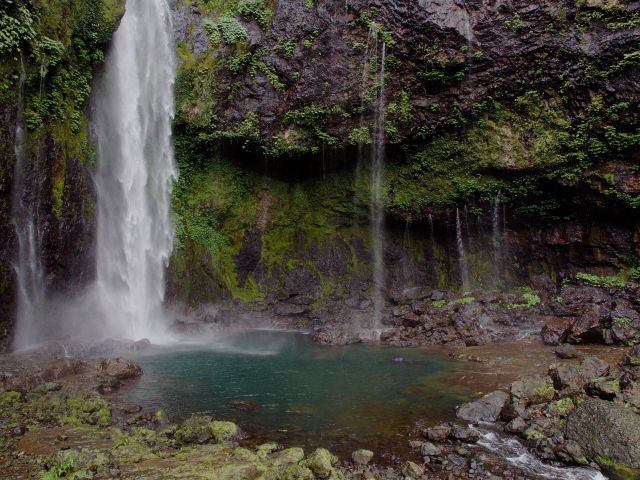
It’s been said that the road to Savulelele Falls – not only Fiji’s tallest waterfall, but the one that’s most fun to say – is an eerie kind of remote. The kind that makes imaginations work overtime. That’s fair, the waterfall, located in the Suncoast’s mountainous interior on northern Viti Levu, is well off the beaten track, requiring either a drive from Suva or Rakiraki which is then followed by a 25-kilometre dirt road drive inland.
The 1.5-kilometre dirt track hike from Nabalesere Village is a form of meditation in itself, ultimately requiring a steep trek that makes many question their commitment to the goal of reaching Savulelele. Perseverance is key; those who continue will be treated to majestic falls thundering down the mountains – often presenting with mist rising around them. Who knows? It might even involve a Fiji Peregrine Falcon or two, an endemic species known to nest here.
Tours are available, but those who go it alone will require a car which can handle dirt and gravel roads, a sevusevu (gift of kava to present to the village chief before the hike is undertaken) and cover-ups to swim in, such as a sarong, or shorts and a t-shirt.
Wainabi Waterfall, Viti Levu
Not to be confused with Wainibau, Pacific Harbour’s Wainabi Waterfall is perfect for those seeking an action-packed adventure with a local tour company. Tours by Domoika Hike, Waterfall and Rock Climbing Adventure Tours offer a range of options to make the most of the seven-tiered waterfall, ranging from an easy 2.5-hour trek along the river, to strenuous eight-hour return trips which include prawn and fern gathering opportunities. Tours begin and end at Waivaka Village and include a village tour, cultural and culinary experiences, and for the more adventurous among us, the chance to enjoy a spot of riverside camping overnight.
Want to see more stories from International Traveller in your Google search results?
- Click here to set International Traveller as a preferred source.
- Tick the box next to "International Traveller". That's it.