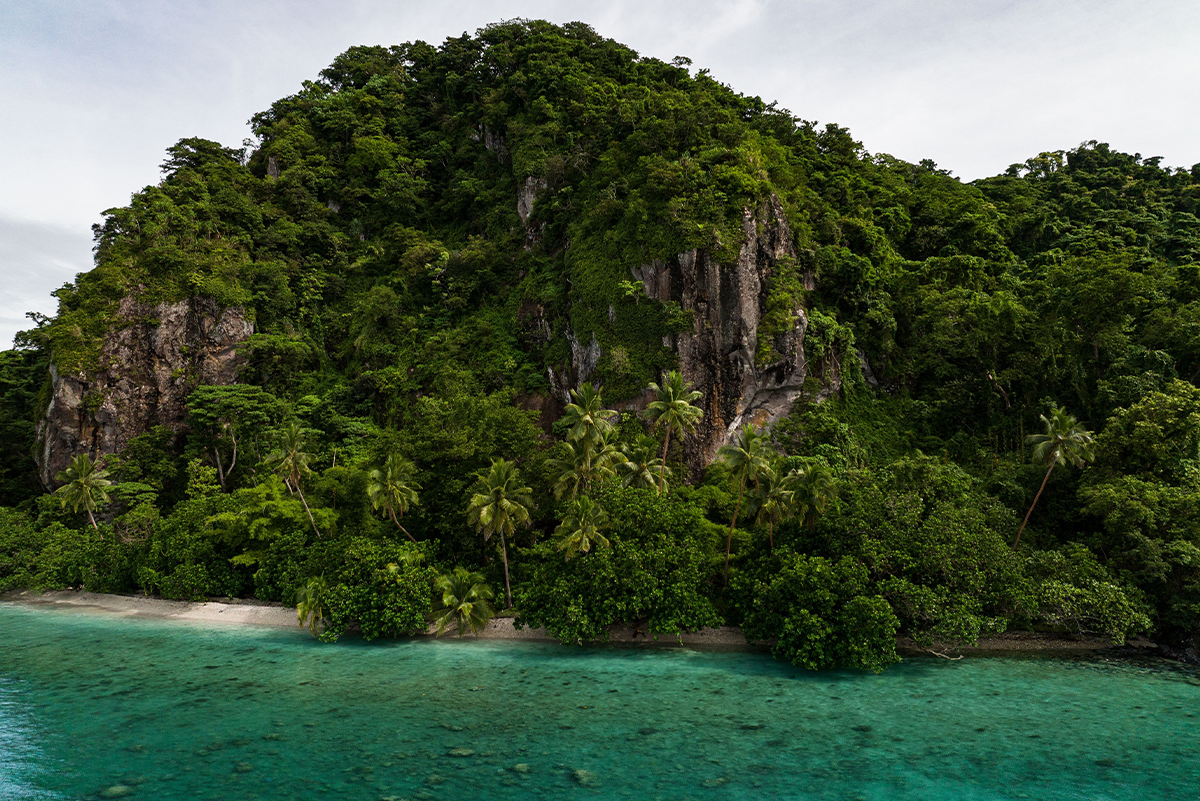

Can you have just as much in Fiji when it rains? Provided you’re equipped, you might even find it’s your future preference, writes Dilvin Yasa.
The first time I visited Fiji, I arrived to the sight of grey sheets of water pouring sideways. “Welcome to Fiji wet season," my driver laughed as he drove me to my resort. “But don’t worry, Fiji weather changes all the time; you’ll still find what you’re looking for."
I was looking for turquoise lagoons and sun-soaked loungers so I was doubtful, but the man was right. Even though it was ‘Fiji wet season’ and it rained intermittently throughout my stay, I was still able to enjoy the perfect beach getaway.
The secret? Perfecting the art of timing and understanding when to go out, and when to sit back and relax….
What (and when) is Fiji’s wet season?
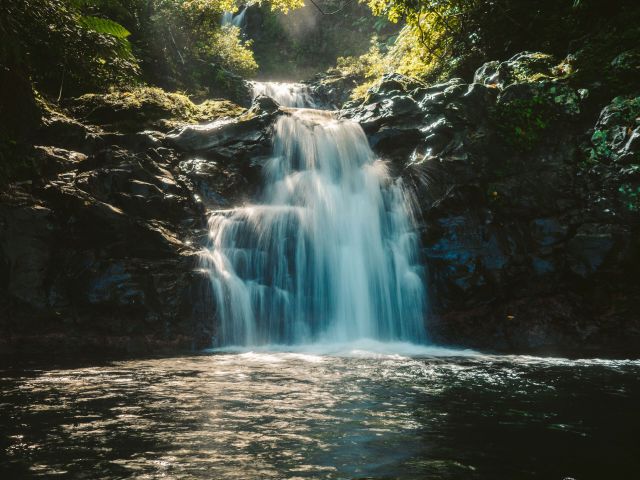
The first thing to note about Fiji is that the island nation only has two seasons: winter and summer. Winter – also known as the dry season – lasts from May to October but with temperatures ranging between 16 and 28 degrees, it’s far from the bone-chilling stuff we can expect closer to home.
Summer (yep, wet season) falls between November and April and is characterised by long, warm days where the humidity is broken up by sudden, yet relatively short, downpours. Visitors to Fiji can expect average temperatures during the wet season to fall between 26 and 31 degrees, with March deemed to be the wettest month of the year.
What are the benefits of visiting Fiji in the wet season?
There were two things I noticed during that first (and subsequent) trips to Fiji: that once the downpour stopped, regular tropical life with its snorkelling and cocktail by the pool sessions resumed like clockwork (and that you often had attractions largely to yourself).
Many cite fewer crowds to be the key highlight of travelling to Fiji during the wet season, and that’s true: who doesn’t want a large cluster of corals to investigate without having to navigate other snorkellers, or a near-empty beach to themselves for a while?
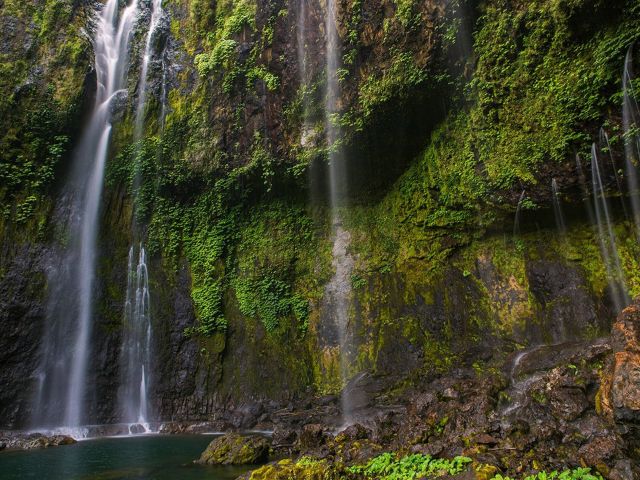
While the joy of a crowd-free holiday can’t be disputed, other benefits include significantly lower prices – particularly on flights and accommodation, lush landscapes at their peak begging to be explored (a huge bonus for hikers and thrillseekers), and for those keen to check out Fiji’s wealth of waterfalls.
What to do in Fiji in the wet season

I quickly learned that there’s no better place to be during a downpour than in a spa enjoying a Bobo massage, a traditional deep-tissue wonder utilising herb-infused coconut oil. It’s still my top recommendation, but there are plenty of things Fijian holidaymakers can do on a rainy day.
Take a mud bath at Sabeto Hot Springs
Why should rolling around in mud only be reserved for festival attendees? At Sabeto Hot Springs, located less than half an hour away from Nadi, the wet season makes the experience that much richer. Here, the process is simple: lather yourself with glorious, mineral-rich mud, jump in the warm mud pool, then rinse it all off in the geothermal hot springs which are said to contain healing powers.
Open 8am to 5pm daily.
Address: Wailoko Road, Sabeto
Enjoy a Sigatoka River adventure
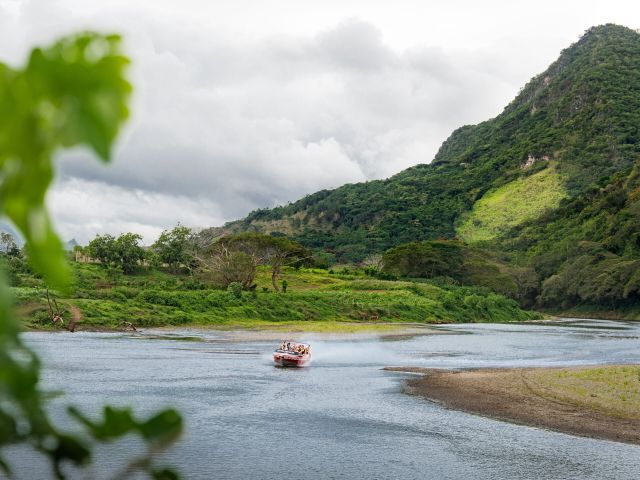
For those craving a hit of adrenaline, a jet boat ride along Viti Levu’s Sigatoka River, the island’s longest, delivers exactly that. Running from the remote highlands to the sand dunes of the Coral Coast, the river provides a dramatic backdrop for a thrill-heavy ride packed with speed and plenty of 360-degree spins. What’s a little rain? Passengers should expect to get soaked regardless of what’s happening with the weather, so it pays to surrender to the experience and enjoy the novelty of wet clothes clinging to sun-warmed skin. Some operators, such as Sigatoka River Safari, will pair the thrill ride with a visit to a traditional village, offering a glimpse into everyday Fijian life beyond the risk of the ride.
Sigatoka River Safari operates every day from 8am to 5pm with the exception of Sunday.
Address: Tappoos Sigatoka Store, Main Street, Sigatoka Town
Sign up for a cooking class
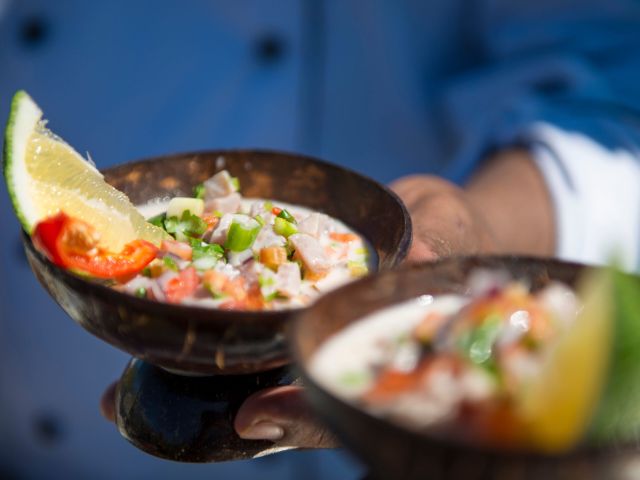
If there’s one big problem with feasting on traditional Fijian cuisine, it’s that the usual sandwiches at home may no longer cut it. Happily, wet weather can be used as an opportunity to master signature dishes like kokoda (citrus-cured raw fish), Fijian Indian curries and – for those with a garden – a lovo (meat and vegetables cooked in an earth oven) by booking a cooking class.
Options are available across Fiji, including Vavavi Cooking & Cultural Experience, Kokoda making class at InterContinental Fiji Golf Resort & Spa and Fiji Cooking School at Yasawa Adventures
Take a hike
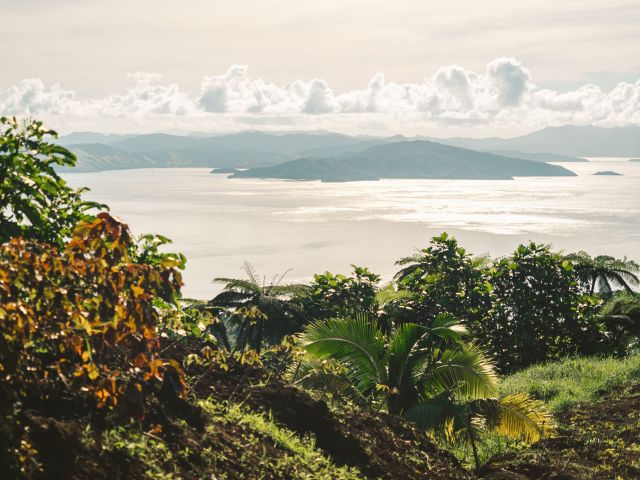
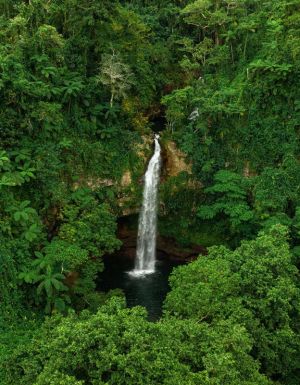
Fiji’s celebrated network of hiking trails comes into its own during the wet season, when waterfalls surge and the rainforests spring to life. On Viti Levu, Mount Tomanivi, Fiji’s highest peak at 1324 metres remains king, but there are plenty of more accessible hikes around the island, including the trails of Colo-i-Suva Forest Park, and the three- to four-hour Mt Koroyanitu (or Mt. Batilamu) trail.
On Taveuni, known as Fiji’s garden island due to its lush, tropical flora, the Tavoro Falls (also known as Bouma Falls) track delivers a triple hit of cascades and jungle swimming spots, but Lavena Coastal Walk, a 10-kilometre round trip celebrated as one of the country’s most scenic, is not to be missed.
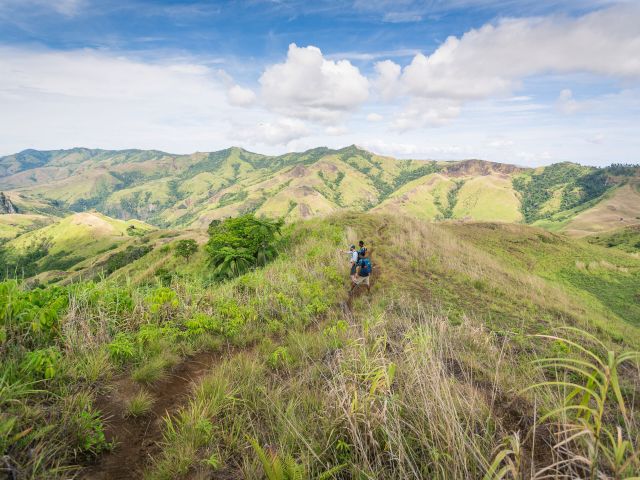
Got an adventurous spirit? Multi-day hikes across Viti Levu’s jungle interiors can be undertaken with Talanoa Treks.
Enjoy a muddy ATV adventure
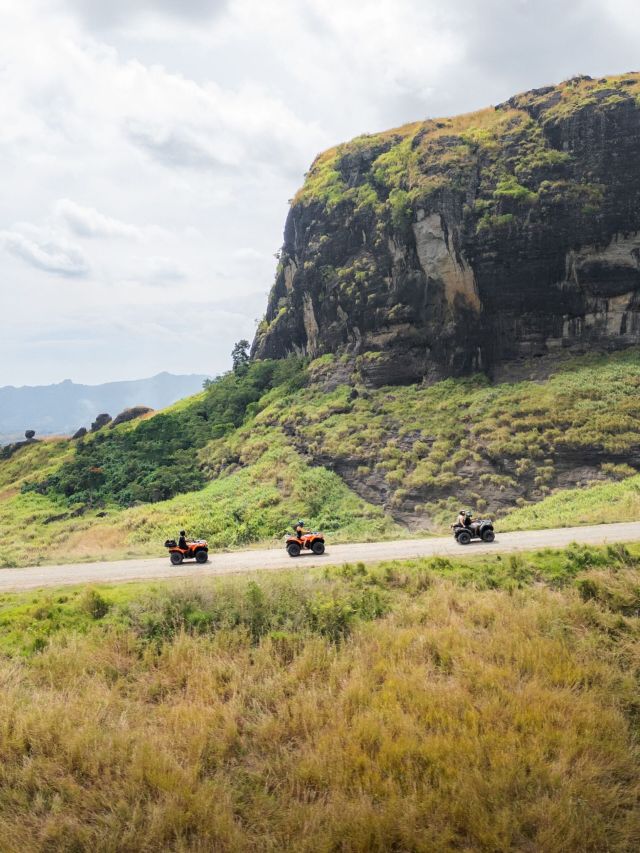
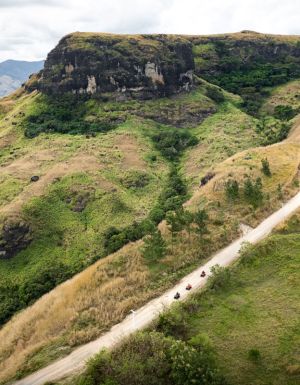
Unleashing that inner mud-demon behind the wheel of a two-seater quad bike, is simple (and recommended) thanks to Go Dirty Tours Fiji. Departing from Nadi and taking in Viti Levu’s forests, villages, waterfalls, hot springs and mud baths, the experience is equal parts adventure and cultural immersion. It should come with a warning, however: wearing old clothes is strongly advised. If rain has fallen, there’s every chance guests will leave covered in as much of the local gooey stuff as they are local insight.
A wealth of tours are on offer, ranging from the 2-3-hour Play Dirty to the 6-7-hour Double Edge, which includes ziplining.
Address: Located between Wailoaloa Beach Resort and Grand West Villas, New Beach Road, Wailoaloa, Nadi.
Weekly travel news, experiences
insider tips, offers, and more.
Visit the Garden of the Sleeping Giant
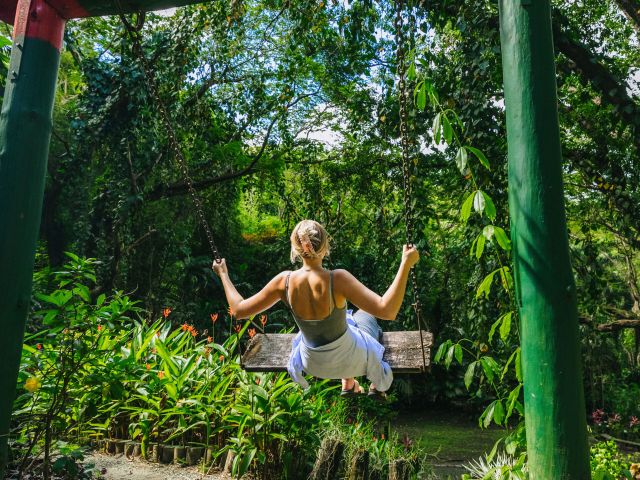
Who can resist an afternoon of wandering around an explosion of flowers, lily ponds and more than 1000 varieties of orchids in full wet-season bloom? The dream becomes a reality at the Garden of the Sleeping Giant, a 20-hectare botanical paradise located a 25-minute drive northeast of Nadi. It’s open daily from 9am to 5pm with no bookings required, but garden tours and transfers are available.
Address: Wailoko Road, Sabeto, Nadi
Say yes to ziplining
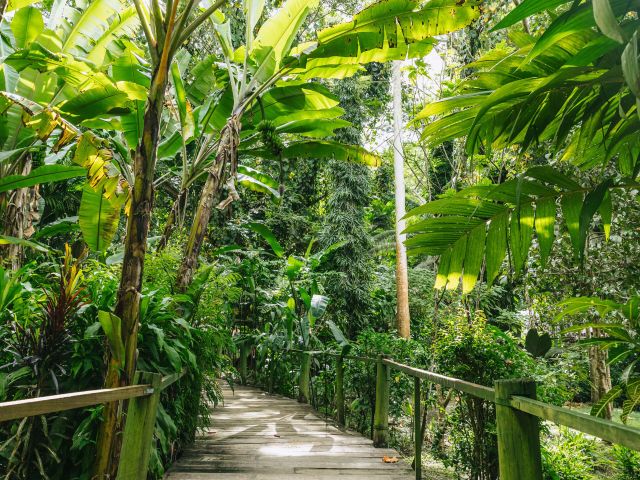
Garden of the Sleeping Giant visitors craving a little more action can combine the visit with a stop at Sleeping Giant Zipline, an eco-friendly jungle adventure park featuring seven ziplines, two waterfalls and a jungle safari.
Spanning over 700 metres and flying over rivers, waterfalls and the jungle at speeds of 40km/ph, Sleeping Giant Zipline is open from 10am to 5pm seven days a week, no matter the weather.
Address: Holika Road, Nadi
Other rainy day options in Fiji include a visit to the Fiji Museum, a stop at Sri Siva Subramanuiya Swami Temple in Nadi, the largest Hindu temple in the Pacific, or a cultural village tour designed around taking a deeper look at local life.
Which islands are best in the wet season?
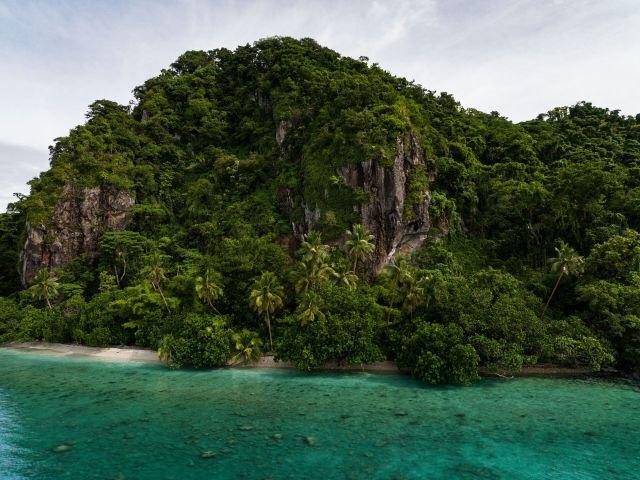
Sorry to say, but it varies between travellers. Those keen to lace up those hiking boots to take advantage of fuller waterfalls and lush rainforest can happily lean into the wet season, while sun-seekers may prefer to search for drier conditions.
Thanks to the tall mountain ranges and southeast trade winds that shape larger islands such as Viti Levu and Vanua Levu, the eastern sides of these islands tend to receive more rain. Travellers hoping for something less… wet, are better off on the western side of these islands, or on smaller islands which tend to experience a more even climate rather than the sharp contrast between wet and dry zones.
What to pack for Fiji in the wet season?
I’ve lost track of the number of occasions where I’ve had to pull out my trusty The New Yorker jigsaw puzzles on tropical holidays, and some form of old-school entertainment, whether it be puzzles, travel-sized board games, card games – even colouring books – is always my top recommendation. That said, the following should also make it to the suitcase:
- A Kindle or a few books (don’t forget the charger if relying on the former)
- A raincoat and/or umbrella
- Sensible shoes (this isn’t the time for suede kicks)
- A device loaded with family favourite TV shows and movies
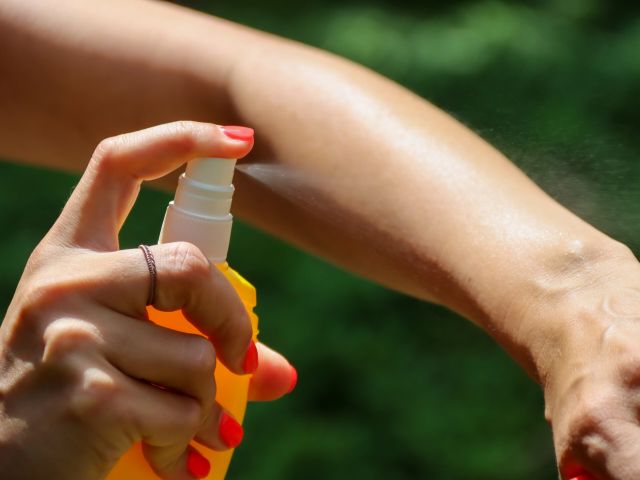
- Mosquito repellent (this is the time of year the little critters are most active)
- Lightweight clothes which dry quickly
Want to see more stories from International Traveller in your Google search results?
- Click here to set International Traveller as a preferred source.
- Tick the box next to "International Traveller". That's it.