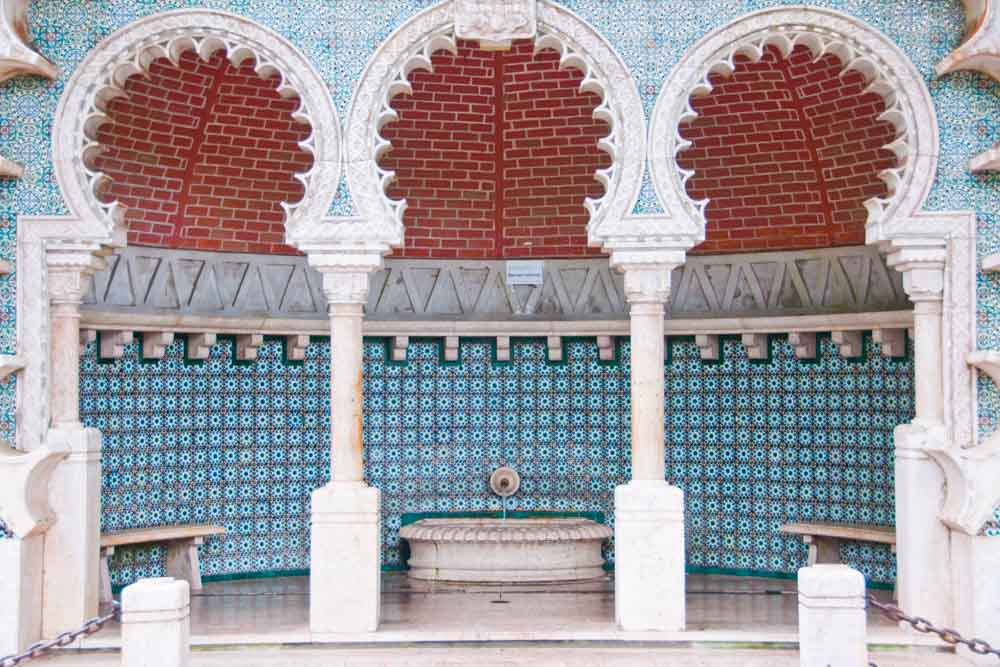
hero media

Exploring Sintra: Europe’s most ‘delightful’ town

International Traveller

With its exuberant palaces and colourful castles giving it World Heritage status, Sintra is a gem of a Portuguese town that you really shouldn’t miss, writes Phil Hawkes.


Lord Byron described Sintra as ‘Perhaps in every respect the most delightful town in Europe’.

There’s no disputing that Byron and his Romantic contemporaries knew a thing or two about beauty, their poetry heavily influenced by nature and classical architecture. So it’s no wonder they found plenty of inspiration in Europe and, in particular, here in Portugal.

These days, Australians travel in droves every year to Europe, taking in what seems like every last bit of Italy and France and Spain, without going the extra step to sample the wonders of Portugal on the western side of the Iberian Peninsula. And it’s a shame because it has so much to offer.
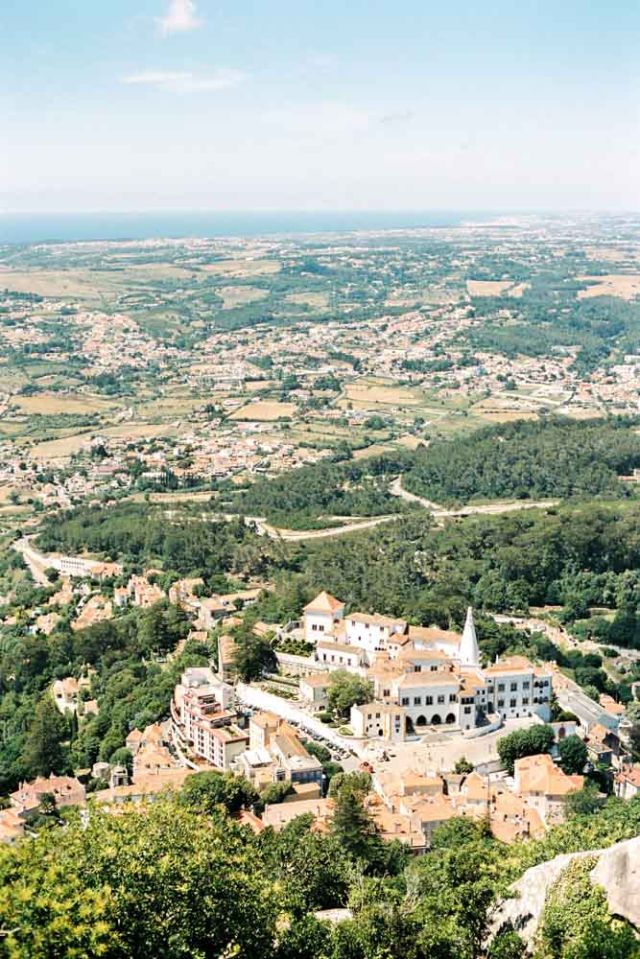
Europe sintra historical
Looking down on the leafy streets of World Heritage Site Sintra, Portugal.

Lisbon, for example, is one of Europe’s most delightful capitals, a lively city where you can enjoy the gamut of interesting history, unique culture, great food and wine, and brilliant shopping. Not to mention the nightlife, with everything from opera to jazz and the particularly entrancing melancholy song form of fado.

Close to Lisbon the historic town of Sintra is another compelling drawcard, a World Heritage Site offering in-and-out appeal to day trippers, but possessing enough to make it worth lingering a few days longer. The area has been host to human civilisation since the Palaeolithic era, evidenced by fragments of ceramics and utensils discovered here by archaeologists over the years.

From the days of the Roman Empire to its occupation by the Moors, and then the Crusaders in the 11th century to prosperity during the Middle Ages, Sintra has long played an important strategic role as the Atlantic gateway to Lisbon. Many remnants of its colourful past remain fascinatingly intact today.
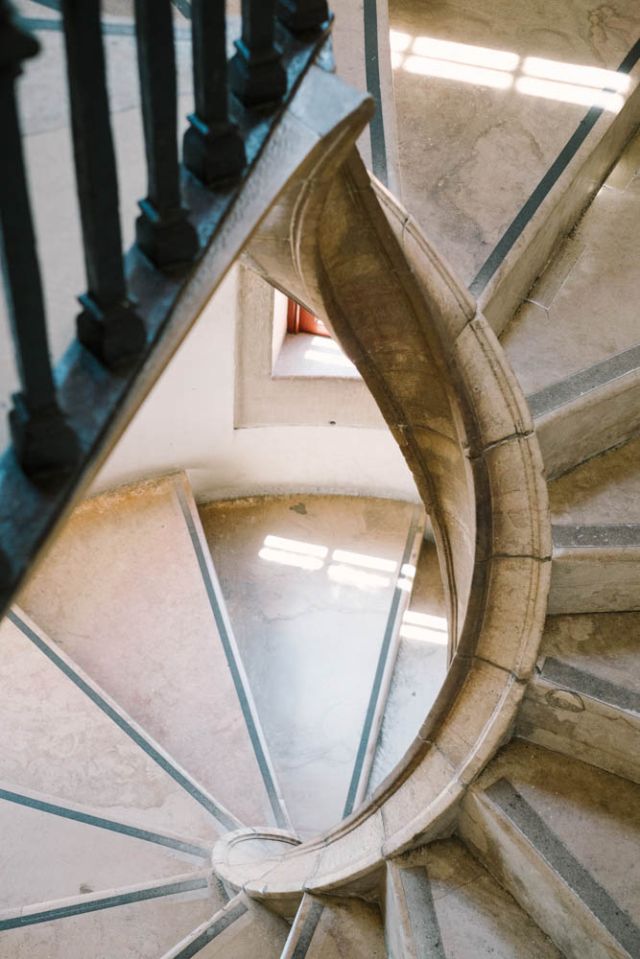
Portugal castles palace architecture
An elegant spiral staircase in Portugal’s Palácio Nacional de Sintra.

Sintra’s more recent history as a retreat for Portuguese royalty and wealthy Lisbonites, with fine palaces, extravagant mansions and decorative gardens, is also clear to see.

The pine-covered hills and maritime climate made it an irresistible proposition then, and it is still a popular holiday destination thanks to those same hills full of hiking trails and the nearby gold-sand beaches.

Then there’s the pretty town centre with its traditional architecture and cobblestone streets (forget about wearing heels, it’s all about flat sandals and sensible walking shoes here) lined with cafes, restaurants and boutiques.
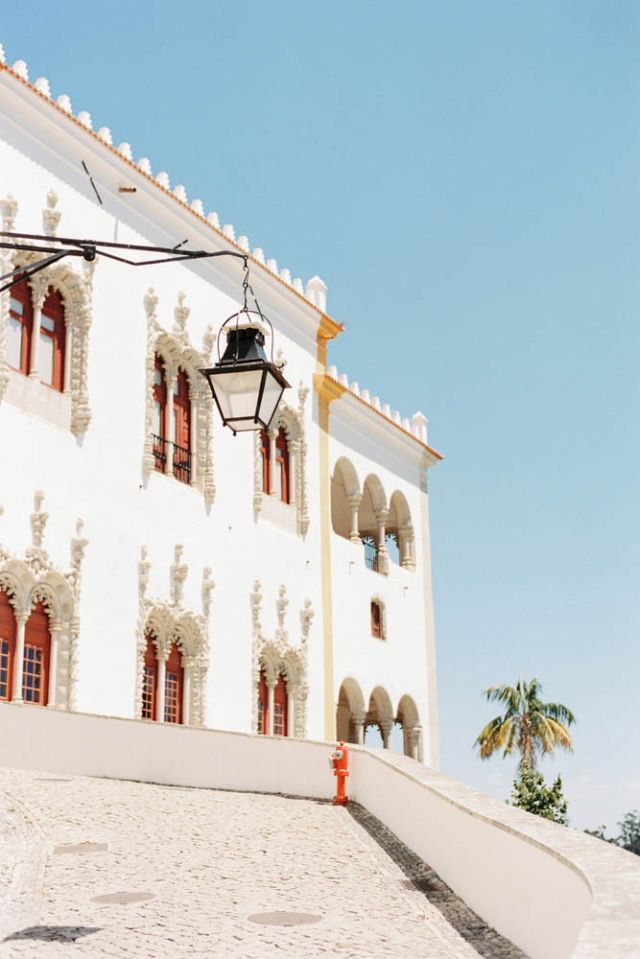
architecture Portugal historical buildings
The white face of the Palácio Nacional de Sintra, which dates back to the 14th century.

A day trip from Lisbon is hardly enough time to enjoy all of Sintra’s myriad attractions, but if that’s all you can manage you definitely shouldn’t miss the opportunity to visit.

If time is of the essence, engage a guide so that you can see all the highlights, with a running commentary revealing the history and colour of the town while you are at it.

Our local guide, Carla, has an understandably impressive knowledge of the area’s history given she grew up in the shadow of the iconic Pena Palace. From an early age she decided her life and career would revolve around this amazing piece of Romantic architecture.

We start our exploration at the Palácio Nacional de Sintra. Although there was an ancient Moorish castle on this site, the present building dates back to the 14th century and is a compelling mix of Moorish, Gothic and Manueline styles.
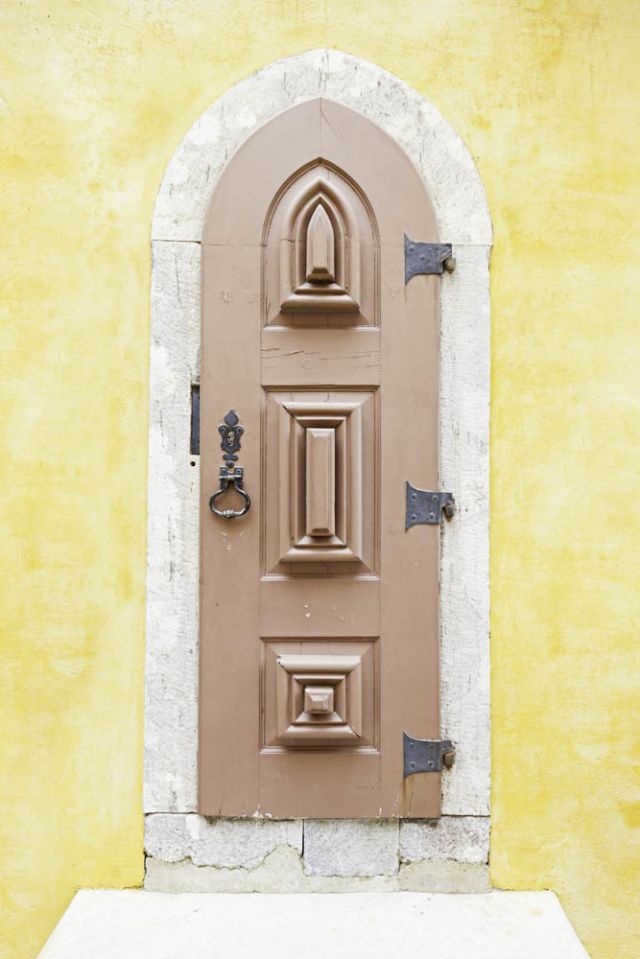
sintra Portugal architecture
A typically colourful Sintra doorway.

It was in continuous use by Portuguese royalty until the abolition of the monarchy in 1910 and today it is one of the country’s main tourist attractions, largely because of its collection of azulejos (glazed tiles), the most extensive in the world; its magnificently decorated rooms; and the two conical chimneys that form Sintra’s most recognisable landmarks.

At the Castelo dos Mouros (Moorish Castle), we take in wonderful views over the region from the crumbling battlements that bear a striking resemblance to a miniature Great Wall of China.

Set among the forests, the partially restored castle was built by the North African Moors in the 8th and 9th centuries to protect their fertile agricultural lands, but was conquered by the Crusaders in the 12th century.

Carla then leads us to her childhood neighbour, the extravagant and colourful Palácio de Pena. Commissioned by King Ferdinand II of Portugal in 1842 following his instructions to “create a scene from an opera", it is an eclectic combination of architectural styles including African Islamic and Gothic Medieval.

The epitome of a fairytale castle, Palácio de Pena is the highlight of any visit to Sintra, with its drawbridge, turrets, ramparts and domes.

Pena Park, which surrounds the palace, has an air of mystery about it, especially when the misty autumn weather cloaks the exotic plants, trees and fountains and, of course, the obligatory statue of Ferdinand II.

The king was born an Austrian lord in 1816, and married into the Portuguese nobility with his betrothal to Maria da Glória Joana Carlota Leopoldina da Cruz Francisca Xavier de Paula Isidora Micaela Gabriela Rafaela Gonzaga. Known as the ‘Artist King’, he ruled Portugal with Queen Maria II between 1837 and 1853, inspiring the Portuguese equivalent of Germany’s famous Neuschwanstein Castle during this time.

Portugal castles palace architecture
Castelo dos Mouros or Moorish Castle, was built on top of a hill with magnificent views of Sintra.

Our tour of castles and palaces concludes with Palacio de Monserrate. Designed and commissioned in 1858 by an Englishman, Sir Francis Cook, this is the smallest but arguably the most beautiful of the palaces of Sintra, set among subtropical gardens that have been described as a masterpiece of landscaping and botanical engineering.

Exploring the interiors of the palace takes you through a luxurious succession of opulently decorated receptions rooms, from the music room to the Indian living room, the dining room and the library, all of which can be found on the ground floor. The tour also allows visitors to view the first floor, where the private apartments were located.

With the light waning and the evening delights of Lisbon beckoning, this is where many visitors bid the town a fond farewell having seen the ‘highlights’, but in doing so they would’ve only scratched the surface of this remarkable place.

No matter how long your stay though, Sintra is an experience not to be missed.


The Details: Sintra, Portugal

The town is only 25 kilometres from Lisbon, easily reached by train or bus from the city. driving there yourself is possible but parking is limited. The best option is a one- or two-day tour by coach, with the advantage of an English-speaking guide.

There are daily flights from Sydney, Melbourne, Brisbane, Adelaide and Perth to Lisbon on Emirates via Dubai. This is the only one-stop service to Portugal.

Want to see more stories from International Traveller in your Google search results?

  1. Click here to set International Traveller as a preferred source.
  2. Tick the box next to "International Traveller". That's it.
hero media

5 things every hotel needs for a more restorative stay

    Kate Bettes Kate Bettes
    Wellbeing means different things to different travellers. Here’s how to pick a hotel that gets it right for you.

    The best wellness holidays aren’t necessarily spent wrapped in a spa robe. Sometimes they’re found around a dinner table in Cambodia, on a hiking trail in New Zealand or after finally beating jet lag on the other side of the world. The hotel you choose is what makes them happen.

    1. Easy access to good food

    meals from Novotel Bangkok Sukhumvit 20
    Taste delicious meals at Novotel Bangkok Sukhumvit 20.

    One of the quickest ways to derail healthy habits on holiday is to spend half of it working out where to eat instead of digging into the culture around you. Thankfully, Novotel has done much of the hard work already, with chefs building menus that lean into the flavours, ingredients and traditions of each destination.

    In Sihanoukville, Cambodia, Korkor soup – often dubbed ‘Cambodian ratatouille’ – sits alongside raw blue crab dressed with lime and chilli, best enjoyed with views across the Gulf of Thailand.

    In the lovingly chaotic city of Bangkok, the presence of food cranks up the sociability. At Novotel Bangkok Sukhumvit 20, you can settle in with mango sticky rice and stranger-turned-friends beside the pool at Sky on 20 rooftop bar, or bring them along to tackle river prawns and stir-fried crab with holy basil at the buzzing Crab Paradise Dinner Buffet.

    Then Novotel Dubai Al Barsha welcomes you with a laidback twist on the level of indulgence the Middle Eastern city is best known for up on Deck Se7en. Looking towards Burj Al Arab, the rooftop lounge has everything from Mediterranean-style dishes like seabass ceviche to Italian prosecco sundowners.

    At the other end of the scale, in the hills that surround the Novotel Bali Ubud Resort, calm comes from nature. At Siralada restaurant, Balinese traditions shape the menu while thunder rumbles over the surrounding jungle – proving the setting is as nourishing as the food itself.

    While at Novotel Nha Trang, chef Kieu Thi My Hanh and her team showcase Vietnam’s knack for balancing freshness, texture and fragrant herbs. Pho remains a favourite, while seafood salad with pomelo and mango brings those flavours together in one bright dish.

    It’s all an approach backed by partnerships with expert food creators such as Alfie Steiner, whose plant-forward recipes prove healthy food should never taste plain.

    2. Better sleep options

    Novotel Bali Ubud Resort room
    Sleep deeply with Novotel.

    There are few travel experiences more disappointing than arriving in a new country, determined to seize the day, only to fall asleep fully clothed by 3pm.

    For Australian travellers, jet lag is often an unavoidable part of the journey. That’s one reason Novotel runs sleep-focused initiatives that help guests adjust quickly without compromising on health. We’re talking partnerships with Sydney-based sleep specialist Olivia Arezzolo, known for her advice on everything from better sleep habits to beating jet lag, alongside features like pillow menus, in-room yoga content and tailored sleep guidance.

    The sooner you’re operating on local time, the sooner you can get back to more pressing matters – like deciding which spa treatment to book.

    3. More ways to move

    woman hiking around queenstown new zealand
    Stay at Novotel Queenstown Lakeside and explore local hiking trails. (Credit: GettyI mages/ naruedom)

    Every place in the world has its own way of getting you moving: whether that’s hiking up ice-bitten mountains before a sauna or gentle stretching by the pool before a facial. From fitness centres to spas, Novotel recognises that wellbeing rarely looks the same.

    At Novotel Queenstown Lakeside, activity is inescapable. Here, hiking trails, ski fields, bungee jumps, and white-water rafting have made the region famous. The hotel’s location on the shores of Lake Wakatipu means less time spent organising yourself and more time out there experiencing them. To top it all off, you can book a private hot tub for the evening before heading back into the wilderness tomorrow.

    Bali, of course, takes a softer approach. At Novotel Bali Ubud Resort or Novotel Bali Nusa Dua, movement is less about conquering a mountain and more about a dance class between the tropical gardens and lagoon pools. Afterwards, the spa takes over, with traditional treatments like a Lulur body scrub: a combination of rice, turmeric, sandalwood, ginger and jasmine that’ll soothe muscles already relaxed by the Balinese heat.

    4. Better connections

    Novotel Sharm El Sheikh
    Kids will love a stay at Novotel Sharm El Sheikh.

    One of the best things about travel is that it gives your family stories you’ll be telling for years. Novotel helps create them with activities that bring everyone together, whether that’s trying something new, learning a local skill, or simply spending more time together.

    Go for a distinctly Thai twist at Novotel Phuket Vintage Park, where many of the family activities draw on local culture. Kids can try everything from beginner Thai boxing and language lessons to umbrella painting and – a pastime beloved by children the world over – pool foam parties. Everyone is welcome to join in, whether that’s getting splashed, covered in paint, or simply watching their children discover a new side of Thailand during the dedicated Family & Kids Day.

    A different adventure awaits at Novotel Sharm El Sheikh. Kids could be perfectly content with discos, drawing classes and new holiday friends, but the Red Sea has other ideas. Sitting on the edge of Naama Bay, days here might involve snorkelling colourful reefs, taking a boat trip to Ras Mohammed National Park or heading into the desert by quad bike or camel for a Bedouin-style dinner beneath the stars.

    5. Location is everything

    Surin Beach, Choeng Thale, Thalang District, Phuket, Thaiföld
    Explore Phuket’s gorgeous beaches. (Credit: Bence Biczo)

    Everyone’s idea of wellness looks a little different. With more than 600 hotels across 65 countries, Novotel gives guests the freedom to choose the destination that suits them best. Whether that’s a beachside escape in Phuket, an alpine expedition in Queenstown or a city break in Bangkok, there’s a good chance a Novotel isn’t far away.

    All that’s left? Choosing your version of wellbeing.

    Discover stays to inspire your everyday at novotel.accor.com.