The 3 remote Canadian Arctic hamlets you've probably never heard of
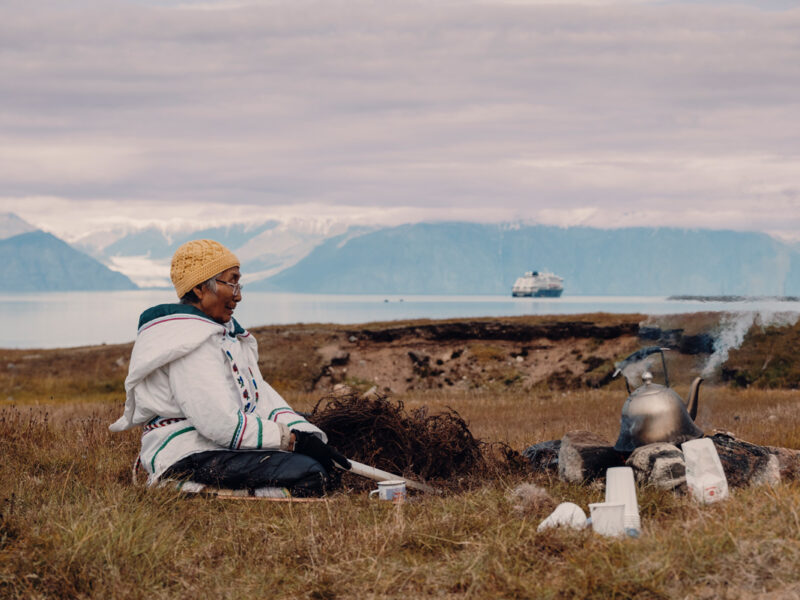
Visit the little-known hamlets of the Northwest Passage. (Credit: Greg Funnell)
The lure of seeing polar bears, narwals and otherworldly icebergs most often draw people to a once-in-a-lifetime cruise through the famous/infamous Northwest Passage but until you meet the locals, the Inuit, face-to-face in their tiny communities, can you really say you’ve been to the Arctic?
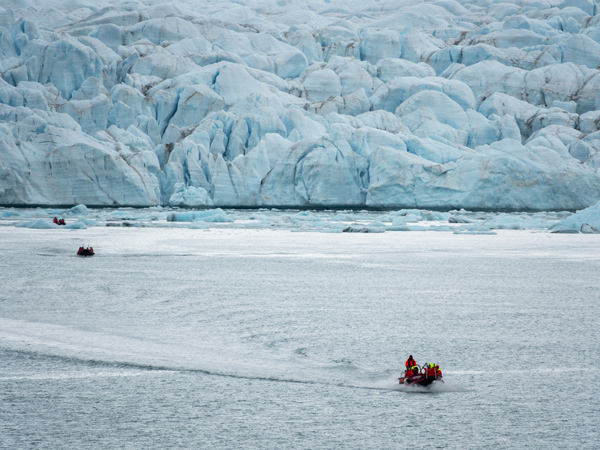
Guests explore Canada’s Arctic in Crocker Bay on board zodiacs. (Credit: Camille Seaman)
He hooks his middle finger in his opponent’s mouth. The volunteer reciprocates. They yank hard, stretching lips to tearing point. Their eyes well with tears, first from pain, then from laughter. She sings a song born deep in her throat, pulling ridiculous faces, right up in the ‘grill’ of her adversary, who surrenders, chuckling. Drums are drummed. Bums shake like caribous prancing. After 45 energetic minutes of ‘Inuit games’ inside Pond Inlet’s community hall – the first of three communities we’ll visit in the Canadian territory of Nunavut – I know more about the philosophy of the people of the Arctic than I could have ever imagined.
Cruising the Northwest Passage onboard MS Fridtjof Nansen
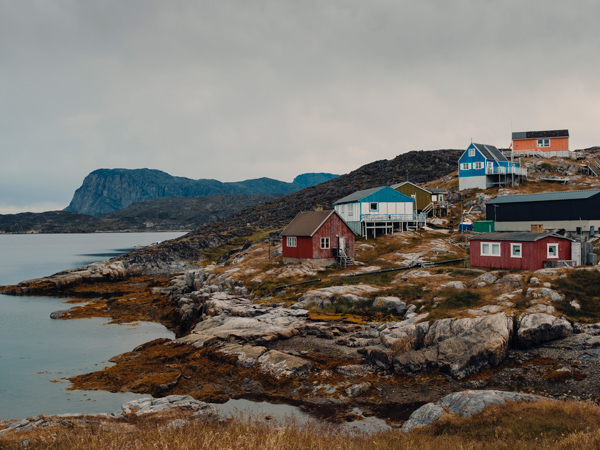
The journey starts in Greenland. (Credit: Greg Funnell)
It takes a firm grasp of history and geography to truly appreciate the privilege of negotiating the Northwest Passage – which ultimately connects the Atlantic and Pacific oceans through the Arctic – with relative ease and in subtle luxury. Until early last century, this journey was dismissed as impossible. I board HX Expeditions’ polar-class MS Fridtjof Nansen in Greenland’s capital, Nuuk, alongside 300 guests, eyes wide open.
My forward-facing suite, directly below the captain’s bridge, is a commodious space that spoils in that almost-minimalist Scandi way. The 140-metre long, 11-deck-high ship is replete with naturally lit spaces that ultimately focus your attention outwards; its three restaurants, spa, sauna and Explorer Bar all offering barely obstructed outlooks at the ever-changing vista. When the weather smiles, which is not always the case, and when there are no polar bears close by, we venture into the landscape; on guided hikes up lonely ridges, through brilliant-blue sea ice by kayak, and playing citizen scientist onboard agile Zodiacs.
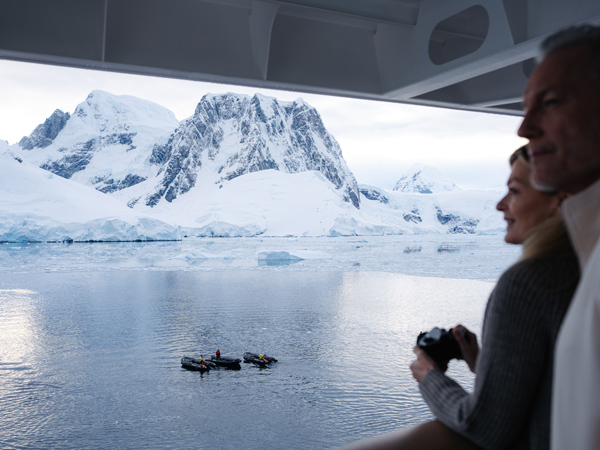
The Expedition Suite offers unbeatable views of the Northwest Passage. (Credit: Tuan Lam)
HX Expeditions’ 26-day Alaska-bound ‘Northwest Passage: Through the Arctic Labyrinth’ initially traces Greenland’s west coast, stopping at towns like Ilulissat, a glacial nirvana. Two ‘sea days’ follow, across the sometimes-tempestuous Baffin Bay, delivering us to the mouth of the Northwest Passage, ice-strangled for all but a small window each year. White rocks arranged into two words on the sloping shoreline signal that we’ve arrived at Canadian Arctic settlement number one: Pond Inlet.
Pond Inlet / Mittimatalik
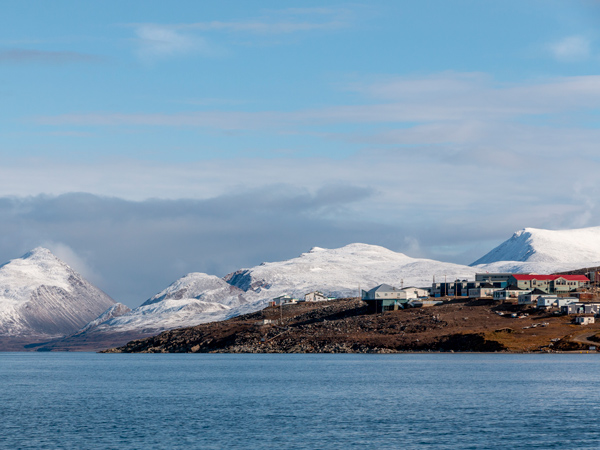
Approaching the coastline of Pond Inlet/ Mittimatalik. (Credit: Andrea Klaussner/ HX Expeditions)
We separate into small local-guide-led groups, so as not to overwhelm the 1500-strong community. The modern settlement – which is cloaked in absolute darkness in winter – dates to the 1970s, a hive of resolute, weather-proofed buildings surrounded by sleds and ATVs. However, Inuit families have lived in this area for untold generations.
Jocelyn, who thinks today is hot (7 degrees), points out the town’s two churches (one Anglican, the dominant religion, and one Catholic) and the country’s most northerly Tim Hortons (basically Canada’s Starbucks). We meet Agnes outside a ‘sod house’ replica, a traditional dwelling, built from and into the earth that would house 10-person families. Whale-bone roof frames would top a structure sealed with seal and caribou skins.
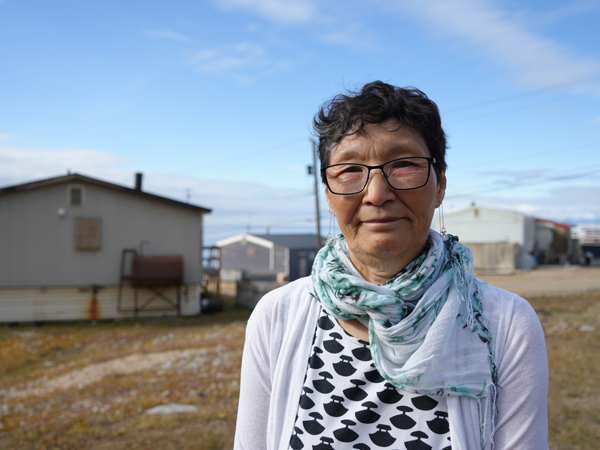
Pond Inlet/ Mittimatalik local, Angnowyak, teaches a seal-skinning masterclass during the writer’s shore excursion. (Image: Steve Madgwick)
Angnowyak (her name means “smart lady”, she jokes) gives a seal-skinning masterclass, a skill honed since age 13. Sitting on the floor of a small hall, she peels back the skin from the recently hunted animal gradually, confidently, with a semi-circular ‘ulu’ knife. She’ll make three pairs of boots from each skin and the animal’s meat can be prepared in a variety of ways: boiled, fried or sometimes even eaten frozen. Elsewhere, groups learn about the qulliq, a soapstone oil lamp-cum-kettle that is a symbol of Inuit women’s nurturing and resilience.
Before re-boarding the ship, we file into the community centre for Inuit games; the drum-led performances, sometimes-slapstick rituals and high-kick and finger-pulling competitions are both a cultural celebration and life lessons for Pond Inlet’s next generation.
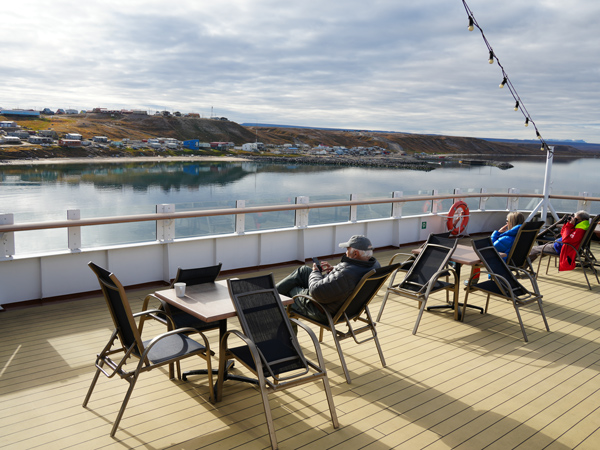
Departing Pond Inlet/ Mittimatalik. (Credit: Steve Madgwick)
Gjoa Haven / Uqsuqtuuq
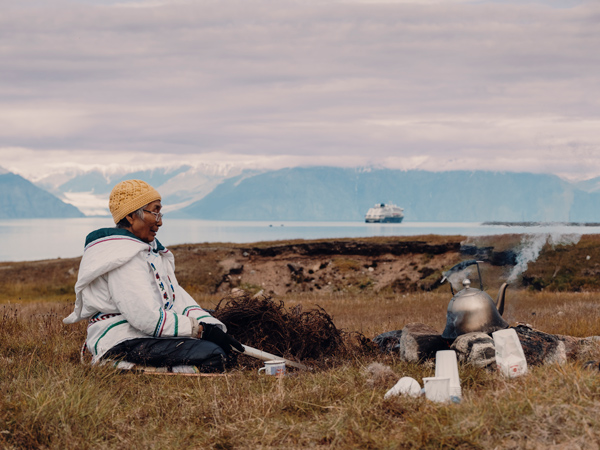
A local in Gjoa Haven / Uqsuqtuuq. (Credit: Greg Funnell)
Deeper into the passage, we dock at the (officially) Hamlet of Gjoa Haven, population approximately 1500, known as Uqsuqtuuq locally: ‘place of plentiful blubber’. King William Island looms large in Northwest Passage lore. Norwegian explorer Roald Amundsen, who eventually led the first crossing through in 1906, spent two consecutive winters harboured here (his ship couldn’t get through the ice). Nearby are the remains of the HMS Erebus and HMS Terror, two ships abandoned during the failed (1840s) Franklin Expedition.
Nicole guides us around Gjoa Haven’s dirt streets, where polar bears sometimes wander. Her “real” job is as a carpenter, a necessity in a place with a chronic housing shortage. Evidence of the Inuit subsistence lifestyle abounds in the treeless townscape: musk ox skulls lie on the ground, caribou antlers crown doorways, rows of Arctic char (fish) cure in the open air.
Gjoa Haven town is a haven for the unexpected. Curious Inuit shaman figures, carved from soapstone and caribou antlers, grace the recesses of the Nattilik Heritage Centre. Nearby, the Coop supermarket, a community hub, sells everything from ATVs and electric guitars to subsidised milk and extortionately priced chocolates.
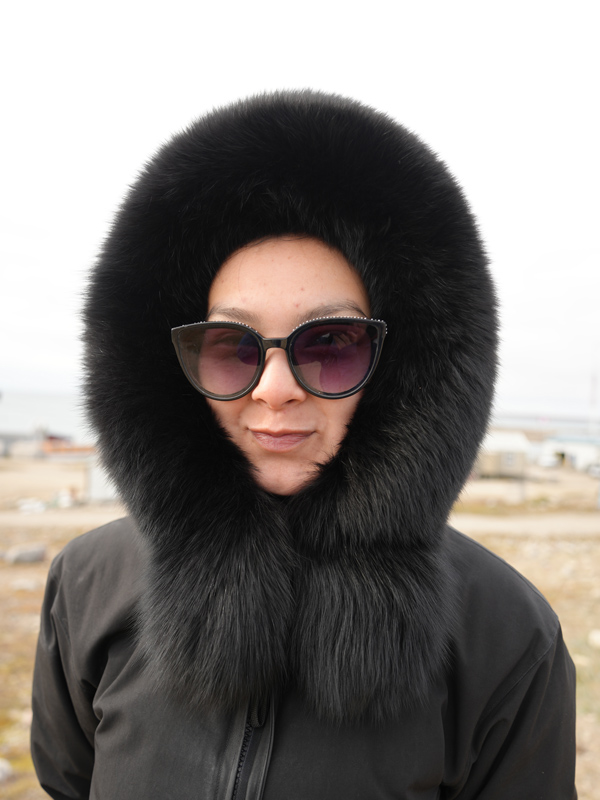
Nicole is the writer’s guide as he explores Gjoa Haven/Uqsuqtuuq . (Credit: Steve Madgwick)
The non-profit Arctic Research Foundation Greenhouse, made from insulated shipping containers in 2019, shows what human ingenuity and perseverance can produce. Under UV lights, locals grow the likes of strawberries, jalapenos and even sunflowers for the community, even in the lightless winter.
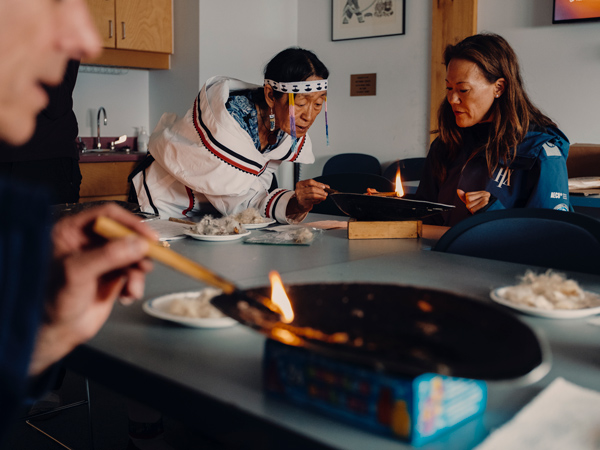
Culturally immersive shore excursions are part of the experience. (Credit: Greg Funnell)
HX Expeditions’ Ambassador Ikey is happy to share the ups and downs of living in remote Gjoa Haven. He says the local dialect, Inuktitut, was slowly fading away but there are now programs trying to keep it alive. Traditional skills are also being re-embraced; in winter, he says, they can make a five-metre diameter igloo in a couple of days.
A storytelling session with Sammy and Betty Kogvik is an abridged masterclass of Inuit life and culture. Betty serves hand-harvested heather tea while visitors sit on a caribou-skin rug, listening to tales of now and then (Sammy claims to have discovered the HMS Terror wreck). If you don’t round out your visit playing bingo with community elders, well, you can hardly say you’ve been to Gjoa Haven at all.
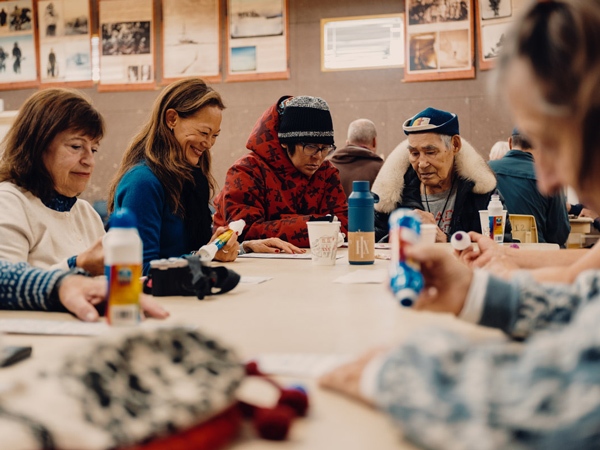
Don’t miss out on a game of bingo with the locals. (Credit: Greg Funnell)
Cambridge Bay / Iqaluktuuttiaq
Nearby (by Arctic standards), Cambridge Bay is the last major Canadian stop before the MS Fridtjof Nansen sails Alaska-bound. The settlement, located on Victoria Island, is the largest of our trio, offering a particularly rich vein of Inuit-led activities.
The Canadian High Arctic Research Station (CHARS) houses a solid overview of the area’s science projects and Inuit culture. Foodies, fishermen and fisherwomen in particular will appreciate a couple of hands-on activities focusing on catching and preparing local staple Arctic Char. Go out on a boat to catch the fish and then watch the guides prepare ‘piffy’ (dried fish). Don’t worry, Cambridge Bay’s Inuit name translates as “good fishing place.”
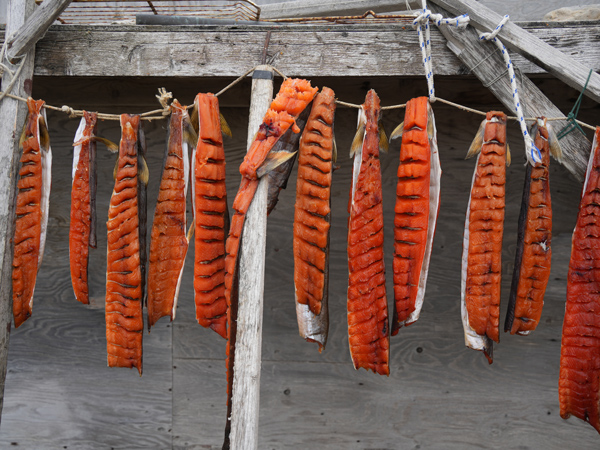
Arctic Char cures outside in the open air. (Credit: Steve Madgwick)
Activity options span artsy to outdoorsy. Design and craft some (take-home) metalwork with a local artist, a project that’s empowering the community’s young creatives. Explore the surrounding landscapes with local guides, be it on a guided ATV tour or on a hike up Mount Pelly, with Bay-wide views from the summit. Out in Ovayok Territorial Park, catch glimpses of fledglings “training for their migration south for the upcoming winter”. Forage for plants to make tundra tea and round it out with some Inuit games of your own (one that involves antlers).
Out here, the Inuit culture is inextricably linked to the land, in any season. And then, after a frustratingly short few days getting to know the people of the Canadian Arctic, it’s time to board MS Fridtjof Nansen again, Alaska-bound, heart and mind overflowing.
Travel details
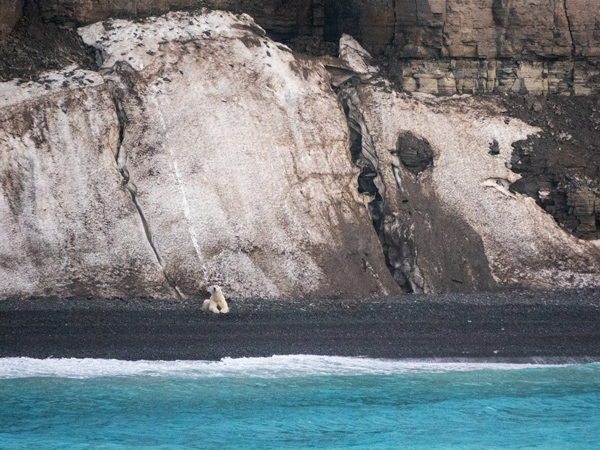
The polar bears of Canada’s Arctic are a key drawcard to the region. (Credit: Camille Seaman)
How much does it cost to cruise the Northwest Passage with HX Expeditions?
Price for the 26-day ‘Northwest Passage – Through the Arctic Labyrinth (Greenland to Alaska)’ cruise starts $37,094 pp for Polar Outside cabin. Expedition Suites (featured) start at $52,105 pp. Prices include most meals, drinks, water-resistant jacket and water bottle. There are two cruises per (short) season (at the end of northern summer).
Where do you fly to board the HX Expeditions Northwest Passage cruise?
Air Canada flies to Reykjavik, Iceland (2 stops: Vancouver, Toronto). Icelandair then flies from Reykjavik to Nuuk, Greenland. Cruise includes final-leg flights from HX’s major gateway airports: Copenhagen or Reykjavik, for example.
Do Australians need a visa for the HX Expeditions Northwest Passage cruise?
Australians don’t require a visa for Greenland (up to 90 days), but will need an ESTA to enter the USA (Alaska).


LEAVE YOUR COMMENT