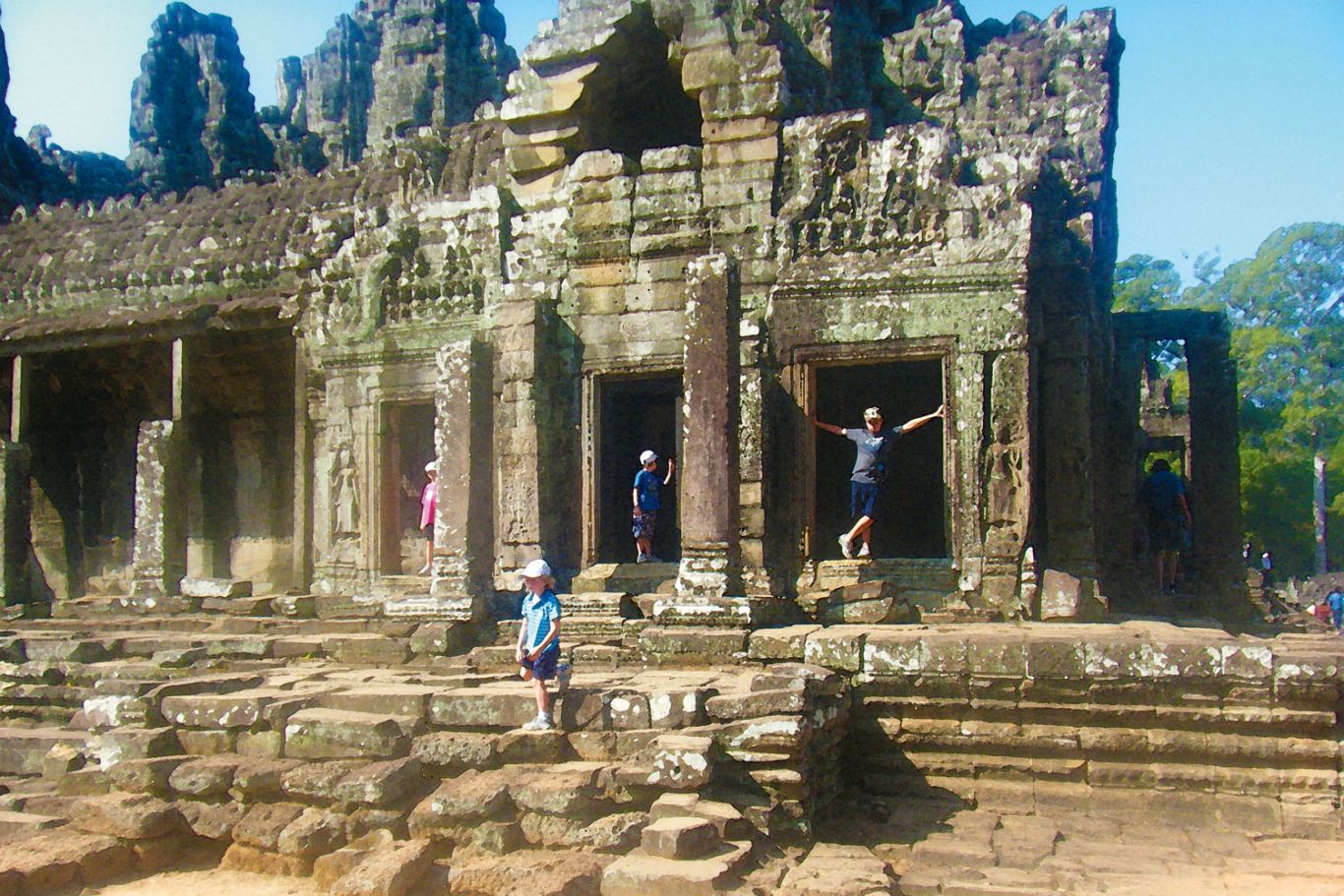
For an eye-opening holiday that no family member will ever forget, Toben Long says forget DisneyLand. He recently took his brood temple-trekking in Cambodia – and they may never be the same again. Images by Gaby Long
Why not Fiji or Bali or anywhere else?
It’s the first question anyone – everyone – asked me whenever I confessed we were taking our four kids, 11, eight, seven and six years old, for a holiday in Cambodia.
As a child I pictured Kampuchea as just another poor African nation filled with starving kids. That was the only place in the world I could imagine where kids starved.
I didn’t realise it was in Asia, and that the children were starving because of a brutal regime.
So why, 30 years later, was I (well, we; the wife was driving the idea) now taking our kids to this place of horror?
We wanted to expose the kids to a world that wasn’t as easy and straightforward as ours. We wanted an adventure that would challenge and enthral them… and us. And, to be honest, it turned into the best family holiday we’ve had.
It was far easier than expected, helped by the beautiful Cambodian people who, for a population battered by history, are extremely helpful, friendly and happy.
Phnom Penh
Hands up, our fault. We had passport dramas and the entire trip was delayed by 48 hours until we got the kids new ones.
Of course that meant that when we finally arrived at the international airport at Phnom Penh, the guards were “curious" about our brand new passports, which didn’t have visas, and the old passports, which did. After what felt like three days of interrogation we were back on our holiday track.
Luckily, the apartments we’d booked had arranged for a driver to pick us up.
We could have done it on our own but those first crucial hours in the craziness of Phnom Penh with four kids felt better with a local behind the wheel – a local they immediately dubbed “Mr Smiley" for his dazzling toothy grin.
Our first full day in Cambodia started brilliantly the next morning. We piled the kids into a tuk-tuk for a zip around this completely foreign city.
Their eyes popped out of their heads at the buzzing, vibrant streets where elephants roamed and monkeys almost outnumbered the people.
Siem Reap
We hopped on a small afternoon flight to Siem Reap, famed base camp for temple exploring.
The temples are in various states of ruin and repair but all are amazing. This is the largest collection of religious buildings on the planet and was only “discovered" by the Western world in the 1900s by French archaeologists. Crazy.
As in Phnom Penh, we were picked up at the airport and whisked to our hotel – Hotel Sokha – a beautiful building close to the old part of the city. The kids loved the fresh fruit mocktails at check-in.
We found that the best time to see the temples was early in the morning or late in the afternoon. In the cool of the evening there are few other tourists, and you get a sense of what life might have been like in the ancient cities.
The temples were eerie at this time of day with the mist rolling in, the light turning the buildings and statues to a soft, mellow grey.
We got into a great rhythm with the kids for our temple visits: up early; breakfast in the hotel; drive 15 to 20 minutes to see a temple with our driver; back to the hotel for a swim and lunch; out to the temples again for a dusk walk; then back to town for dinner.
To keep the kids engaged and challenged, we made up a questionnaire for them to complete at each of the sites.
Questions like: “Can you find the two large lion statues?" Or “Can you find the crocodile eating a person?" The kids loved the adventure, and we could actually take in the history without a nagging, whinging but much-loved pest under our feet.
We squeezed in most of the well-known temples into our visit. Angkor Wat is a must. It was easy to imagine the ancient Khmers roaming the large courtyards, but harder to figure out how they managed to get the enormous stones in place.
The standout temple for our brood was definitely Ta Prohm (of Lara Croft: Tomb Raider fame). Look out for the dinosaur carving near the last door, and the resonating chamber. The temple is also famed for the trees that grow around – and often through – the walls.
In Siem Reap town the kids had a ball. They were obsessed with the fish massages and had one every day. It’s not pretty, but strangely ticklish as you dangle your feet into a large glass pool full of tiny fish, which nibble off the dead skin on your feet.
Another pleasant surprise was the spirit of culinary adventure the kids displayed. Strict Vegemite and pastavores at home, they excitedly barbequed and ate snake and crocodile on Siem Reap’s famous Pub Street. Who would have thought?
We dined at a series of great restaurants. Our favourite was Sugar Palm in an old French colonial home with open decks and the typical French timber shutters that gave the place a European flavour. Best choices were the mango salads and the Amok (steamed in banana leaves) curries.
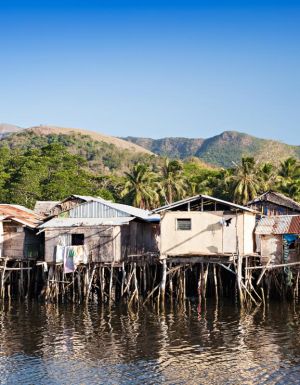
On the final day of our time in Siem Reap, we went out to the floating village of Chong Kneas on the large inland lake, Tonle Sap. The villagers live on boats and barges; even the livestock have floating fields to feed in.
At the central shop the kids loved holding giant pythons.
The silk farm at Siem Reap was a great way to break up the temple visits. Run by a group called Angkor Artisans, the whole lifecycle of silk craft was explained via a guided tour.
The kids and our guide had a cute dialogue going on (they said he was wearing lipstick; he said it was just the curry he ate) which lasted the entire tour, through the mulberry orchards, the silk worm nursery and the harvesting of the silk.
Embracing their new spirit of culinary courage, they chomped down on a boiled silk worm. Apparently they taste a bit like beans. (Not chicken?)
The tour then carried on through the dying and weaving of the silk, ending in the inevitable tourist shop, which is presented as a high-end designer outlet – a little out of place in Cambodia, where most things are on a subsistence level.
But perhaps that’s the Cambodia of ten years hence.
Back to Phnom Penh
We returned to Phnom Penh and went on a terrific evening river cruise on the Mekong – our own boat for an hour for around $20, just floating about drinking Coke or beer and watching the Cambodian world go around.
Looking at the city from the water at dusk was soothing and calming. You could see the magnificent silver pagoda towering over the city like a parent protecting a child.
We watched as the city came to life with the nightlights and the music from the boom boxes. When we got off the boat we promenaded along the riverfront – it felt like the banks of the Seine.
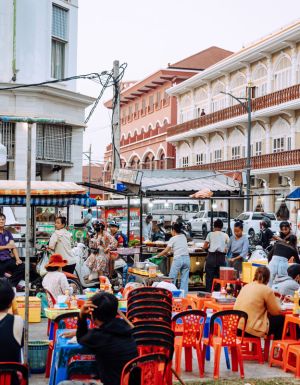
On the paved boardwalk you could buy nibbles of deep-fried spiders or crickets.
We also came across the interesting Cambodian phenomenon of line dancing. We spotted half a dozen groups of 30 to 40 people of all ages moving to the rhythm of the music.
With moves orchestrated by a conductor at the front of each group, it was as though each collection was having a dance off with the others. It was the quintessential Cambodian colour, music and smell.
Kampot
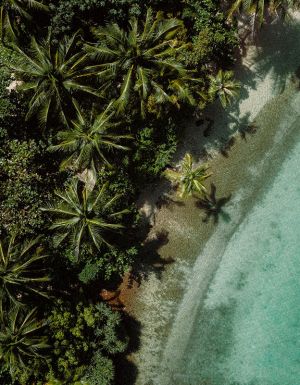
We’d done the cultural immersion and temple adventure holiday, so it was time for a little beach and resort.
We jumped in a van (air-conditioning essential) and took in the Cambodians’ way of travelling – south to the Kampot region on the Bay of Thailand.
We stayed at the Netaya Round House Coral Bay Resort & Spa. A well-appointed resort hotel, we stayed in a little bure and met some great Cambodian locals also holidaying there.
One day we travelled up to Bokor Mountain to the ghost town at Bokor Hill Station. Built in the 1920s, 900 people died in its nine-month construction.
The buildings sit on the edge of an escarpment looking over the floodplains of the south, out into the bay of Thailand. The centrepiece then and now is the old Bokor Palace Hotel & Casino, which looks for all the world like the old hotel in the The Shining.
On the way back to Phnom Penh, we passed through Kampot for lunch. It’s a wonderfully preserved slice of French colonial architecture.
The Epic Arts Café is staffed by deaf and disabled young people, with all profits fed back into the disabled community. The food was great; the fruit drinks even better.We also picked up some famous Kampot pepper.
Apparently, before the rule of the Khmer Rouge, every French restaurant worth its salt (pun intended) had Kampot pepper. With the demise of that ruinous regime, the pepper plantations are once again thriving – to the benefit of anyone fortunate enough to sample their produce.
As a family holiday destination, Cambodia beat all our expectations.
The hotel, pools, elephant rides, food, fish massages, tuk-tuk rides and general fun for the kids was just one aspect. They were challenged, entertained and educated.
It most definitely will not last but while it does there is a certain kind of magic.
The details
Weekly travel news, experiences
insider tips, offers, and more.
You need to know
Drivers: a fantastic way to see the sights with a local. It made it a lot easier for us and the kids. We paid $20-$30 a day.
Tuk-tuks: they are plentiful. When you need one, just put your hand up. Negotiate the price upfront and make sure you bargain. We loved the early morning tour of Phnom Penh from the tuk-tuk on our first day. Then it was a driver all the way.
Temples: early morning and late afternoon are best to beat the crowds and have the ideal light for a Kodak moment.
Cons: we only come up against one at Chong Kneas. You’re trapped and asked to buy overpriced books and noodles for the orphanage. It felt like a scene out of Oliver Twist without Fagin.
Visas: you can get them at the airport once you arrive. We got them before arrival just in case it was a nightmare.
Passports: the kids had less than three months, so we had to get them new ones, valid for at least six months.
Health: we had to have hepatitis shots before we left and malaria tablets. We also overpacked on the medicine cabinet – half a case, and didn’t have to use one pill. We were in great health the whole time.
Phnom Penh
Stay:
The Embassy Apartments, 147 Norodom Blve, Phnom Penh
Eat:
Goldfish River Restaurant, Riverbank Sisowath Quay, Opposite Street 106, Phnom Penh
Foreign Correspondents Club, 363 Sisowath Quay, Phnom Penh
Siem Reap
Stay:
Sokha Hotel: Corner National Rd No.6 & Sivatha St, Siem Reap
Eat:
Anywhere on Pub Street
Sugar Palm: Taphul St, Siem Reap
Kampot
Stay:
Nataya Round House Coral Bay Resort & Spa: Prek Ampil, Kampot
Eat:
Epic Arts Café: 67 Oosaupia Muoy, Sovann Sakor, Kampot
Best thing about Cambodia
The temples and the adventurous nature that Cambodia brought out in the kids.
Worst thing about Cambodia
The terrible history that the Cambodians have been through – in our own lifetime – and getting through the airport on arrival.
Want to see more stories from International Traveller in your Google search results?
- Click here to set International Traveller as a preferred source.
- Tick the box next to "International Traveller". That's it.