
Discover Hawai‘i Volcanoes National Park’s essential sights, travel tips and the best ways to experience its active lava flows, lush rainforests and sacred volcanic terrain.
One of the world’s most active volcanoes, Kīlauea has been erupting episodically roughly every two weeks since December 2024, with no indication of slowing. It’s the kind of natural spectacle travellers dream of witnessing – but timing, as ever, is everything.
While lava fountains may be the headline act at Hawai‘i Volcanoes National Park, its surreal, shifting landscapes ensure the experience remains unforgettable at any time.
Here’s everything you need to know before visiting Hawai‘i Volcanoes National Park, one of the best things to do on the island.
Why visit Hawai‘i Volcanoes National Park?
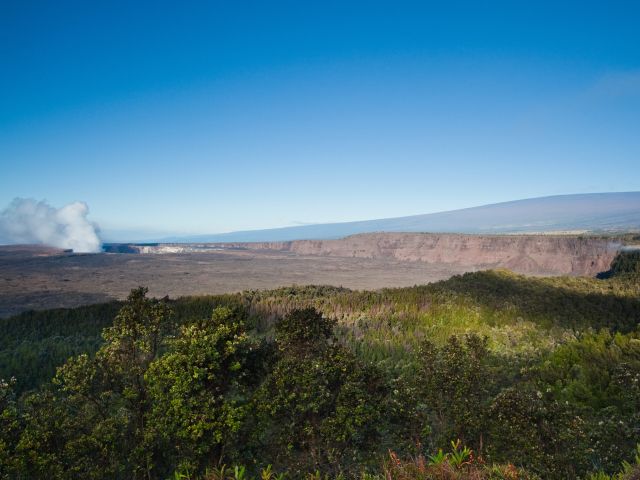
To experience some of the world’s most dramatic volcanic landscapes and, if you’re lucky, witness an eruption or glowing lava flows.
How to see Hawai‘i Volcanoes National Park
Hiking
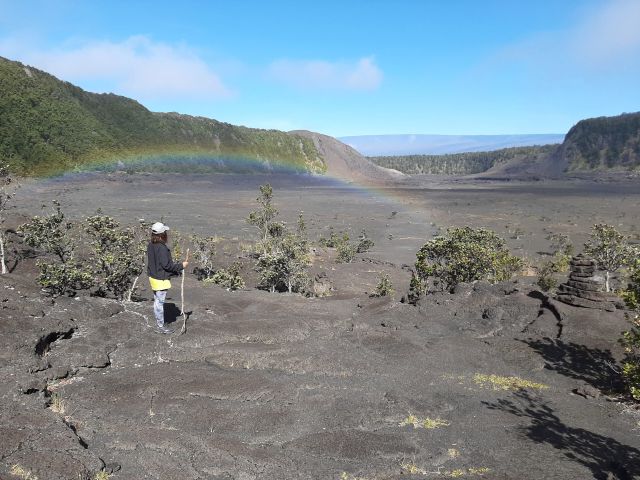
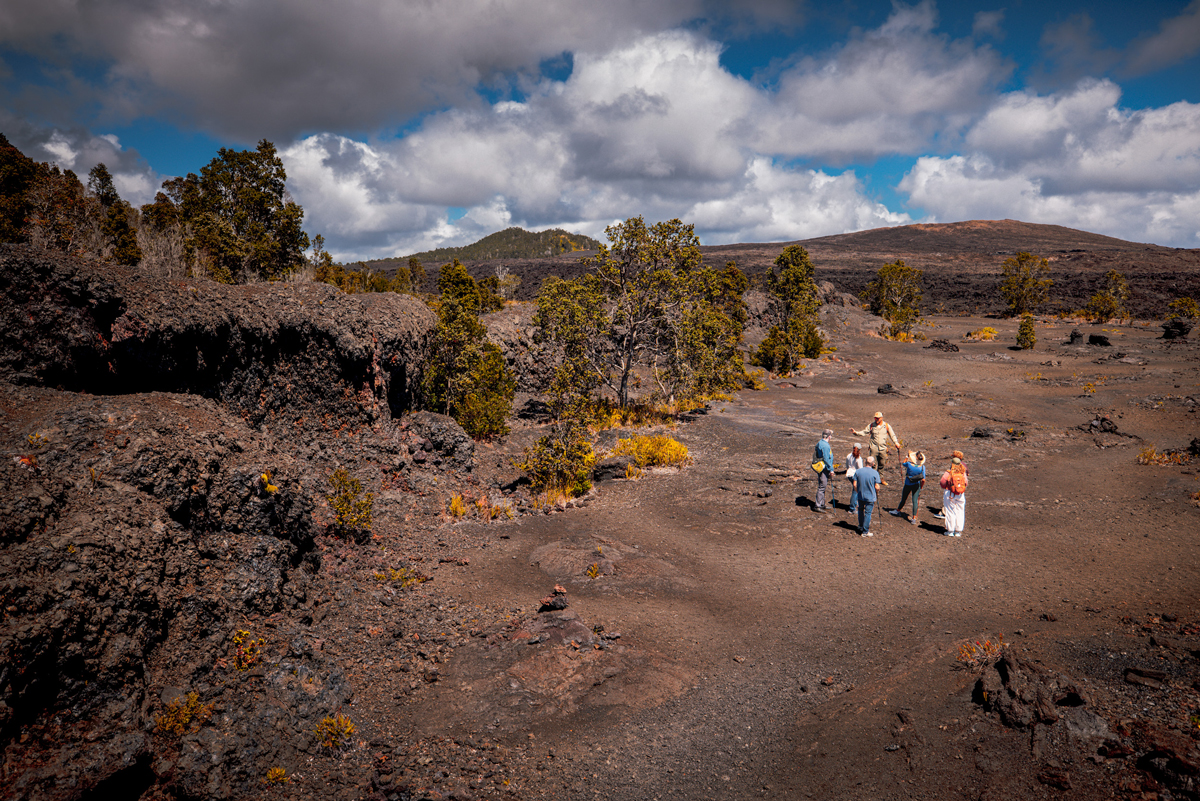
Hiking here feels like walking on another planet. Standout routes include the Crater Rim Trail and Kīlauea Iki, where dense rainforest gives way to steaming crater floors, alongside shorter walks like Devastation Trail and lava-etched paths along Chain of Craters Road.
Driving
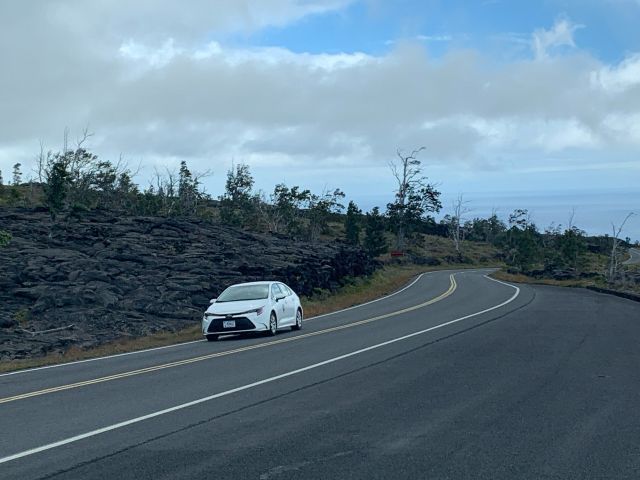
Along the winding roads near Kīlauea and down the cinematic sweep of Chain of Craters Road, the landscape shifts from lush green to elemental stone. Fuel up in Hilo or Volcano Village before entering the park, as services are limited and long stretches can feel remote, with road conditions and closures changing in response to volcanic activity.
Tours
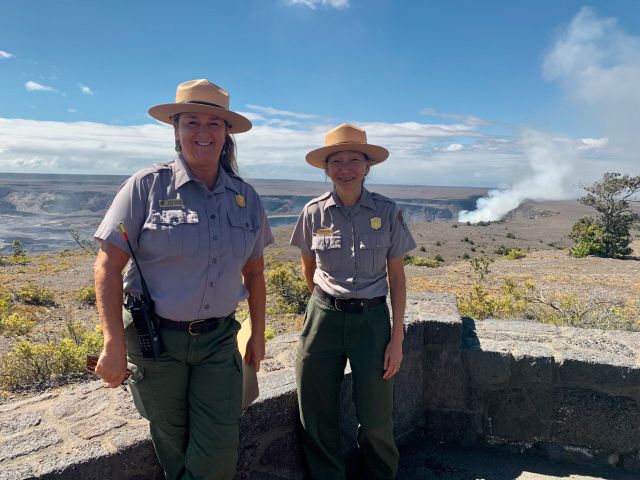
Operators like Hawai‘i Forest and Trail offer naturalist-led journeys that weave together geology, culture and storytelling. These tours often take you beyond the main viewpoints into lava fields, crater rims and rainforest pockets, offering a more intimate and informed encounter.
How long should you plan to visit?
A minimum of one full day is essential, but to truly do the park justice, two to three days is the sweet spot.
Essential experiences and sights
Steam vents and sulphur banks
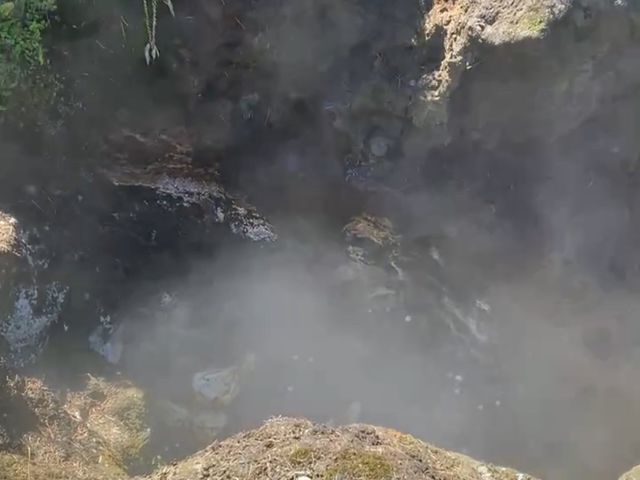
A short, well-marked walk along the caldera rim reveals dozens of fissures quietly venting volcanic steam, specifically at Steaming Bluff (Wahinekapu) and the Sulphur Banks (Haʻakulamanu). It’s best to visit in the morning when the plumes are most visible. Be warned – the sulphur-rich air lends the area a distinct rotten-egg tang.
Pu‘u Loa Petroglyphs
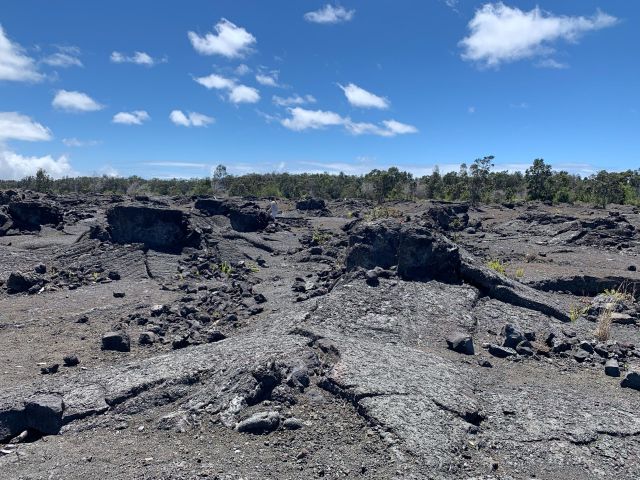
Follow the turnoff along Chain of Craters Road to Pu‘u Loa, where a short but exposed walk across a 550-year-old lava field reveals more than 23,000 petroglyphs – enigmatic figures and geometric carvings etched into the rock. Go early or late to avoid the worst of the heat, take water and pause at the boardwalk sections for the best-preserved carvings.
Hōlei Sea Arch
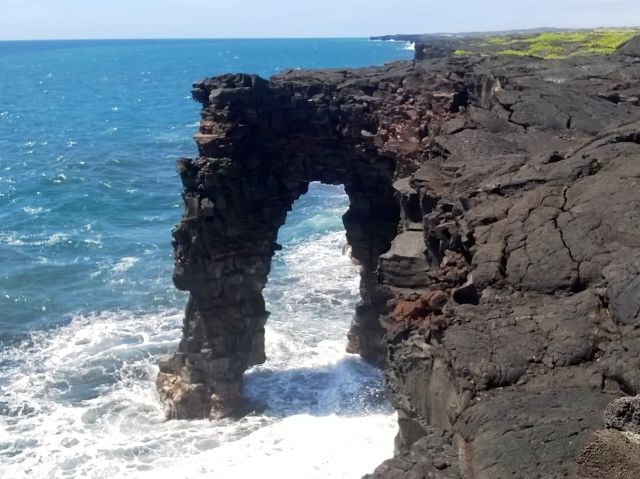
At the end of the Chain of Craters Road, the Hōlei Sea Arch rises like a sculptural flourish from black lava cliffs, a 27-metre basalt bridge carved by relentless Pacific surf over centuries. Arrive early or late for softer light and fewer crowds.
Mauna Ulu
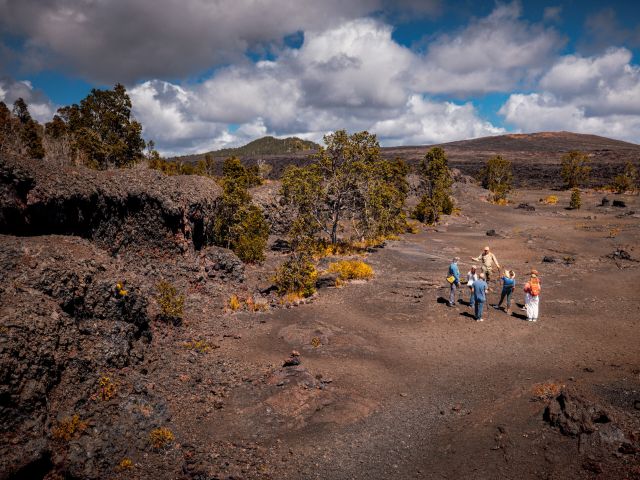
Also along Chain of Craters Road, Mauna Ulu is a brooding volcanic shield born from its last eruption in 1974, which spread 44 square kilometres of solidified lava and sculpted surreal formations including lava trees – mushroom-like rock shapes created as molten flows cooled and hardened around standing forest. Take a short walk across this small volcano and continue to nearby Puʻu Huluhulu for incredible views over the terrain.
Crater Rim Trail
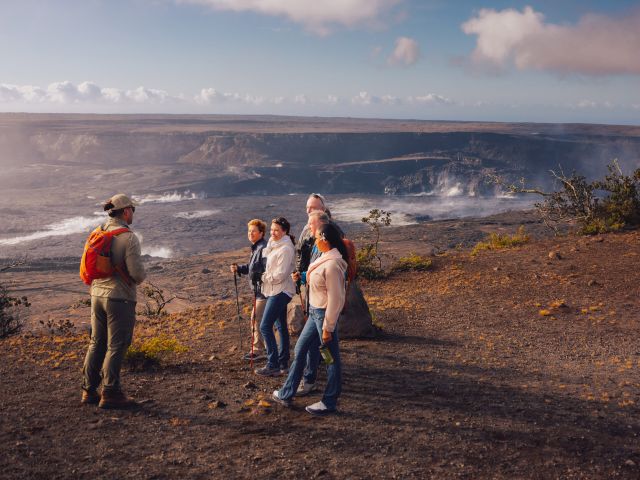
Tracing the dramatic caldera edge, the Crater Rim Trail reveals a shifting tapestry of volcanic landscapes, from steam vents and sulphur banks to sweeping views into the vast Halemaʻumaʻu crater. Dip into shorter sections rather than tackling the full loop.
Nāhuku (Thurston Lava Tube)
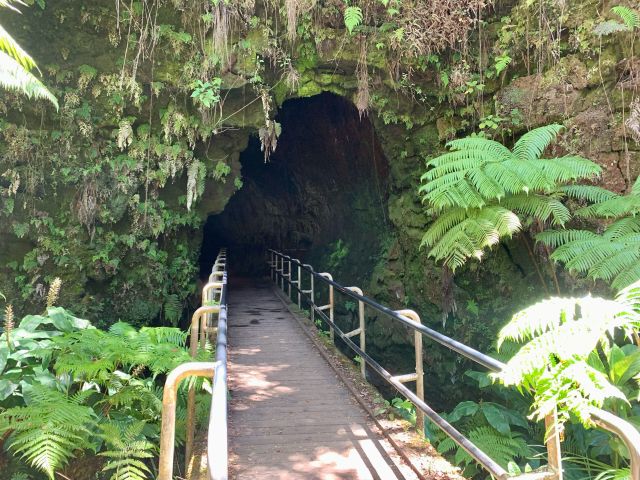
A cathedral-like passage carved by a river of molten lava, now softened by fern-draped rainforest and filtered light. Step inside and the temperature drops as the forest’s green hush replaces the fire that once forged this subterranean corridor, offering one of the park’s most atmospheric encounters.
Wildlife spotting
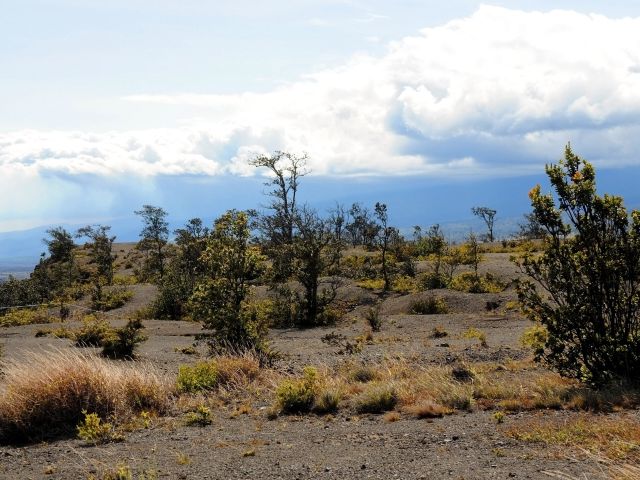
It’s surprising how much life thrives inside Hawaiʻi Volcanoes National Park, where you’d expect only barren lava fields. The secret is the island’s extreme range of microclimates, from steaming rainforest to windswept alpine desert. Take your time exploring at different elevations and you’ll find that what looks inhospitable at first glance is actually one of the most ecologically diverse corners of the islands.
Hawksbill turtle
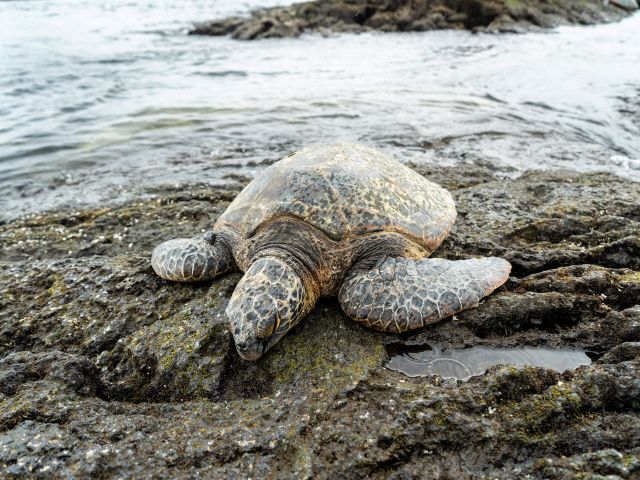
Where volcanic craters and rainforest slopes of Hawaiʻi Volcanoes National Park tumble all the way to the Pacific, the endangered hawksbill turtle returns to shore to nest on remote black-sand beaches. These turtles nest at only a few beaches in the Hawaiian Islands, and from June through December you may be fortunate enough to witness a female laying her eggs at Halapē, Apua Point or Keauhou. Keep a safe distance of at least three metres to avoid disturbing these critically endangered animals, as per local, state and federal laws.
Hawaiian honeycreeper
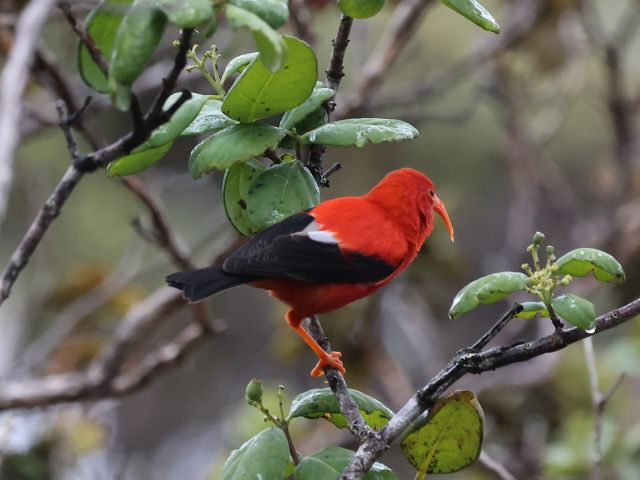
In the park’s misty upland forests, the jewel-toned Hawaiian honeycreepers flit through the canopy like living confetti, their varied beaks telling the evolutionary story of isolation and survival in one of the world’s most remarkable birding destinations. For the best chance of spotting these elusive endemics, head out just after dawn along quieter trails such as the Crater Rim backroads or kipuka pockets of old-growth forest.
Weekly travel news, experiences
insider tips, offers, and more.
Nēnē
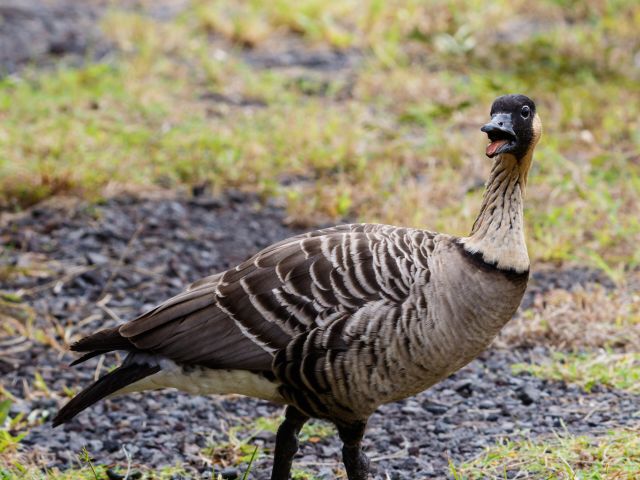
The endangered ʻnēnē, or Hawaiian goose, pads calmly through volcanic landscapes that feel more primordial than pastoral, perfectly adapted to life on hardened basalt and high-altitude scrub. Slow down along Chain of Craters Road at dawn or late afternoon, when these charismatic birds often wander surprisingly close to the roadside, unbothered by passing visitors.
Accommodation in Hawai‘i Volcanoes National Park
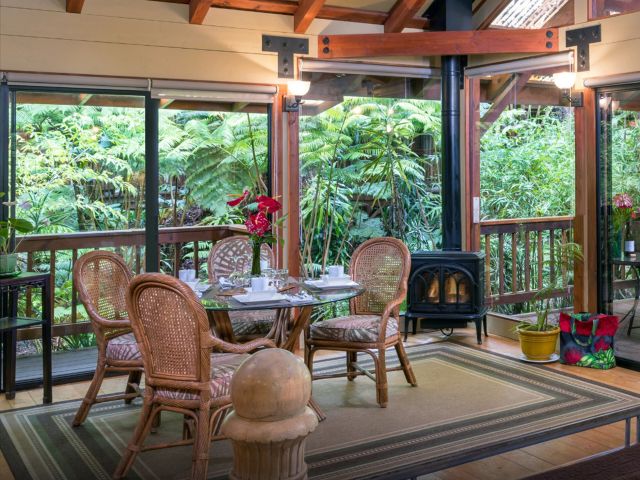
The historic Volcano House offers the rare chance to sleep on the rim of an active volcano. Book well ahead for crater-facing rooms and time dinner for after dark when the glow of the volcano (if active) turns the park into a living, breathing spectacle. Opt for nearby Volcano Village Lodge for a more low-key rainforest retreat just minutes from the park entrance.
Is it accessible?
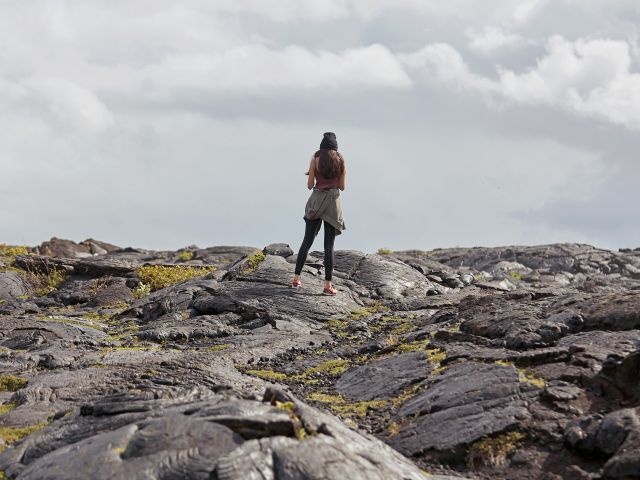
Paved overlooks along Crater Rim Drive, wheelchair-friendly sections at key viewpoints and visitor centre facilities make the park more inclusive than its rugged terrain might suggest. For more information, visit nps.gov/havo/planyourvisit/accessibility.htm
What to wear
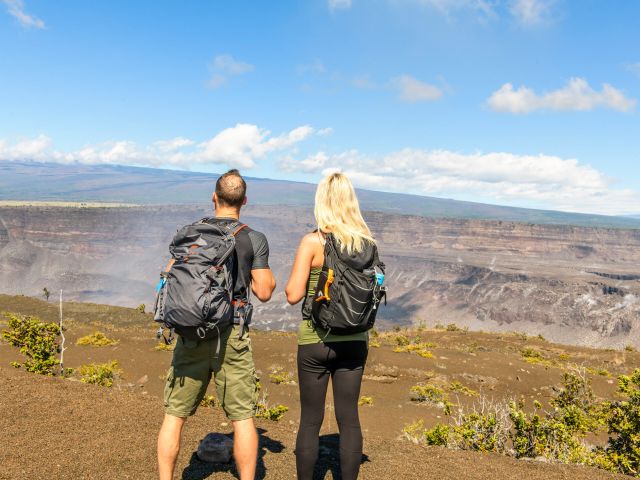
After an eruption, the summit of Kīlauea is often draped in tephra – a scattering of ash, cinders and rock fragments that settles across the landscape. In exposed areas where volcanic debris lingers, it’s wise to dress the part, including eye protection, a dust mask, long sleeves, long pants and sturdy closed-toe shoes or boots.
For the latest updates, visit nps.gov/havo/index.htm
Don’t skip
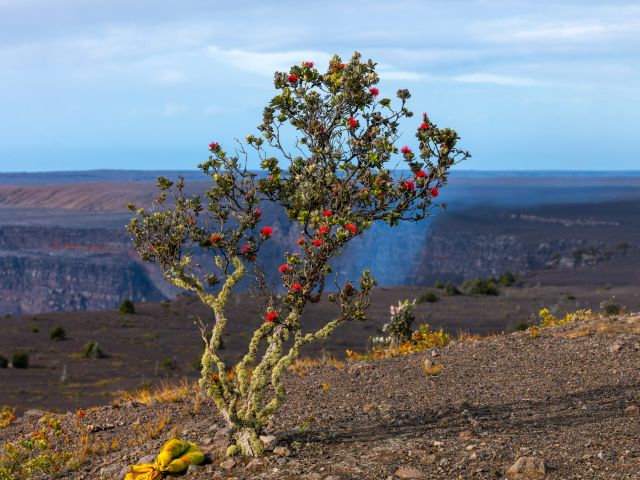
Seeing Halemaʻumaʻu Crater from the Kīlauea Overlook.
Give it a miss
If you’re short on time, skip the Devastation Trail hike and take in the otherworldly terrain from the Puʻupuaʻi Overlook instead.
My top tip for first-timers
Leave your itinerary flexible and plan your visit for when an eruption is predicted. Check the United States Geological Survey website for forecast short-term eruption windows or subscribe to its Volcano Notification Service.
Most memorable moment
Peering into Steaming Bluff (Wahinekapu) vent getting a natural facial from water vapour rising from beneath the surface.
Want to see more stories from International Traveller in your Google search results?
- Click here to set International Traveller as a preferred source.
- Tick the box next to "International Traveller". That's it.