Your guide to island-hopping in Malta
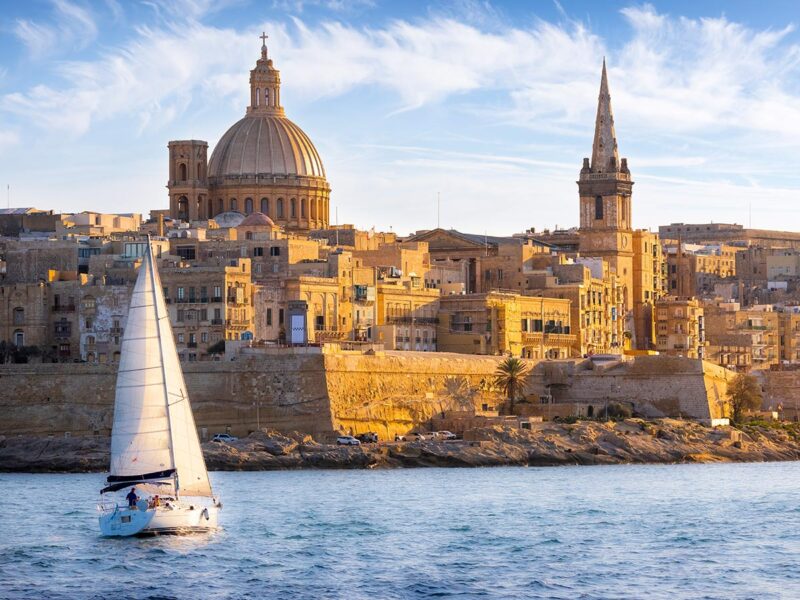
Forget Greece, island-hopping in Malta in unrivalled. (Image: Getty/ ewg3D)
| THIS ARTICLE WAS CREATED IN PARTNERSHIP WITH Visit Malta |
Picture yourself drifting between three sun-drenched islands, each one able to be explored in a day, yet interesting enough to fill your photo album for a lifetime.
Europeans have been going here for centuries, but for many unaware travellers, Malta is still a name dropped in passing rather than a destination circled on the map. That’s a good thing, as it means you can still wander into villages that feel untouched, step inside temples older than Stonehenge and eat food unique to anywhere else. Not to mention, Malta islands rival those of any Mediterranean country.
The trick is to move slowly. Begin on the main island, then let the ferry carry you to Gozo and Comino when you see fit. Island-hopping here isn’t about ticking boxes; it’s about leaning into the rhythm of local life.
Malta
At a glance
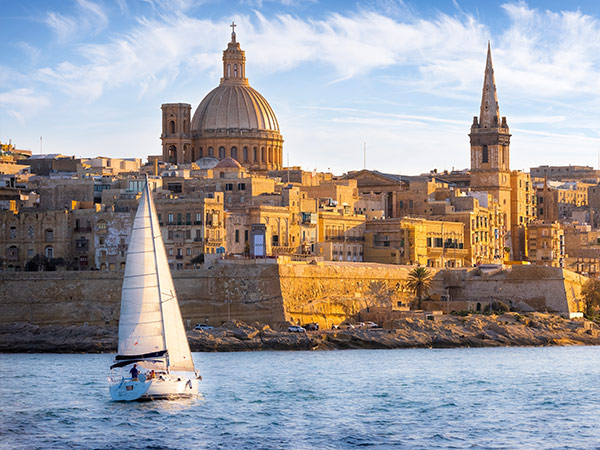
Start in Malta’s colourful capital, Valletta. (Image: Getty/ ewg3D)
Malta itself is the entry point and the largest of the three islands (technically, Malta is made up of five islands, yet only three are inhabited). Malta’s colourful capital, Valletta, is a city teeming with elaborate, historic buildings that will have you stopping to take a snap every five seconds. Each street is alive with wine bars, boutique hotels and locals who seem to know everyone by name. Quaint towns worthy of exploration can be found just outside of the capital, each with its own square, church, and bakeries serving fresh ftira (traditional Maltese sourdough bread).
See
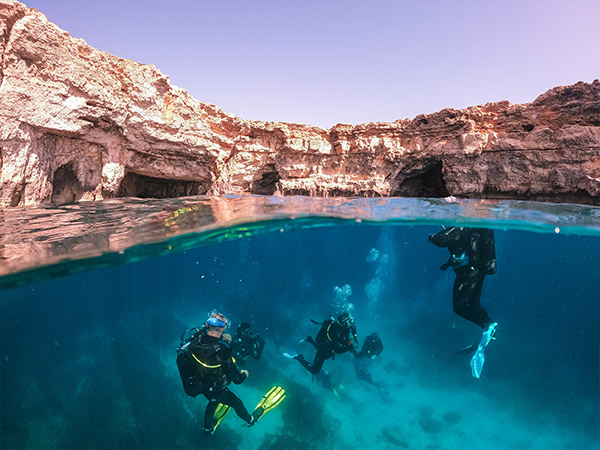
Dive into Malta’s gorgeous underwater scene.
A ride across the Grand Harbour in a traditional dghajsa is like living a scene directly out of an antique painting. Once you’re back on land, make a beeline for the island’s wilder corners. Clifftop trails wrap around the coastline, dotted with chapels and precarious watchtowers, while inland paths cut through olive groves and wildflower fields.
Diving is Malta’s calling card, with reefs, wrecks and caves creating a crystal-clear underwater playground that attracts adventurers from across Europe. If you’d rather stay dry, helicopter tours offer a bird’s-eye sweep of the Maltese Archipelago, each inlet and hidden cove revealed in miniature below.
Taste
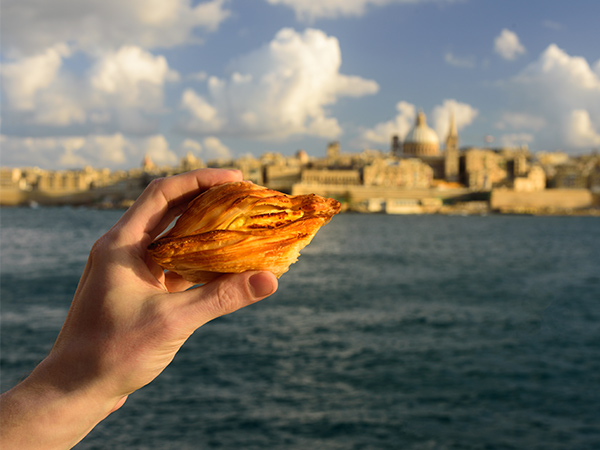
Taste delicious pastizzi. (Image: Getty/ Molenira)
Food in Malta is bold, rustic and made to share. Start with pastizzi, hot parcels of flaky pastry filled with ricotta or thoroughly seasoned mashed peas. Dozens queue at The Serkin Crystal Palace, a famous bakery that has perfected the dish over decades. However, for those who love venturing away from the hot spots, let your nose do the walking and pop your head into bakeries in the periphery of the (arguably modest) hustle and bustle.
Malta’s national dish, rabbit stew or fenkata, is usually cooked in red wine with a generous heaping of garlic, best enjoyed at rural restaurants where the portions are generous and the atmosphere is heaving.
Take a wander through Valletta’s side streets and you’ll notice something curious: brightly painted wooden balconies jutting out over the cobbles. The bright paint initially served the sole purpose of protecting wood from the elements, but as word continues to get out, it acts as its own unique tourist attraction.
Gozo
At a glance
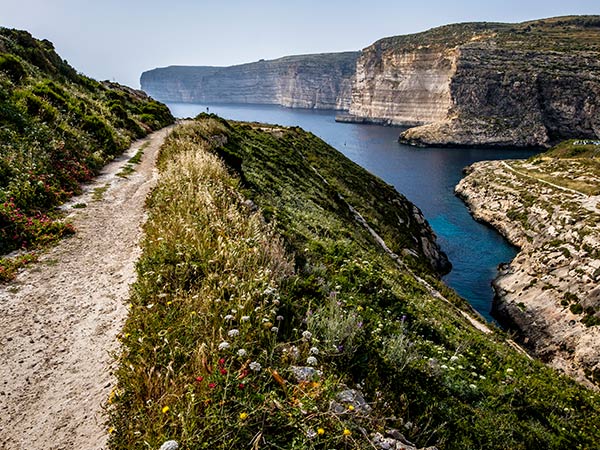
Slow down on Gozo. (Image: Getty/ VFKA)
Hop back on the ferry from Valletta and 45 minutes later, you’re in Gozo. The difference is immediate: this island is greener, more laidback, and dotted with a niche hoard of travellers who have known to base themselves in converted farmhouses. Where else could you find centuries-old accommodation with private pools, air conditioning and terraces opening directly onto sprawling vineyards and orchards?
See
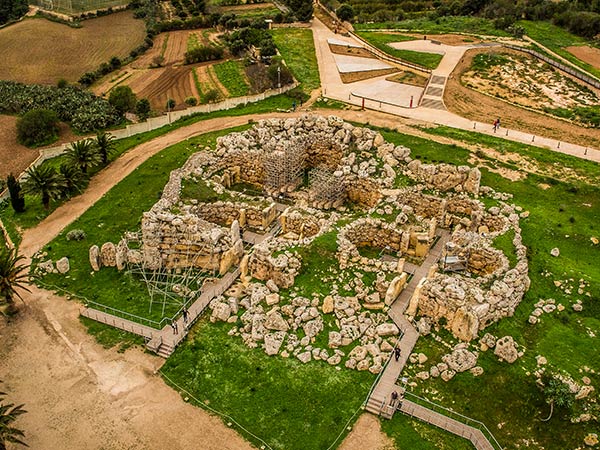
Visit the ancient Ggantija Temples. (Image: Visit Malta)
Ir-Rabat (Victoria), the island’s capital, is a medieval fortress with sweeping views across the countryside. Beyond the city, villages like Xaghra offer a treat for history hunters, from the Ġgantija Temples dating back to a time pre-pyramids, to the 200-year-old Ta’ Kola Windmill.
Ramla Bay’s red-gold sand makes it one of Malta’s most striking beaches. Elsewhere, the Xwejni Salt Pans glisten in the sun as workers collect the essential mineral using methods unchanged for centuries. The best moments, however, often come from the simplest detours: watching cheesemakers press rounds of ġbejna (Gozo’s tangy sheep or goat milk cheese), or joining a picnic on a clifftop where local farmers unpack baskets of olives, tomatoes and bread.
Taste
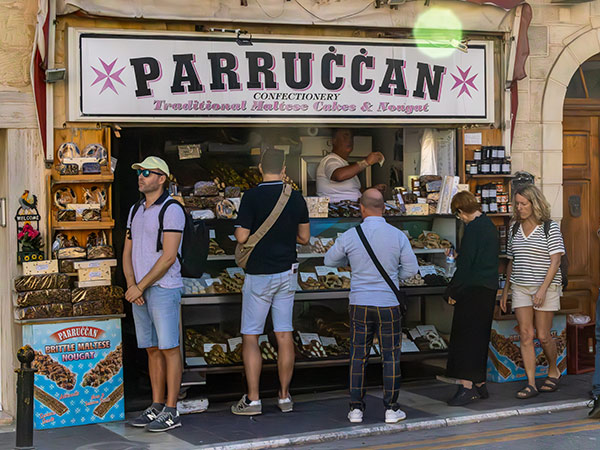
Join the local food scene. (Image: Getty/ Alexander Farnsworth)
Ġbejna is often considered the star of Gozo, served fresh or dried, plain or peppered. Try it folded into salads or tucked inside a ftira, the island’s take on pizza, topped with tuna, capers and potatoes.
For the full experience, head to Nadur, where generations have been making legendary ftira in wood-fired ovens, or visit the Cittadella for platters of cheese, cured meats and local wine. Cooking classes in farmhouse kitchens give you a deeper understanding of traditional dishes alongside the families who have perfected them over generations.
If you’re venturing to Malta during the summer, villages in Gozo are known to throw a festa dedicated to their patron saints. Marching bands, fireworks illuminating the sky, and church facades lit with hundreds of bulbs can leave travellers in awe.
Other islands to try
Comino
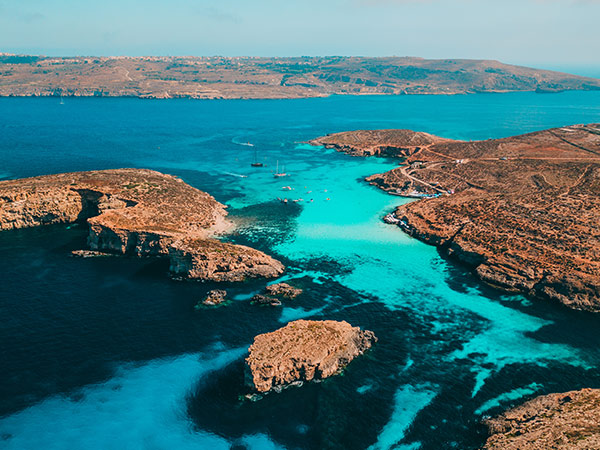
Hike around Comino. (Image: Visit Malta)
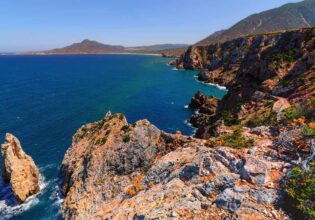
The objectively tiny island of Comino, spanning a mere three square kilometres, sits snugly between Malta and Gozo. Lace up your shoes and follow the walking trails around the island. With views stretching back to Malta on one side and Gozo on the other, it feels like standing in the middle of the Mediterranean itself.
Beyond Malta
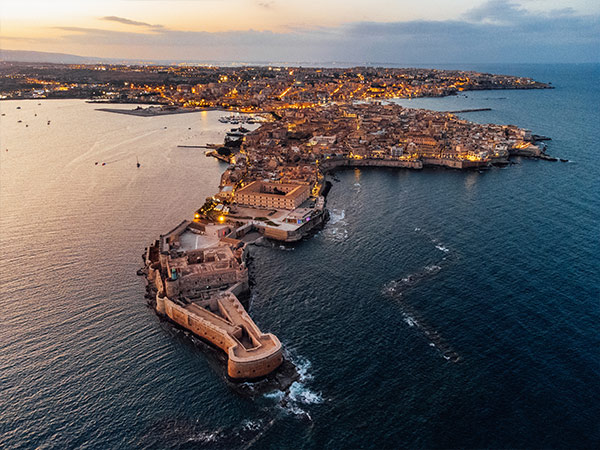
Sail on over to Sicily. (Image: Getty/ Filippo Bacci)
Of course, your trip doesn’t have to end after your cup’s full in Malta. Sicily lies just over the horizon, with regular ferries linking Valletta to Catania. St Paul’s Island, closer to home, is worth a visit for its wildlife when the seas are calm. The ease of these connections makes Malta the perfect springboard for a wider European journey.
Other Mediterranean islands have their postcard moments, but Malta rewards curiosity; it invites you to explore, taste, and ponder. The best part? It still feels like a discovery.
Start planning your Mediterranean adventure at visitmalta.com/en.





LEAVE YOUR COMMENT