
Mumbai’s Irani cafes recreate, in miniature, the democratic nature of the city – while reminding us of the fragility and beauty of civic space.
At 8am, late in the Mumbai monsoon, a stillness falls over the Colaba Causeway, a 19th-century thoroughfare known for the cacophony of rickshaws, the garlanded street stalls, the pavements that surge with pedestrians. But cross the road and the Olympia Coffee House – conceived in 1918 by Syed Mohammed Merab, an Iranian businessman – is already bristling with life.
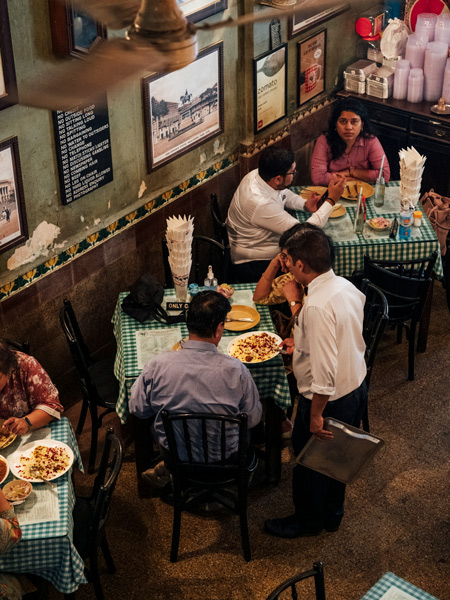
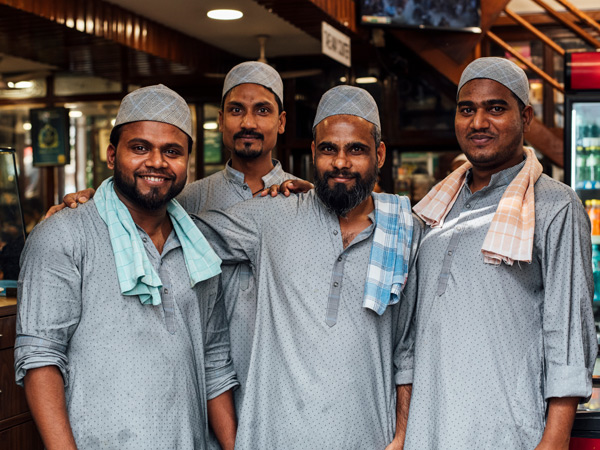
Under the whirr of the ceiling fans, a team of men wearing perfectly pressed kurtas weave between the marble-topped tables. They ferry milky cups of masala chai to groups of office workers and couples who have chosen this place to meet, privacy something of a short supply in this metropolis of nearly 22 million.
We linger over plates of keema, the spiced mincemeat that’s a mainstay of Mumbai kitchens. It’s served alongside aloo paratha, (breakfast flatbreads) stuffed with potato and glistening with butter. For a moment, it’s as if we’ve been transplanted into an older version of the city, where life is the sum of simple pleasures, rituals designed to be shared and savoured, unfolding at their own pace.
The history of Mumbai’s Irani cafes
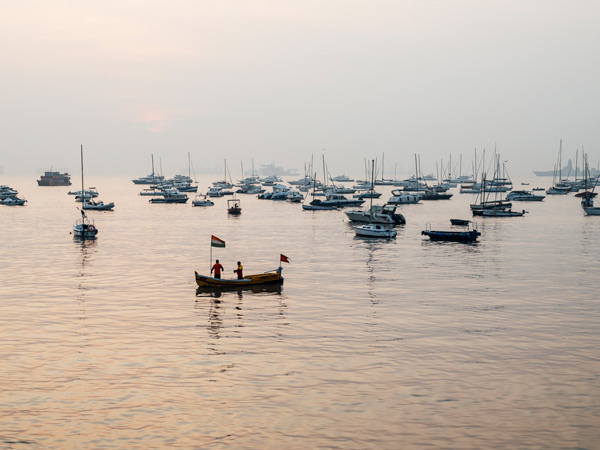
In Mumbai, often still referred to by locals as Bombay, change comes quickly. Now, the rickshaw drivers take digital payments. There’s a gleaming bridge that connects Bandra, in the city’s west, to the southern peninsula of Colaba, like a mirage over the Arabian Sea.
Mumbai’s Irani cafes were established by the wave of Parsi and sometimes Shia Muslim immigrants who arrived in the city from the late 19th century, fleeing persecution or seeking better prospects. To me, they aren’t just relics of a bygone era. They are symbols of the way the city reinvents itself without discarding its previous layers, the past and the present existing side by side.
A closer look at cafe culture
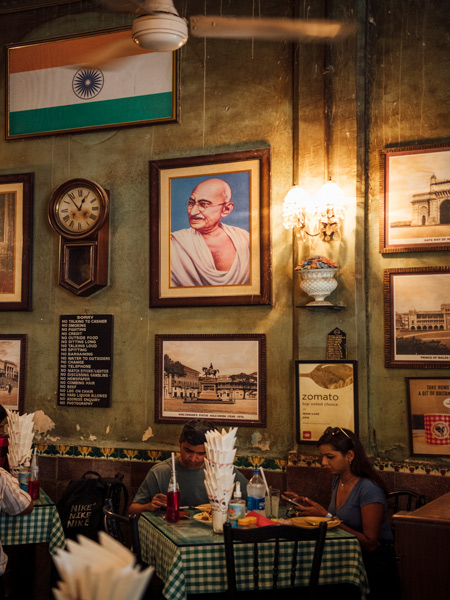
Britannia & Co, in nearby Ballard Estate, unfolds on the ground floor of an elegant 1920s building by George Wittet, the Scottish architect who designed the Gateway of India. Here, you can try chicken berry pulao – a Persian recipe adapted for the Indian palate by the wife of Boman Kohinoor, the late former owner. His father, Rashid, a Parsi immigrant from Iran’s Yazd region, sought refuge in Bombay near the turn of the century.
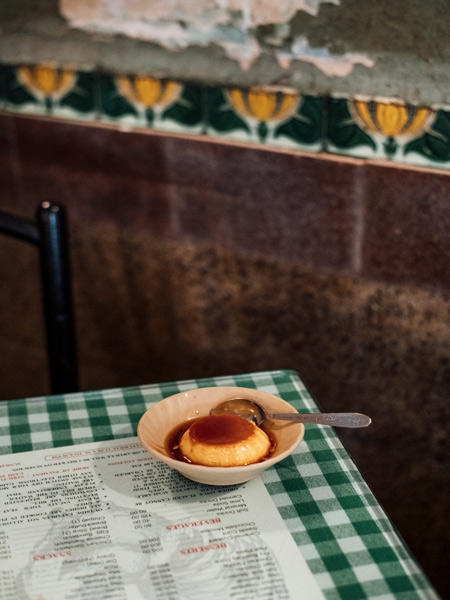
Or you can sample caramel custard, introduced by Portuguese colonisers, on bentwood chairs imported from Poland under portraits of Gandhi and Queen Elizabeth – as if the cafe has internalised the city’s many cultural influences if only to play them back.
Mumbai, of course, has always blurred image and reality. At Bandstand, near the sea, the city’s newest migrants – from as far afield as Uttar Pradesh and Bihar – gaze at the mansions of billionaire Bollywood stars.
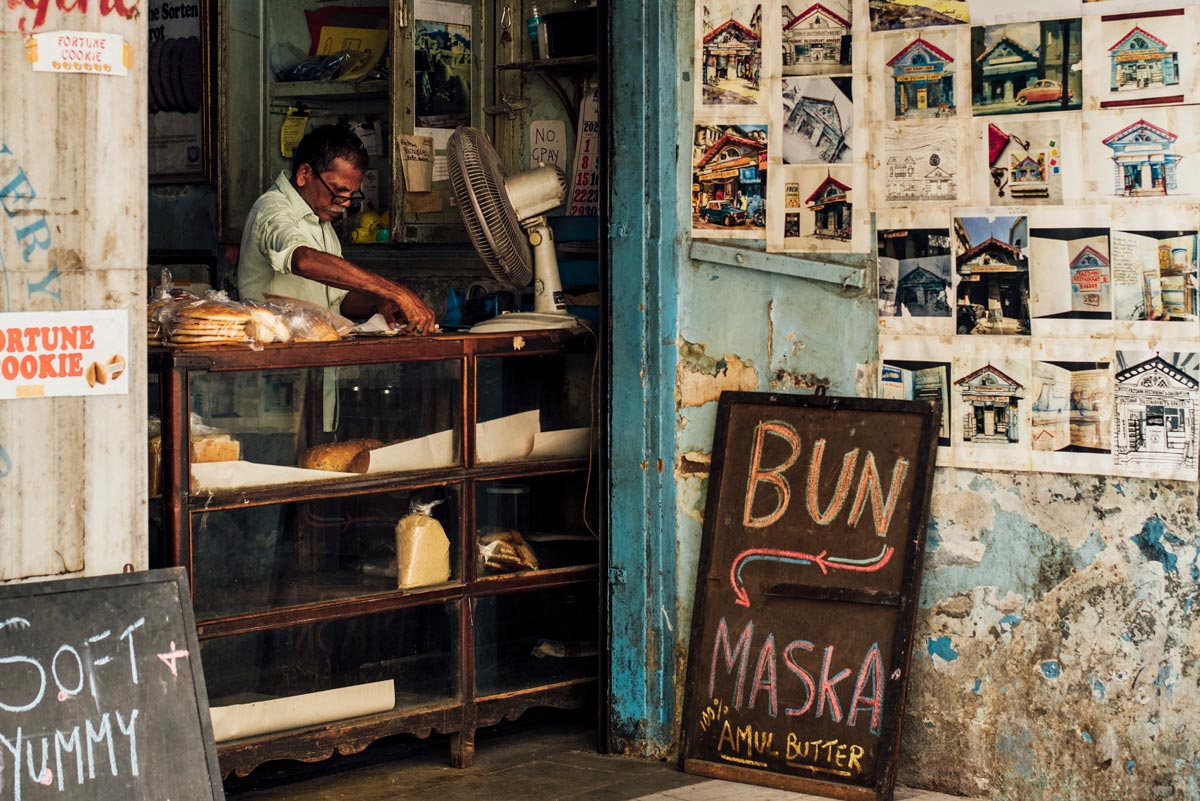
At Irani cafe Jimmy Boy, which has stood, since 1925, on a leafy corner in Fort under a cheery striped awning, I admire a glass cabinet lined with cakes adorned with elaborate frosting. I eat akuri, eggs scrambled with chillies and tomatoes, beloved by Parsi households, followed by bun maska – a kind of sweet, pillowy bun best served alongside strong tea. An actor does the same, a film crew chronicling his every movement.
Nostalgia in a rapidly changing city
There were once more than 400 Irani cafes scattered across Mumbai and there are now fewer than 40. In this city, among the richest in the world, where somehow 40 per cent of the population faces insecure housing, these places emblemise all the fragility of civic space.
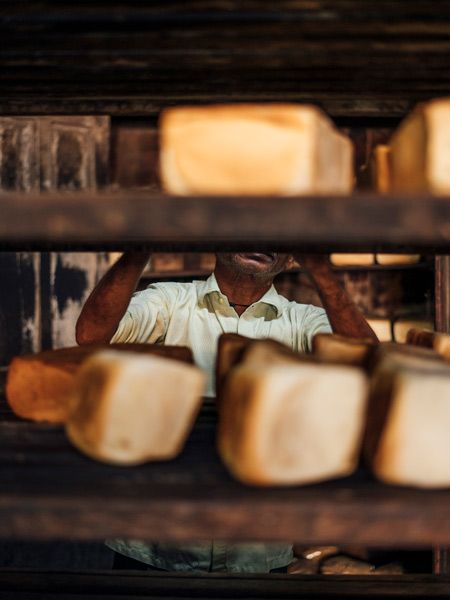
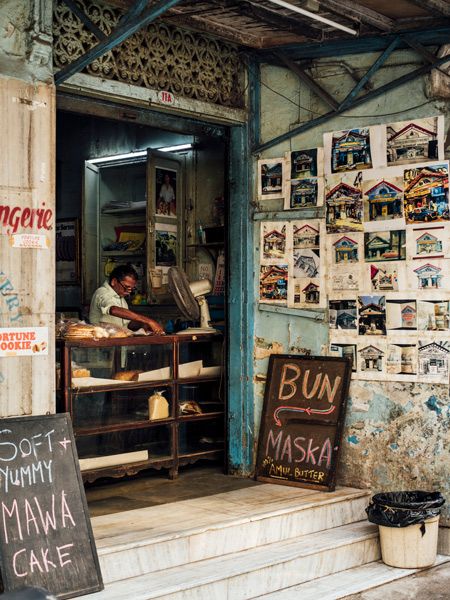
It’s easy to romanticise the Irani cafe. At the start of my days in Fort, I stop by Yazdani Restaurant & Bakery, now limited to takeaway, where the peeling turquoise paint and red signage recall the faded grandeur of a movie set. A baker, wearing a banyan – or white singlet – dispenses baked goods, handmade in a woodfired oven, for less than 20 rupees.
A short walk from here, I remember, the famous Royal Bombay Yacht Club barred Indians from entering until 1958, eight years after Yazdani’s owner, an Iranian migrant called Meherwan Zend, started serving chai and soft, cardamom-laced biscuits called nankhatai to loyal patrons from all segments of society.
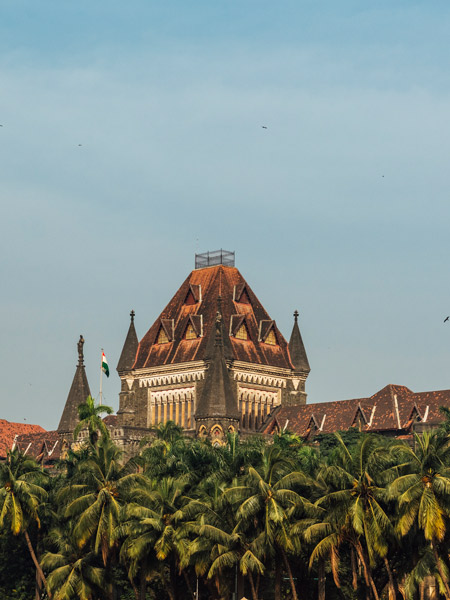
They still queue here today: the crisp-shirted office workers, the judges wearing their robes, on break from the nearby high court. The barbers, who set up shop on the street corners, refuelling before their day of commerce – united on this pavement in the pursuit of simple pleasures, if only just for a moment.
The best Irani cafes in Mumbai at a glance
Olympia Coffee House
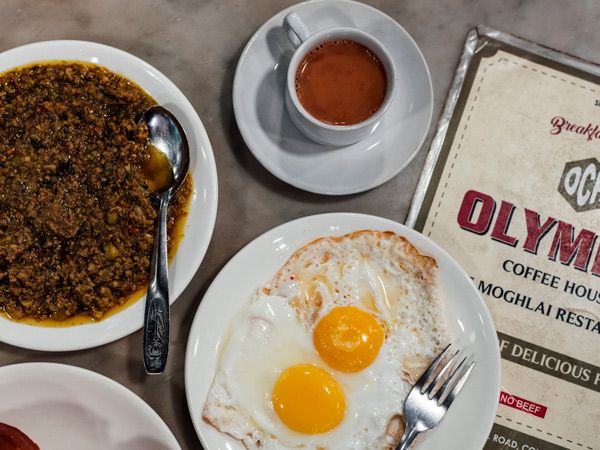
Kheema pav (a popular Mumbai street food) is religion at this much-loved Irani cafe, where the mirrored walls reflect local office workers and families from all corners of the city.
Weekly travel news, experiences
insider tips, offers, and more.
Cafe Mondegar
Cloud-like omelettes and cold coffee are breakfast stalwarts at this charming South Colaba cafe, famous for murals by lauded Goan artist Mario Miranda.
Yazdani restaurant & Bakery
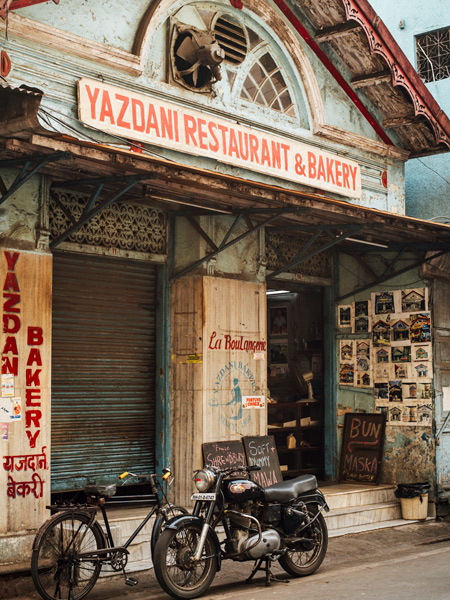
This pocket-sized bakery, marked by red signage and a peeling turquoise facade, is synonymous with the city’s favourite baked goods: from khari biscuits to mawa cakes.
Good Luck Cafe
This Bandra cafe, near Mehboob film studios, nods to a pre-independence Bombay, its bun maska an antidote to a neighbourhood caught between old and new.
Kyani & Co.
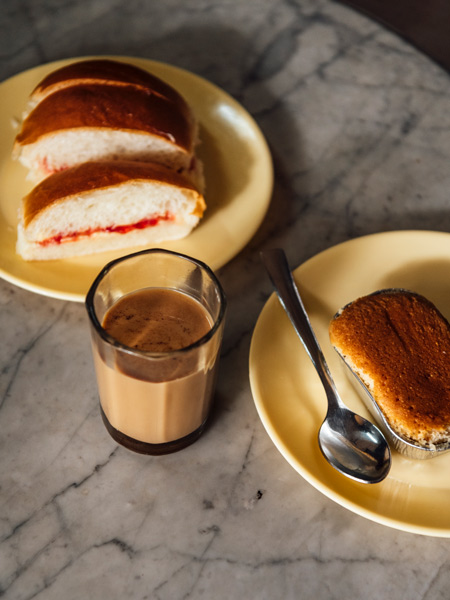
An airy Marine Lines institution, where locals on wooden tables and bentwood chairs linger over egg bhurji and cups of sweet Irani chai.
Jimmy Boy
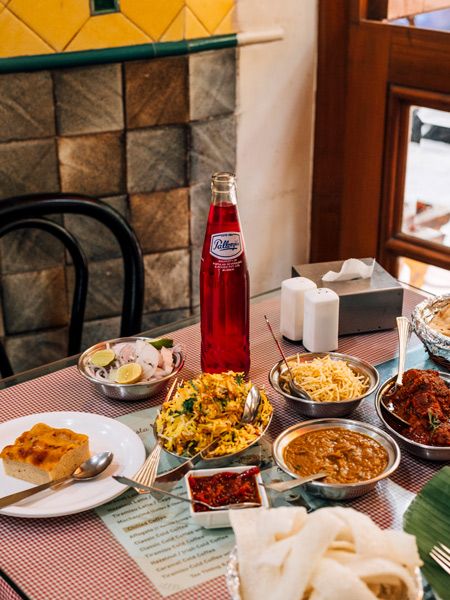
Jimmy Boy’s Fort location closed temporarily in June 2025 but is due to reopen. Meanwhile, the smaller Mahim outpost of the century-old institution offers junglee sandwiches, flaky pastries and traditional Parsi cuisine.
Want to see more stories from International Traveller in your Google search results?
- Click here to set International Traveller as a preferred source.
- Tick the box next to "International Traveller". That's it.