Hyper-localisation is the new benchmark in world-class hotel design
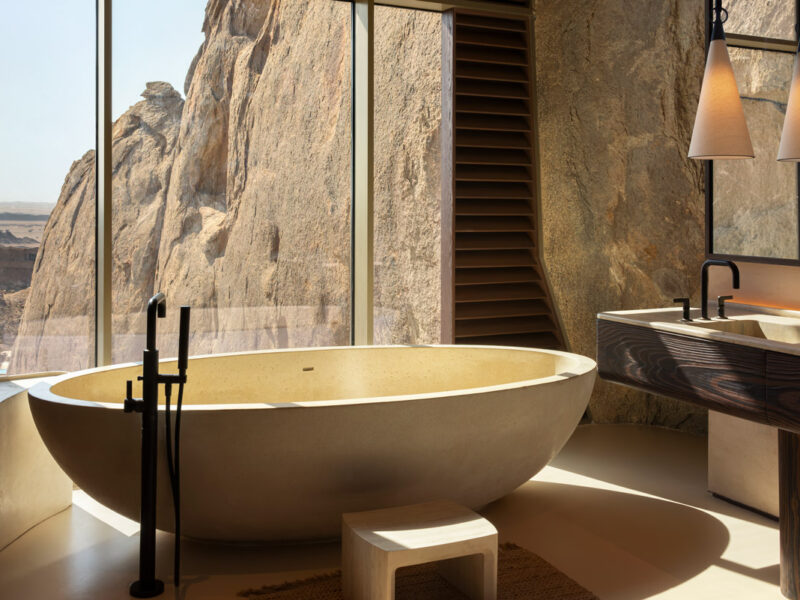
Desert Rock Resort in Saudi Arabia is an example of how hotels are letting the environment shape the design. (Credit: Ema Peter)
Today’s hotels don’t just sit in their environment; they become part of it, embracing the local culture and inviting both visitors and locals inside.
The once-common logic of booking a hotel and treating it as little more than a place to sleep is increasingly behind us. Hospitality is an ever-changing landscape, and in recent years the way hotels look – and how they are used – has evolved far beyond just a place to rest.
As traveller behaviour becomes more considered and experience-driven, today’s designers, both established and emerging, are responding with spaces that invite guests and locals to linger in. More than ever, storytelling is at the forefront, with hotels increasingly being designed as cultural hubs that are part of their local communities rather than simply existing in them – especially for design-savvy travellers who value context and authenticity. “Hospitality is shifting from being just a place to stay to being an experience platform, a place where local culture, design, craftsmanship, performance and community life intersect,” says Toronto-based designer Paolo Ferrari of Studio Paolo Ferrari.
Where hotel design began
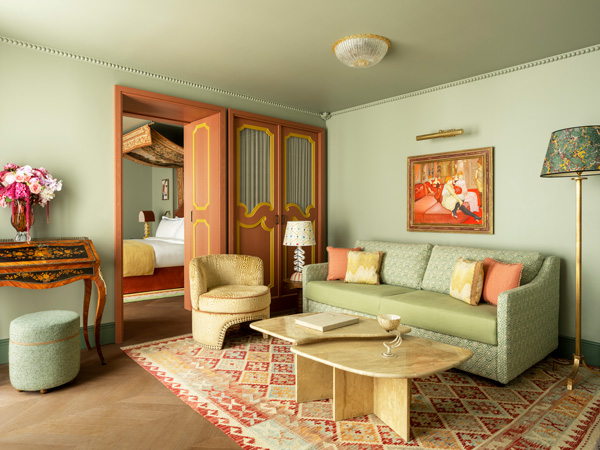
The luxe Le Grand Mazarin is reminiscent of a mini Parisian apartment. (Credit: Vincent Leroux)
In their earliest form, hotels existed purely as transient and functional spaces for rest and shelter. The rise of tourism in the 18th and 19th centuries led to more palatial accommodations to cater to the aristocracy and upper classes who wanted not just a place to sleep, but a signal of their social status. Accommodations like Paris’s Ritz Hotel (1898), where ladies lunched, doubled as spaces for private balls and social clubs. In response to the democratisation of tourism during the 20th century, hotels began to be designed to prioritise form over function. They catered to short-term stays, acted as liminal spaces, and often featured generic, standardised designs that were almost indistinguishable from one another.
The shift to boutique and social hubs
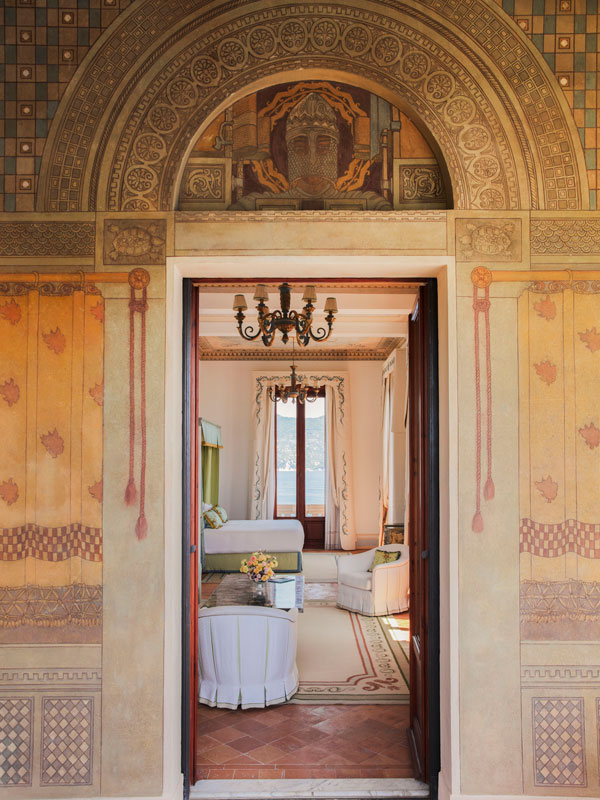
The Villa Beatrice is a mix of Art Nouveau and Gothic Revival styles. (Credit: Belmond)
In the 1980s, hotelier Ian Schrager invented the concept of the ‘boutique hotel’, transforming accommodation into cultural hubs and social spaces for both travellers and locals. Designed alongside French interior and product designer Andrée Putman, Morgans Hotel opened in 1984 in New York City with a small living-room-style lobby meant for meeting and gathering, not just check-in.
This community-facing hospitality concept was popularised by brands such as US-born hotel chain Ace Hotel, which embraced it across its properties with lobbies designed as social and work spaces. The brand has since expanded to Sydney, Kyoto and Athens, renowned for drawing on each hotel’s neighbourhood and collaborating with local architects, artists, musicians, and makers to deepen cultural context. Schrager continues to push this democratic hotel design ethos forward in his EDITION and PUBLIC hotel brands.
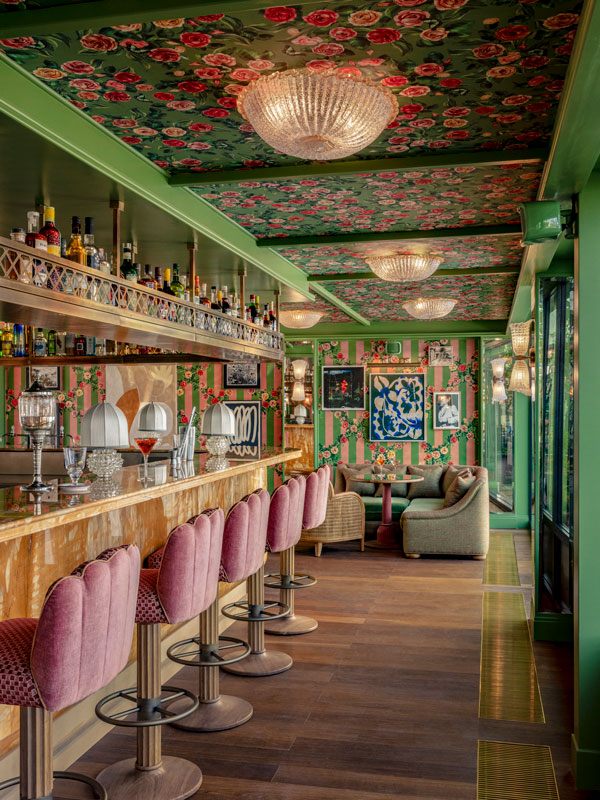
A lush rooftop bar is housed within the La Fantaisie Hotel in Paris. (Credit: Jérome Galland)
In the mid-2000s, Swedish interior architect and product designer Martin Brudnizki vanguarded personality, storytelling and social vibrancy in his richly layered projects. “We don’t follow trends, instead recognise the power of creating interiors that endure time, avoiding pastiche,” he shares. “We’ve always focused on creating timeless designs that feel deeply rooted to its surroundings and character through the use of rich materiality, a detail-oriented design approach and a thorough understanding of the client and location.” Locals flock to the hospitality venues at his Soho Beach House, Miami project, which is inspired by the city’s Art Deco and Cuban heritage. “We want guests to feel as though they have entered a space that has something exciting to tell, that will convey an emotion.”
His work continues to go beyond standard hotel design, creating social ecosystems for people to gather, be it in intimate yet dynamic public areas, carefully curated bars and lounges or via striking focal pieces that spark conversation. His glamorous designs for Broadwick Soho quickly made it London’s ‘it’ hotel after it opened in November 2023, while the whimsical La Fantaisie, which launched in the same year on Rue Cadet, became his first Parisian triumph along with Le Grand Mazarin.
Brudnizki was also responsible for the sumptuous redesign of Splendido, A Belmond Hotel, Portofino as well as its exclusive Villa Beatrice.
Hôtel du Couvent and the new benchmark
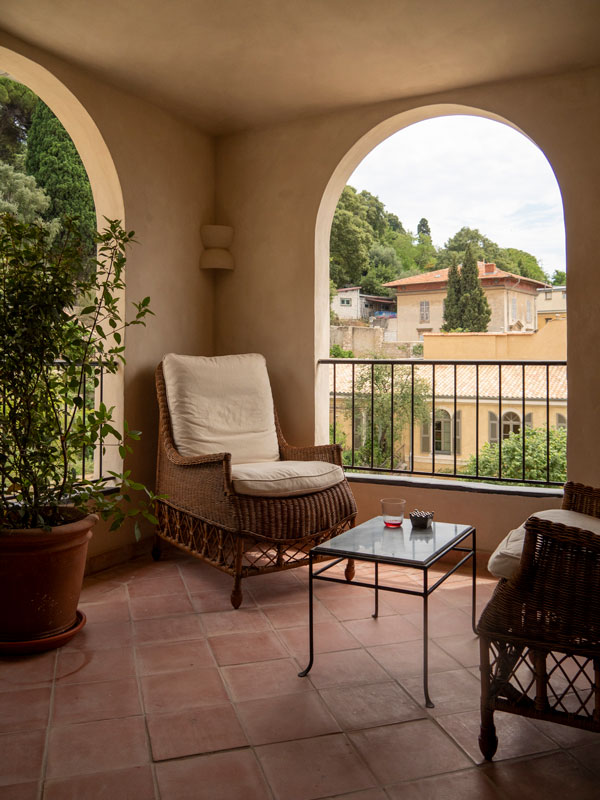
The Hôtel du Couvent design pays homage to its monastic roots.
Coveted stays like Hôtel du Couvent in Nice, France, showcase how heritage restoration, place-driven design and community engagement can produce a deeply contextual, locally rooted hospitality experience. Hotelier Valéry Grégo’s decade-long vision of converting the 17th-century convent was realised in 2024 alongside architectural teams Studio Mumbai and Studio Méditerranéen. Beyond preserving the building’s bones, the hotel also nods to Nice’s Roman thermal bath heritage through an underground Roman-inspired bathhouse. A monthly farmers’ market is held in the courtyard for locals and producers, while the herbal shop and on-site boulangerie invite visitors in. This attention to detail honours Hôtel du Couvent’s monastic roots and positions it as a natural extension of the city’s cultural and communal life, not a sealed-off luxury retreat.
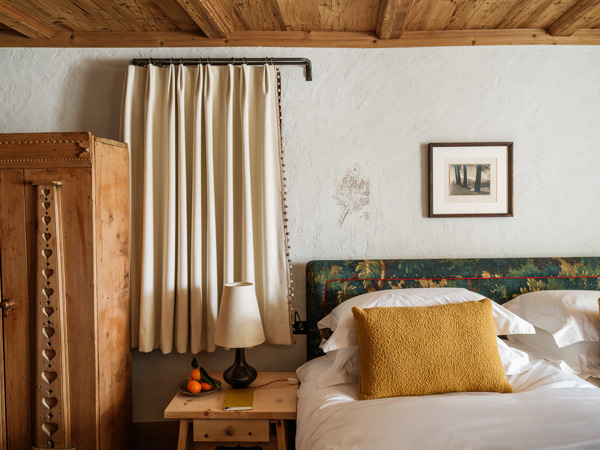
The 16th-century guesthouse blends Engadine heritage and contemporary art. (Credit: Dave Watts)
In the meantime, 2026 has already seen a sweep of spectacular hotels open within sensitively restored heritage buildings. In Italy, The Lake Como EDITION, developed in partnership with design firm Neri&Hu and architects De. Tales, is housed within a restored 19th-century palazzo, exuding Italian glamour and contemporary refinement. In Switzerland’s Sils Maria, leading Swiss gallerists Iwan and Manuela Wirth of Artfarm worked with Paris-based architectural firm Laplace to transform a 16th-century guesthouse into the art-filled, 13-room Chesa Marchetta.
A new wave of designers carrying the torch
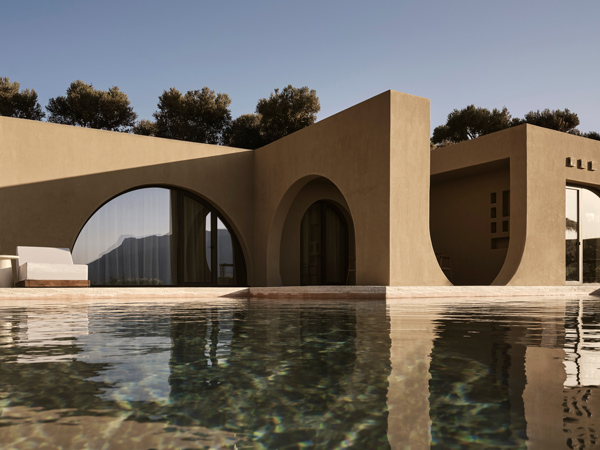
The newly opened Tella Thera in Kissamos, Crete. (Credit: Christos Drazos)
For emerging architect and creative designer Jacu Strauss, thoughtful design can make hotels feel alive, rooted in place and welcoming to both guests and the local community. The London-based designer is the creative director of Lore Group, whose eclectic projects, including One Hundred Shoreditch and Pulitzer Amsterdam, serve as a social epicentre to their respective cities.
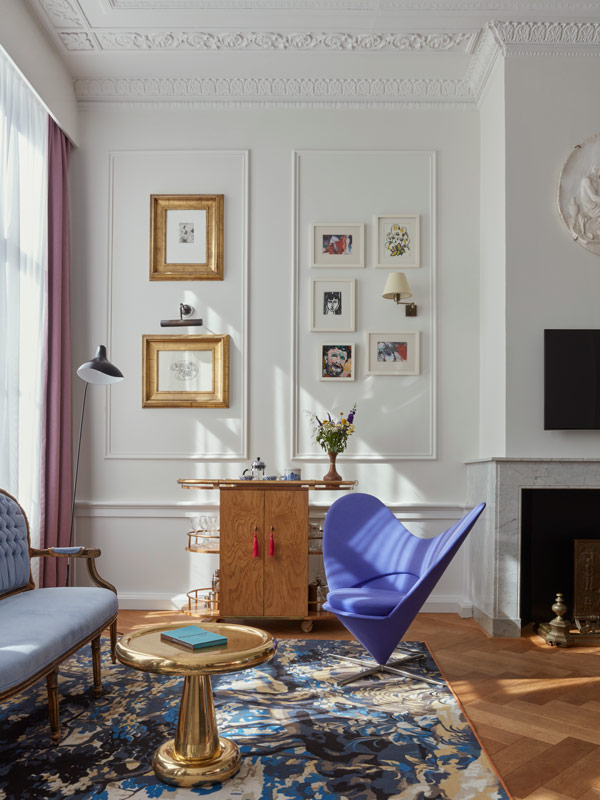
The suite design at Pulitzer Amsterdam embraces traditional Dutch craftsmanship.
“When design responds to these rhythms and prioritises the human experience, interaction happens naturally. Public spaces then become areas where guests want to linger, locals feel at home and the hotel feels like a natural extension of its context,” he says. Like Brudnizki, Strauss uses artwork to act as a conversation starter in public spaces. “These sculptures act as wonderful focal points and set the tone for guest experience and connection upon arrival,” he shares.
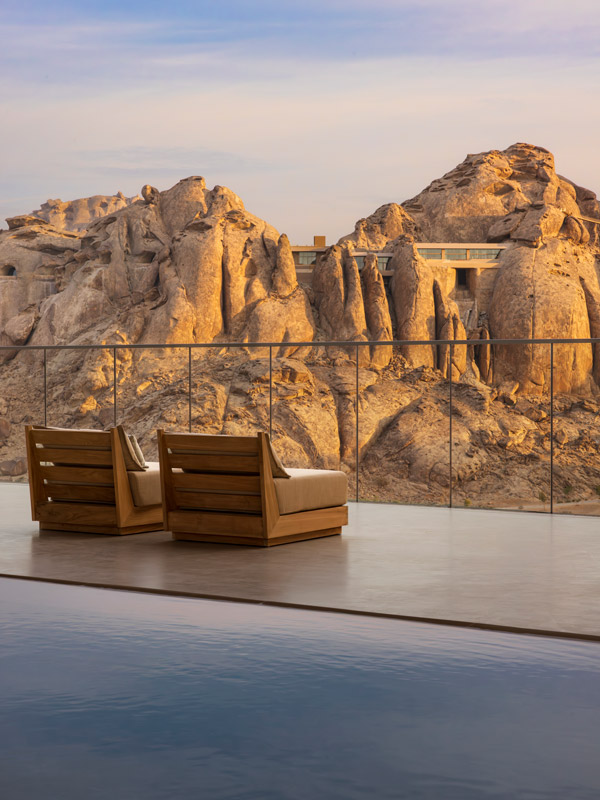
Dramatic mountain views abound at Desert Rock Resort. (Credit: Ema Peter)
Paolo Ferrari has gained significant attention in the world of hotel design thanks to his place-led approach. “I look for deeper threads of meaning in place, materials, craftsmanship, rituals and the way people interact with their environment,” he explains. His studio’s unique projects aren’t interchangeable hotels but extensions of geography, history and atmosphere that allow guests to be deeply immersed in place.
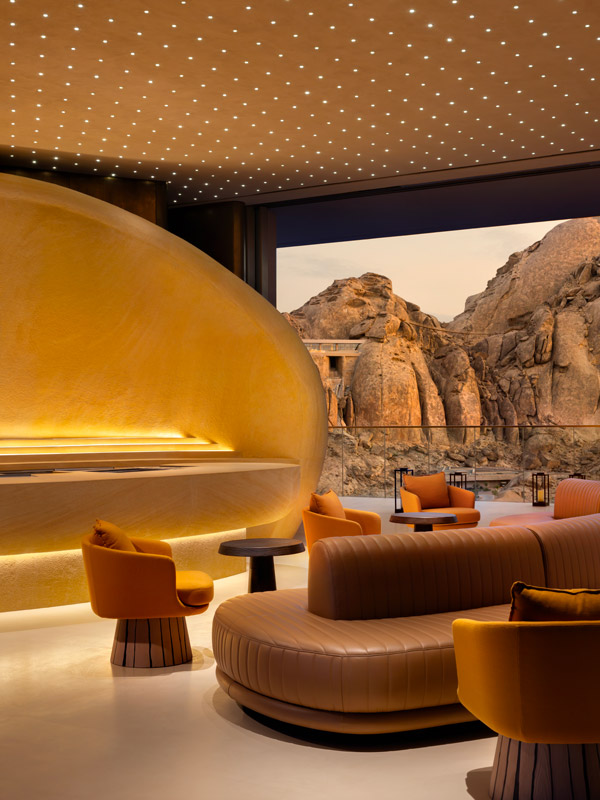
Enjoy cocktails with enchanting vistas at Mica Bar. (Credit: Ema Peter)
For Desert Rock Resort in Saudi Arabia’s Hijaz Mountains, which opened in December 2024, the aim was to immerse guests in the atmosphere of the desert. “The surrounding landscape isn’t a backdrop; it’s a protagonist. We didn’t import motifs or clichés. Instead, we let the serenity and scale of the desert dictate the materiality – sand-cast bronze fixtures, subdued hues, textures that resonate with the rock and sand, and spaces oriented so that each vista feels like a moment of contemplation. It’s about listening to the landscape and letting it guide choices from colour to detail.”
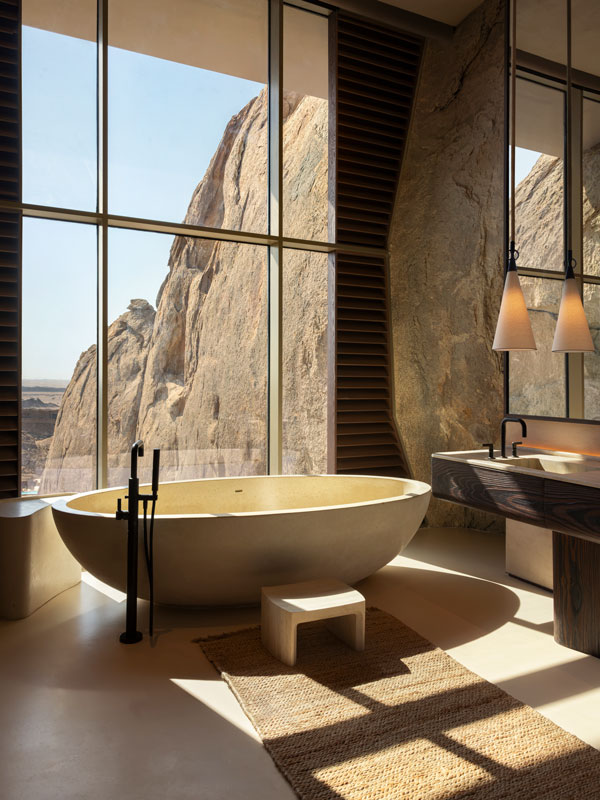
Take in the desert cliffs as you soak in an enormous tub. (Credit: Ema Peter)
Ferrari continues to push place-led design forward, with upcoming projects such as Moncayo, Auberge Resorts in Costa Rica, and a Raffles property in Mexico’s Los Cabos region. “Public spaces in a hotel should do more than look good, they should work on people by providing layered environments that encourage discovery, comfort, and interaction,” he says.
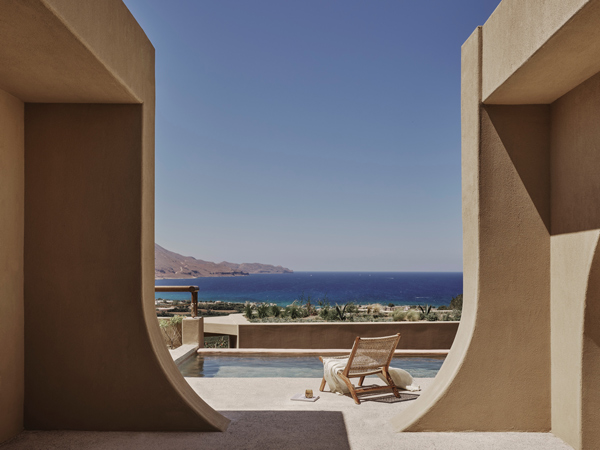
Reconnect with nature and culture against Aegean vistas at Tella Thera. (Credit: Christos Drazos)
At the newly opened Tella Thera in Kissamos, Crete, guests are encouraged to pause and reconnect with nature and culture against Aegean vistas. Founders Loukas Tourkomanis and Chevon Low worked with Athens-based firm Pieris. Architects, local developers and sustainability expert Professor Agis M. Papadopoulos from the Aristotle University on the bioclimatic design. Furniture and artwork were crafted by local artisans, elevating the structure that’s embedded in its Cretan hillside, inspired by Crete’s cave dwellings. A grove of olive trees creates a contemplative outdoor space that invites guests to engage with and explore the landscape, while onsite olive oil production honours Greece’s agricultural heritage.
The future of hotels
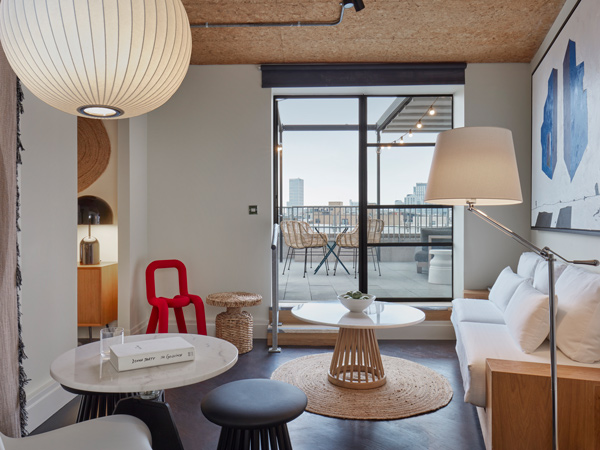
The Art Deco-inspired Studio Suite South at One Hundred Shoreditch, London.
Hotels being designed more sympathetically and with both travellers and locals in mind will undoubtedly yield more sustainable builds that stand the test of time and encourage slower, more mindful stays. We are firmly in an era of hyper-localisation, where hotels tell an authentic story of place, and it’s arguably making for the most exciting time to both travel and simultaneously stay put.






LEAVE YOUR COMMENT