How to see Yosemite’s rare “firefall” in 2026
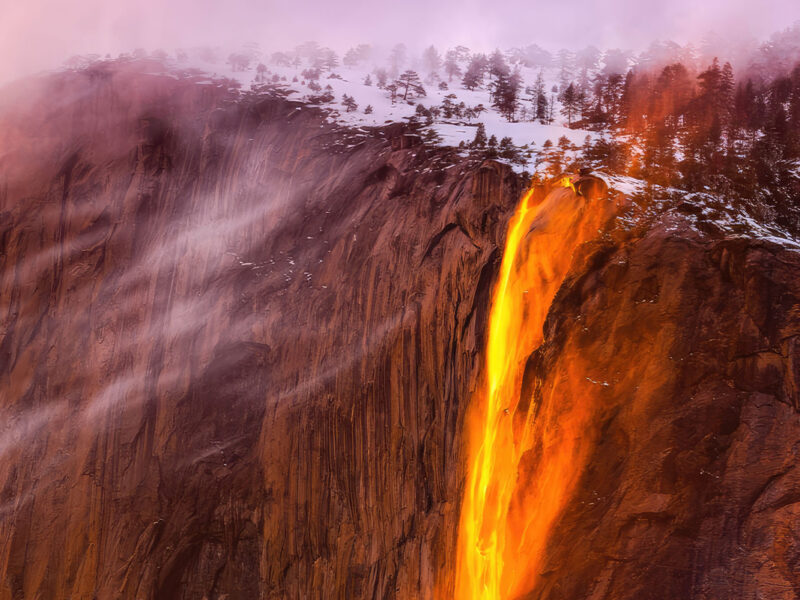
A fiery optical illusion is drawing crowds to Yosemite National Park.
Each February, nature delivers a showstopper at Yosemite National Park. Horsetail Fall transforms into a glowing, lava-like cascade, nicknamed the “firefall”, as the setting sun hits the waterfall just right, making it look as though flames are tumbling down the cliffs of El Capitan. This natural wonder is brief, breathtaking and highly sought after. Here’s your guide to seeing it in 2026.
What is Yosemite’s firefall?
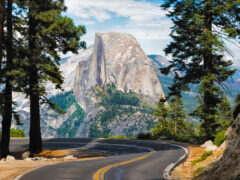
Horsetail Fall is a seasonal waterfall that flows down the eastern face of El Capitan in winter and early spring. When conditions align – clear skies, enough water flowing and the perfect angle of sunlight – the fall reflects the fiery hues of the sunset, creating the famous firefall effect. This phenomenon usually occurs for about two weeks in mid- to late-February, making it one of the most anticipated events in Yosemite.
How to see the firefall in 2026
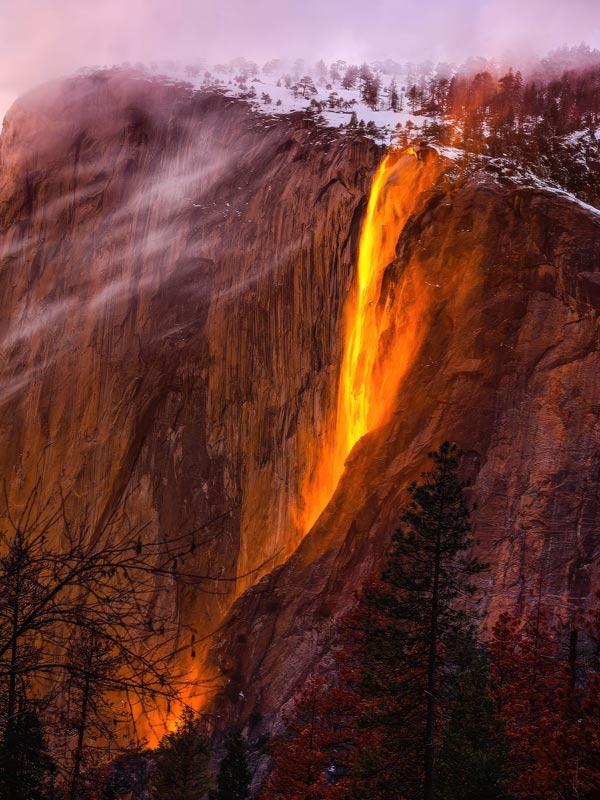
A fiery optical illusion is drawing crowds to Yosemite National Park. (Image: Getty Images/wirestock)
If conditions align, February 2026 is shaping up to be an excellent year to see Yosemite’s famous firefall.
The strongest window runs from 19 to 23 February, when the phenomenon is forecast to reach 100 per cent quality, with 21 February expected to deliver peak intensity. These are the dates when the angle of the setting sun is most likely to ignite Horsetail Fall in glowing shades of orange and gold.
Still worth planning around are the shoulder dates from 15-18 February and 24-26 February, which are expected to deliver around 85 per cent quality. Even the outer edges of the season, 10-14 February and 27-28 February, can produce a visible firefall at roughly 60 per cent quality, provided conditions cooperate.
Each evening, the moment you are waiting for is brief. Peak viewing happens around sunset, roughly 5.28-5.38pm PST, when a 10-minute golden window can transform the waterfall into something that looks molten. However, timing can vary based on the weather, so keeping an eye on forecasts is key.
1. Choose your viewing spot wisely
The best viewpoints for the firefall are on the valley floor, specifically the El Capitan Picnic Area, which offers unobstructed views. Arrive early, as parking fills up fast, and you’ll need to walk 2.4 kilometres each way to the viewing spot.
2. Pack the essentials
If you’re planning to capture the perfect shot, bring a camera with a zoom lens, a tripod and extra batteries (the cold can drain them quickly). Snacks, water, a torch for the trek back to your car, and a warm jacket are also must-haves.
What to expect in 2026
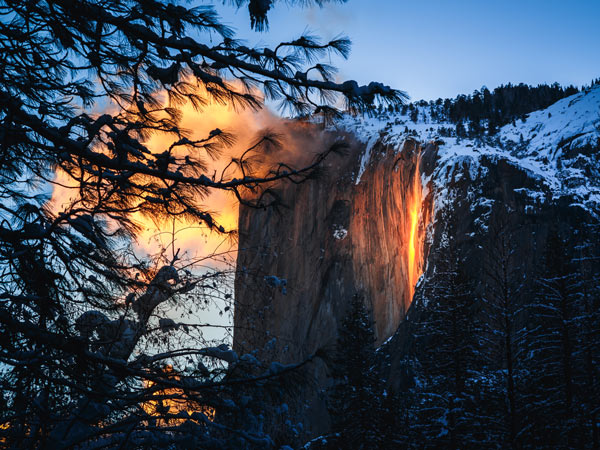
The firefall is a photographer’s dream. (Image: Getty Images/heyengel)
The firefall is a photographer’s dream, but it’s also a fleeting moment. The vivid orange and red glow lasts only about 10 minutes each evening, so be ready to soak it in – or snap that perfect shot – when the magic happens.
Crowds will be large, so patience is crucial, but the reward is a once-in-a-lifetime visual spectacle that will leave you speechless.
Pro tips for a memorable visit
Avoid weekends: Weekdays are generally less crowded.
Stay nearby: Accommodation inside Yosemite or in nearby towns like Mariposa and El Portal will save you hours of driving.
Check conditions: Clear skies are essential, so flexibility in your travel dates is helpful.
Don’t miss your chance to witness one of nature’s most surreal displays in 2026. Yosemite’s firefall is not just a phenomenon – it’s an experience that will set your wanderlust ablaze.









LEAVE YOUR COMMENT