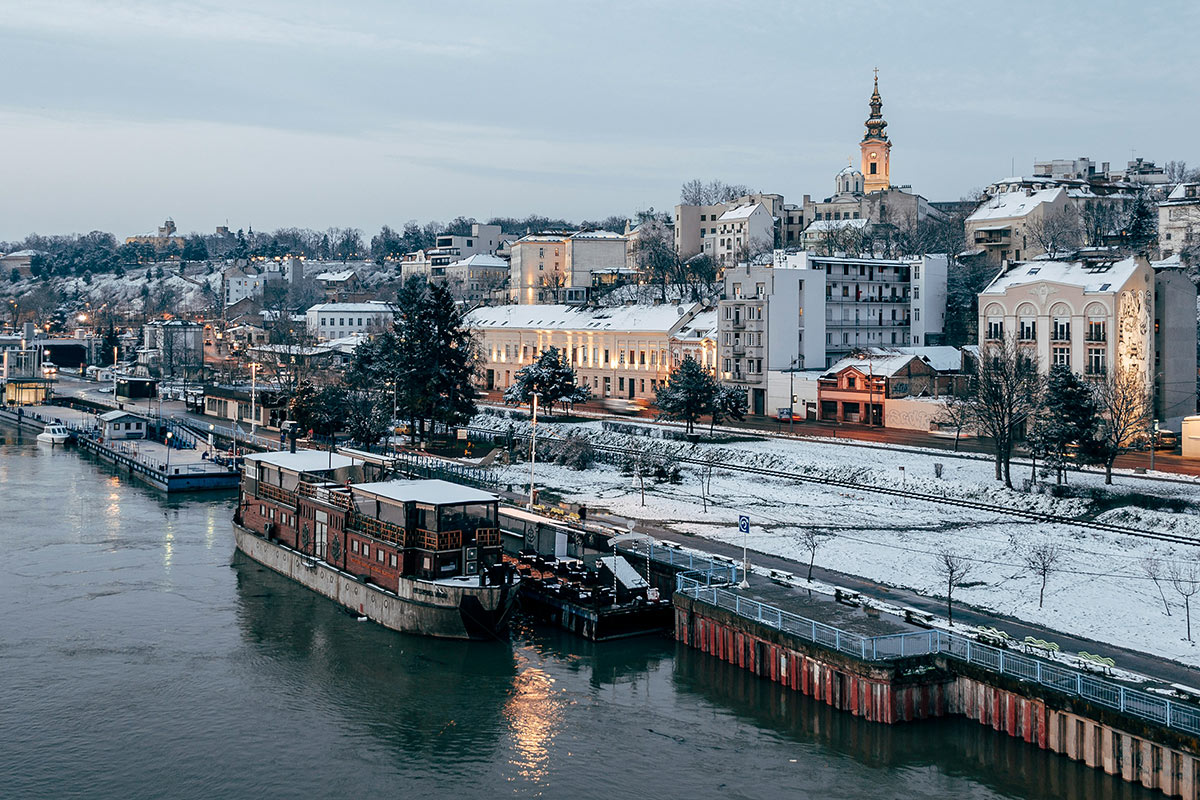

A festive Danube cruise reveals a lesser-travelled Europe shaped by empires, conflict and resilience.
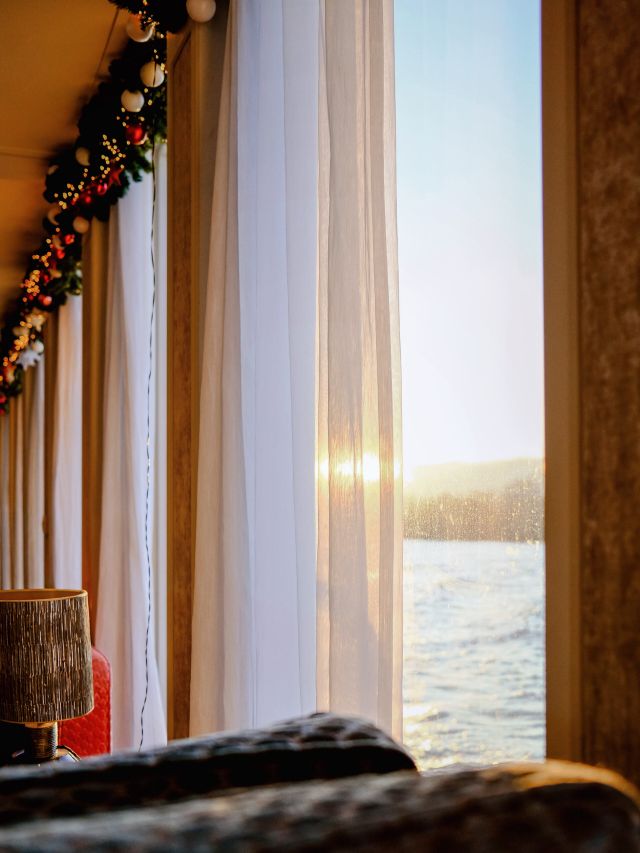
I arrive in Giurgiu layered like an onion, still underprepared for just how cold late November in Eastern Europe will be. The air bites at my cheeks as I step aboard AmaMagna, AmaWaterways’ double-wide flagship, its warm glow radiating like an invitation to thaw out. Inside, Christmas has already arrived.
Tinsel drapes staircases. Trees shimmer in every lounge. Each cabin door wears a wreath topped with a small plush reindeer. As an Australian, it feels almost surreal. We don’t do Christmas like this. Here, it’s like stepping into a festive storybook.
And yet this journey, stretching from Romania to Hungary along the Lower Danube (one of the best rivers to cruise) is far more than a holiday fantasy. Over seven nights, it will become a moving lesson in history, identity and the fragile lines that once divided Europe.
From my balcony stateroom, I watch the Danube slip past in shades of slate and silver. It’s Europe’s second-longest river, but here it feels less like a waterway and more like a timeline.
There is something grounding about travelling through a place where the stakes of human history are still written into the landscape. It has a way of recalibrating things. I am, in a way, mid-river myself, caught between one chapter of my personal life and what comes next.
A journey through Eastern European history
On our first full day, we travel to Veliko Tarnovo in Bulgaria, a medieval former capital perched dramatically over the Yantra River. The Church of Saints Peter and Paul stands quiet and resolute, its origins stretching back to the 13th century.
Our guide explains how earthquakes damaged the medieval Orthodox church, wars reshaped it and regimes repurposed it, including a spell as a state library when political winds demanded so. This is a theme that will follow us all week. Nothing here exists untouched by what came before.
The region has seen it all. Ottoman rule for centuries. The rise and fall of empires. Communist regimes. The Yugoslav wars of the 1990s, still fresh enough that locals speak of them not as history but memory.
At one point, a Serbian guide tells another passenger that he has lived in Novi Sad his entire life. Forty years, he says. And in that time, he has technically lived in four different countries. Borders here have shifted faster than generations. What looks like continuity – a street, a river, a life – has changed underneath, again and again.
Our next stop is Vidin, and we visit Baba Vida Fortress, the largest preserved medieval castle in Bulgaria, its stone walls rising directly from the riverbank as though grown there. Vidin once had a substantial Sephardic Jewish community – Jews who had been expelled from Spain in 1492 and settled across the Ottoman Empire. Our guide notes that only eight Jewish residents remain in the city today, speaking to centuries of accumulated loss.
Life onboard the Danube’s most distinctive ship
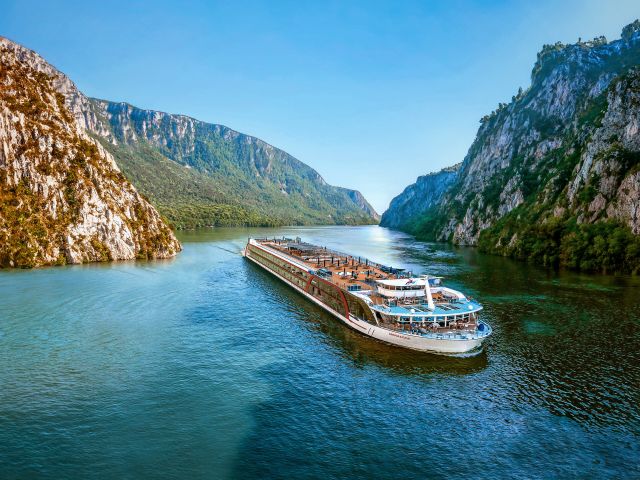
AmaMagna, the ship carrying us through this layered landscape, is an unusual presence on the river. At 22 metres wide, twice the width of traditional Danube vessels, there’s far more room than you’d usually get on a river cruise.
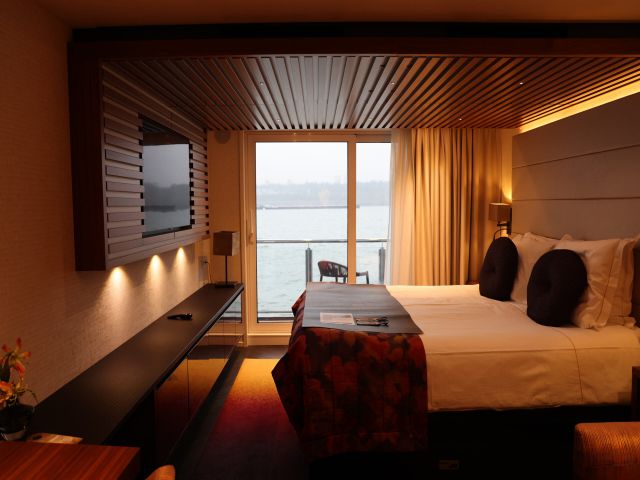
My stateroom comprises a generous 33 square metres. There’s a queen-size bed, a large marble bathroom with a double vanity and a couch positioned perfectly for watching the river drift by. Each morning, coffee and pastries can be delivered directly to the room, a luxury I quickly become attached to. Those quiet early hours watching the river’s ecosystem come alive become some of my favourite moments on the trip.
One morning, I open my door to find a small festive surprise left overnight. The crew have recreated St Nicholas Day for us, and like many guests, I’d left a slipper outside the night before. Inside it now sits a chocolate Santa Claus, a small but charming nod to European Christmas traditions. I stand in the doorway in my socks, smiling at the sweetness of it.
Beyond the cosy lounges and polished dining rooms, the ship also feels surprisingly active. There are morning stretching sessions, HIIT classes and walking or cycling tours in nearly every port.
Ancient wonders along the Danube
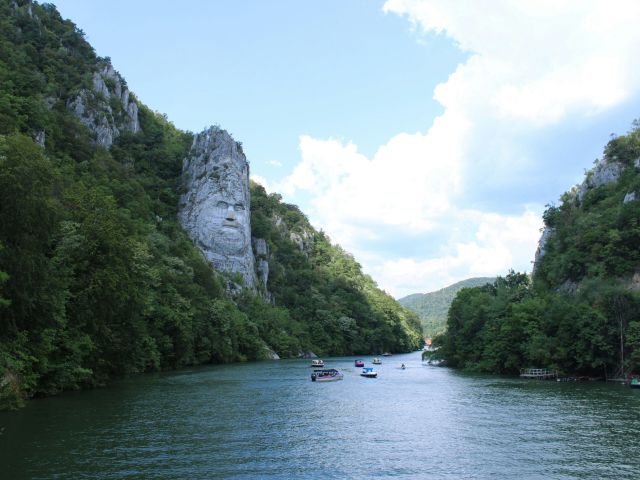
One of the most unforgettable days comes as we glide into the Iron Gates, a dramatic gorge where the Danube narrows between the Carpathian and Balkan mountains. The river here feels ancient and powerful, winding through sheer cliffs dusted with early winter snow.
Ruddy-cheeked passengers gather along the railings, cameras ready, as the famous carved face of King Decebalus emerges from the rock. The colossal sculpture watches silently over the river, a reminder of the region’s deep roots and enduring stories. The scale of it makes me feel very small, in the best possible way. It’s magnificent.
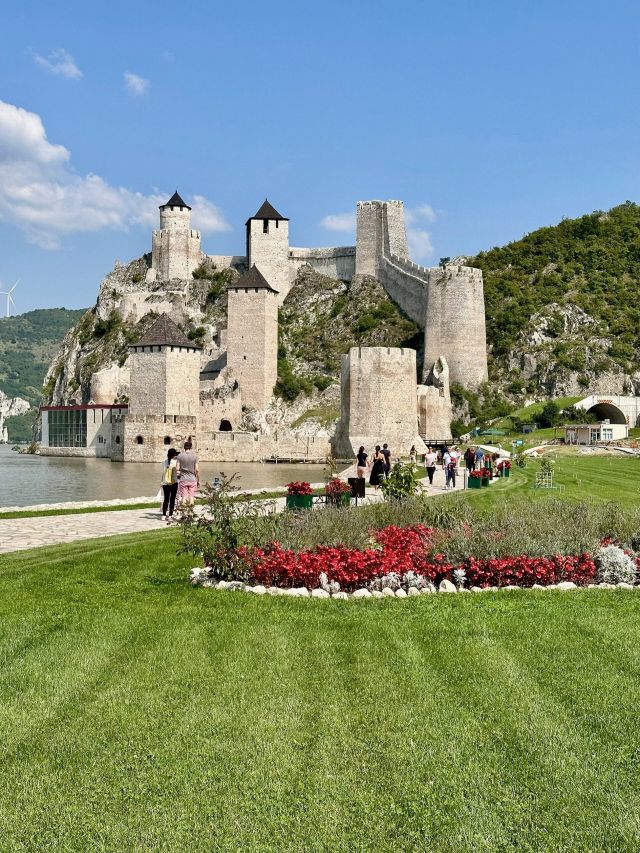
Later that afternoon, we dock in Serbia at the Golubac Fortress, one of the most striking medieval castles I have ever seen. It’s dusk when we arrive and the day has been particularly misty, and Golubac Fortress’s 10 towers rise from above the water like something pulled straight from a fantasy realm. Walking through its stone corridors in the cold air, it’s easy to imagine centuries of battles fought to control this single strategic point on the river.
Echoes of the past: from Belgrade to Ilok
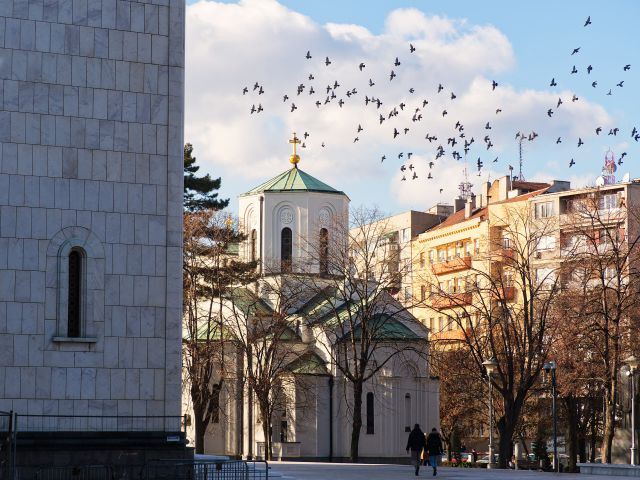
If Golubac feels cinematic, Belgrade feels alive. The next morning, we arrive to snow flurries, flakes drifting briefly over the city before dissolving into the wet streets as we explore the Serbian capital.
Belgrade’s story is one of relentless resilience. Conquered more than 40 times, it sits at the confluence of the Sava and Danube rivers, a geographic crossroads that has made it both tactical and vulnerable throughout history.
At a rakia tasting at Belgrade Urban Distillery, we sample traditional fruit brandies made from quince, apricot, plum and raspberry. Each must exceed 40 per cent alcohol to legally be called rakia, our host explains, smiling knowingly as we react to the potency. I have two. They help with the cold.
The next day, we arrive in Croatia, docking at Vukovar in the country’s east. Here, reminders of the Yugoslav wars are impossible to ignore. The Battle of Vukovar, one of the fiercest battles seen in Europe since the Second World War, was an 87-day siege in 1991 that left the city almost entirely destroyed. Around 3000 people died and at least 20,000 were expelled.
The buildings still bear scars, and the museums preserve stories of siege and survival. It’s confronting, but travelling here is about understanding how deeply the past shapes the present, and bearing witness to what was lost, and how people continue regardless. It’s proof, I think, that you can rebuild after almost anything.
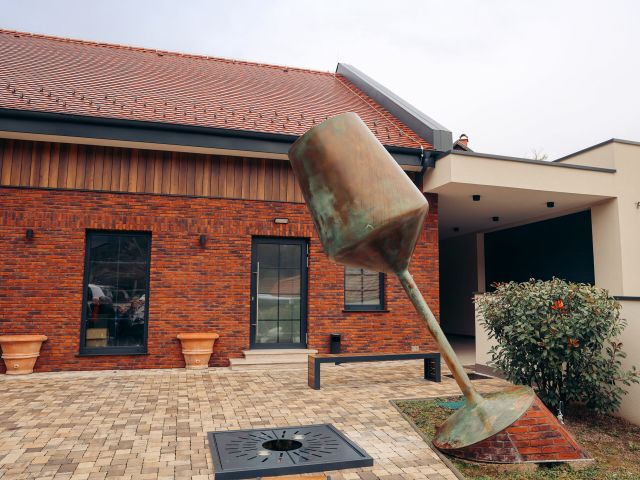
From there, we journey to Ilok in Croatia’s easternmost wine region, where vineyards stretch across gentle hills that have produced wine since Roman times. We visit Kast Winery, run by sister and brother team Katarina (Ka) and Stjepan (St) Kovčalija, and explore its historic cellars.
Katarina tells us how Queen Elizabeth II ordered over 1000 bottles of Croatian traminac for her coronation, an unexpected connection to this quiet region. While I do enjoy the traminac, I find myself more taken with the graševina.
Weekly travel news, experiences
insider tips, offers, and more.
A festive finale in Hungary
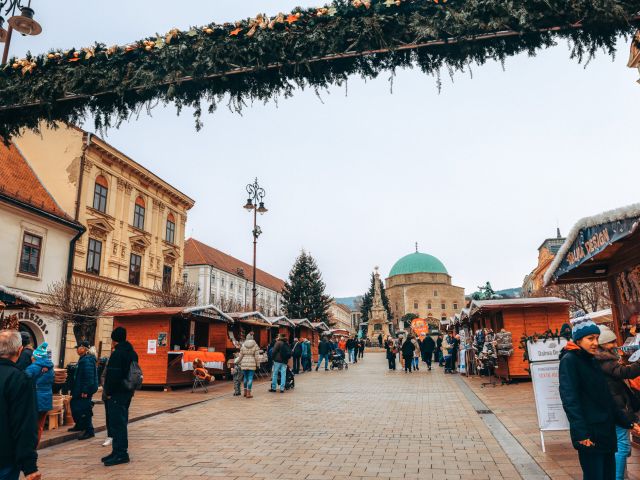
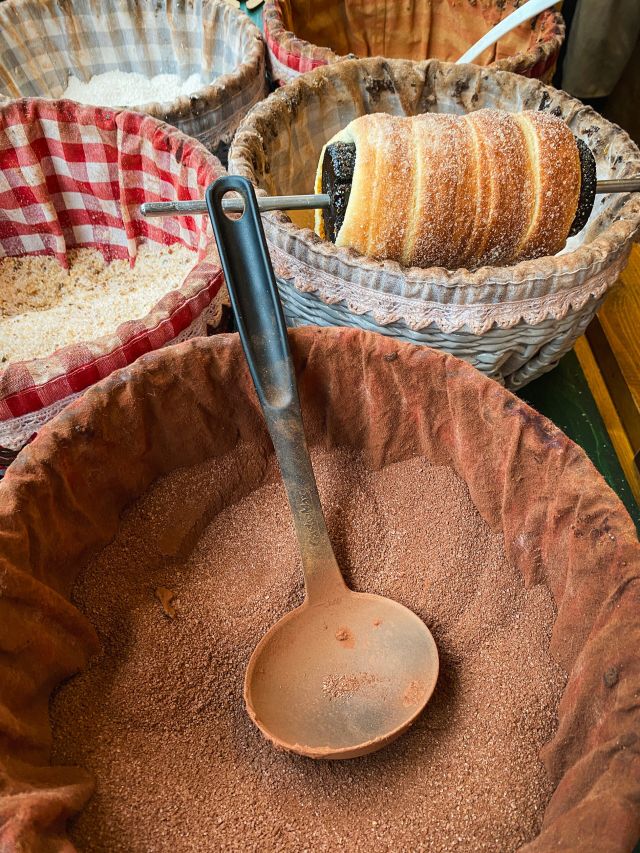
Most Christmas markets are a week or two away from opening in the towns we pass through, but we find a glorious one in Pécs, Hungary. Strings of lights glow above market stalls selling mulled wine, gingerbread, handmade crafts and, to my unbridled joy, kürtőskalács (chimney cake).
It’s like stepping into a postcard. I walk slowly, hands wrapped around a warm cup of mulled wine, watching families and couples moving through Széchenyi Square. After a week of exploring complex histories and heavy stories, this moment is light and joyful. I exhale.
A grand skyline unfolds along the riverbanks as we sail into Budapest on the final morning. As the passengers onboard AmaMagna stir awake under the winter sky, its Christmas lights still glowing warmly, I think about what this trip has given me. The Danube is a waterway where loss isn’t hidden, borders shift, cities get rebuilt and people carry on regardless.
Want to see more stories from International Traveller in your Google search results?
- Click here to set International Traveller as a preferred source.
- Tick the box next to "International Traveller". That's it.