hero media

Discover Tahiti’s secret paradise: Taha’a, the ‘vanilla island’

The small island of Taha’a sits in the shadow of its well-known neighbour, Bora Bora, yet has all the beauty and none of the crowds.

Let me tell you a story about the birds and the bees. Except, crucially, in this story, there are no bees. It’s about a swift impregnation that needs to take place within a window of just a few hours, between daybreak and noon, to birth a beautiful, glossy vanilla pod on the Tahitian island of Taha’a, aptly known as ‘the vanilla island’ – reached via a 45-minute flight from Tahiti to the island of Ra’iātea, then a 10-minute boat ride across the lagoon.

The vanilla capital of the world

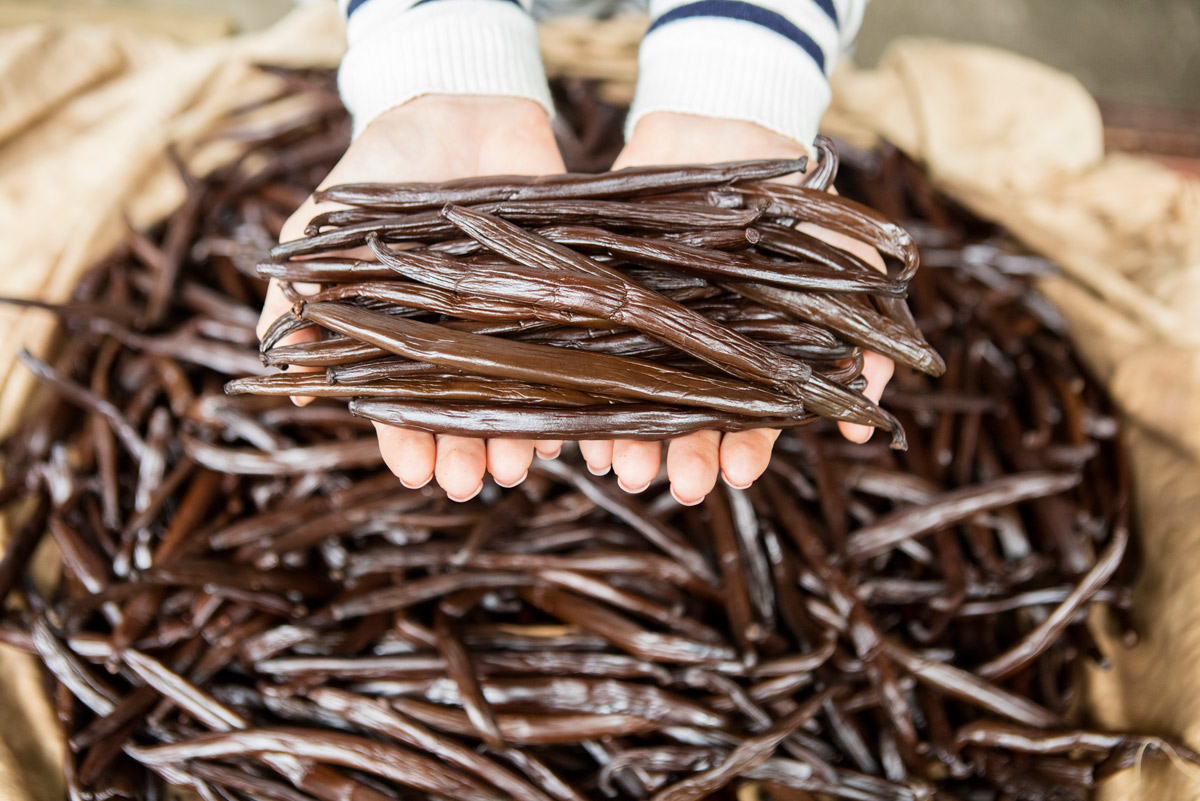
Vanilla is seen growing all over Taha’a – from large farms (some of which you can visit) to small backyard plantations. Here are some quick facts about vanilla on Taha’a.

  • Imported to French Polynesia: 1848 (from the Philippines) and 1874 (from Mexico)
  • Harvest period: July to November
  • Annual production: ~20 tonnes (down from 200 tonnes in the 1940s)
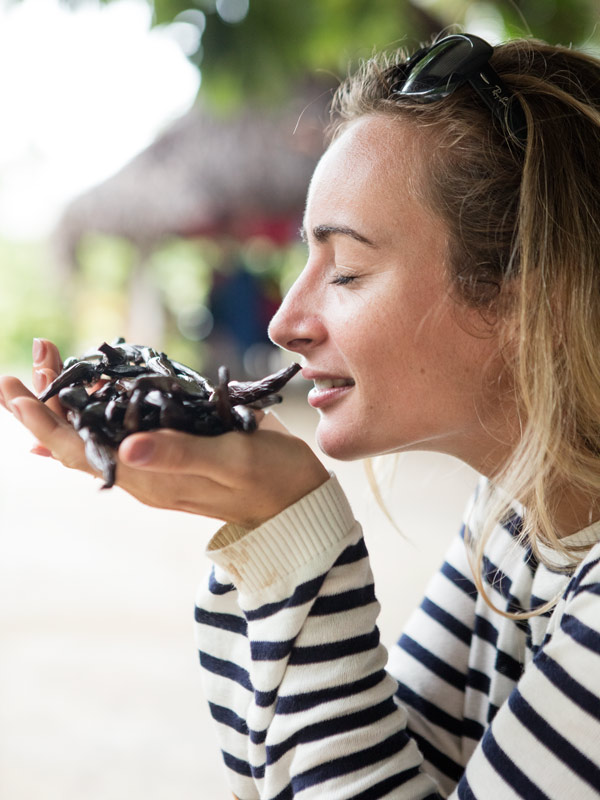
Woman smelling vanilla on Taha’a in Tahiti
Vanilla is seen growing all over Taha’a. (Image: Tahiti Tourisme and Grégoire Le Bacon)

When introduced, the vines enjoyed the climate of their new home and thrived in Taha’a’s volcanic soil, but unfortunately, the bees used to pollinate the flowers in Mexico weren’t so enamoured by their new environment. This left farmers having to assume the role of the bees, working quickly and gently to transfer pollen to the flowers’ stigma between July and November.

You could say it’s worth the labour of love, as Taha’a is said to produce some of the most fragrant and sizeable vanilla pods in the world. The pods are valued for their scarcity with the number likely to dip further, given the younger generation doesn’t seem particularly keen on racing up and down at first light to help high-maintenance vanilla flowers copulate. The way of the world, it seems.
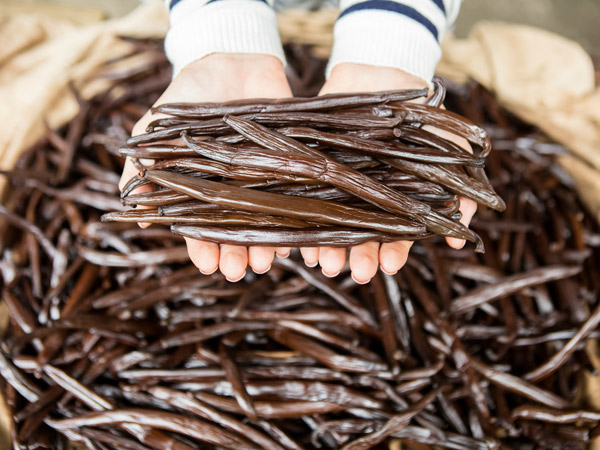
Woman holding vanilla on Taha’a in Tahiti
Taha’a is said to produce some of the most fragrant and sizeable vanilla pods in the world. (Image: Tahiti Tourisme and Grégoire Le Bacon)

For now, however, Taha’a still has a country-town feel. It’s an island that very much espouses island time – there’s no hurry, no worries, and the community of 5000 people is tight-knit. “Do you know everyone on the island?" I ask our 4WD safari guide, Hiti Qui, who waves to every car and bike we pass as we make our way around the island’s 70-kilometre, flower-shaped perimeter. “Yes," he responds matter of factly, returning a wave to a man just offshore in an outrigger canoe.

Taha’a neighbours Bora Bora, but unlike its famous cousin, it flies under the radar, despite being surrounded by the same postcard-ready turquoise water. It seems only the French (i.e. the European kind, given all French Polynesians are French citizens) are clued into its beauty, making up the vast majority of tourists. We certainly don’t see any other Aussies, and both staff and fellow travellers seem genuinely surprised when we start speaking English (bar our few broken phrases in French).
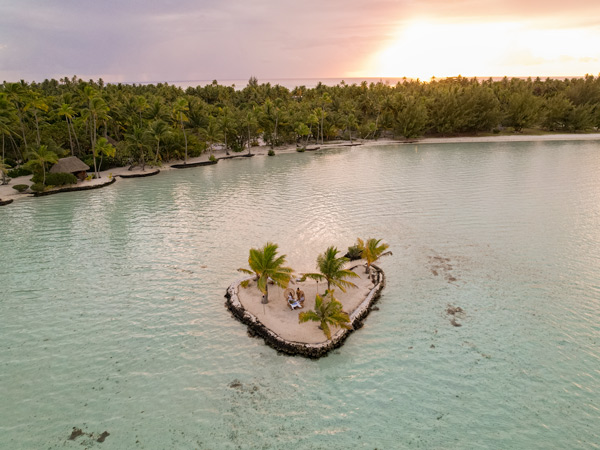
Heart shaped island in Taha’a in Tahiti
Taha’a is severely underrated. (Image: Grégoire Le Bacon)

Rum, pearls and adventure

It’s not just vanilla that defines Taha’a. Dive into the island’s other famous exports: rum and Tahitian black pearls.

A number of French Europeans have been drawn to the island more permanently, including Olivier Duret, who set up a rum distillery (with dark rum aged in French oak barrels, of course), capitalising on the island’s plentiful sugar cane. Our safari with Hiti includes a rum and gin tasting in the rustic, sand-floor shack, then a trip to a pearl farm to learn more about another major driver of French Polynesia’s economy – the prized Tahitian black pearl.
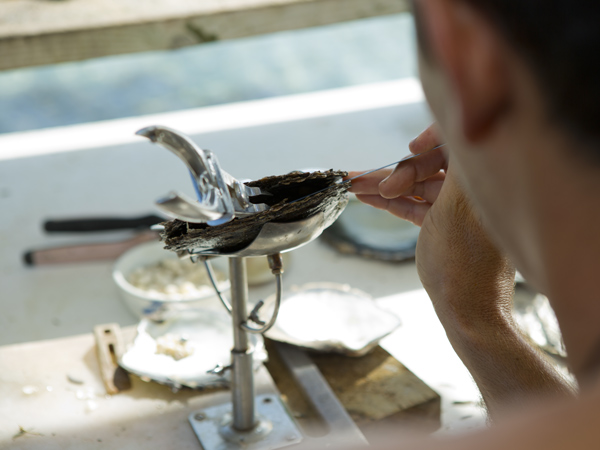
Man cleaning pearls on Taha’a Tahiti
Tahitian black pearls are important for French Polynesia’s economy.

After a short demonstration of the cultured pearl process, introduced in French Polynesia in 1961, we meet the owner of Love Here Pearl Farm, Alfred Marten, as he sits by the water, plucking pearls from a white cloth bag one by one and carefully rolling them between his fingers. He examines their size, shape and imperfections, before placing them in lettered grading trays, with ‘A’ being the highest quality.

“Less than five per cent are top quality," he says of the 200,000 pearls his farm harvests per year (which take about five hours per day to grade – lucky he’s got a nice spot by the water). And that five per cent fetches a high price, though lower grades can also be beautiful, and the farm will custom-make jewellery if you find a pearl you like.
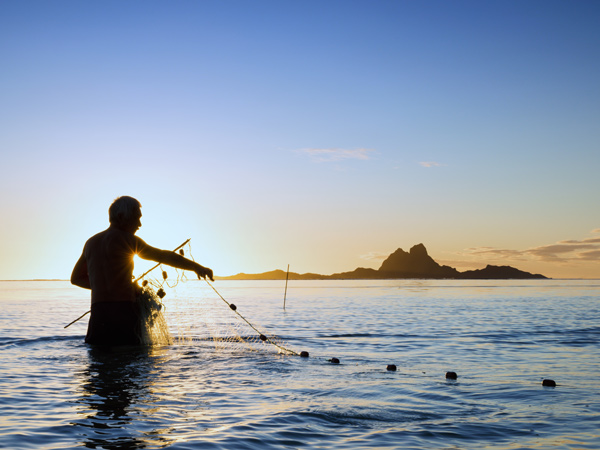
Man harvesting pearls on Taha’a Tahiti
Less than five per cent of pearls are top quality. (Image: Stephane Mailion Photography)

Where to stay on Taha’a

Though Taha’a has one hotel with overwater bungalows (Le Taha’a by Pearl Resorts), the charm of this island comes from its smaller accommodation options, which have a more local, connected feel compared to Bora Bora’s flashy resorts.
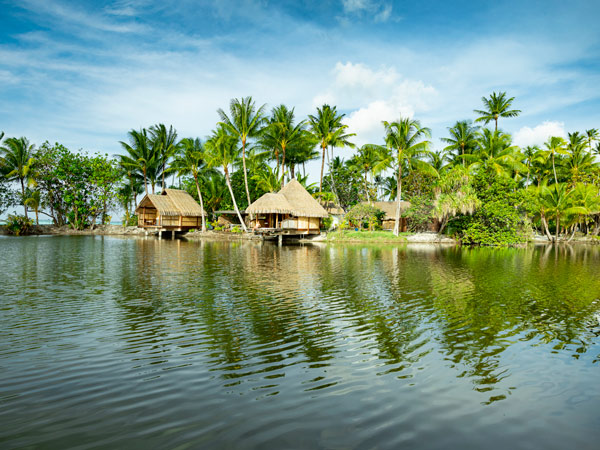
Le Taha’a by Pearl Resorts overwater bungalows.
Le Taha’a by Pearl Resorts has overwater bungalows. (Image: Grégoire Le Bacon)

My partner and I check in to Pension Anahata, a passion project of Patricia Girard and her husband Heiarii, a construction company and lumberyard owner, who saw what others might consider an impossibly steep block and thought it would make the perfect spot for eight boutique huts with beautiful timber finishes.
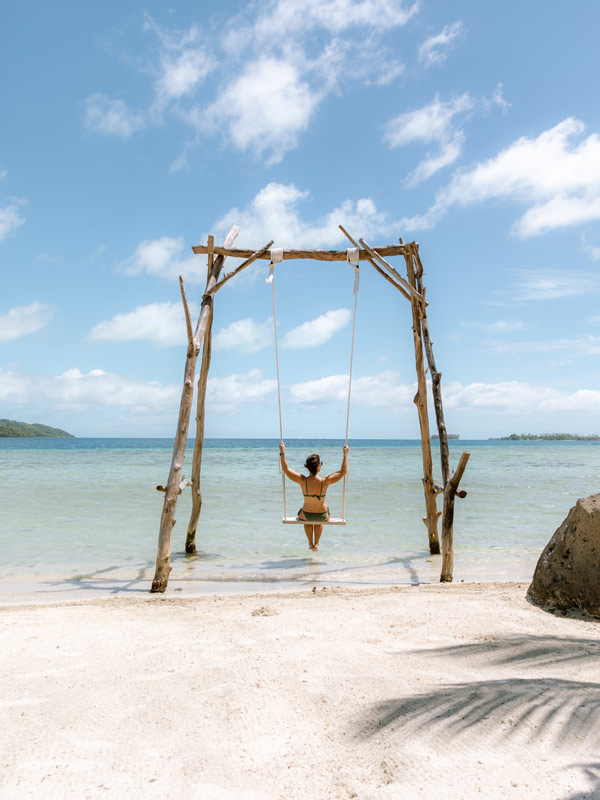
Woman swinging on a swing on beach at Pension Anahata on Taha’a , Tahiti
Pension Anahata is a passion project of Patricia Girard and her husband Heiarii. (Image: Marie Production)

Their bravery paid off as the hilltop restaurant (where guests enjoy a home-cooked breakfast and dinner) has 180-degree sea views, and our bungalow at the bottom of the hill let us step off the deck almost straight onto the sand.
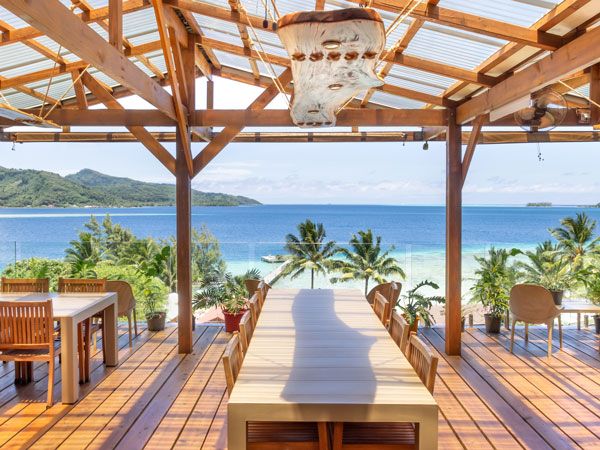
Tables overlooking ocean at Pension Anahata on Taha’a , Tahiti
The hilltop restaurant has 180-degree sea views. (Image: Marie Production)

At sunset, we borrow a couple of rusted coastal cruisers and cycle past simple, rectangular houses painted in pastel colours – aqua, pink, yellow and green, with wide-open windows and floral curtains pinched at the waist. Many houses have a small plot of sugarcane and bananas nearby, and larger coconut plantations border the coastal road. We dodge giant crabs scuttling across the road and the odd chicken, and only pull over twice to let a car pass, otherwise enjoying the road to ourselves.
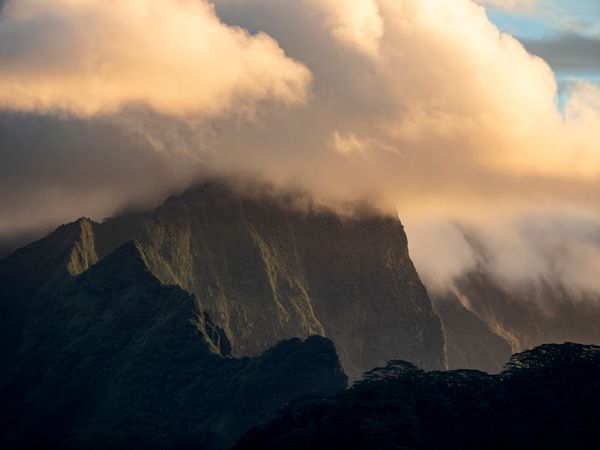
Sunset over mountains Taha’a, Tahiti
Explore the island at sunset. (Image: Emmanuel Bouvet)

Explore the lagoon: Manta rays and coral gardens

The following day, we’re picked up from Anahata’s private jetty by Tama Castagnoli, who was born in Tahiti and has lived on Taha’a for 26 years – drawn to the simplicity of life (we quickly realise that the island of Tahiti, French Polynesia’s administrative centre, is considered the ‘big smoke’ and is generally shunned by those living on other islands, who deem it too chaotic).
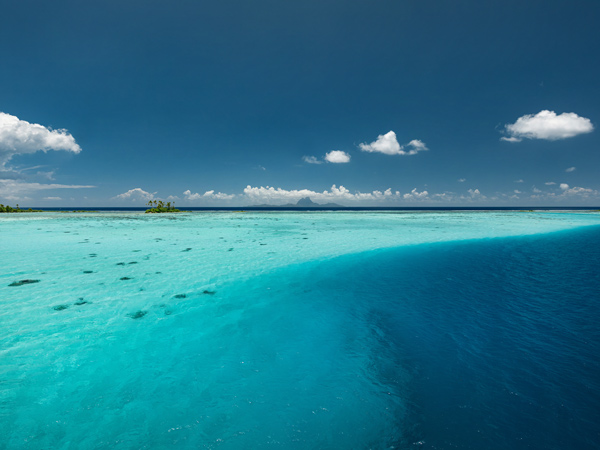
Blue waters on Taha’a in Tahiti
Locals on Taha’a are drawn to the simplicity of life.

“First, we’re going looking for manta rays," Tama announces as he fiddles with the strings of a ukulele, white shirt unbuttoned to reveal a torso that’s clearly spent many hours in the sun.

After a short boat ride, we jump into the temperate sea with fins and snorkels on Tama’s cue. Sunlight streaks through the sapphire water and schools of silver fish dart past us as we scan for the gentle giants.
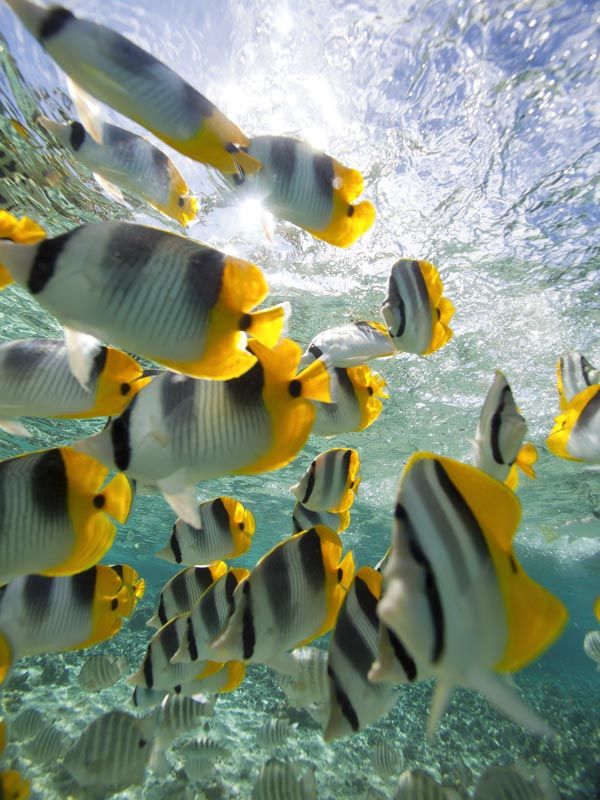
School of fish underwater in Taha’a, Tahiti
Schools of fish dart past as you snorkel.

Tama pops up and removes his mask. “Not here, come." He waves us back to the boat and we try a second spot. Within two minutes, a monstrous manta ray with an almost five-metre wingspan glides over a coral ridge, soon followed by another. The majestic creatures nearly brush past us as they slowly flap their wing-like fins. I could have stayed all day, entranced by their graceful movements, but Tama is keen for us to see more of the local marine life, so we swim back to the boat.
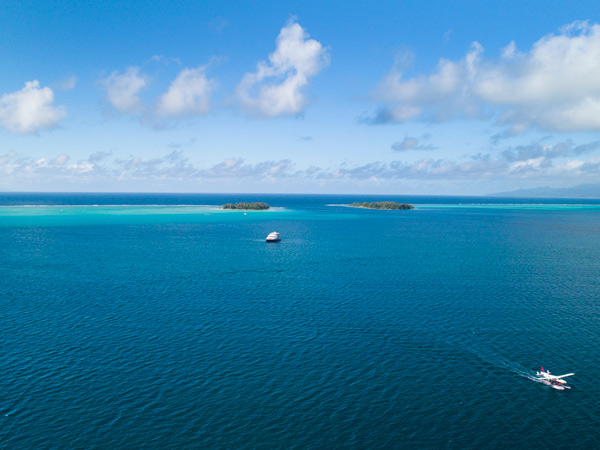
Boat and seaplane on Taha’a in tahiti
Taha’a is teeming with marine life. (Image: Tahiti Tourisme and Grégoire Le Bacon)

Our tour then takes us to a coral garden teeming with fish, then a shallow sandbar teeming with black-tip sharks. They curiously swarm us, and we’re assured they’re friendly. Our tour ends on a private ‘motu’ – the term for a small island off the islands of Tahiti – where we have lunch and laze beneath the coconut trees, watching a trio of stingrays cruise up and down in the clear, shallow waters.

“It’s a good life here," says Tama as our accommodation comes back into view. As we bump across the clear water with jungle-like mountains up ahead, and another friendly wave from a passing boat, it’s hard to disagree.
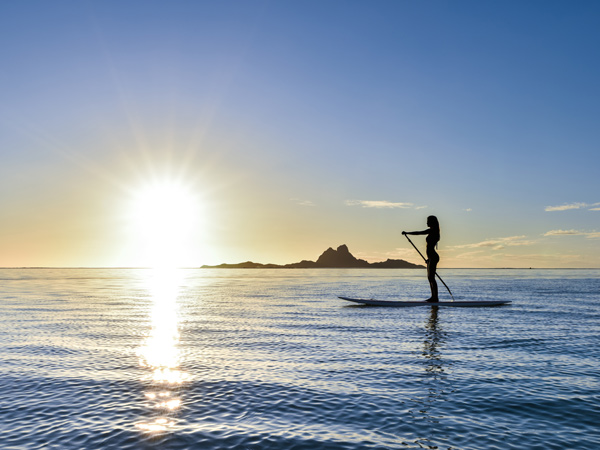
Woman stand up paddleboarding on Taha’a, Tahiti
Life is good on Taha’a. (Image: Stephane Mailion Photography)

Weekly travel news, experiences
insider tips, offers,
and more.

How to get to Taha’a

Air Tahiti Nui flies from Sydney and Melbourne to Tahiti’s capital, Papeete, via Auckland.

Air Tahiti then flies from Papeete to Ra’iātea and accommodation providers will usually arrange a boat transfer from Ra’iātea’s waterside airport to Taha’a.
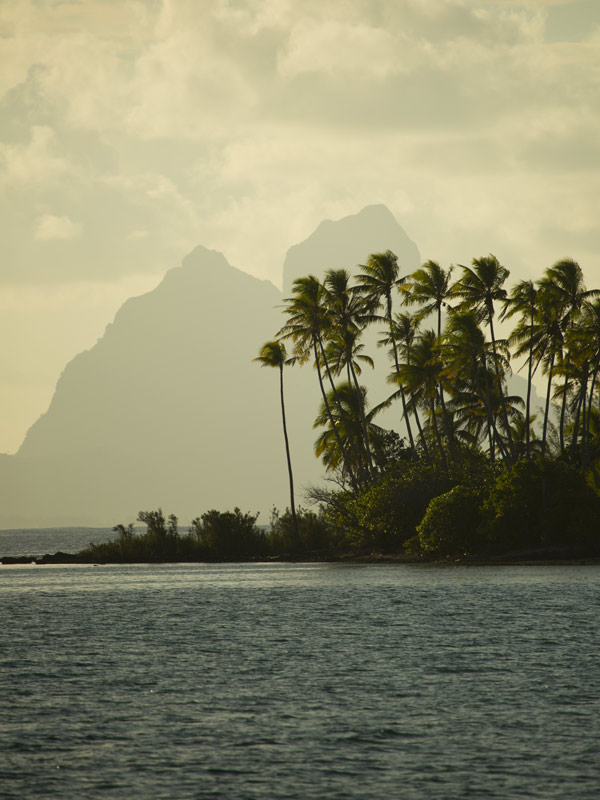
Mountain on Taha’a in Tahiti with palm trees in forefront
Fly Air Tahiti to Taha’a.

Top tours on Taha’a

4×4 island safari: Explore Taha’a’s natural beauty and vanilla plantations with Taha’a Tour Excursion.

Lagoon tour: Discover marine life, coral gardens and motu islands with Terainui Tours.
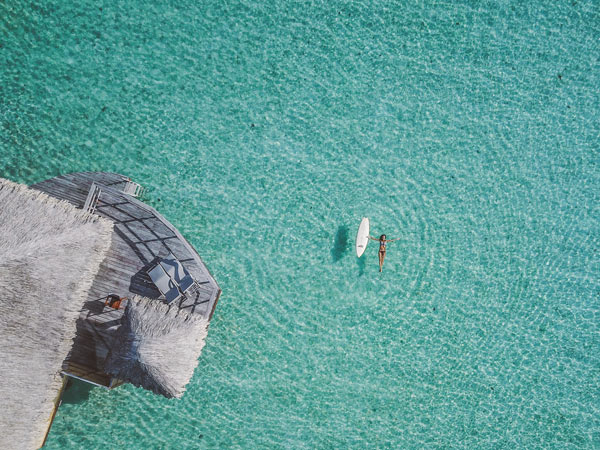
Aerial shot of woman in water in Taha’a, Tahiti
There is so much to be explored on Taha’a. (Image: Charlotte PIHO)
Taha’a is waiting to be discovered. Whether you’re into adventure, relaxation or culinary delights, this hidden gem has something for everyone. Don’t wait for the crowds – experience Taha’a before the secret’s out!

Want to see more stories from International Traveller in your Google search results?

  1. Click here to set International Traveller as a preferred source.
  2. Tick the box next to "International Traveller". That's it.
Emily McAuliffe
Emily McAuliffe is a Melbourne-based freelance travel writer. She is on the board of the Australian Society of Travel Writers and her writing and photography has featured in many titles in Australia and abroad. She loves nothing more than touching down in a new destination or approaching a familiar place with fresh eyes.
View profile and articles
hero media

5 things every hotel needs for a more restorative stay

    Kate Bettes Kate Bettes
    Wellbeing means different things to different travellers. Here’s how to pick a hotel that gets it right for you.

    The best wellness holidays aren’t necessarily spent wrapped in a spa robe. Sometimes they’re found around a dinner table in Cambodia, on a hiking trail in New Zealand or after finally beating jet lag on the other side of the world. The hotel you choose is what makes them happen.

    1. Easy access to good food

    meals from Novotel Bangkok Sukhumvit 20
    Taste delicious meals at Novotel Bangkok Sukhumvit 20.

    One of the quickest ways to derail healthy habits on holiday is to spend half of it working out where to eat instead of digging into the culture around you. Thankfully, Novotel has done much of the hard work already, with chefs building menus that lean into the flavours, ingredients and traditions of each destination.

    In Sihanoukville, Cambodia, Korkor soup – often dubbed ‘Cambodian ratatouille’ – sits alongside raw blue crab dressed with lime and chilli, best enjoyed with views across the Gulf of Thailand.

    In the lovingly chaotic city of Bangkok, the presence of food cranks up the sociability. At Novotel Bangkok Sukhumvit 20, you can settle in with mango sticky rice and stranger-turned-friends beside the pool at Sky on 20 rooftop bar, or bring them along to tackle river prawns and stir-fried crab with holy basil at the buzzing Crab Paradise Dinner Buffet.

    Then Novotel Dubai Al Barsha welcomes you with a laidback twist on the level of indulgence the Middle Eastern city is best known for up on Deck Se7en. Looking towards Burj Al Arab, the rooftop lounge has everything from Mediterranean-style dishes like seabass ceviche to Italian prosecco sundowners.

    At the other end of the scale, in the hills that surround the Novotel Bali Ubud Resort, calm comes from nature. At Siralada restaurant, Balinese traditions shape the menu while thunder rumbles over the surrounding jungle – proving the setting is as nourishing as the food itself.

    While at Novotel Nha Trang, chef Kieu Thi My Hanh and her team showcase Vietnam’s knack for balancing freshness, texture and fragrant herbs. Pho remains a favourite, while seafood salad with pomelo and mango brings those flavours together in one bright dish.

    It’s all an approach backed by partnerships with expert food creators such as Alfie Steiner, whose plant-forward recipes prove healthy food should never taste plain.

    2. Better sleep options

    Novotel Bali Ubud Resort room
    Sleep deeply with Novotel.

    There are few travel experiences more disappointing than arriving in a new country, determined to seize the day, only to fall asleep fully clothed by 3pm.

    For Australian travellers, jet lag is often an unavoidable part of the journey. That’s one reason Novotel runs sleep-focused initiatives that help guests adjust quickly without compromising on health. We’re talking partnerships with Sydney-based sleep specialist Olivia Arezzolo, known for her advice on everything from better sleep habits to beating jet lag, alongside features like pillow menus, in-room yoga content and tailored sleep guidance.

    The sooner you’re operating on local time, the sooner you can get back to more pressing matters – like deciding which spa treatment to book.

    3. More ways to move

    woman hiking around queenstown new zealand
    Stay at Novotel Queenstown Lakeside and explore local hiking trails. (Credit: GettyI mages/ naruedom)

    Every place in the world has its own way of getting you moving: whether that’s hiking up ice-bitten mountains before a sauna or gentle stretching by the pool before a facial. From fitness centres to spas, Novotel recognises that wellbeing rarely looks the same.

    At Novotel Queenstown Lakeside, activity is inescapable. Here, hiking trails, ski fields, bungee jumps, and white-water rafting have made the region famous. The hotel’s location on the shores of Lake Wakatipu means less time spent organising yourself and more time out there experiencing them. To top it all off, you can book a private hot tub for the evening before heading back into the wilderness tomorrow.

    Bali, of course, takes a softer approach. At Novotel Bali Ubud Resort or Novotel Bali Nusa Dua, movement is less about conquering a mountain and more about a dance class between the tropical gardens and lagoon pools. Afterwards, the spa takes over, with traditional treatments like a Lulur body scrub: a combination of rice, turmeric, sandalwood, ginger and jasmine that’ll soothe muscles already relaxed by the Balinese heat.

    4. Better connections

    Novotel Sharm El Sheikh
    Kids will love a stay at Novotel Sharm El Sheikh.

    One of the best things about travel is that it gives your family stories you’ll be telling for years. Novotel helps create them with activities that bring everyone together, whether that’s trying something new, learning a local skill, or simply spending more time together.

    Go for a distinctly Thai twist at Novotel Phuket Vintage Park, where many of the family activities draw on local culture. Kids can try everything from beginner Thai boxing and language lessons to umbrella painting and – a pastime beloved by children the world over – pool foam parties. Everyone is welcome to join in, whether that’s getting splashed, covered in paint, or simply watching their children discover a new side of Thailand during the dedicated Family & Kids Day.

    A different adventure awaits at Novotel Sharm El Sheikh. Kids could be perfectly content with discos, drawing classes and new holiday friends, but the Red Sea has other ideas. Sitting on the edge of Naama Bay, days here might involve snorkelling colourful reefs, taking a boat trip to Ras Mohammed National Park or heading into the desert by quad bike or camel for a Bedouin-style dinner beneath the stars.

    5. Location is everything

    Surin Beach, Choeng Thale, Thalang District, Phuket, Thaiföld
    Explore Phuket’s gorgeous beaches. (Credit: Bence Biczo)

    Everyone’s idea of wellness looks a little different. With more than 600 hotels across 65 countries, Novotel gives guests the freedom to choose the destination that suits them best. Whether that’s a beachside escape in Phuket, an alpine expedition in Queenstown or a city break in Bangkok, there’s a good chance a Novotel isn’t far away.

    All that’s left? Choosing your version of wellbeing.

    Discover stays to inspire your everyday at novotel.accor.com.