hero media

Under-the-radar spots in Albania

A Mediterranean holiday full of flavoursome food, wonderful wine and Riviera views – but make it unique, uncrowded and inexpensive. It might sound like a tall order, but not if you set your sights on Albania.

With Greece to its south, Montenegro to its north and Italy just across the pond, Albania is a culinary and cultural crossroads where Mediterranean freshness meets Balkan heartiness. Like nearby Italy, Spain and southern France, the country experiences mild winters and hot, dry summers, ideal for grape-ripening. The vineyards smattered along its coast experience similar conditions to those in Portugal’s Douro Valley, while its mountainous grape-growing regions have been likened to Italy’s Piedmont or France’s Rhône Valley.

If the food and wine aren’t enough to get you booking a trip, Albania has almost 500 kilometres of dramatic riviera, speckled with beach bars, seafood restaurants and crystal-clear coves to splash around in. So how has a destination that offers so much managed to quietly coast under the radar for so long?

A brief history

Up until the mid-1980s, Albania spent almost 50 years under the strict communist leadership of Enver Hoxha. Albanians were forbidden to travel, nothing was imported and taxpayer funds were pumped into building thousands of underground bunkers for an invasion the ever-paranoid Hoxha was certain would come – but never did.
beach signs in Durres
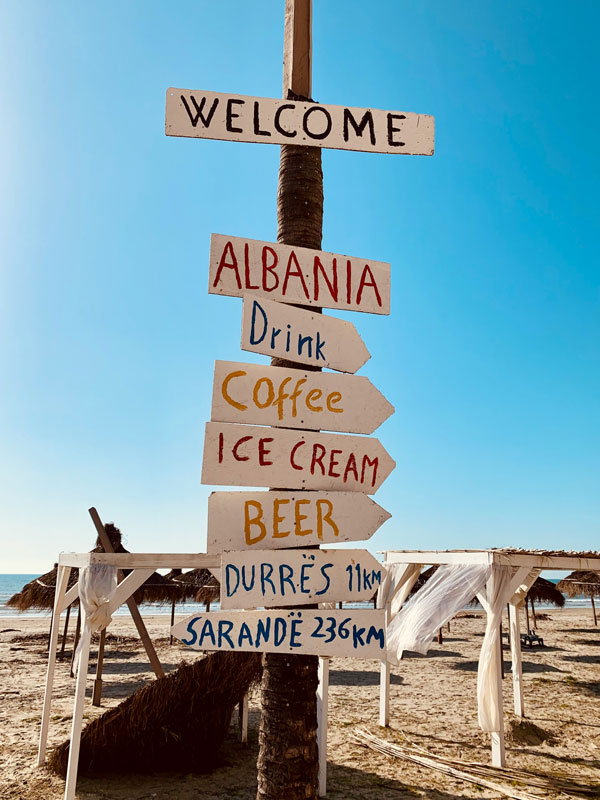
Bars and seafood restaurants are found along the beach. (Image: Olga Pro)

Cut to the late ’80s, and a new Albanian president was in power, forging trade ties with Western Europe, allowing Albanians to journey abroad, and – importantly for curious travellers – opening Albania up to the rest of the world. Independent political parties were formed after the collapse of communist rule in Eastern Europe, before the Democratic Party was voted into power in 1992. However, Albania’s freshly minted democratic system was young, fragile and led by inexperienced staff. These conditions made it all too easy for opportunistic criminal networks to emerge and thrive, creating the perception that Albania was a hotbed for mafia activity.

But Albania stepped up to create a safer environment for its people and visitors. It established an anti-corruption and organised crime investigatory body and joined the United Nations Convention Against Transnational Organised Crime. Today, visiting Albania requires no extra vigilance than travelling to any other European country. And its eventful past provides a thrilling experience for history buffs. This – along with its culture, cuisine and remarkable riviera – makes for an unforgettable experience.
the villages in the Albanian Riviera
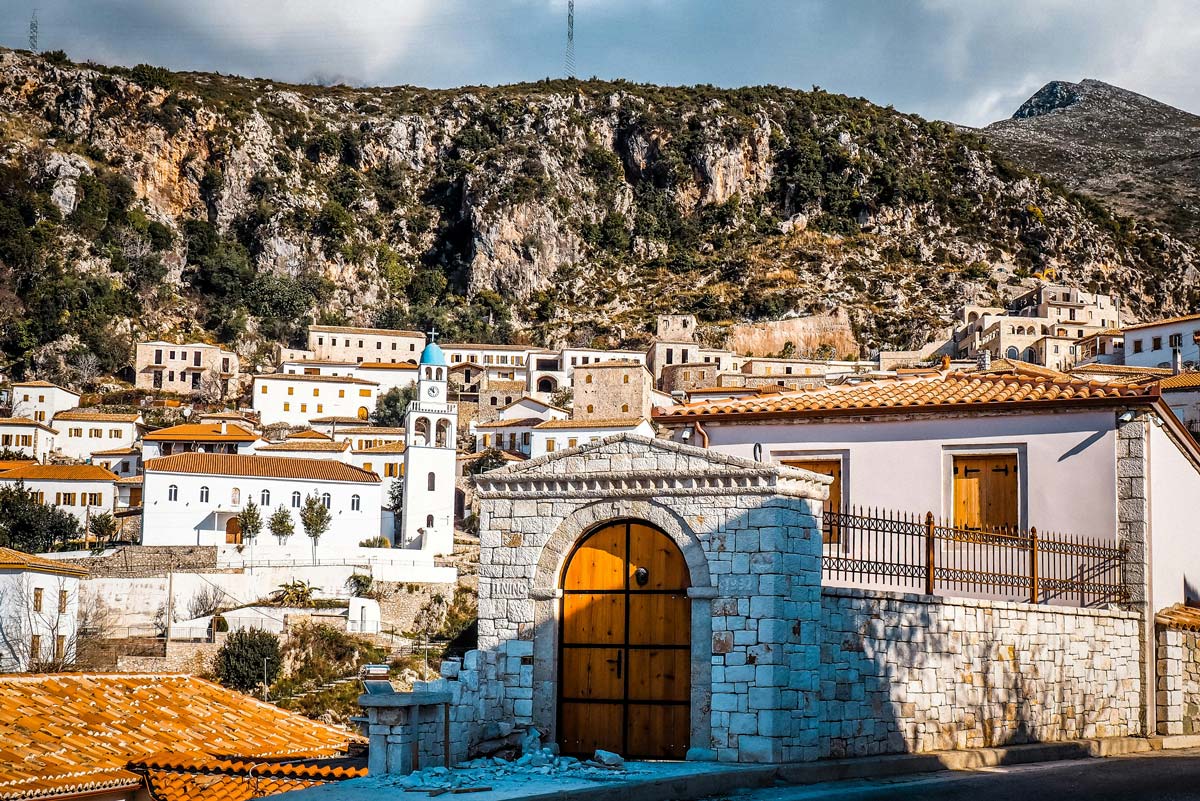
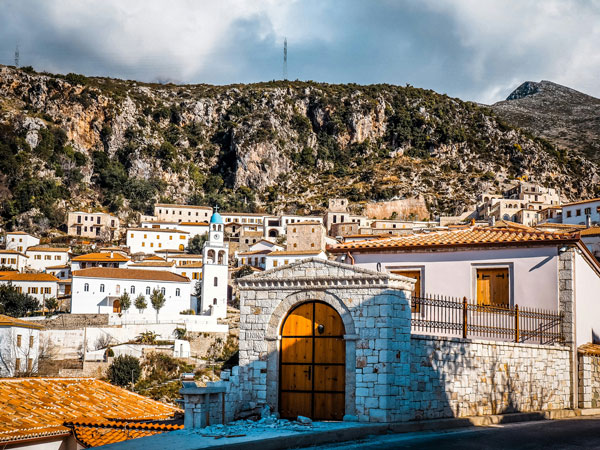
Albanian villages are built into the craggy coast. (Image: Abenteuer Albanien)

Tiranë

At first glimpse, the lively capital of Tiranë (or Tirana) seems like any other modern city in Europe – well-heeled professionals crossing the leafy Shëtitorja Murat Toptani Bulevardi, locals meeting for espresso in hip cafes and students congregating in sprawling plazas and parks. But then you turn a corner and see half a dozen torn-down communist statues being stored behind a building, or walk past a decrepit bunker that’s been transformed into a trendy bar, and you realise there is much more to this city than meets the eye.
the Pyramid of Tirana in Blloku
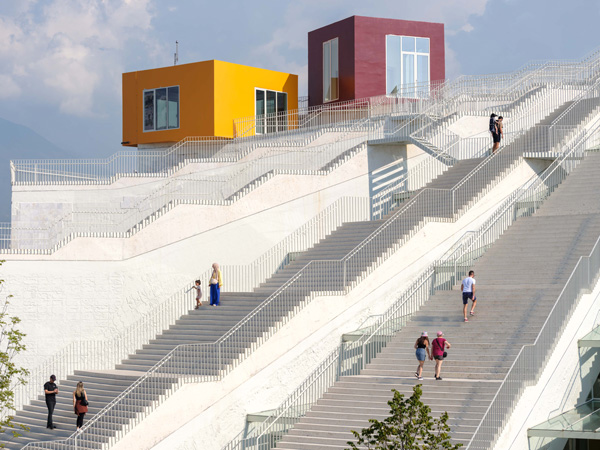
The Pyramid of Tirana in Blloku is a symbol of the city. (Image: Ossip Van Duivenbode)

The hip neighbourhood of Blloku – once restricted to only the communist elite – is peppered with chic cocktail lounges, coffee spots and restaurants (with prices so affordable you’ll do a double take at your bill).

Blloku is also where you’ll find the Pyramid of Tirana, a symbol of the city and a popular spot for locals and tourists.
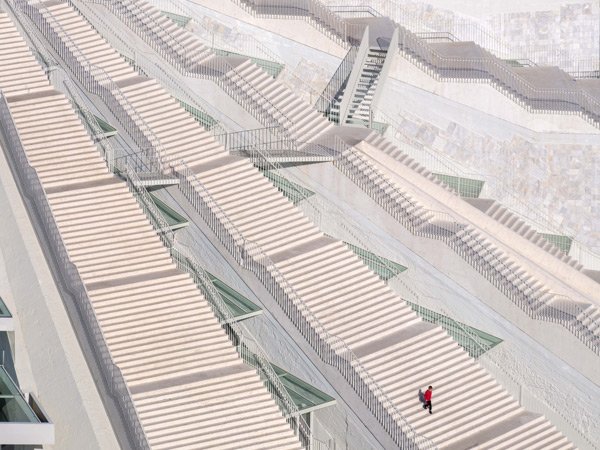
a closer look at the Pyramid of Tirana in Blloku
The said pyramid was dedicated to the communist dictator Enver Hoxha. (Image: Ossip Van Duivenbode)

Right behind the Pyramid is Komiteti Kafe Muzeum, a quirky cafe meets museum with decor inspired by the communist era – the furniture, the walls and even the toilet. It serves almost 20 different types of Albanian raki liqueur, as well as karamele zana – a regional candy popular in Albania during its communist era.
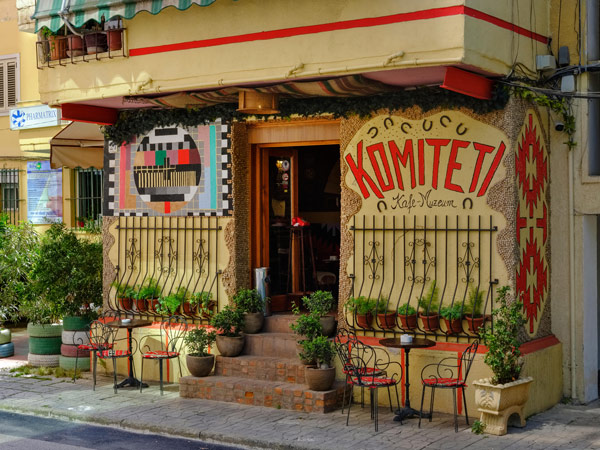
the Komiteti Kafe Muzeum in Tirana
Pop by the quirky Komiteti Kafe Muzeum in Tirana. (Image: imageBROKER.com GmbH & Co. KG)

Another not-to-be-missed museum experience is Bunk’Art2, an ode to Albania’s history inside a preserved communist-era nuclear bunker. Bunk’Art2 is the offshoot to the hugely successful Bunk’Art1. While the latter is on the outskirts of the city, Bunk’Art2 is in the heart of Tirana.
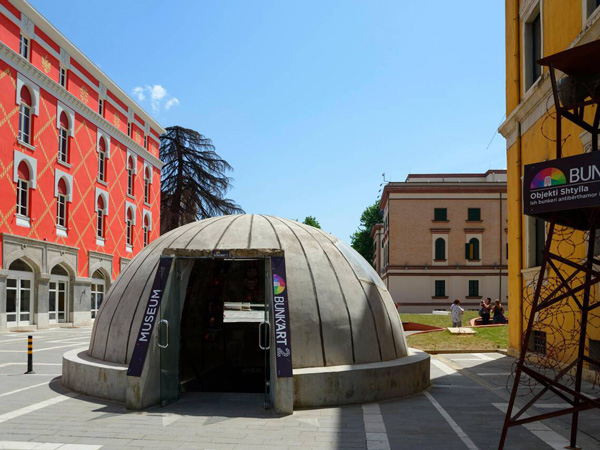
the Bunk’Art2 museum in Albania
Bunk’Art2 is a museum housed inside a communist-era nuclear bunker. (Image: ImageBroker/Alamy)

Not far is Skanderbeg Square, Tirana’s main plaza, which provides a fascinating glimpse into Albania’s mottled past. In the early 2000s, the Albanian government began erecting structures in vibrant hues of pink, orange and yellow to sit starkly alongside the old grey communist high-rises; it’s quite a sight to behold.
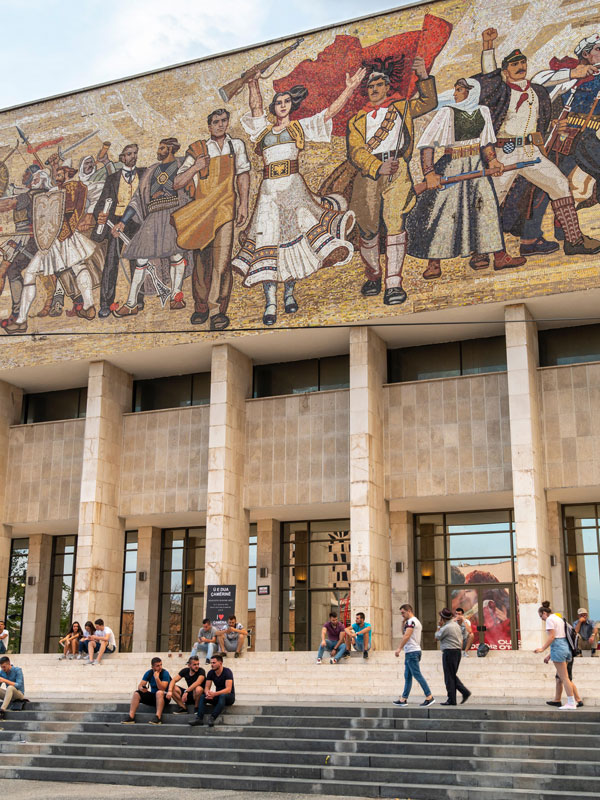
the National Historical Museum in central Skanderbeg Square, Tirana
Locals and visitors relax in Skanderbeg Square in central Tirana. (Image: Peter Eastland/Alamy)

Berat

Albania’s second-biggest city Berat is about a two-hour drive from Tirana and is a compact place explorable within one or two days. The city itself is a UNESCO World Heritage site, and you’ll immediately understand why upon arrival.
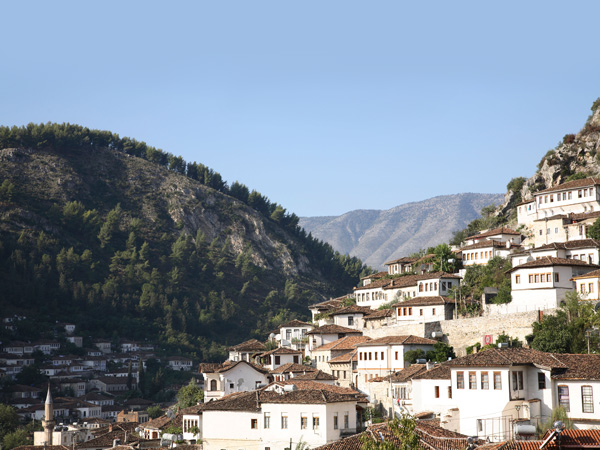
hillside houses in Berat City
Berat is often called ‘The City of a Thousand Windows’ for its many houses that cling to the hillside. (Image: LatitudeStock/Alamy)

The elegant stone and alabaster city is fringed with verdant fig trees and earned its moniker, The City of a Thousand Windows, due to the dazzling view of old Ottoman houses that cascade down both sides of its gentle river valley.
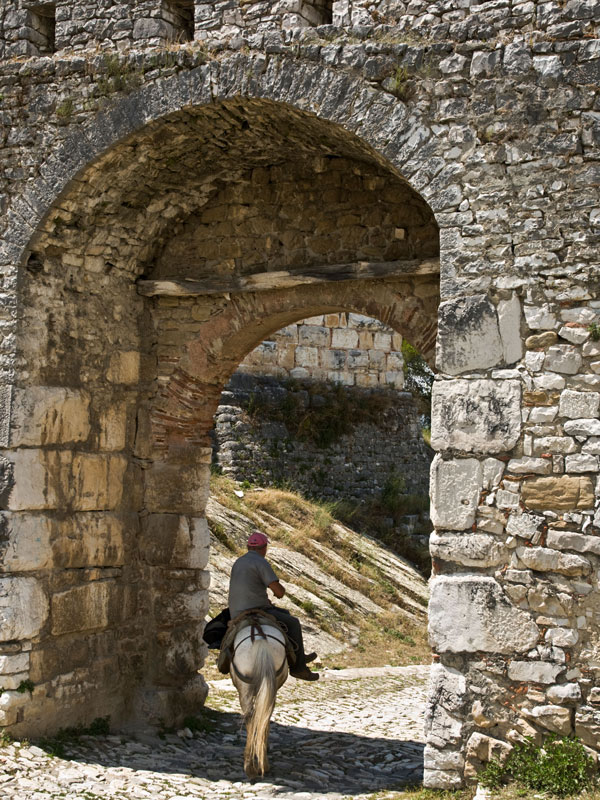
a man riding a horse at the gate to the Citadel of Berat
Stroll through the stone streets to the 13th-century Citadel of Berat. (Image: Peter Eastland/Alamy)

The 13th-century Berat Castle built at the top of a hill is a sprawling community of complex stone streets and houses. Many families still reside inside the castle walls, with some homes converted into guesthouses, restaurants or shops.
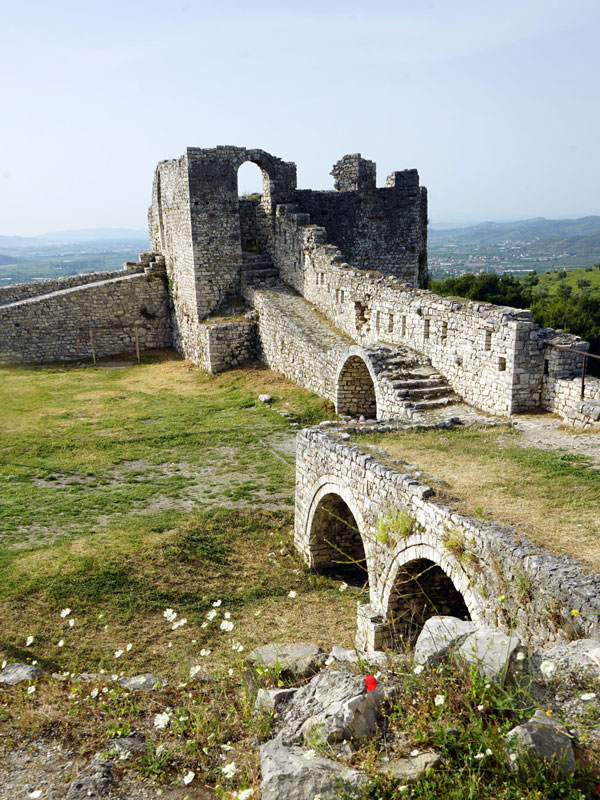
the fortress ruins of the Berat Castle
These crumbling fortress walls are what’s left of Berat Castle. (Image: Sarah Crake/Alamy)

It’s not unusual to see locals herding sheep, kids kicking a ball down the stone alleyways or women selling lace and embroidery outside their homes as you make your way up to the Berat Viewing Platform that looks out over the city.
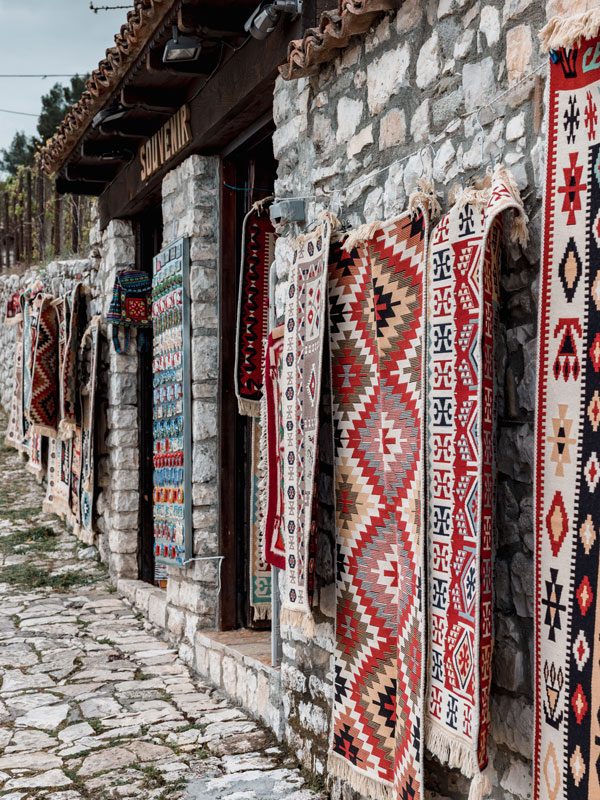
colourful ottoman style rugs outside a souvenir shop in Berat, Albania
Find these colourful Albanian rugs at souvenir shops in Berat. (Image: Brittany Olson via Getty Images)

Stroll along Bulevardi Republika, a vast car-free street lined with cafes on one side and a park that serves as a buffer between pedestrians and the river on the other.

Cross over the Gorica Bridge to take in the view of the endless windows that Berat is famous for. Local restaurant Antigoni offers outdoor dining that provides a breathtaking vantage point.
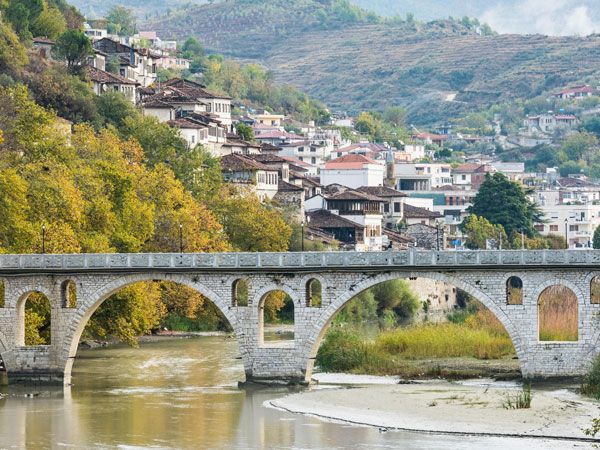
the Gorica Bridge in Berat, Albania
The Ottoman-era city is UNESCO World Heritage-listed. (Image: Gert Olsson/Alamy)

The Riviera

Upon catching your first glimpse of Albania’s striking riviera, you could be forgiven for thinking you’re on the coast of France or Italy. Yachts and fishing boats bob along the glimmering turquoise water. Beach bars and seafood restaurants pepper the endless white sand. And dramatic hills covered in olive groves tower overhead and into the distance.
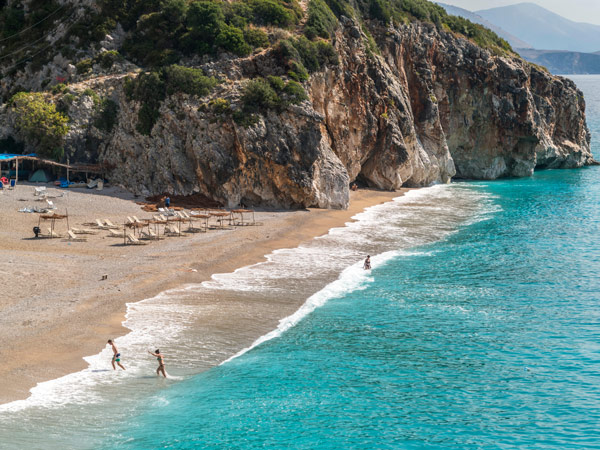
the Gjipe Beach in Albania
The Albanian Riviera is an unexpected and delightful alternative to Mediterranean hotspots. (Image: Peter Schickert/Alamy)

However, unlike its other European counterparts, the Albanian Riviera is uncrowded, inexpensive and far more laid-back. In fact, come closing time for the beachfront restaurants, it’s not uncommon for staff to bring out a pot of surplus seafood risotto and offer it to late-night beachgoers who may be in need of a snack.
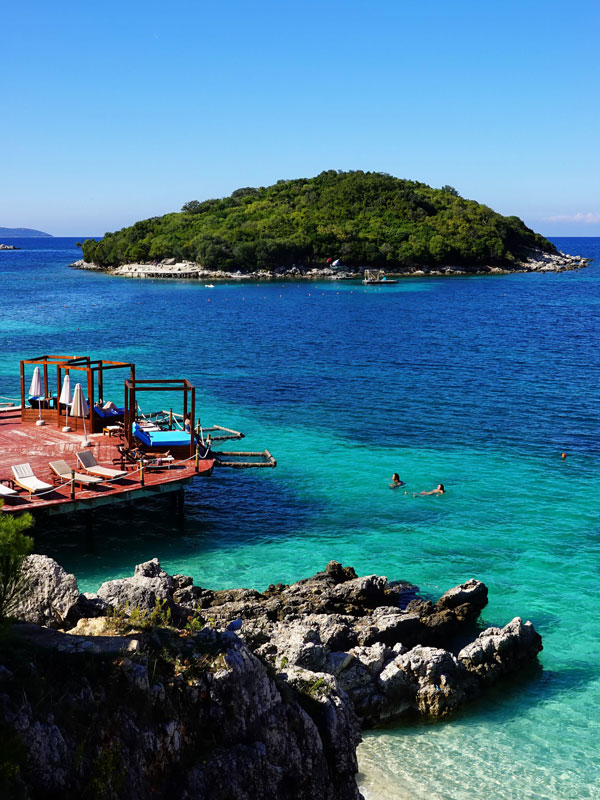
the beachside capital of Albania at Plazhi Ksamilit
Plazhi Ksamilit is the country’s unofficial beachside capital.

Plazhi Ksamilit, the unofficial beachside capital of the Albanian Riviera, lies in the south near the Greek border. It has a small bay with three tiny islands that are an easy swim or boat ride away, and offers plenty of accommodation and beachfront dining – Guvat Bar & Restaurant is worth a visit.
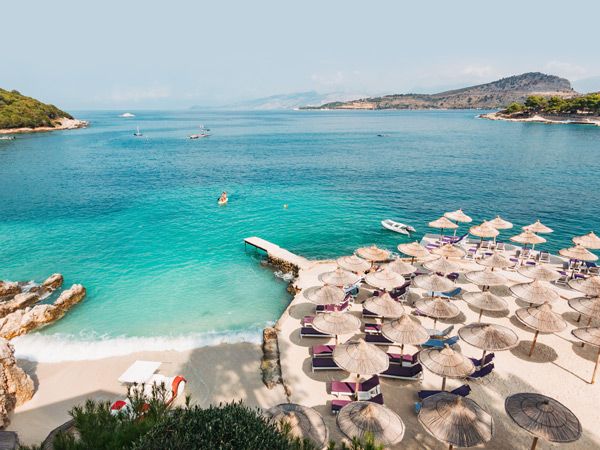
an aerial view of beach umbrellas clustered at Ksamil
Umbrellas are clustered on the sand at Ksamil. (Image: Hugh Mitton/Alamy)

You’ll find endless coastal towns with their own jaw-dropping beaches and bays heading further north, where standouts include the beaches of Livadhi, Drymades and Jale. Restaurant Kapiteni in Jale is an unforgettable spot for dinner and a drink or a stay at its luxe hotel.
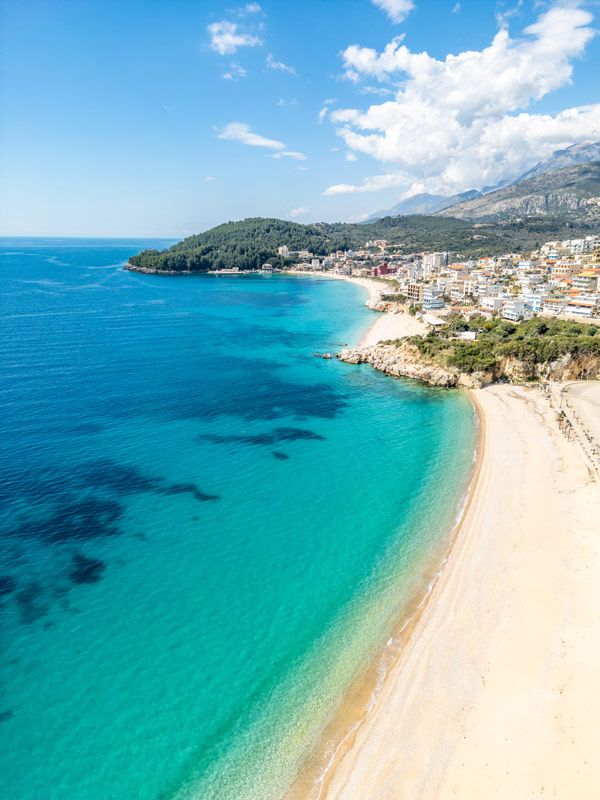
an aerial view of Prinos Beach in Himarë, Albania
Albania’s coast is lapped by turquoise sea. (Image: Thomas Faull via Getty Images)

Weekly travel news, experiences
insider tips, offers,
and more.

Food and wine

Mrizi i Zanave

A car in Albania really is essential, because the famous Mrizi i Zanave, a restaurant, farm, winery and resort nestled in the Albanian countryside, is 90 minutes north of Tirana. The agritourism venture in the hills of Fishtë has made quite a name for itself with its farm-to-table cuisine and the fact it’s managed to achieve an ambience that is both unpretentious and opulent. Expect a gaggle of geese to greet you when you arrive at the rustic stone building before you’re taken inside for your six-course degustation.
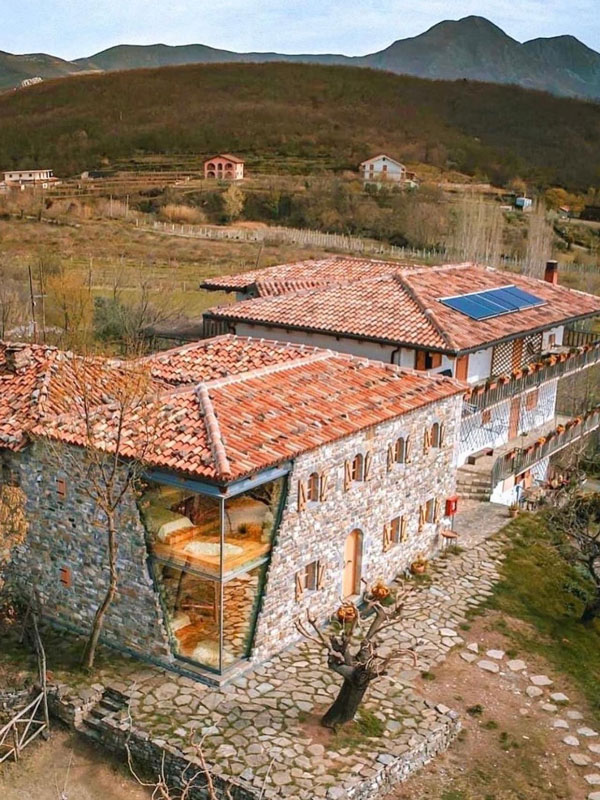
the top view of the guesthouse at Mrizi i Zanave
The guesthouse at Mrizi i Zanave is within a heritage stone building.

Each dish served at the restaurant is emblematic of the global Slow Food movement and a contemporary take on traditional Albanian cuisine, known for being a unique amalgamation of Mediterranean and Balkan flavours. It’s a cuisine that celebrates the country’s geographical diversity, with dishes that echo the freshness of the coast as well as the heartiness of the hillside. Expect vibrant seafood dishes like Albanian artisanal pasta tossed with prawns, cherry tomatoes and parsley from the farm, to hearty and traditional tavë dheu – a slow-cooked dish of veal, local vegetables and ricotta. Hospitality is deeply ingrained in Albanian culture, and serving food is an integral part of hosting guests and visitors. So, when you dive into your meal, you’re not just tasting food, you’re experiencing Albania’s generosity, warmth and shared sense of community.
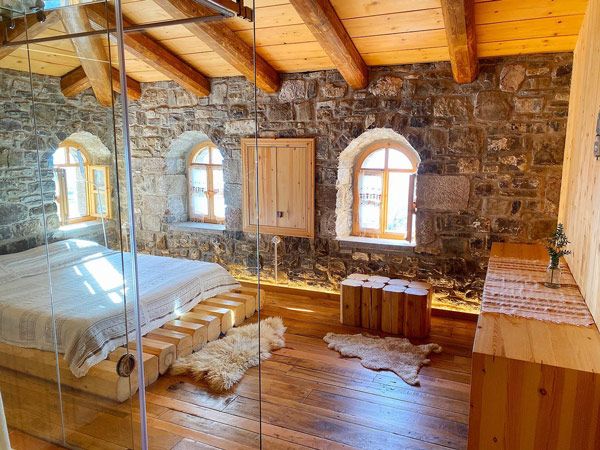
the guesthouse interior of Mrizi i Zanave restaurant
Mrizi i Zanave is a farm-to-table restaurant with a guesthouse.

Kantina Kallmeti

Not far from Mrizi is Kantina Kallmeti, one of Albania’s standout wineries. It has gained international recognition for its cultivation of the kallmet grape, an Albanian varietal known for its ability to produce spectacular red wine.

Çobo Winery

Çobo Winery, a family-run estate 20 minutes from Berat, is considered one of the best wineries in the country. It has been making wine for about a century and offers visitors intimate and detailed tastings in its homey cellar door.

Nurellari Winery

Nurellari Winery is another family-run affair just a 25-minute drive south of Berat.
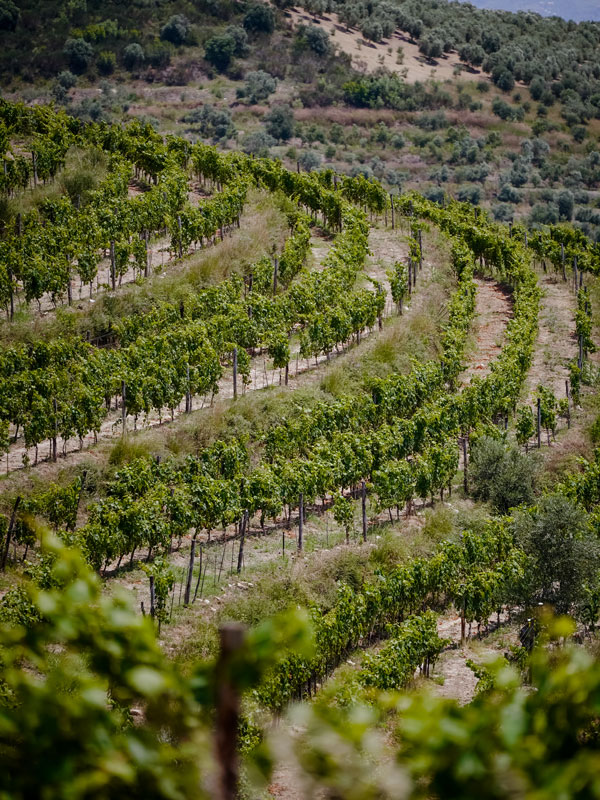
the ush vineyards at Nurellari Winery
Be surrounded by lush vineyards at Nurellari Winery.

While its cellar door is stately and sumptuous, the service is personal, warm and friendly. Don’t be surprised if, after your tasting, Mama Nurellari asks you to stay for dinner.
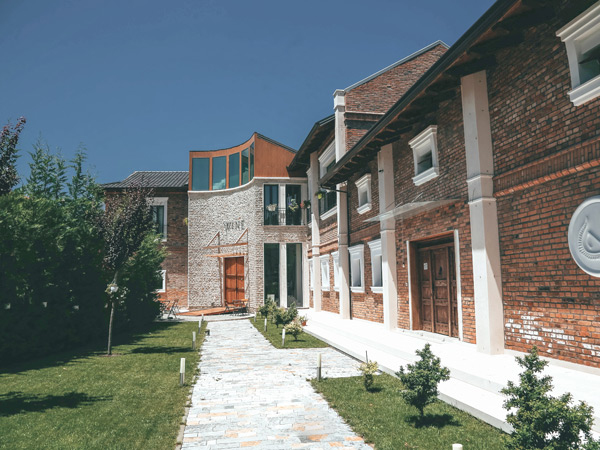
the exterior of Nurellari Winery
Sample wines at the family-run Nurellari Winery.

Want to see more stories from International Traveller in your Google search results?

  1. Click here to set International Traveller as a preferred source.
  2. Tick the box next to "International Traveller". That's it.
Kirsty Petrides
Kirsty Petrides is a writer, wine-lover and cheese enthusiast. Whether she’s hunting down the best restaurant in Albania, foraging the Marrakech markets for spices or camping in the middle of Patagonian wilderness, she loves to seek out the authentic side of the places she visits, and share that with readers through her writing.
View profile and articles
hero media

5 things every hotel needs for a more restorative stay

    Kate Bettes Kate Bettes
    Wellbeing means different things to different travellers. Here’s how to pick a hotel that gets it right for you.

    The best wellness holidays aren’t necessarily spent wrapped in a spa robe. Sometimes they’re found around a dinner table in Cambodia, on a hiking trail in New Zealand or after finally beating jet lag on the other side of the world. The hotel you choose is what makes them happen.

    1. Easy access to good food

    meals from Novotel Bangkok Sukhumvit 20
    Taste delicious meals at Novotel Bangkok Sukhumvit 20.

    One of the quickest ways to derail healthy habits on holiday is to spend half of it working out where to eat instead of digging into the culture around you. Thankfully, Novotel has done much of the hard work already, with chefs building menus that lean into the flavours, ingredients and traditions of each destination.

    In Sihanoukville, Cambodia, Korkor soup – often dubbed ‘Cambodian ratatouille’ – sits alongside raw blue crab dressed with lime and chilli, best enjoyed with views across the Gulf of Thailand.

    In the lovingly chaotic city of Bangkok, the presence of food cranks up the sociability. At Novotel Bangkok Sukhumvit 20, you can settle in with mango sticky rice and stranger-turned-friends beside the pool at Sky on 20 rooftop bar, or bring them along to tackle river prawns and stir-fried crab with holy basil at the buzzing Crab Paradise Dinner Buffet.

    Then Novotel Dubai Al Barsha welcomes you with a laidback twist on the level of indulgence the Middle Eastern city is best known for up on Deck Se7en. Looking towards Burj Al Arab, the rooftop lounge has everything from Mediterranean-style dishes like seabass ceviche to Italian prosecco sundowners.

    At the other end of the scale, in the hills that surround the Novotel Bali Ubud Resort, calm comes from nature. At Siralada restaurant, Balinese traditions shape the menu while thunder rumbles over the surrounding jungle – proving the setting is as nourishing as the food itself.

    While at Novotel Nha Trang, chef Kieu Thi My Hanh and her team showcase Vietnam’s knack for balancing freshness, texture and fragrant herbs. Pho remains a favourite, while seafood salad with pomelo and mango brings those flavours together in one bright dish.

    It’s all an approach backed by partnerships with expert food creators such as Alfie Steiner, whose plant-forward recipes prove healthy food should never taste plain.

    2. Better sleep options

    Novotel Bali Ubud Resort room
    Sleep deeply with Novotel.

    There are few travel experiences more disappointing than arriving in a new country, determined to seize the day, only to fall asleep fully clothed by 3pm.

    For Australian travellers, jet lag is often an unavoidable part of the journey. That’s one reason Novotel runs sleep-focused initiatives that help guests adjust quickly without compromising on health. We’re talking partnerships with Sydney-based sleep specialist Olivia Arezzolo, known for her advice on everything from better sleep habits to beating jet lag, alongside features like pillow menus, in-room yoga content and tailored sleep guidance.

    The sooner you’re operating on local time, the sooner you can get back to more pressing matters – like deciding which spa treatment to book.

    3. More ways to move

    woman hiking around queenstown new zealand
    Stay at Novotel Queenstown Lakeside and explore local hiking trails. (Credit: GettyI mages/ naruedom)

    Every place in the world has its own way of getting you moving: whether that’s hiking up ice-bitten mountains before a sauna or gentle stretching by the pool before a facial. From fitness centres to spas, Novotel recognises that wellbeing rarely looks the same.

    At Novotel Queenstown Lakeside, activity is inescapable. Here, hiking trails, ski fields, bungee jumps, and white-water rafting have made the region famous. The hotel’s location on the shores of Lake Wakatipu means less time spent organising yourself and more time out there experiencing them. To top it all off, you can book a private hot tub for the evening before heading back into the wilderness tomorrow.

    Bali, of course, takes a softer approach. At Novotel Bali Ubud Resort or Novotel Bali Nusa Dua, movement is less about conquering a mountain and more about a dance class between the tropical gardens and lagoon pools. Afterwards, the spa takes over, with traditional treatments like a Lulur body scrub: a combination of rice, turmeric, sandalwood, ginger and jasmine that’ll soothe muscles already relaxed by the Balinese heat.

    4. Better connections

    Novotel Sharm El Sheikh
    Kids will love a stay at Novotel Sharm El Sheikh.

    One of the best things about travel is that it gives your family stories you’ll be telling for years. Novotel helps create them with activities that bring everyone together, whether that’s trying something new, learning a local skill, or simply spending more time together.

    Go for a distinctly Thai twist at Novotel Phuket Vintage Park, where many of the family activities draw on local culture. Kids can try everything from beginner Thai boxing and language lessons to umbrella painting and – a pastime beloved by children the world over – pool foam parties. Everyone is welcome to join in, whether that’s getting splashed, covered in paint, or simply watching their children discover a new side of Thailand during the dedicated Family & Kids Day.

    A different adventure awaits at Novotel Sharm El Sheikh. Kids could be perfectly content with discos, drawing classes and new holiday friends, but the Red Sea has other ideas. Sitting on the edge of Naama Bay, days here might involve snorkelling colourful reefs, taking a boat trip to Ras Mohammed National Park or heading into the desert by quad bike or camel for a Bedouin-style dinner beneath the stars.

    5. Location is everything

    Surin Beach, Choeng Thale, Thalang District, Phuket, Thaiföld
    Explore Phuket’s gorgeous beaches. (Credit: Bence Biczo)

    Everyone’s idea of wellness looks a little different. With more than 600 hotels across 65 countries, Novotel gives guests the freedom to choose the destination that suits them best. Whether that’s a beachside escape in Phuket, an alpine expedition in Queenstown or a city break in Bangkok, there’s a good chance a Novotel isn’t far away.

    All that’s left? Choosing your version of wellbeing.

    Discover stays to inspire your everyday at novotel.accor.com.