hero media

Are some routes more prone to air turbulence? Will climate change make it worse? Your questions answered

International Traveller
A little bit of turbulence is a common experience for air travellers. Severe incidents are rare – but when they occur they can be deadly.

The recent Singapore Airlines flight SQ321 from London to Singapore shows the danger. An encounter with extreme turbulence during normal flight left one person dead from a presumed heart attack and several others badly injured. The flight diverted to land in Bangkok so the severely injured passengers could receive hospital treatment.

Air turbulence can happen anywhere, but is far more common on some routes than on others.

Climate change is expected to boost the chances of air turbulence, and make it more intense. In fact, some research indicates turbulence has already worsened over the past few decades.

Where does turbulence happen?

Nearly every flight experiences turbulence in one form or another.

If an aircraft is taking off or landing behind another aircraft, the wind generated by the engine and wingtips of the lead aircraft can cause “wake turbulence" for the one behind.

Close to ground level, there may be turbulence due to strong winds associated with weather patterns moving through the area near an airport. At higher altitudes, there may be wake turbulence again (if flying close to another aircraft), or turbulence due to updraughts or downdraughts from a thunderstorm.

Another kind of turbulence that occurs at higher altitudes is harder to predict or avoid. So-called “clear-air turbulence" is invisible, as the name suggests. It is often caused by warmer air rising into cooler air, and is generally expected to get worse due to climate change.

At the most basic level turbulence is the result of two or more wind events colliding and creating eddies, or swirls of disrupted airflow.

It often occurs near mountain ranges, as wind flowing over the terrain accelerates upward.

Turbulence also often occurs at the edges of the jet streams. These are narrow bands of strong, high-altitude winds circling the globe. Aircraft often travel in the jet streams to get a speed boost – but when entering or leaving the jet stream, there may be some turbulence as it crosses the boundary with the slower winds outside.

What are the most turbulent routes?

It is possible to map turbulence patterns over the whole world. Airlines use these maps to plan in advance for alternate airports or other essential contingencies.
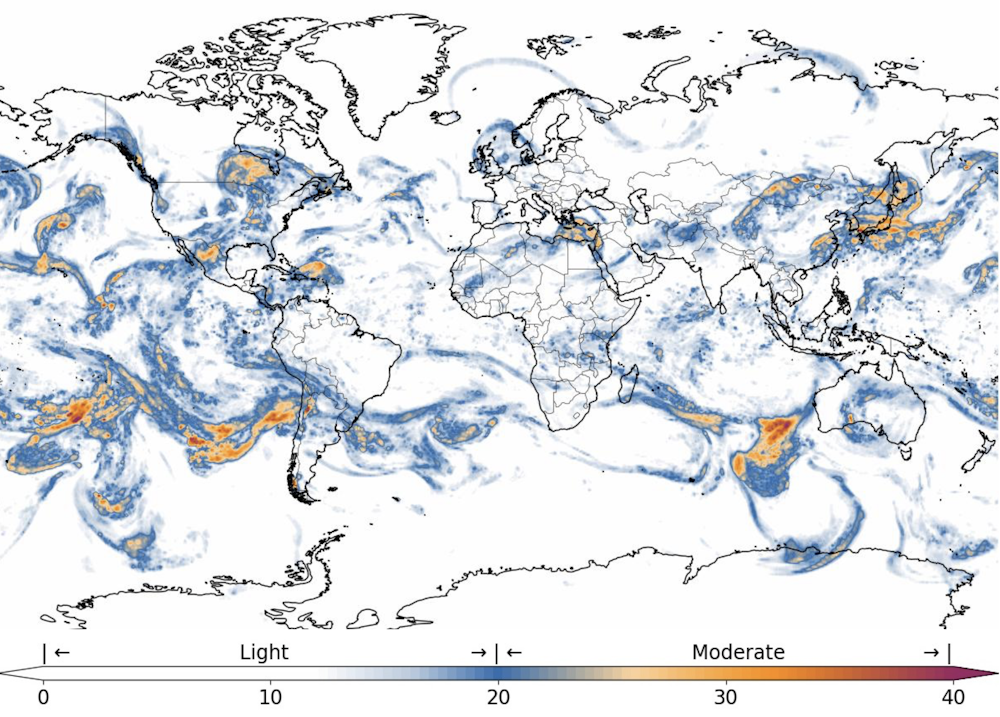
Map showing air turbulence.

A map of estimated clear-air turbulence around the world, current as of 3:00PM AEST (0500 UTC) on May 22 2024.
Turbli

While turbulence changes with weather conditions, some regions and routes are more prone to it than others. As you can see from the list below, the majority of the most turbulent routes travel close to mountains.

In Australia, the highest average turbulence in 2023 occurred on the Brisbane to Sydney route, followed by Melbourne to Sydney and Brisbane to Melbourne.

Climate change may increase turbulence

How will climate change affect the future of aviation?

A study published last year found evidence of large increases in clear-air turbulence between 1979 and 2020. In some locations severe turbulence increased by as much as 55%.

A map of the world with different areas shaded in red.
A map showing changes in the chance of clear-air turbulence across the globe between 1979 and 2020. Darker red indicates a higher chance of turbulence.
Prosser et al. (2023), Geophysical Research Letters

In 2017, a different study used climate modelling to project that clear-air turbulence may be four times as common as it used to be by 2050, under some climate change scenarios.

Weekly travel news, experiences
insider tips, offers,
and more.

What can be done about turbulence?

What can be done to mitigate turbulence? Technology to detect turbulence is still in the research and development phase, so pilots use the knowledge they have from weather radar to determine the best plan to avoid weather patterns with high levels of moisture directly ahead of their flight path.

Weather radar imagery shows the pilots where the most intense turbulence can be expected, and they work with air traffic control to avoid those areas. When turbulence is encountered unexpectedly, the pilots immediately turn on the “fasten seatbelt" sign and reduce engine thrust to slow down the plane. They will also be in touch with air traffic control to find better conditions either by climbing or descending to smoother air.

Ground-based meteorological centres can see weather patterns developing with the assistance of satellites. They provide this information to flight crews in real time, so the crew knows the weather to expect throughout their flight. This can also include areas of expected turbulence if storms develop along the intended flight route.

It seems we are heading into more turbulent times. Airlines will do all they can to reduce the impact on planes and passengers. But for the average traveller, the message is simple: when they tell you to fasten your seatbelt, you should listen.The Conversation

Doug Drury, Professor/Head of Aviation, CQUniversity Australia

This article is republished from The Conversation under a Creative Commons license. Read the original article.

Want to see more stories from International Traveller in your Google search results?

  1. Click here to set International Traveller as a preferred source.
  2. Tick the box next to "International Traveller". That's it.
hero media

The world’s best island for 2026 is a blissful Asian idyll

Credit: Nehal Patel

Thousands of readers have cast their votes in a worldwide survey, revealing the best islands in the world to add to your travel radar.

The best island escapes have a way of making us feel instantly lighter – whether it be the pink-hued fringing reefs, green coconuts, powdery sands between your toes or crystalline water that shifts between turquoise and aquamarine with the light. Perhaps it’s the easy-breezy atmosphere that makes your worries melt as quickly as a tropical ice block in the sun. But how does one choose which island to visit? 

Travel + Leisure has released its list of the best islands in the world as part of its 2026 World’s Best Awards, shining a spotlight on 25 idylls worth adding to your travel radar. More than 661,000 votes were cast across all award categories, including the best train journeys in the world, from more than 207,000 readers, who weighed in to share their opinions. From accessible Pacific gems to volcanic Portuguese outposts and stirring Scottish isles, the top-voted islands have revealed travellers’ appetite not only for relaxation, but also for adventure and cultural discovery.

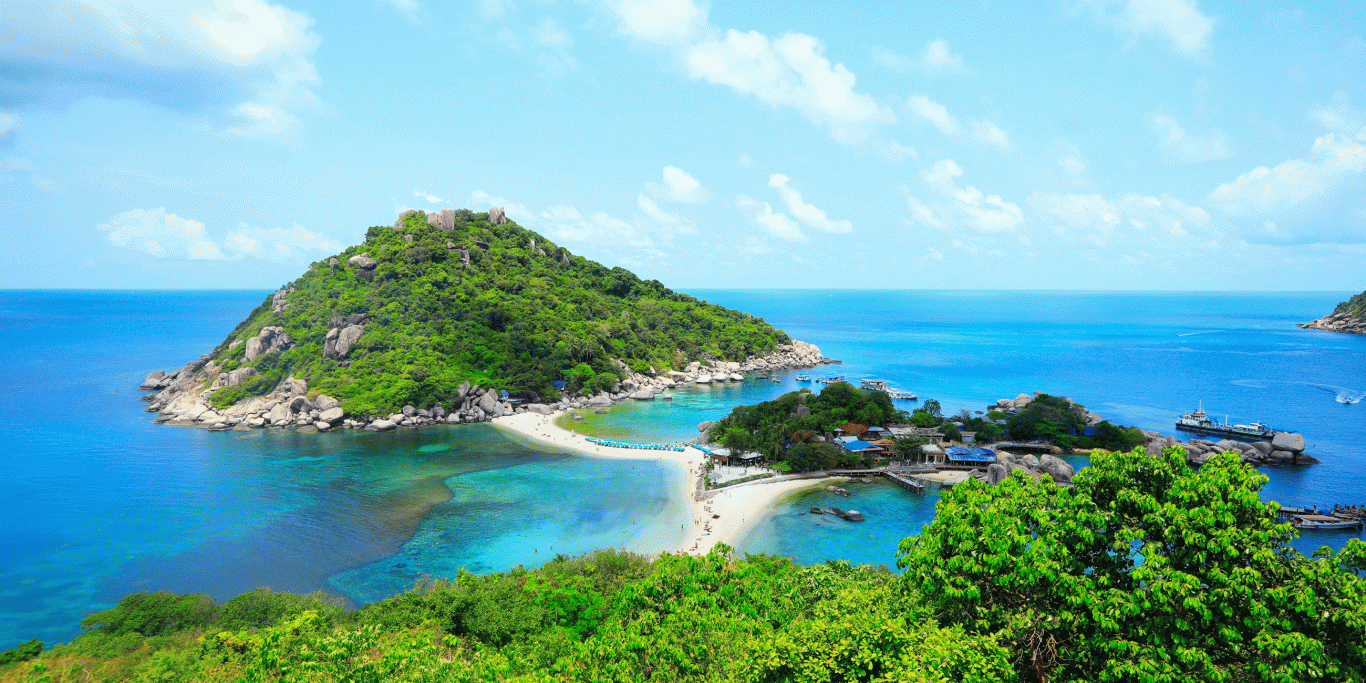
And taking out the No.1 ranking? A blissful Thai island set in an inlet of the South China Sea.  

1. Koh Samui, Thailand

Koh Samui
Koh Samui has been named the world’s best island. (Credit: Unsplash/Max Bottinger)

Thailand’s second-largest island, Koh Samui, has been named the number one island in the world for 2026, scoring an impressive 95.64 out of 100. Travellers appreciate the island’s diversity – offering everything from pristine beaches and lush rainforests to elephant sanctuaries and breathtaking Buddhist temples.

The destination has received increased attention from tourists over the past year or so, thanks to the hit HBO series The White Lotus setting its third season at the uber-luxurious Four Seasons Resort Koh Samui (we can dream, right?). Whether you’re checking into this five-star resort or an affordable jungle villa, Koh Samui will no doubt cast its spell on you.  

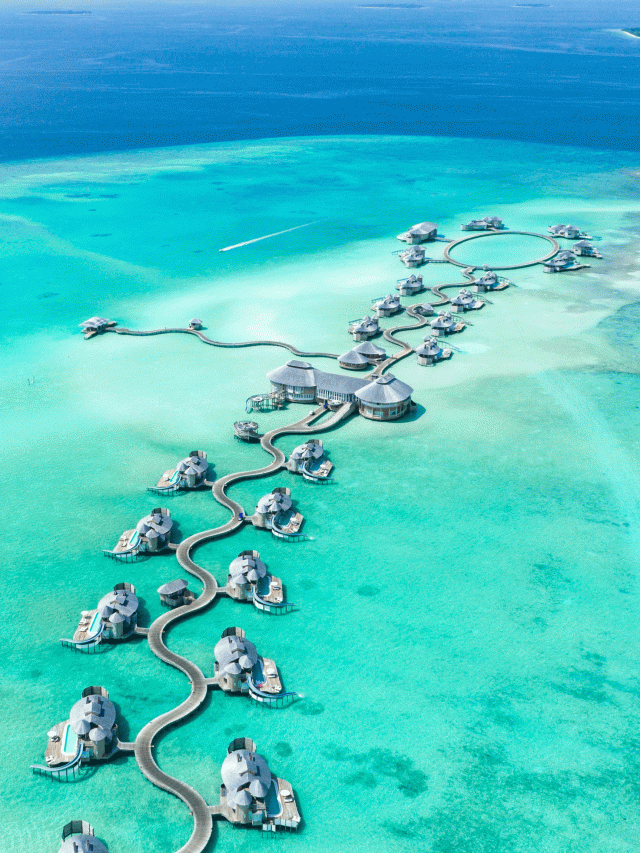
2. Maldives 

maldives aerial
The Maldives are known for their overwater villas. (Credit: Unsplash/Ishan @seefromthesky)

The atolls of the Maldives continue to hold universal allure, owing to their unbelievably glassy waters, indulgent overwater resorts and abundant marine life luring the diving crowd. And now they are even easier to access than ever, thanks to Luxury Escapes recently launching Australia’s first direct flight to the Maldives.

3. Galápagos Islands, Ecuador 

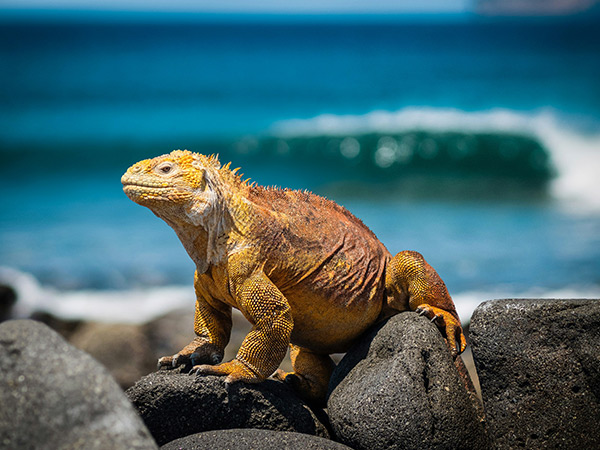
yellow iguana on Galapagos Islands
Spot the incredible wildlife of the Galapagos Islands. (Credit: Simon Berger)

Giant tortoises. Cheeky sea lions. Marine iguanas. With its unique environment where guests can follow in the footsteps of Charles Darwin, unparalleled wildlife encounters and expedition spirit, it’s easy to see why this island group in the eastern Pacific Ocean tops bucket lists the world over. 

4. Bali, Indonesia 

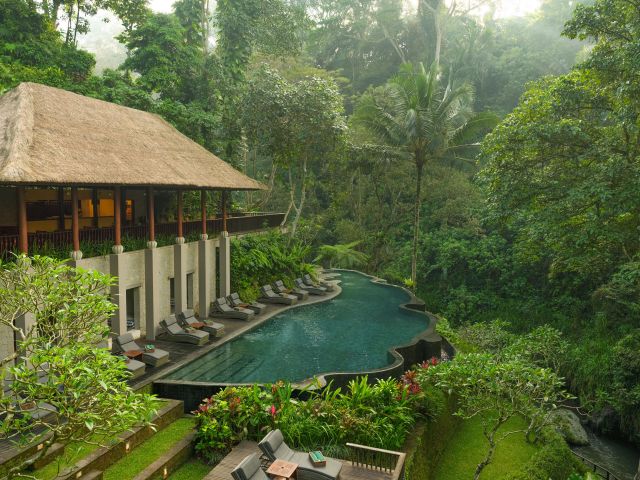
The River Café at Maya Ubud Resort & Spa, Bali
A secluded riverside infinity pool hangs over the sacred Petanu River at Maya Ubud Resort & Spa.

Bali is a tried-and-true crowd-favourite among Aussie and NZ travellers not just for its convenient proximity to the east coast of Australia, but for its surf breaks, laid-back beach club lifestyle and delicious food. Plus, prices are a fraction of what they are back home. 

5. Phuket, Thailand 

Rich in dramatic limestone cliffs, elephant sanctuaries and a dynamic meld of cultures, Phuket is the largest island in Thailand and one worth planning a tropical escape to. 

6. Seychelles 

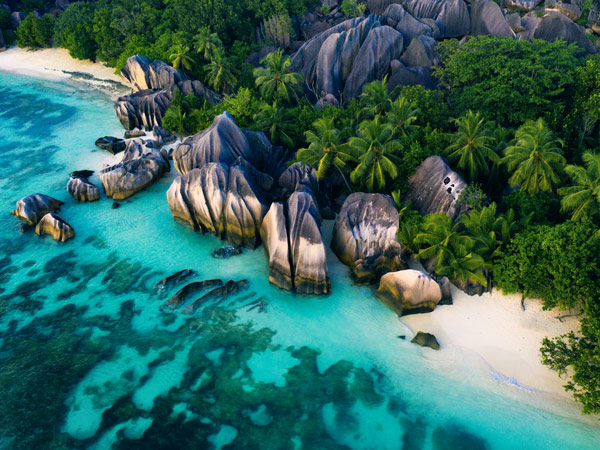
a white-sand beach with giant boulders at La Digue, Seychelles
Etched on La Digue Island are huge granite rocks. (Credit: Getty/Diamond Dogs)

The independent island nation of Seychelles commonly conjures images of secluded beaches studded with oversized granite boulders and lined with shady palms. But it is also home to thriving vanilla plantations, multi-ethnic culture, French and British architecture, as well as island-hopping opportunities. 

7. Fiji 

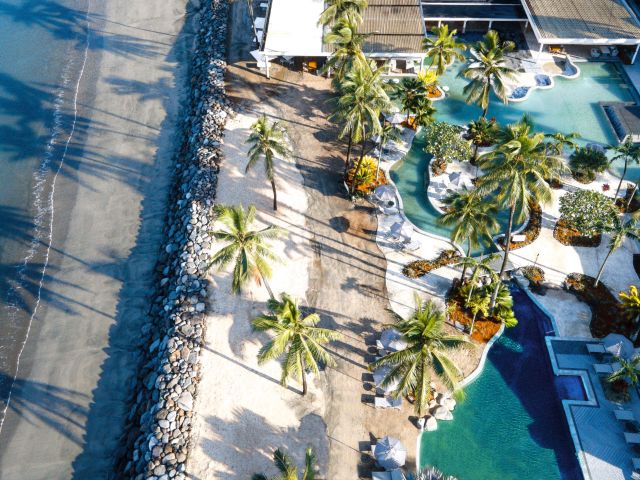
Top view of Sheraton Fiji Golf & Beach Resort pool
Spend warm days soaking up the sun, playing golf or relaxing by the pool at Sheraton Fiji Golf & Beach Resort.

Fiji was voted one of the best islands in the world for several reasons: it is convenient to get to (located around four hours from mainland Australia), home to wildly beautiful marine environments and boasts of the friendliest locals in the world.  

8. Sri Lanka 

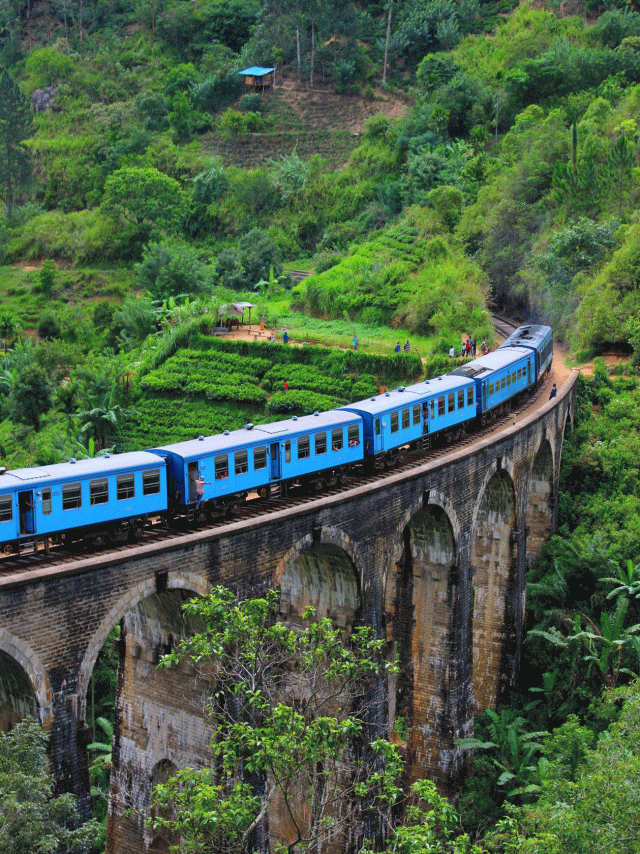
sri lanka train
Sri Lanka is known for its lush landscapes. (Credit: Unsplash/gemmafjam)

Located in the Indian Ocean just off the south-eastern coast of India, Sri Lanka beckons with flavour-packed cuisine, lush jungle and relaxed surf scenes that have visitors longing to return.  

9. Dominica, the Caribbean 

With rainforest covering around two-thirds of the land mass, this Caribbean destination is all about getting outdoors. Swim under thundering waterfalls, hike volcanic terrain and snorkel around Scotts Head. 

10. Zanzibar, Tanzania 

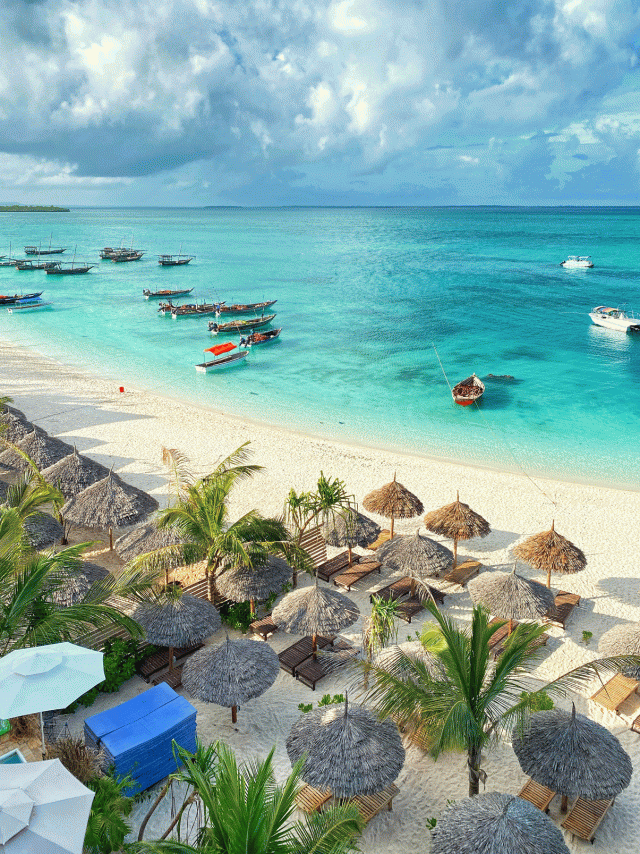
zanzibar
Zanzibar makes for a unique tropical escape. (Credit: Unsplash/Olga Budko)

Boasting a vibrant fusion of African, Arabic and Indian cultures, Zanzibar is a unique place to book for your next island escape. The postcard-worthy beaches harbour dolphins and sea turtles, while the landscapes are home to endangered monkeys, rhinos and antelopes. 

11. Golden Isles, USA 

Comprising Jekyll Island, Little St. Simons Island, Sea Island, and St. Simons Island, the Golden Isles lie along Georgia’s Atlantic coast. Expect sweeping salt marshes, stretches of sun-drenched beaches and landmarks revealing a fascinating southern history. 

12. Sardinia, Italy

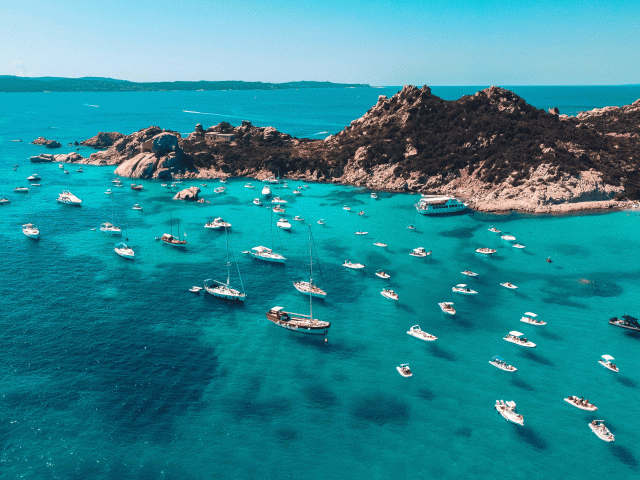
sardinia boats
Sardinia is blessed with blue waters. (Credit: Unsplash/Fadi al Shami)

If you haven’t yet visited Sardinia, consider this your sign. This relatively undeveloped island, placed 200 kilometres off Italy’s mainland just south of Corsica, offers a distinctive local cuisine and mysterious Bronze Age ruins. An absolute must is joining a boat charter to the La Maddalena Archipelago – I’ve never seen water so clear and blue! 

13. Skye and the Hebrides, Scotland 

Not all islands come ringed with palm trees and tropical waters. In Scotland, the Isle of Skye and the Hebrides offer windswept coastlines far from civilisation, historic castles and a Lord of the Rings vibe.  

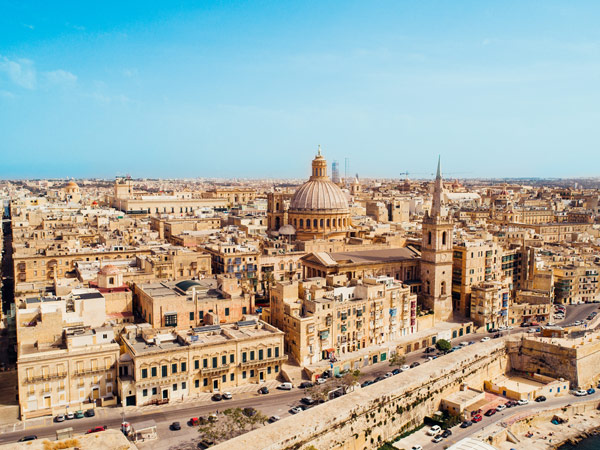
14. Malta 

the Valletta city pictured from above
Soak up the Baroque beauty of Valletta City. (Credit: Visit Malta)

One of the world’s best islands for both history and stunning blue water, Malta is famed for its golden limestone architecture, megalithic temples and Baroque buildings. Make sure to visit the striking Blue Lagoon. 

15. Grenada, the Caribbean 

Dubbed the ‘spice isle’, Grenada’s main hilly island is home to an abundance of nutmeg plantations, along with colourful Georgian buildings and diverse landscapes, from flowing waterfalls to castaway beaches. 

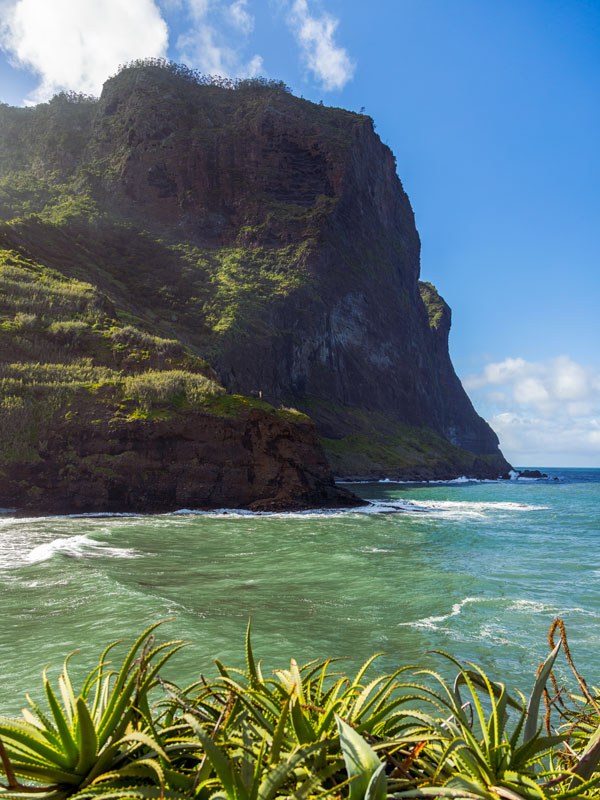
16. Madeira, Portugal 

coastal views at Porto da Cruz, Madeira
The majestic coastal beauty of Madeira’s Porto da Cruz. (Credit: Lauren de Sousa)

This subtropical Portuguese archipelago is a speck in the North Atlantic Ocean. Praised for its stirring volcanic landscapes, fortified wine and hiking trails, Madeira is a wonderful destination for food lovers as well as nature seekers. 

17. Azores, Portugal 

A lush paradise in the Atlantic, the Azores comprise nine volcanic islands, with São Miguel being the most popular among tourists. Bubbling geothermal hot springs, green crater lakes, whales, and dolphins are all reasons to visit. 

18. Maui, USA 

Maui is Hawai’i’s second-largest island and is known for its crystal-clear snorkelling at Molokini Crater, epic sunrises, waterfalls, scenic drives and luxurious beach resorts. 

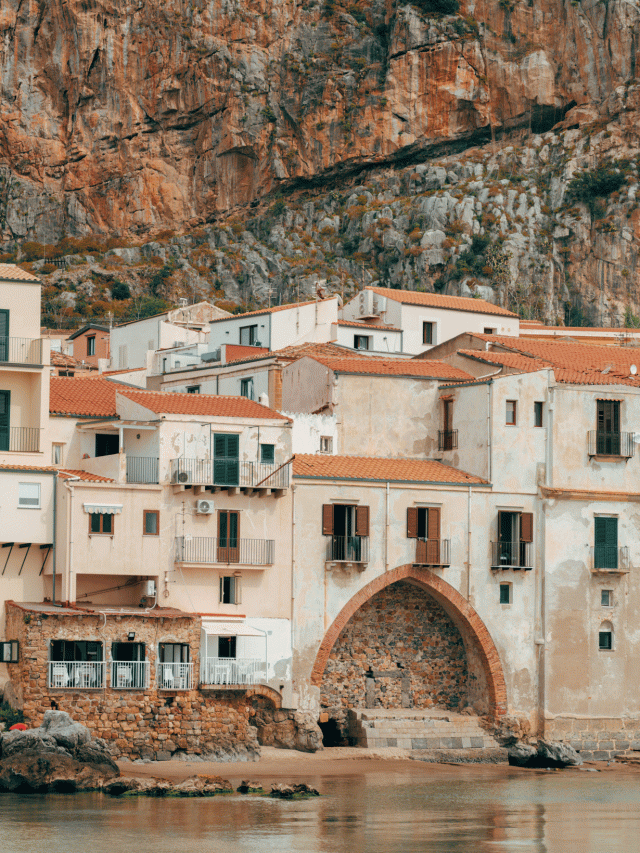
19. Sicily, Italy

sicily architecture
Sicily boasts charming architecture. (Unsplash/Val Vesa)

It’s little wonder Sicily has become such an enviable tourist destination, voted one of the best islands in the world. Not only does it offer sparkling turquoise coves and Italy’s tallest active volcano, but it’s also home to ancient Greek ruins and charming towns dotted with restaurants dishing up twirls of silky spaghetti. 

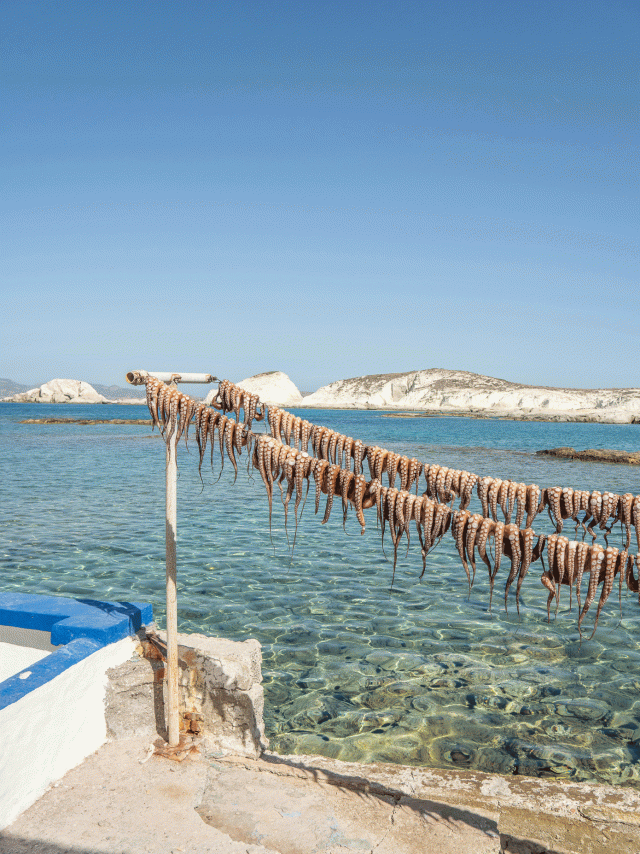
20. Milos, Greece 

milos greece
Find seafood-strewn villages in Milos, Greece. (Unsplash/Diego Allen)

Ah, Milos. This Aegean outpost in the Cyclades region is proving that the Greek islands will always be a slice of paradise to travellers with its moon-like landscapes, quieter atmosphere and pebbly beaches dotted with sun-baking locals.  

21. Virgin Gorda, British Virgin Islands 

Discover vegetation-lined walking trails, nature sanctuaries, luxury yacht trips and famous seawater-flooded grottos on this dreamy Caribbean island. 

22. Crete, Greece 

a boat moored in the seaside village of Loutro Crete
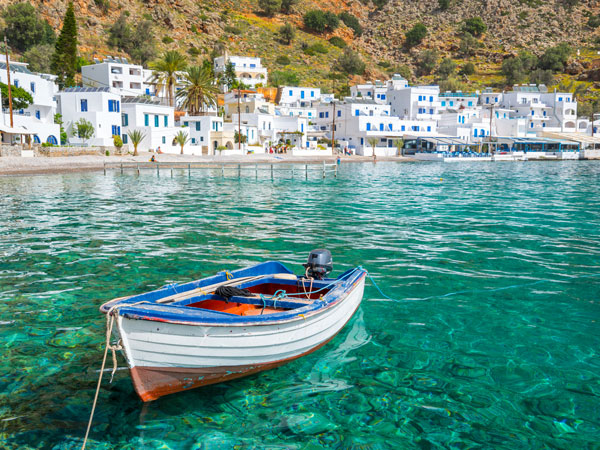
Loutro is a charming seaside village in Crete that is surrounded by turquoise waters.

The largest and most populous island of Greece, Crete is the place to go for towering mountain gorges, world-renowned beaches, historic old towns and a distinct blend of Minoan, Greek Orthodox, Venetian, and Ottoman influences.  

23. Vieques, Puerto Rico 

The lesser-known Caribbean island of Vieques is where wild horses roam the countryside, wildlife refuges and bioluminescent bays where microorganisms light up the water with an otherworldly blue-green glow. 

24. Paros, Greece 

The lively main fishing town of Paros gives the island plenty of charm – think whitewashed houses, cobbled alleys, vine-draped tavernas and boutique shops. But don’t miss the sailing cruises and unique rock formations dotted around the island. 

25. Kauaʻi, USA

Kauaʻi coast
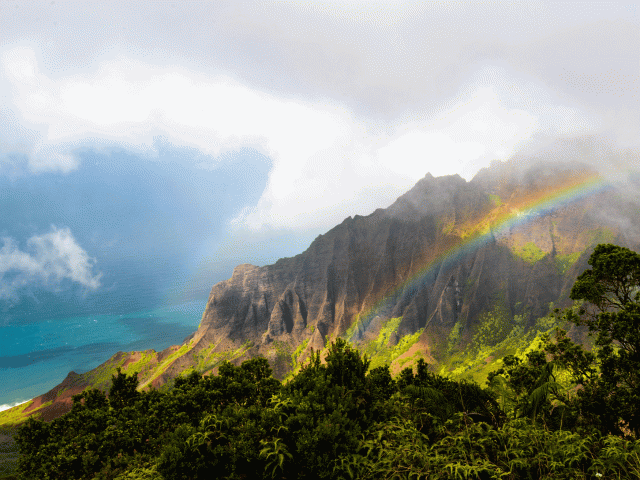
Hike dramatic coastlines on Kauaʻi. (Credit: Unsplash/Jake Houglum)

Part of the Hawaiian archipelago, Kauaʻi is best known for its striking natural beauty, where godly green cliffs tumble into azure ocean and rainbows spring from misty waterfalls.