hero media

Transylvania’s last mushroom hat artisans fight to save their art

In Transylvania, a near-extinct folk art is being revived by its last remaining artisans.

Artisan Károly Mate Jr straddles a stool in his workshop, patiently dragging a mighty sickle through a bulbous wedge of fungus. The mushroom, which has been fermented and dried for weeks, is deceptively wooden in texture, but Károly hews his blade effortlessly, slicing it as if he’s peeling the skin off an apple.

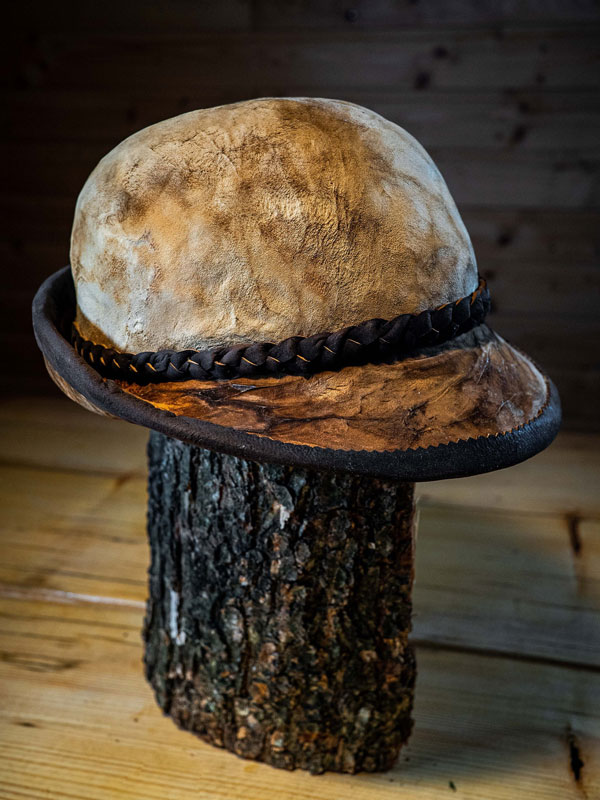
The finished products of his labour are strewn about the workshop – whimsical hats made from soft, weightless mushroom leather. Some are embossed with an array of Transylvanian folk motifs such as mountain flowers, pine trees and leaves, while others are embellished with feathers or wiry tufts of bear fur.

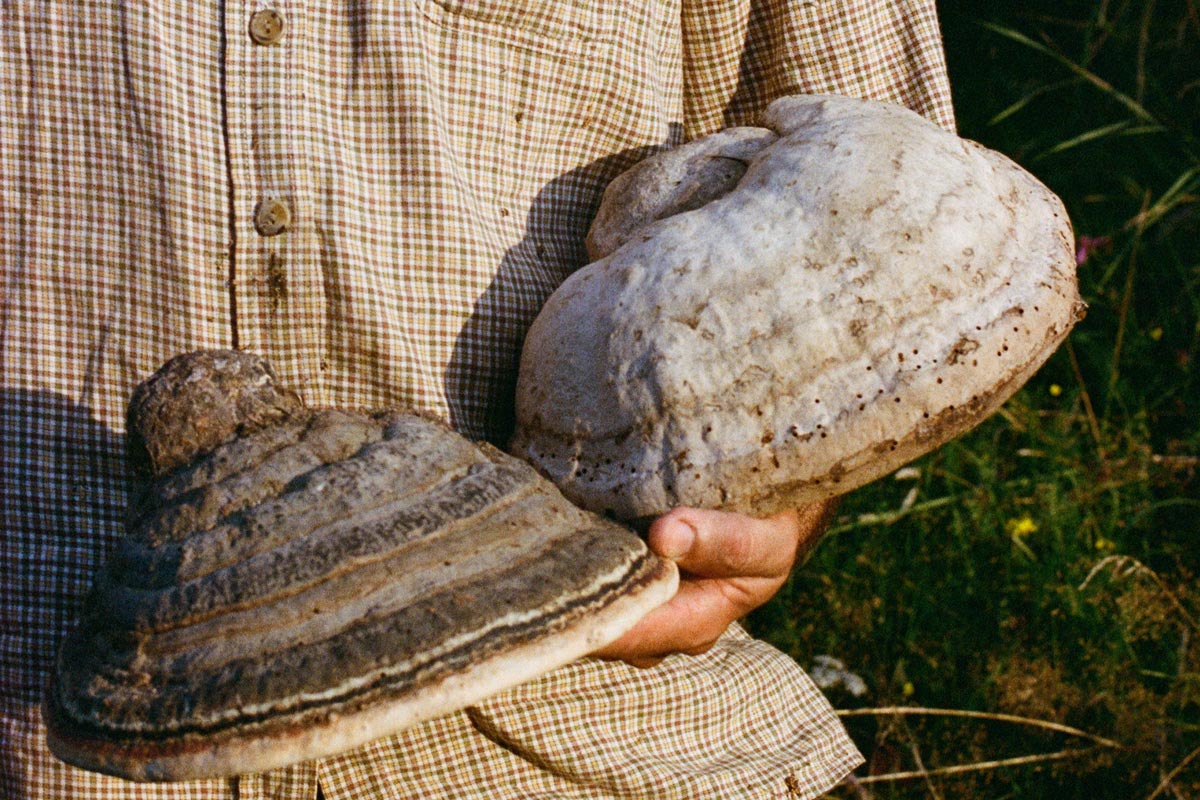
The material Károly is making for the hats is amadou – a traditional fabric painstakingly crafted from the horseshoe fungus (also known as conk) that grows on birch trees. Amadou is an ancient material, archetypal and almost mythic in its origin. It’s both a medicinal cloth and a powerful fire starter – an elemental panacea used by early human cultures for survival.
a mushroom hat on display
A finished hat. (Image: Elizabeth Whitehead)

In fact, the earliest known owner of this mysterious textile is none other than Ötzi the Iceman, the famous 5300-year-old mummy discovered in a glacier in the Tyrolean Alps, frozen in time. At the time of Ötzi’s death, he was carrying little more than an axe, a few flint tools and several fragments of amadou.

But despite the storied, millennia-long history of the craft, Károly is one of the last amadou artisans left in existence. And he regularly risks his life to keep the craft alive. “In the last year, I was attacked three times by a bear," he says, shaking his head, hardly glancing up from the conk he’s whittling with his sickle.
the scenic landscape of Carpathian Mountains
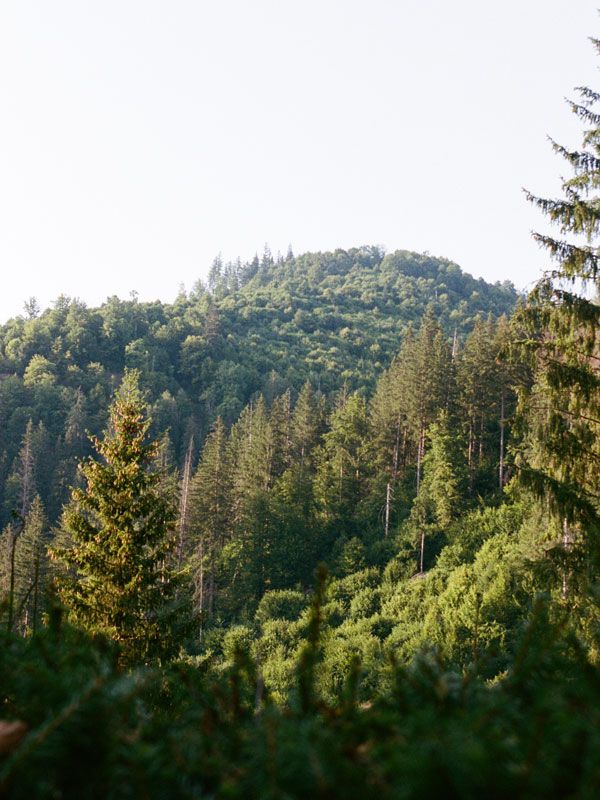
The Carpathian Mountains in the backcountry of Transylvania. (Image: Jeremy Zafiropoulos)

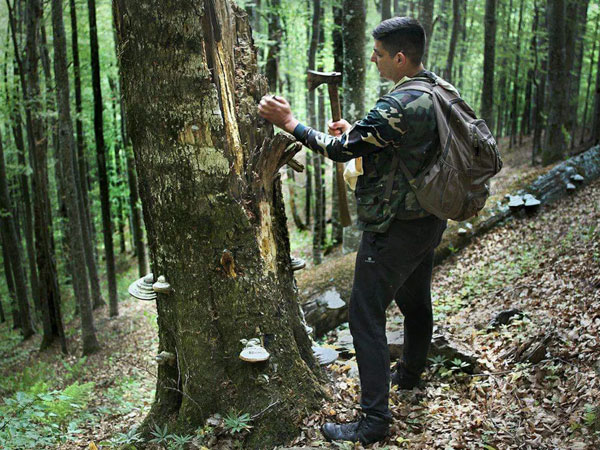
To obtain suitable fungus specimens, Károly must venture high into the Carpathian Mountains, often for several days at a time. Like Ötzi, he carries little more than an axe and a few strips of amadou, which he uses to dress wounds or get a campfire blazing at night. On a recent expedition, he was searching a tree for conk when he stumbled across two brown bear cubs sitting in the bough above him.
foraging for conk
Károly Mate Jr foraging for conk.

“I saw the mother bear rise up a few metres away," he recounts. “It was a matter of two or three seconds that determined whether I survived or not." Luckily, Károly was able to launch off a hill and roll into a stream, narrowly avoiding pursuit. “I did not even feel myself run … But I lived to tell this story. Many people do not."

This is the wild side of Europe, where bears and wolves stalk the forests and folk tales spring from the landscapes like mountains. To reach Károly’s village of Corund in the foothills of the Carpathians, I drive through swathes of Transylvanian backcountry, cleaving the region’s bucolic heart.
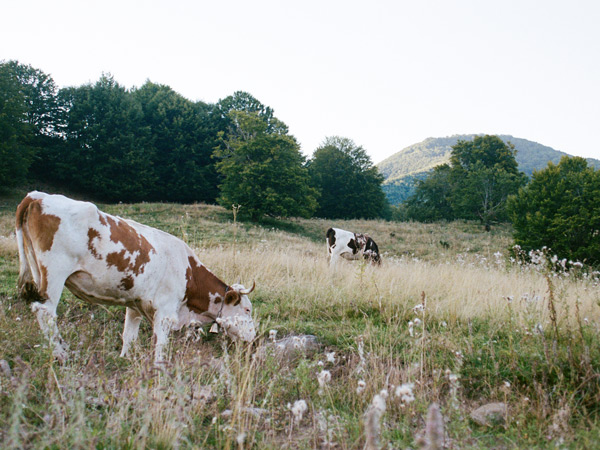
cows grazing in the field, Corund
The countryside near Corund. (Image: Jeremy Zafiropoulos)

It’s high summer, and the meadows are flecked with wildflowers, speckling the landscape with vivid bursts of purple, yellow and red. I share the road with horse-drawn carts, some piled high with hay, others ferrying Romani girls with colourful skirts and scarves in their hair.

Corund soon comes into view: a storybook village of red thatched roofs nestled in the sloped palm of a green valley.
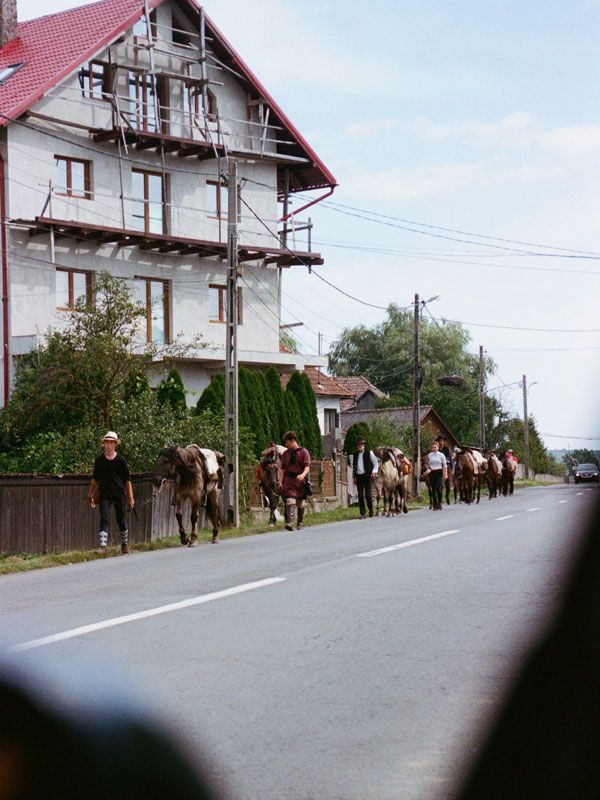
the local villagers in Corund
Local villagers in Corund. (Image: Jeremy Zafiropoulos)

Amadou hats have been made here in Corund for over 150 years," Károly says as he passes me the sickle and the mushroom. “Here, try it. You need to carve away the outer layers from the centre. That’s the part we want."

It takes all of my strength to make a single incision. My partner has even less luck, slicing his finger on the blade, prompting scarlet blood to begin weeping from the wound. Károly takes a fragment of amadou fabric and bandages it around the abrasion.
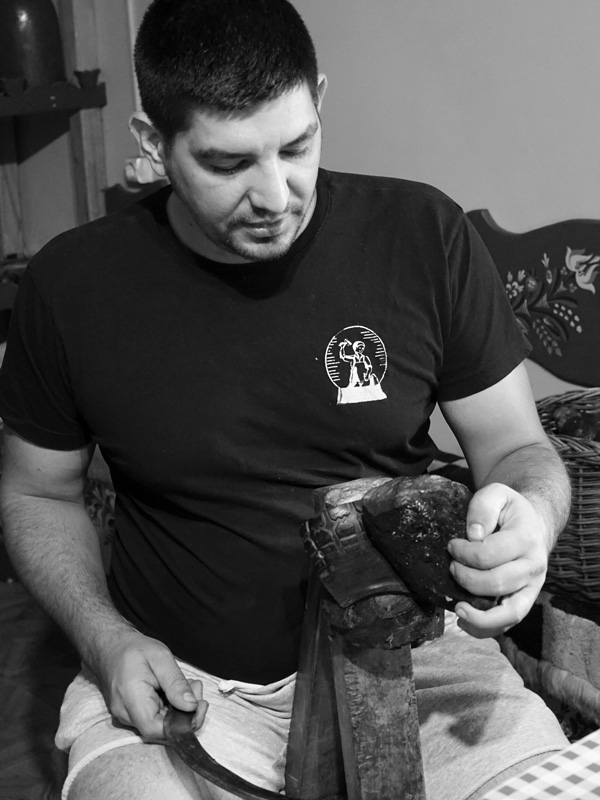
Károly Mate Jr carving a mushroom
Károly Mate Jr at work carving a mushroom. (Image: Elizabeth Whitehead)

“I’ve done this many, many times," Károly smiles. “My fingers are like stones." When he removes the cloth, the bleeding has miraculously stopped and the wound is closed, almost as if it was never there.

Amadou fell into decline across Europe when matches for fire became more widespread, usurping the need for the fabric. But Corund’s isolation and the idiosyncratic local headwear industry kept the craft ticking along. But another blow was dealt when all private work was forbidden when Romania entered 40 years of communist rule after the Second World War.

“Gradually, people just gave it up. The old guys died; the young ones never learned. There used to be 70 families in the village working with amadou, now there are just three."

Amadou might have completely faded into obscurity by now if it wasn’t for Károly’s business partner, biologist István Moldován. I visit him at his cosy mushroom bungalow in the historic neighbouring county of Mureş.
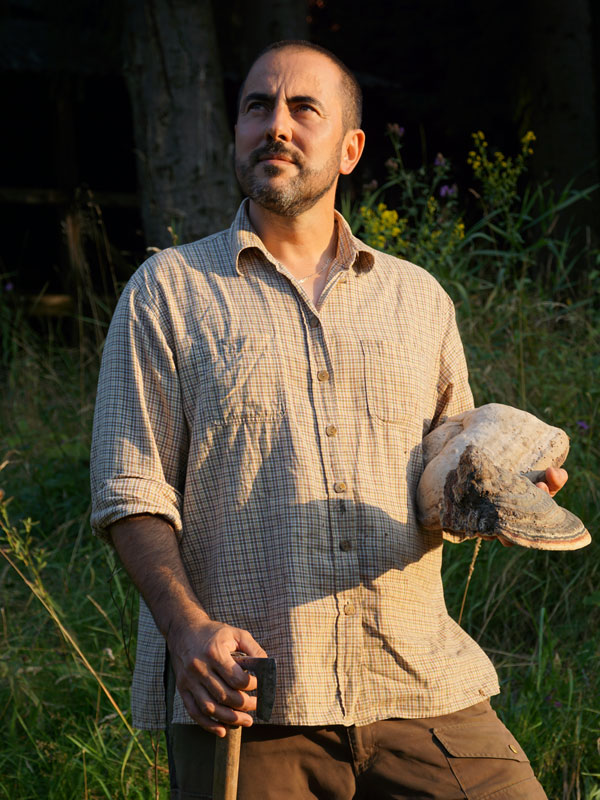
biologist István Moldován holding conk
Meet Károly’s business partner, biologist István Moldován. (Image: Elizabeth Whitehead)

We sit in the garden, threads of evening sunlight piercing through the pines like spun gold while a chorus of insects rasp away in the background. He’s cooked a hearty meal of ciulama de gălbiori (a traditional dish of creamy chanterelle mushrooms and polenta), complemented with a charcuterie of local boar sausage, cheeses and a bottle of pear palincă (fruit brandy) to wash it all down.

István was drawn to visit Corund after learning his grandfather once owned an amadou hat. Intrigued, he arrived in the village determined to learn more about the mysterious craft.
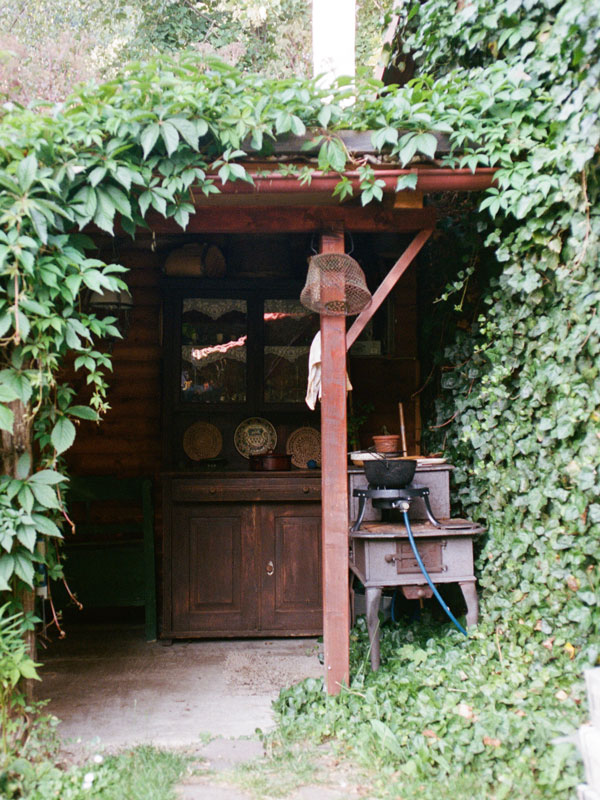
the mushroombungalow of István Moldován
István’s ‘mushroom bungalow’. (Image: Jeremy Zafiropoulos)

“I was asking, asking, asking, ‘Does anyone make mushroom hats?’" he recalls. “But everyone told me that it was already in the past." Eventually, István found Károly Jr’s father, Károly Sr, who was still crafting a few fedoras as a hobby.

“I wanted to make some noise, and see if I could sell the hats online," István says. Not long after, the eminent mycologist Paul Stamets appeared on the Joe Rogan podcast wearing a hat that István had sent him. Like a fragment of amadou, this became the tinder that ignited a revival.

“Within a day, my inbox was flooded," István recalls. “When I went to Károly Sr and told him we had over 100 hat orders he said, ‘Are you crazy? That will take 10 years!’ But I told him, there are still a few elders who know how to make it. Ask them for help. And from there, we began to activate the people."
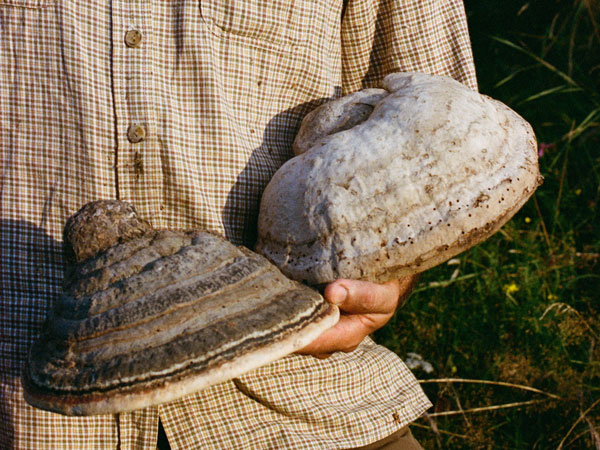
holding conk or horseshoe fungus
István Moldován holding conk. (Image: Elizabeth Whitehead)

Business was thriving so much that Károly Sr’s, son, Károly Jr, returned home from living in Budapest to continue working with the craft. Now, István and Károly Jr host mushroom-foraging expeditions and amadou workshops for tourists. They hope that by sharing the knowledge, the craft will live on.

“We have to teach the people because one day the [older artisans] will die," István says. “It happened with many other crafts … the knowledge died with the elders who wanted to keep it a secret. It took me three years to convince the elder amadou artisans to share the knowledge. It’s working … we have people visit here from all over. There are a few people who are really interested, and at home, they’re working with amadou."

Back in Károly Jr’s workshop, with the core of the conk extricated, he demonstrates how to hammer and stretch it to form a large ream of felt amadou fabric. I am short on time, so I don’t have the chance to watch how he moulds it into a completed hat.

But I do purchase one from Károly’s shop, which is full of different styles he’s experimenting with. There are mushroom cowboy hats, baseball-style caps, bags and vests. I select a plain hunter’s fedora with a dark, braided band.

“I learned this craft from my father," Károly says. “My grandfather also worked in this profession, as did my great-grandfather."

Outside, Károly’s five-year-old son plays on the steps of his workshop. “When he’s older, I want to take him with me to the forest to collect conk," he says. “If I can pass the knowledge to the next generation, then it will be safe."
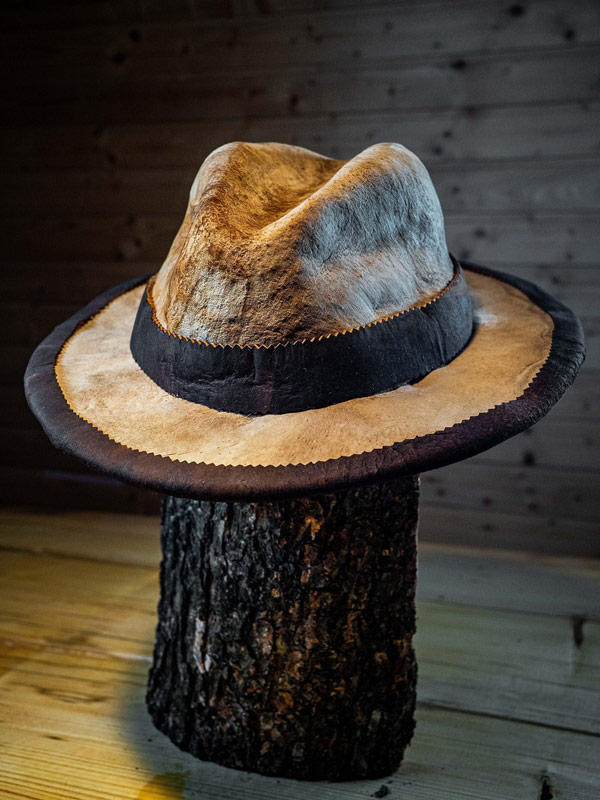
a mushroom hat
The hats come in many different styles. (Image: Elizabeth Whitehead)

Want to see more stories from International Traveller in your Google search results?

  1. Click here to set International Traveller as a preferred source.
  2. Tick the box next to "International Traveller". That's it.
Elizabeth Whitehead
Elizabeth Whitehead is a writer obsessed with all things culture; doesn't matter if it's pop culture or cultures of the world. She graduated with a degree in History from the University of Sydney (after dropping out from Maths). Her bylines span AFAR, Lonely Planet, ELLE, Harper's BAZAAR and Refinery 29. Her work for International Traveller was shortlisted for single article of the year at the Mumbrella Publishing Awards 2024. She is very lucky in thrifting, very unlucky in UNO.
View profile and articles
hero media

5 things every hotel needs for a more restorative stay

    Kate Bettes Kate Bettes
    Wellbeing means different things to different travellers. Here’s how to pick a hotel that gets it right for you.

    The best wellness holidays aren’t necessarily spent wrapped in a spa robe. Sometimes they’re found around a dinner table in Cambodia, on a hiking trail in New Zealand or after finally beating jet lag on the other side of the world. The hotel you choose is what makes them happen.

    1. Easy access to good food

    meals from Novotel Bangkok Sukhumvit 20
    Taste delicious meals at Novotel Bangkok Sukhumvit 20.

    One of the quickest ways to derail healthy habits on holiday is to spend half of it working out where to eat instead of digging into the culture around you. Thankfully, Novotel has done much of the hard work already, with chefs building menus that lean into the flavours, ingredients and traditions of each destination.

    In Sihanoukville, Cambodia, Korkor soup – often dubbed ‘Cambodian ratatouille’ – sits alongside raw blue crab dressed with lime and chilli, best enjoyed with views across the Gulf of Thailand.

    In the lovingly chaotic city of Bangkok, the presence of food cranks up the sociability. At Novotel Bangkok Sukhumvit 20, you can settle in with mango sticky rice and stranger-turned-friends beside the pool at Sky on 20 rooftop bar, or bring them along to tackle river prawns and stir-fried crab with holy basil at the buzzing Crab Paradise Dinner Buffet.

    Then Novotel Dubai Al Barsha welcomes you with a laidback twist on the level of indulgence the Middle Eastern city is best known for up on Deck Se7en. Looking towards Burj Al Arab, the rooftop lounge has everything from Mediterranean-style dishes like seabass ceviche to Italian prosecco sundowners.

    At the other end of the scale, in the hills that surround the Novotel Bali Ubud Resort, calm comes from nature. At Siralada restaurant, Balinese traditions shape the menu while thunder rumbles over the surrounding jungle – proving the setting is as nourishing as the food itself.

    While at Novotel Nha Trang, chef Kieu Thi My Hanh and her team showcase Vietnam’s knack for balancing freshness, texture and fragrant herbs. Pho remains a favourite, while seafood salad with pomelo and mango brings those flavours together in one bright dish.

    It’s all an approach backed by partnerships with expert food creators such as Alfie Steiner, whose plant-forward recipes prove healthy food should never taste plain.

    2. Better sleep options

    Novotel Bali Ubud Resort room
    Sleep deeply with Novotel.

    There are few travel experiences more disappointing than arriving in a new country, determined to seize the day, only to fall asleep fully clothed by 3pm.

    For Australian travellers, jet lag is often an unavoidable part of the journey. That’s one reason Novotel runs sleep-focused initiatives that help guests adjust quickly without compromising on health. We’re talking partnerships with Sydney-based sleep specialist Olivia Arezzolo, known for her advice on everything from better sleep habits to beating jet lag, alongside features like pillow menus, in-room yoga content and tailored sleep guidance.

    The sooner you’re operating on local time, the sooner you can get back to more pressing matters – like deciding which spa treatment to book.

    3. More ways to move

    woman hiking around queenstown new zealand
    Stay at Novotel Queenstown Lakeside and explore local hiking trails. (Credit: GettyI mages/ naruedom)

    Every place in the world has its own way of getting you moving: whether that’s hiking up ice-bitten mountains before a sauna or gentle stretching by the pool before a facial. From fitness centres to spas, Novotel recognises that wellbeing rarely looks the same.

    At Novotel Queenstown Lakeside, activity is inescapable. Here, hiking trails, ski fields, bungee jumps, and white-water rafting have made the region famous. The hotel’s location on the shores of Lake Wakatipu means less time spent organising yourself and more time out there experiencing them. To top it all off, you can book a private hot tub for the evening before heading back into the wilderness tomorrow.

    Bali, of course, takes a softer approach. At Novotel Bali Ubud Resort or Novotel Bali Nusa Dua, movement is less about conquering a mountain and more about a dance class between the tropical gardens and lagoon pools. Afterwards, the spa takes over, with traditional treatments like a Lulur body scrub: a combination of rice, turmeric, sandalwood, ginger and jasmine that’ll soothe muscles already relaxed by the Balinese heat.

    4. Better connections

    Novotel Sharm El Sheikh
    Kids will love a stay at Novotel Sharm El Sheikh.

    One of the best things about travel is that it gives your family stories you’ll be telling for years. Novotel helps create them with activities that bring everyone together, whether that’s trying something new, learning a local skill, or simply spending more time together.

    Go for a distinctly Thai twist at Novotel Phuket Vintage Park, where many of the family activities draw on local culture. Kids can try everything from beginner Thai boxing and language lessons to umbrella painting and – a pastime beloved by children the world over – pool foam parties. Everyone is welcome to join in, whether that’s getting splashed, covered in paint, or simply watching their children discover a new side of Thailand during the dedicated Family & Kids Day.

    A different adventure awaits at Novotel Sharm El Sheikh. Kids could be perfectly content with discos, drawing classes and new holiday friends, but the Red Sea has other ideas. Sitting on the edge of Naama Bay, days here might involve snorkelling colourful reefs, taking a boat trip to Ras Mohammed National Park or heading into the desert by quad bike or camel for a Bedouin-style dinner beneath the stars.

    5. Location is everything

    Surin Beach, Choeng Thale, Thalang District, Phuket, Thaiföld
    Explore Phuket’s gorgeous beaches. (Credit: Bence Biczo)

    Everyone’s idea of wellness looks a little different. With more than 600 hotels across 65 countries, Novotel gives guests the freedom to choose the destination that suits them best. Whether that’s a beachside escape in Phuket, an alpine expedition in Queenstown or a city break in Bangkok, there’s a good chance a Novotel isn’t far away.

    All that’s left? Choosing your version of wellbeing.

    Discover stays to inspire your everyday at novotel.accor.com.