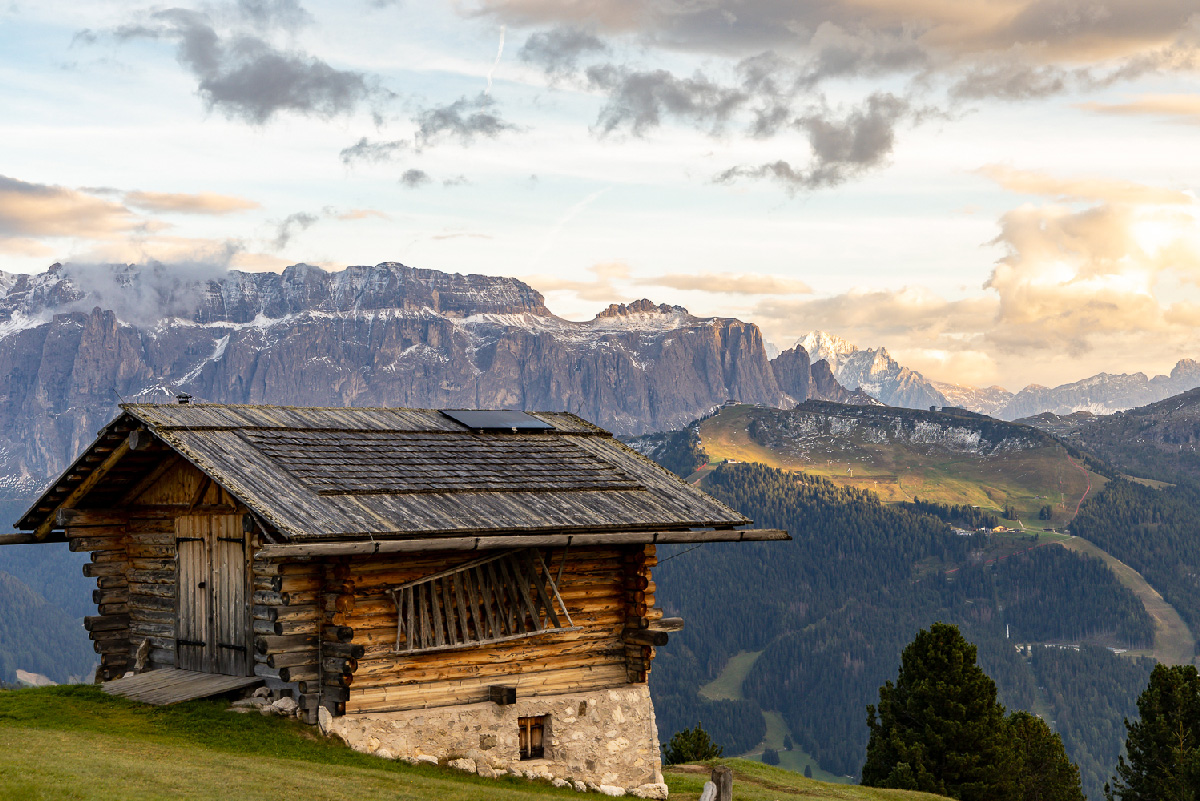
Autumn in the South Tyrolean Dolomites offers idyllic weather for hiking and witnessing the fiery alpenglow phenomenon of enrosadira. But when the mountain gods dispense an unseasonal dose of ice and snow, photojournalist Ben Kelly discovers a silver lining.
It’s difficult to gaze upon the monolithic giants that punctuate the fantasy-like landscape of South Tyrol and not be instilled with feelings of awe, humility and wonder. In this corner of the Italian Dolomites, the Ladin people have tended bountiful fields for more than 2000 years, overshadowed by prehistoric limestone behemoths that erupted from a tropical sea aeons ago.
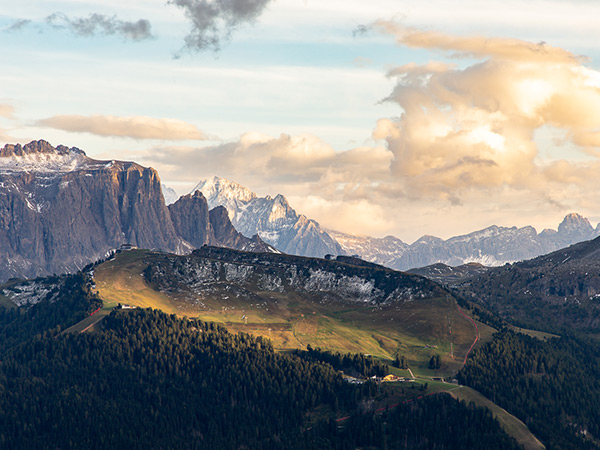
While Europeans have flocked to this province for skiing and mountaineering for decades, it’s only been in the past several years – a relative blink of an eye – that social media has brought South Tyrol to the world, and in turn, the world to it. Just as in other parts of Italy, this attraction comes with challenges as the province manages ever-increasing inflows of tourists at the height of summer.
With this in mind, I settled on the autumn shoulder season to visit South Tyrol, splitting my time between the glamorous ski villages of Corvara and Ortisei. Autumn offers pleasant weather, quieter mountain trails and is said to be one of the best times of year for witnessing the enrosadira – the mystical glow of the mountains that occurs at sunrise and sunset. Perfetto. But as I was to find out, the mountain gods can have other plans in mind.
Embracing the elements in Corvara
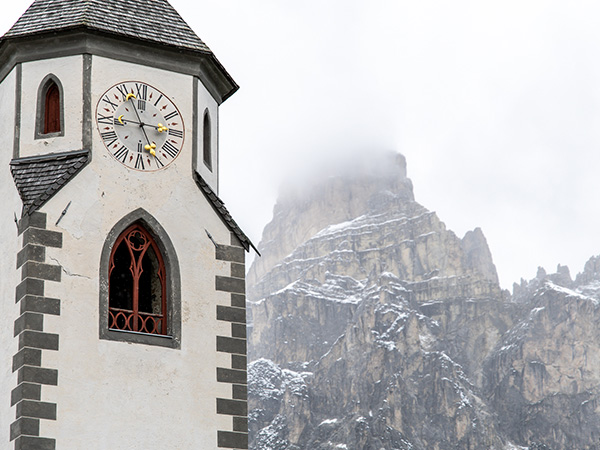
From Venice, it’s a three-hour drive to my first Dolomites destination: the village of Corvara in Val Badia. Out of Venice and onto the autostrada, the landscape quickly changes into a distracting wonderland of mountain passes, peaks and villages punctuated by church spires. A prettier postcard around every corner.
The road winds upwards until finally traversing mountainous landscapes blanketed in white. It looks like Christmas. So much for that sunny September hiking I’d read about. While light dustings of snow are common in autumn, this particular September had brought unseasonably heavy snowfall and wintry temperatures.
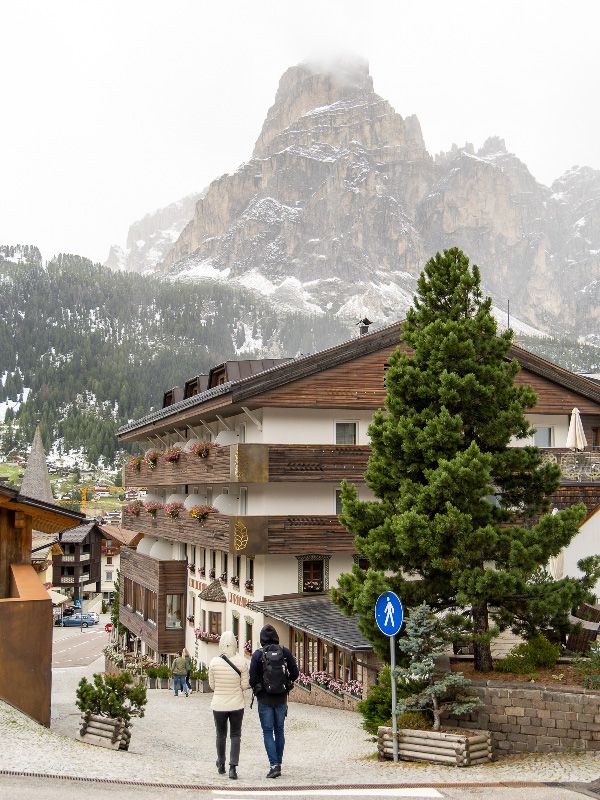
It is below zero Celsius and snowing when I arrive in Corvara – an opulent ski village surrounded by alpine fields overshadowed by the Sassongher mountain. I check into the luxurious Hotel Marmolada. Suites are spacious and modern with mountain-view balconies. In the dining room, a gourmet, three-course menu changes every night, with seasonal dishes reflective of South Tyrol, Italy and wider Europe. The service here is the best I have come across in my entire lap of Italy.
Corvara’s extensive lift network means one can leave their vehicle at their hotel for their entire stay. Italy’s first-ever ski lift was built here in 1946 and is today replaced by the fast and modern Col Alto eight-person gondola, which reaches an elevation of 1980 metres. The next morning, I head to this lift station where I’m the only person in line.
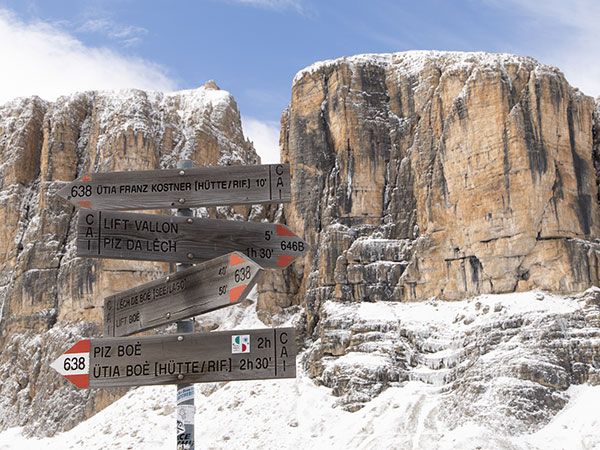
Up on the mountain, the air is crisp. I wear winter layers to keep out the cold. Hiking is at times through snow shin-deep. Although I had envisaged sunny green alpine fields, the white landscape is a novelty. Trails wind between tall mountain pines weighed down by white camouflage, and serenity is my reward for braving the day’s elements; few other intrepid hikers are enjoying today’s wintry wonderland.
A splash of white powder under a tree hooks my attention as a startled fox bounds through the snow. I follow trails that trace ridgelines between mountain huts and magical white scenery. A pair of fellow hikers invite me to join them for a mountain hut lunch at Piz Arlara Alpine Restaurant – I order speck and polenta, washed down with a bombardino: eggnog and brandy, topped with whipped cream.
After exploring for several hours, I descend a chairlift into the village and walk back to the Marmolada hotel. An outdoor hot tub gives one a front-row view of the Sassongher as it turns pink and red with the setting sun.
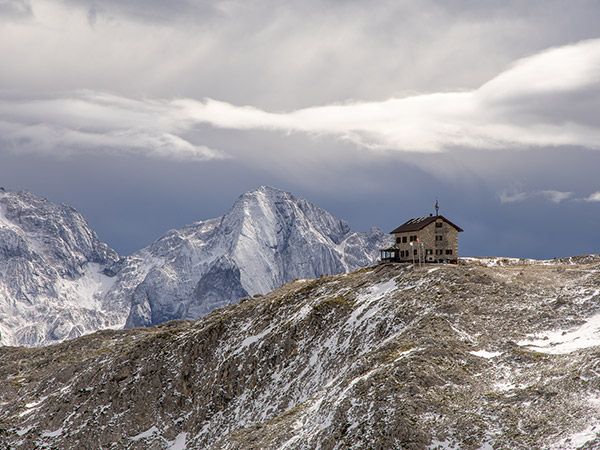
My second day is icier and windier. I fully layer up to take the Piz Boe gondola up the western side of the valley. Once the winds subside, a chairlift opens to reach the Franz Kostner Mountain Hut, located on the Sella mountain group at an altitude of 2550 metres. The kitchen is closed for lunch, but thankfully, there is homemade cake. This timber hut feels as if it’s perched on some far-flung peak of the Himalayas, surrounded by breathtaking, rugged vistas.
After a frigid and windswept yet awe-inspiring day atop the mountain, it’s an even more welcome return to the Marmolada, where the wine bar staff help me work on my Italian vocabulary over a South Tyrolean beer. With the indoor swimming pool, extensive wellness centre and restaurant, one needn’t head outside again, which is a good thing.
The fairy-tale village of Ortisei
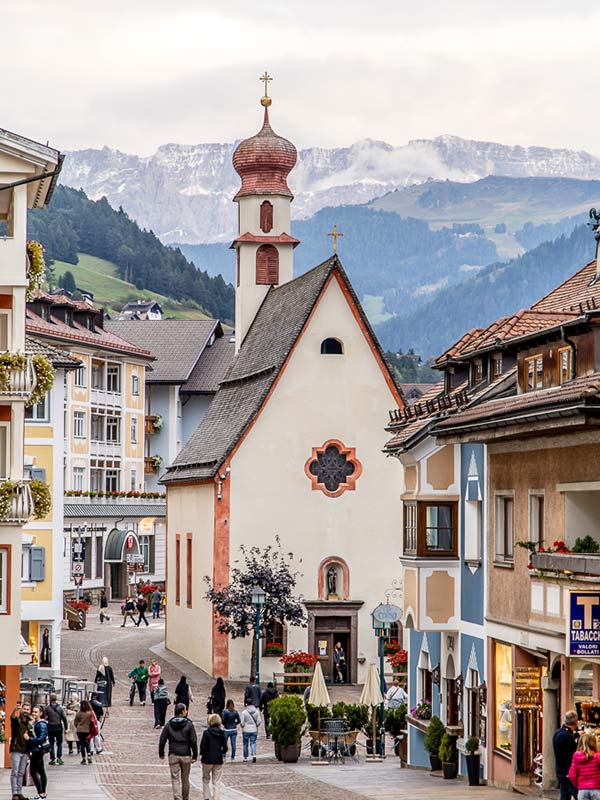
A 30-kilometre drive from Corvara is Val Gardena’s iconic village of Ortisei – or Urtijëi in the Ladin language. Its cobblestoned pedestrian thoroughfare is lined with colourful Disney-like hotels, painted like dollhouses. At its heart is the Renaissance church, St. Anthony Chapel and its iconic bell tower. A scene that was made for a snow globe.
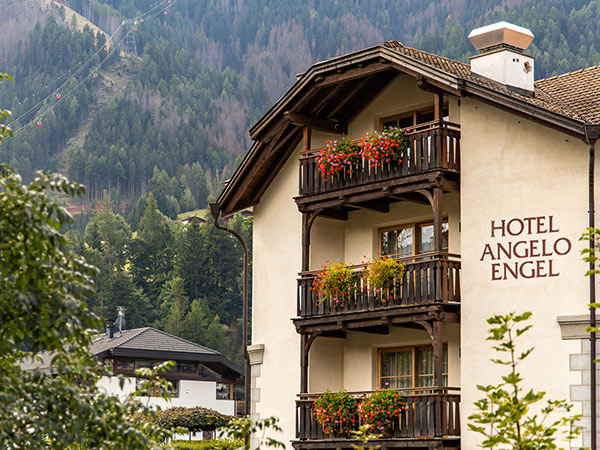
A short walk from the main street is the luxury Hotel Angelo, a quintessential Dolomites hotel with a timber facade and furnishings, and cute window flower boxes brimming with burgundy blooms. It has a luxury spa centre and an indoor-outdoor swimming pool. The warm European feel of the restaurant sets the scene for hearty menu options.
The next morning, I catch an exhilarating cable car to reach the legendary Seceda Peak. The famous Seceda lookout is accessible by a short walk from the upper lift station. The colossal, jagged angles are breathtaking to behold in person. It’s one of the Dolomites’ top attractions, so starting early here is key.
I begin trekking my way across the pleasant alpine plateau, hut-hopping between romantic mountain rifugios for espresso, lunch and an aperitivo. Paragliders sail colourfully overhead. In the quiet ambience broken only by the occasional squeal of a marmot and clang of a cow bell, the freedom to explore elicits a child-like glee.
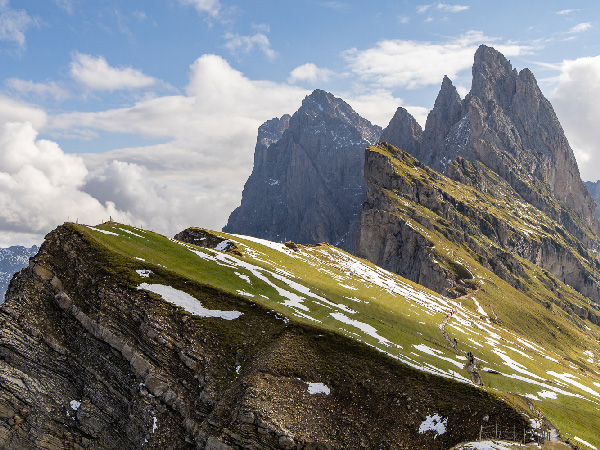
Snowmelt has made the trails muddy, slippery and, in some spots, icy. But for the price of muddy boots, I’m able to enjoy the famous Seceda mountainside without the busyness of summer.
My local contact sends me a text message: if I keep hiking over the next valley, I can join up with the Burning Dolomites evening hiking tour. I push ahead up Mount Pic, which offers 360-degree views of Val Gardena, before descending several hundred metres of steep rocky trail, which takes me down to the meeting point.
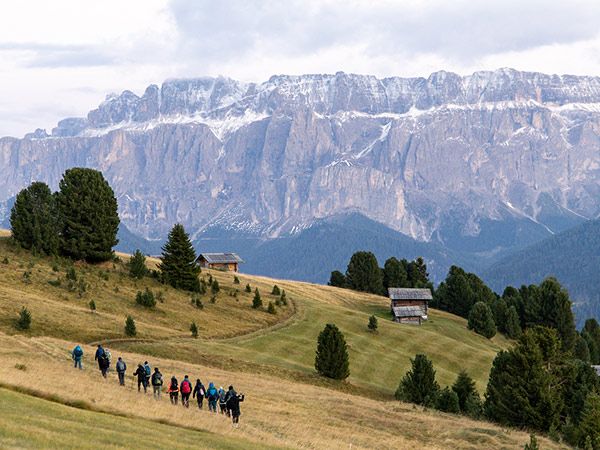
It’s late afternoon when I meet with the group. Tour guide Patrick Stuflesser is explaining the meaning of enrosadira – a word from the Ladin language. According to Ladin legend, the flowers from a King’s rose garden shine in the evening sun. “The mountains become coloured with fire. This is a unique tour because it’s totally special in autumn," says Patrick.
The tour operates in September and October, taking visitors on a late afternoon stroll through a magic forest up to the rustic family-run mountain hut, Sëurasas. At an elevation of 2000 metres, Sëurasas is the perfect viewing point to witness the mountain faces alighting with the pinks and reds of sunset.
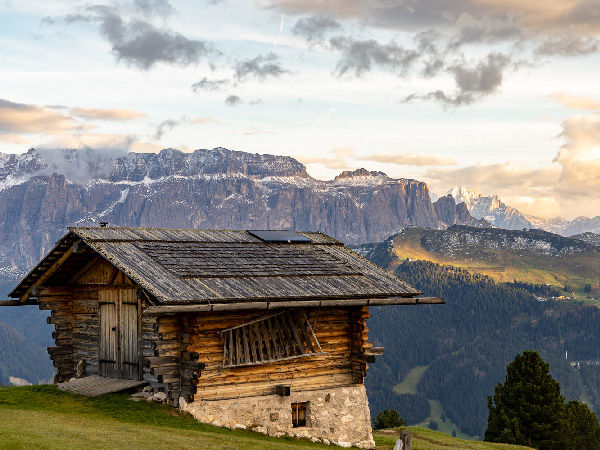
After a refreshment infused with the garnish of a local wildflower, we hike to a higher vantage point. But the sky is still blanketed in clouds and does not want to give up the sunset. “Even when it’s a little bit rainy, you have this mystical effect of the fog and the clouds," says Patrick. Even without the fiery enrosadira, the landscape is surreally beautiful.
The hero of the vista is the Sassolungo, one of the Dolomites’ most recognisable mountains. Misty clouds cast a diffuse softness over the scene, adding to the otherworldly ambience: a photographer’s dream.
Patrick is a South Tyrolean of several generations and is proud of his Ladin heritage. South Tyrol belonged to the Austro-Hungarian Empire for 400 years, until Italy’s border was redrawn after the First World War. “You have to imagine that this area was Austria one day, and part of Italy the next. So, my grandfather was an Austrian and became an Italian citizen overnight … he could only speak German, and a little bit of Ladin," says Patrick.
The Ladin language is still taught in schools today. Young people here are learning more languages than ever, with a recent increase in international tourists to South Tyrol. “In the past, we principally had Italian and German guests … but within the past 10 years, it’s changed totally. The big change was after the Coronavirus – social media has changed everything. Attractions like Seceda became famous overnight," says Patrick.
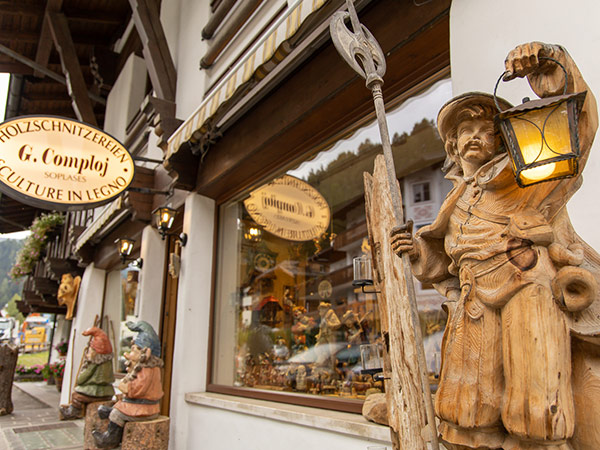
Locals are proud of their region, Ladin culture and language, and they are happy to share them with visitors, who, Patrick reports, mostly respect nature and the local culture: “absolutely, we are very proud of our culture and our history; Ladin is our secret language". There are numerous authentic wood-carving shops throughout Val Gardena, where visitors can purchase souvenirs made by local Ladin artisans. After enjoying the sunset, we hike with headtorches down through the dark forest.
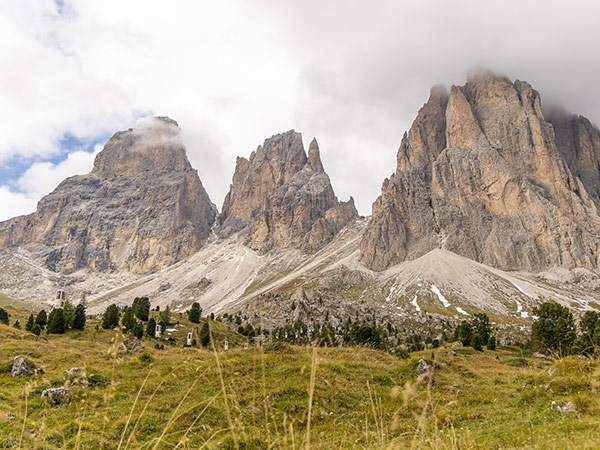
For my last day in Val Gardena, I drive across the valley to reach the Forcella del Sassolungo gondola: a small, retro-style “coffin lift" – a unique standing-room-only cable car experience that’s not for the faint-hearted. The gondola reaches the Toni Demetz Alpine Hut on Sassolungo mountain, which presents hikers with numerous options, including thrilling via ferrata climbs. I watch as a tour group completes their climb atop a spectacular ridgeline.
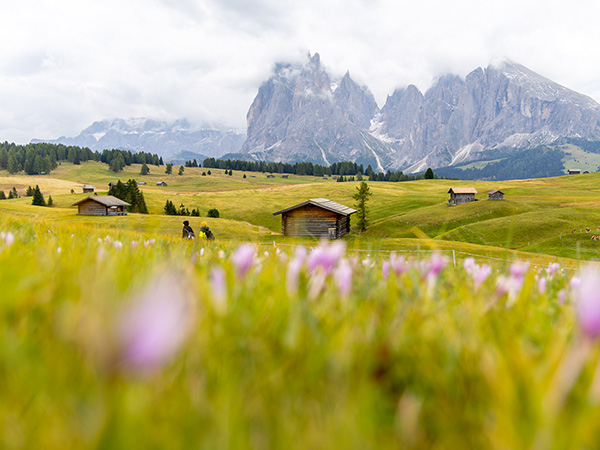
In the afternoon, I return to Ortisei and ride another gondola to spend a couple of hours exploring the famous alpine meadow of Alpe di Siusi. My camera is drawn to the cute mountain farmhouses and animals, set against green meadows punctuated with violet wildflowers. Again, the fields are quiet and I have free rein to explore. Another first-person adventure, with terrain as surreal as a fantasy video game.
Back in Ortisei, I find an alfresco seat at Vinoteque La Cercia wine bar, which has an extensive wine menu to satiate the most discerning vinophiles and, most importantly, is generous with aperitivo snacks. It’s the perfect spot to people-watch against the pretty backdrop of whimsical hotel facades and reflect on my six days in South Tyrol.
While over-tourism is becoming a challenge in some of Italy’s peak destinations, such as the Dolomites, it doesn’t mean you need to miss out. Given that this wonderland is gorgeous year-round, the shoulder season might just yield an even more awe-inspiring trip, even if the local mountain deities are in an icy mood.
Weekly travel news, experiences
insider tips, offers, and more.
Want to see more stories from International Traveller in your Google search results?
- Click here to set International Traveller as a preferred source.
- Tick the box next to "International Traveller". That's it.