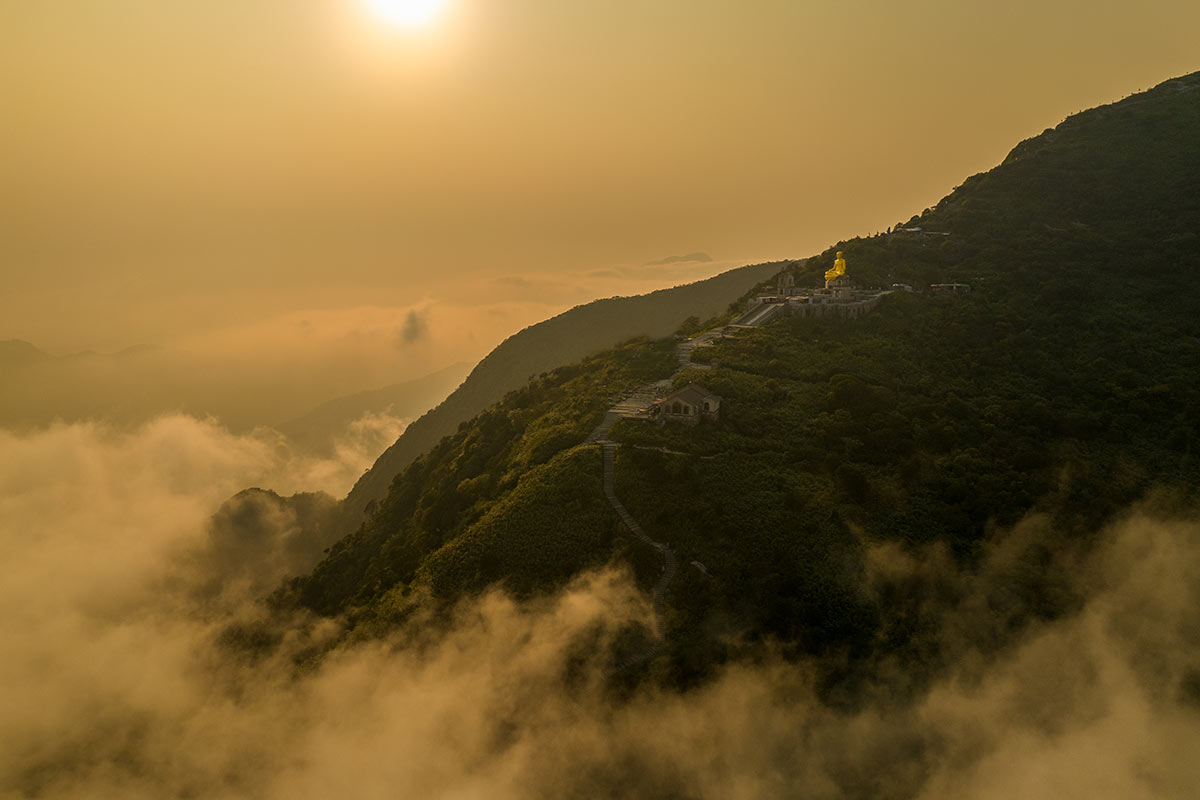

Whether you’re crouched low over bowls of pho on the streets of Hanoi, ascending through shrines on Yen Tu Mountain or gliding across the waters of Ha Long Bay, Northern Vietnam shifts your line of vision.
My backside is hovering mere inches above the pavement. Behind me, fragrant steam billows from a steel cauldron, dampening the back of my neck with a scalding mist. A fluffy white dog potters over and curls up at my feet, panting in the heat of the day. This is street dining in Hanoi. It’s lunch hour, and the restaurant is full of locals perched on tiny plastic stools, hunched over bowls of glossy noodles and umami-rich broth.
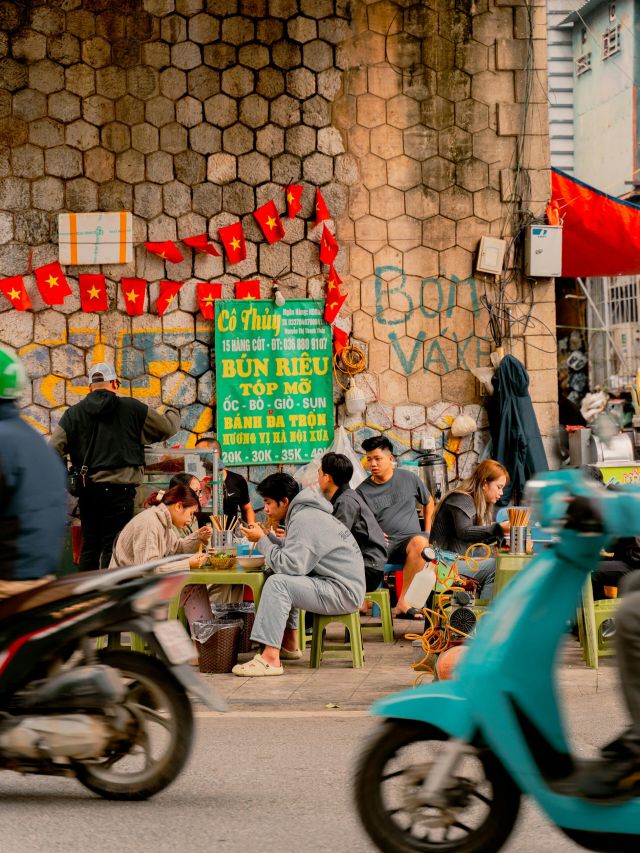
In Hanoi, life takes place close to the ground. The plastic stools are a defining motif of the city, scattered along almost every street in a bright jumble of colours. These stools rarely stand taller than a baguette of bánh mì, yet they are an anchor for social life in the city.
They’re used by groups of retirees, laser-focused and huddled around games of Chinese checkers; friends, lingering over rich, syrupy cups of Vietnamese coffee in the morning; and businessmen, stretching the sharp tailoring of their suits as they squat around cold cans of beer, cigarettes in hand. These stools are tied to the Vietnamese tradition of ngồi bệt – squatting or sitting on the pavement to socialise, drink and eat – just like I’m doing right now.
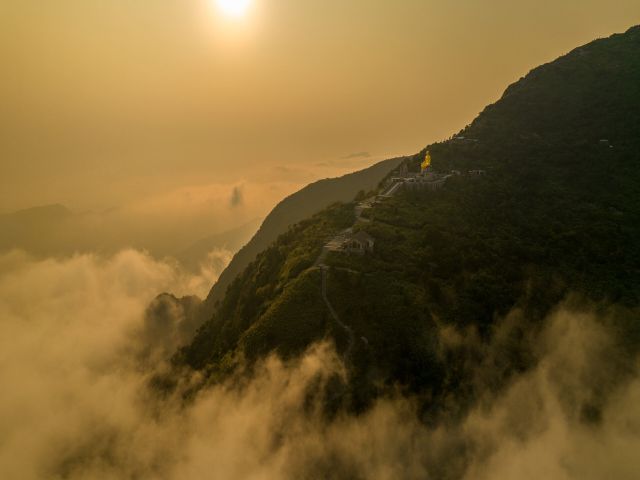
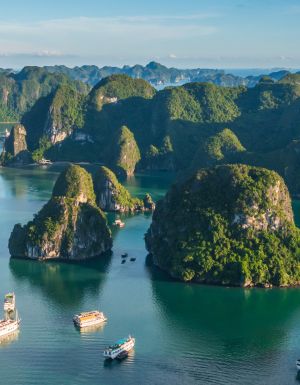
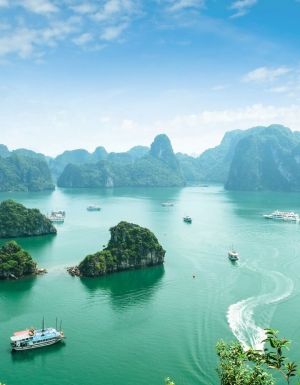
I’m travelling through Hanoi and its surrounds with local guide Tom Vu of BestPrice Travel. The city is the gateway to some of Northern Vietnam’s most striking landscapes: Yen Tu Mountain, the spiritual heartland of the region, and Ha Long Bay, where limestone karsts jut dramatically from jade-coloured waters.
As you move through Northern Vietnam, your line of sight is constantly shifting. Hanoi draws the gaze down towards the rhythm of the street. Yen Tu lifts it upward towards misty slopes dotted with pagodas and shrines that seem stacked almost vertically on one another. And in Ha Long Bay, the eye drifts outward across a mesmerising seascape that stretches towards the horizon. It’s one region, with life arranged along three different axes.
Hanoi: life at street level in the city
Right now, my attention is fixed at street level. I’m on a food tour of Hanoi, eagerly awaiting the next dish to arrive – even though I’m technically on my fourth lunch of the day. “Each restaurant only makes one or two dishes," Tom explains, playing traffic controller as he guides our group through streets frenetic with motorbikes.
We start with a palate cleanser – zingy, sweet skewers of pineapple from a local fruit stall. Then, devour bowls of bún bò Nam Bộ – a noodle salad made from silky threads of vermicelli tangled with barbecued beef, peanuts and fresh herbs. There are always fresh herbs: coriander, Thai basil and crispy bean sprouts that snap between your teeth.
Next, we squat on the sidewalk, munching what Tom has boldly declared as the city’s best bánh mì. “It’s all in the crispiness of the bread," he explains. By that metric, we are onto a winner, with flakes of crust scattering across the pavement as we bite down.
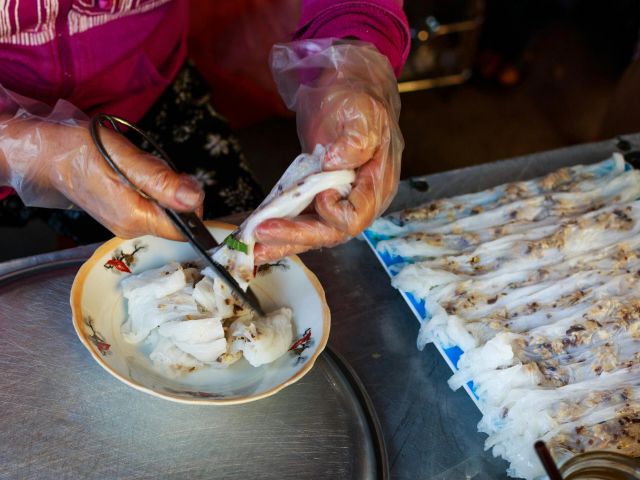
Our next dish, bánh cuốn, arrives; rice pancakes folded around juicy bites of minced pork. Tom shows us how to eat them: by dunking pieces into a bowl of delicious, tangy fish broth.
“We have a saying here," he tells us. “Men eat like tigers, and women eat like cats." But I’m no cat. I help myself to a second serving, leaving no scraps for the hopeful dog still curled up by my feet.
Yen Tu Mountain: a pilgrimage above the clouds in Northern Vietnam
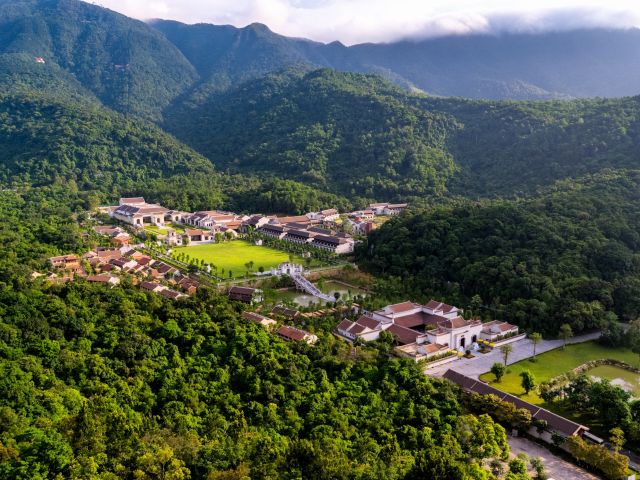
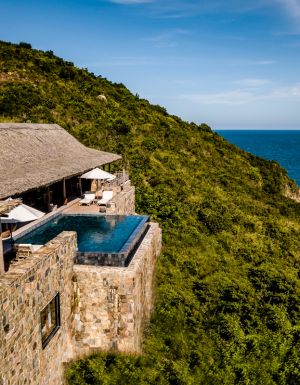
The restless streets of Hanoi have given way to mist and mountain silence. We’re based at Legacy Yen Tu Hotel Uong Bi – MGallery Collection, designed by architecture maverick Bill Bensley. Modelled after a 13th-century monastery, the hotel echoes traditional monastic design, from its central courtyards to the long cloister-like corridors. Bensley’s signature whimsy appears throughout, flashes of fuchsia velvet against wood and stone interiors.
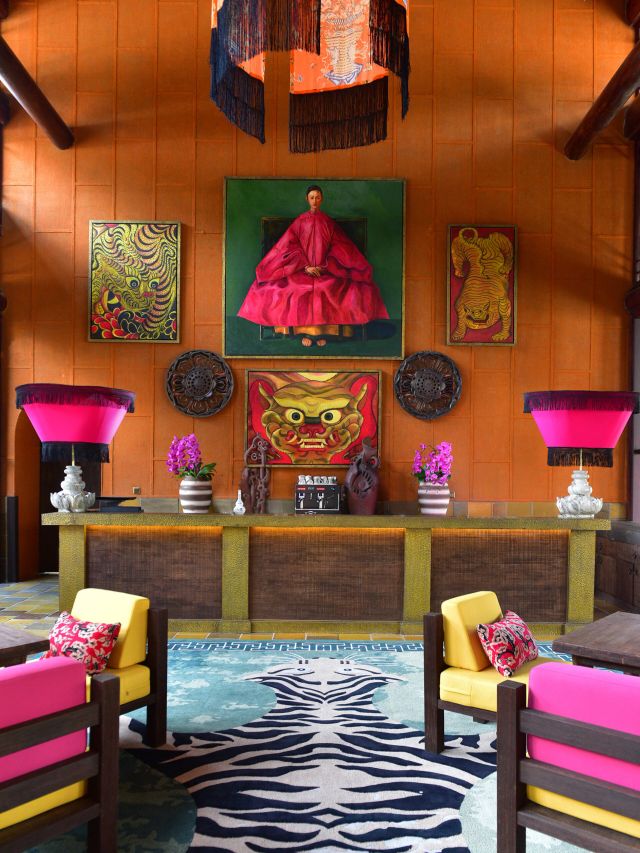
The hotel plays with scale in a way that feels surreal: yawning ceilings and wooden doors that dwarf guests, oversized armchairs and an enormous rope swing suspended in the courtyard. It makes me feel as though I’ve climbed a beanstalk into another world – a feeling that deepens when I fling open the wooden shutters of my room to reveal four white mares grazing silently in a field outside my window.
Yen Tu is the birthplace of Trúc Lâm, a Vietnamese branch of Zen Buddhism founded in the 13th century by a king who abdicated the throne to become a monk. Drawn by the mountain’s peace and remoteness, he retreated here to meditate and study. Today, Yen Tu remains a place of pilgrimage and devotion, where monks, locals and visitors ascend the mountain to pray and reflect at the many pagodas and shrines.
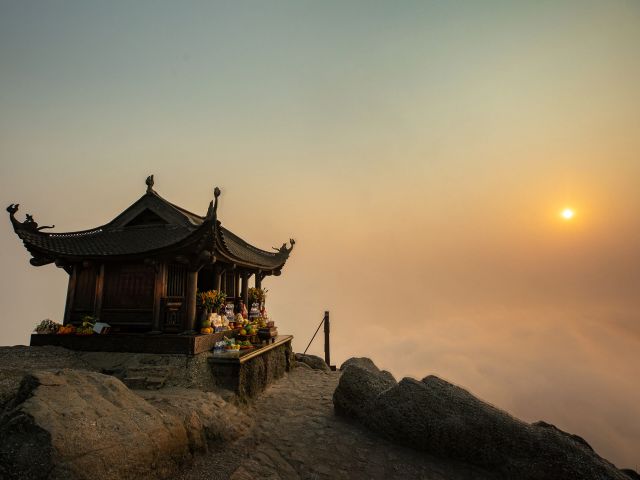
Legacy Yen Tu sits so close to the mountain that it seems to bleed into it. Attached to the accommodation is a cavernous temple studded with golden lotus motifs, and it’s here that I meet Tung, a soft-spoken monk draped in daffodil-coloured robes and a matching mustard-yellow beanie.
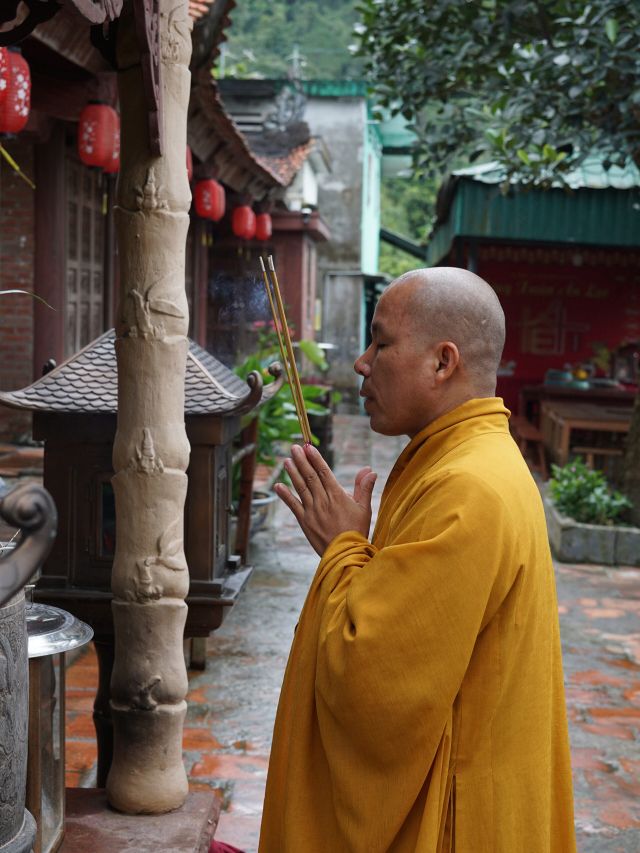
“A yellow robe represents release," Tung’s translator explains. “When you become a monk, you leave your worldly possessions behind." Tung accompanies us as we begin ascending the mountain up a stone staircase.
He takes us into small temples where he lights musky incense sticks, placing them down in a mountain of ash from previous offerings. He tells us meditation is part of his daily practice and something he believes everyone should try. “Our minds are like monkeys," he says softly. “Meditation calms the mind."
He practises for such long stretches, he tells us, that he often falls asleep still sitting upright in the lotus position. Before leaving, he invites our group to join him in a short meditation. I fold my legs into the lotus pose, just like Tung, and let my consciousness drift upward like streams of incense coiling into the sky.
Weekly travel news, experiences
insider tips, offers, and more.
Ha Long Bay: a world on the water
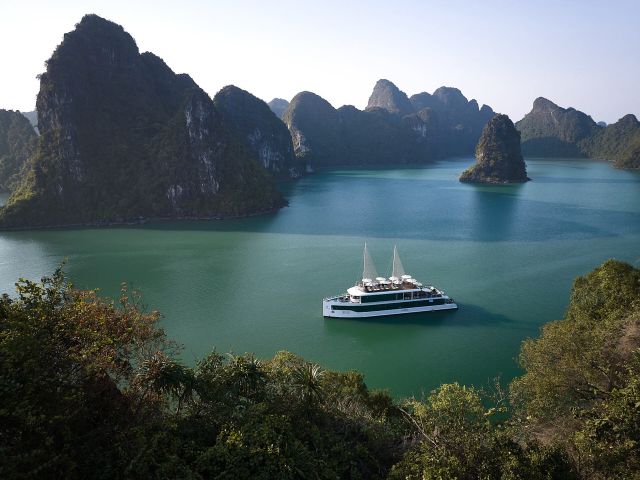
I’ve had a car towed before. But I didn’t know I could be towed. Yet here I am, clinging onto the back of Tom’s kayak as he pulls me through the emerald waters of Ha Long Bay. We’re out on a day cruise with JadeSails, anchored in the quiet Ao Ech lagoon, and it feels as though we have the water all to ourselves.
Here, passengers can climb into kayaks or leap directly off the side of the boat. I do the latter, disappearing into the glittering green water. Unfortunately for Tom, I spot him paddling past as I resurface, and decide to grab on.
I only intend to hitch a ride for a few metres. But the water is too perfect, the limestone karsts too hypnotic, and the simple joy of being pulled along too good to give up. So I keep holding on, drifting through the lagoon while kicking my legs behind him in a mostly symbolic attempt to help.
JadeSails takes us into quieter stretches of Ha Long Bay, anchoring in remote lagoons for passengers to explore. In La Han Bay, little fishing boats pull up alongside us and we clamber aboard. Our rower hands us conical hats to shield us from the sun before steering us silently through the water. He manoeuvres his oar with effortless precision, scooping us through the water into dark sea caves that open into hidden pockets of still water.
His name is Thang, Tom translates. He tells us he lives here in a fishing village, just like the one we’d passed by earlier. These villages are a network of floating wooden homes balanced above the water, ribbons of fish and squid hanging from beams, drying in the sun.
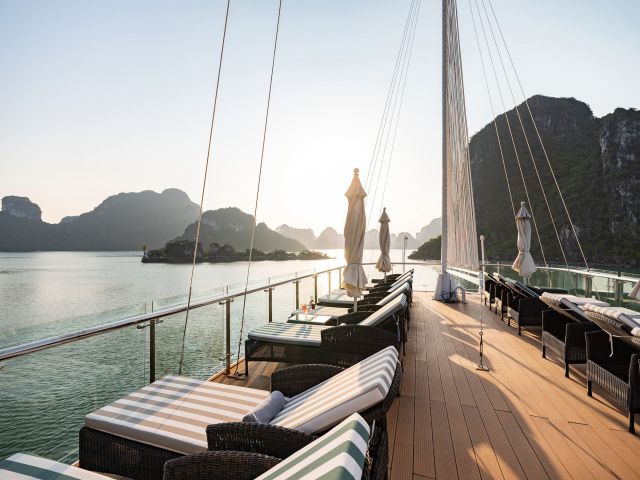
The vibe onboard is admittedly cheesy – but delightful all the same. When I first step aboard, I’m greeted by a confetti of red rose petals raining down onto my head, thrown by smiling staff to the brassy sound of a live jazz band. It’s possibly the most romantic gesture of my life. But JadeSails contains all the comforts you could need to luxuriate in the beauty of the bay: sun beds, a spa and a steady succession of cocktails.
In Hanoi, my gaze was drawn downward to the street. In Yen Tu, it shifted upward into the mountains. But here in Ha Long Bay, I’m looking out across the horizon as more limestone karsts slowly emerge into view – jagged and spiny, as though they could puncture the sky.
I watch little fishing boats heading out to sea and lose myself in the glassy water stretching endlessly into the distance. Sunset dissolves the evening into karaoke and more cocktails, and soon enough we’re back on land, heading back to Hanoi where I know I’ll once again be crouched low to the pavement come dinner time. I’m looking forward to it.
Want to see more stories from International Traveller in your Google search results?
- Click here to set International Traveller as a preferred source.
- Tick the box next to "International Traveller". That's it.