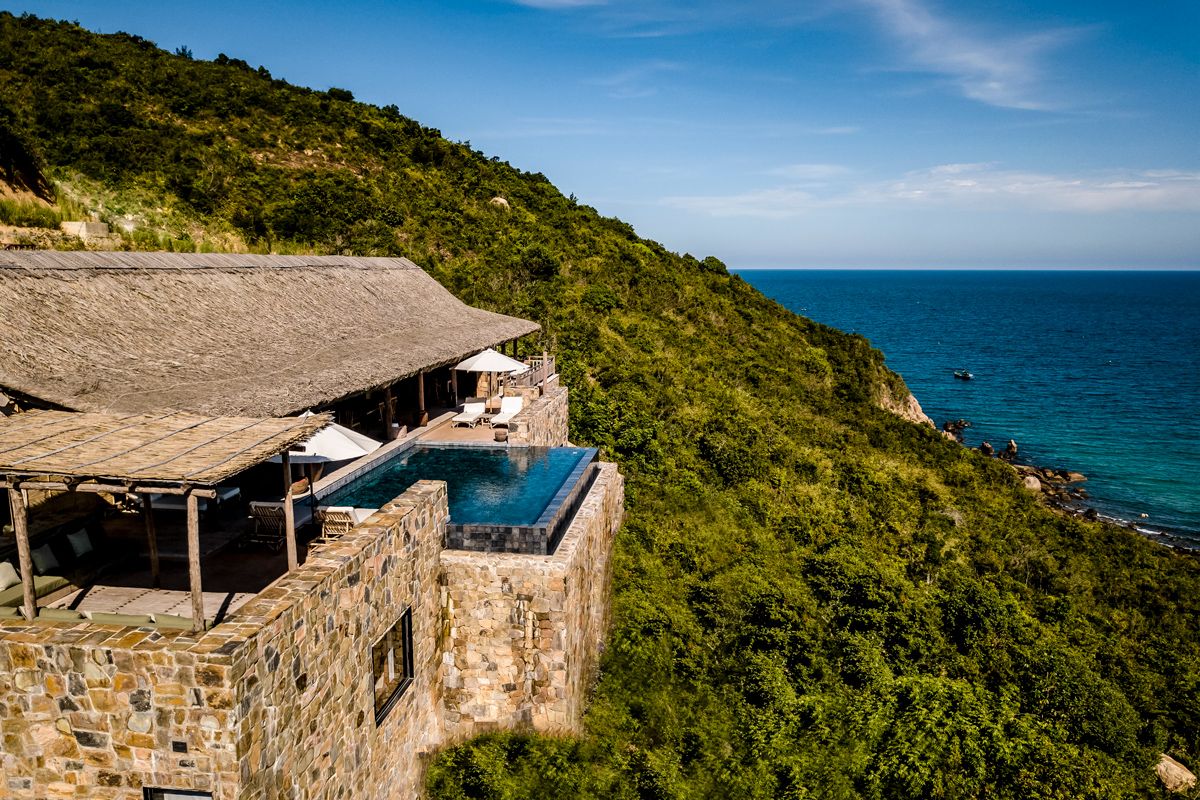

After a typhoon devastated Vietnam’s south-central coast, Zannier Bãi San Hô was rebuilt through a remarkable community effort – to tell a story of resilience and renewal.
In November 2025, Typhoon Kalmaegi barrelled across the South China Sea, making landfall on Vietnam’s south-central coast. Directly in its path was Zannier Bãi San Hô, the sprawling 98-hectare beachfront resort. In the aftermath, the resort closed. A five-month clean-up and rebuild ensued, and with it the slow regeneration of the semi-arid coastal landscape.
Here, rocky cliffs tumble into bone-white beaches, shimmering lagoons and fishing villages where boats have come and gone for centuries. I travel with my family by road from Quy Nhon – the final resting place of the poet Hàn Mặc Tử‚ and home to the 11th-century Banh It Cham towers – past scatterings of bonsai nurseries and carts peddling syrupy Vietnamese coffee and fragrant chargrilled pork.
Further south, these vibrant scenes begin to fracture. In Song Cua village, on the fringes of the resort, daily life carries on around uprooted trees, eroding soil, damaged roads and rubble. But it’s only when we arrive at Zannier Bãi San Hô, meaning the Bay of Corals, on a narrow, storm-battered peninsula, that the typhoon’s impact sinks in.
The devastating aftermath of Typhoon Kalmaegi
Thach Ngoc Thạc, a young staff member who goes by Tony, recalls watching the storm from the lobby as its eye unfurled against the shore, tearing terracotta roof tiles away and buckling buildings. Relentless rain followed.
From the balcony of our Hill Pool Villa, we overlook rice paddies lined with serene, stilted terrace villas. During the storm, the sea rose with such ferocity that it swallowed these fields like a lake. When the water eventually receded, life returned.
I have come to witness what it takes to restore a place like this, which is a livelihood for many in the local community. Over the coming days, I come to understand the human resilience and optimism that can surface in the wake of a natural disaster.
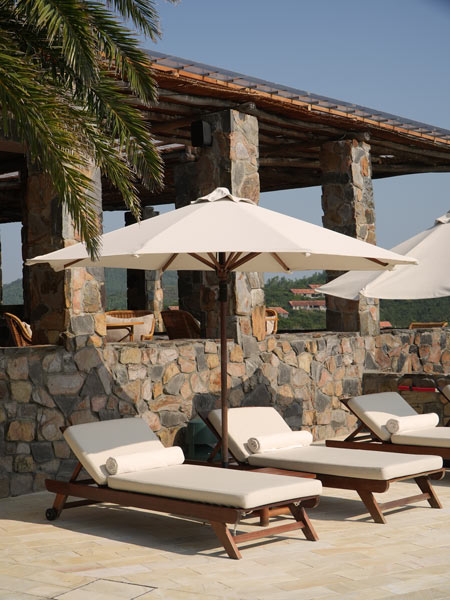
At dawn, we watch fishermen haul their nets into round boats offshore in the glistening bay. Then the bustle begins. By first light 200 people have arrived for work, carrying weather-beaten nón lá (Vietnamese leaf hats) and bottles of iced water, tools slung over their shoulders.
On our morning walk, we quickly learn to hug the edge of the narrow road as brightly coloured tuk-tuks whir past, piled high with bricks, bamboo and bundles of palm thatching. Each day follows a similar rhythm as craftspeople from nearby villages return to reconstruct the resort.
A community effort: rebuilding Zannier Bãi San Hô
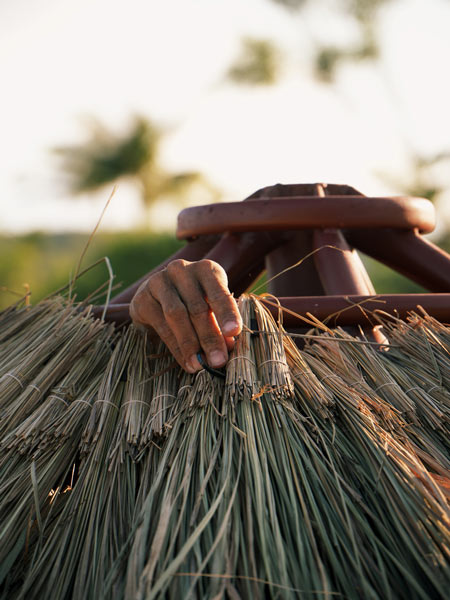
Of the 180 staff at Zannier Bãi San Hô, 177 are local – many from the surrounding fishing villages that bore the brunt of the storm. Nguyễn Thị My Linh, who oversees Làng Chài, the resort’s beachfront restaurant, is from nearby Hoa Hoi village in the Xuan Canh commune.
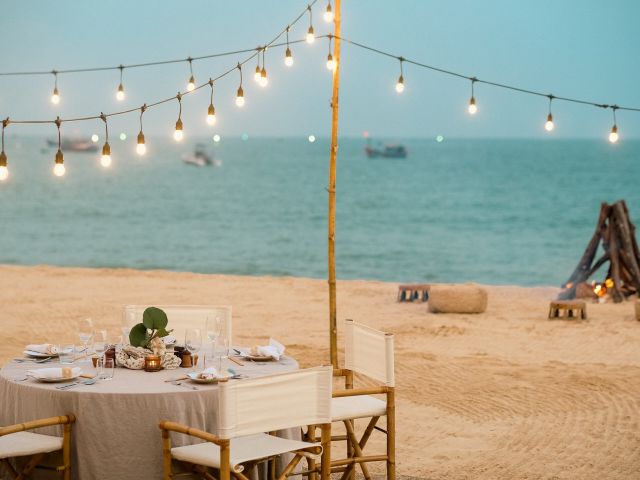
“I was born and raised here," she tells me proudly. “It was the first time I experienced a storm like it." The typhoon tore the roof from her home and damaged her family’s convenience store. It also destroyed Làng Chài. Rebuilt on the same footprint, the restaurant once again faces the sea, serving fresh-caught lobster pulled from this bay.

One evening as the moon rises, shining like silk on the ocean, music punctures the usually still night. It drifts in waves over the valley and returns each night for days. Guest assistant Lê Hoàng Khánh Linh explains it is the Nghinh Ông, or the Whale Worshipping Festival. “Local fishermen believe that whales are guardians of the sea," she says, “protecting them from storms and dangers."
According to ancient Cham folklore, when a whale dies and washes ashore, it’s buried in a sacred whale temple. Held after the Lunar New Year, villagers gather to honour the whale’s spirit through rituals, offerings and colourful processions. These fishermen, who sing to the sea for safe passage and a bountiful catch, are the same people whose homes and communities bore the wrath of the ocean. Like the resort, they’re intent on rising again.
Weekly travel news, experiences
insider tips, offers, and more.
Life returns to the coast of Vietnam
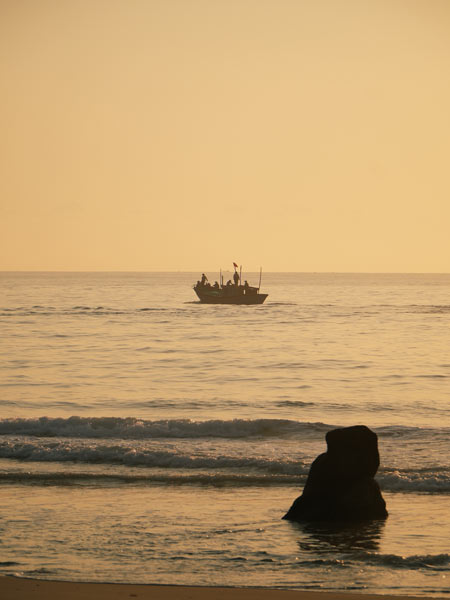
On our last day, the whooping of two bronze coucals echo in duet. White eastern cattle egrets take flight over the knee-high rice paddies, and an ocean breeze gently sways the fringes of newly planted palms.
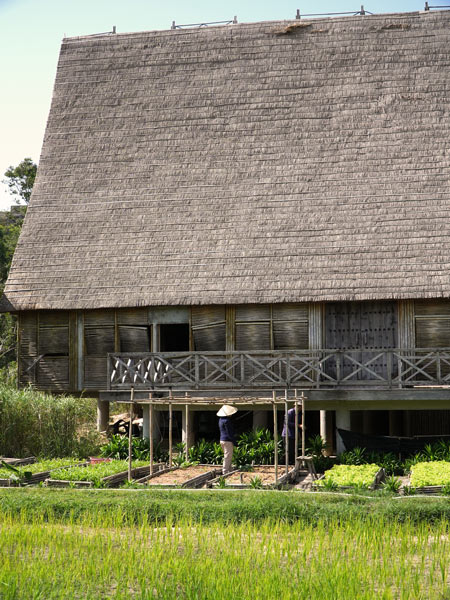
Part of the resort’s landscaping team, Mister Ðàn Nguyễn emerges from the shadow of Bà Hai, the towering Bahnar rong house, carrying a plump papaya in weathered, soil-covered hands. He moves through the garden with the ease of someone who has worked this land for over a decade, gesturing towards orchids sprouting from hanging coconuts and tangled tomato vines while crushing Thai basil leaves between his fingers, their liquorice-sweet scent drifting through the air.
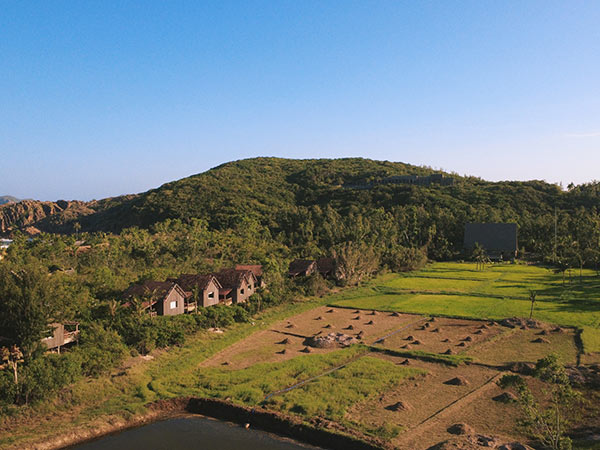
By the time the resort reopened in April 2026, nearly 23,500 trees and shrubs had been replanted by hand, and the beach – stretching about a kilometre – had been rebuilt. That night, while boats raise lobster pots under the moonlight, the singing comes again – fishermen and their communities calling to the same sea.
Want to see more stories from International Traveller in your Google search results?
- Click here to set International Traveller as a preferred source.
- Tick the box next to "International Traveller". That's it.