hero media

A stay at this Japanese hotel will nurture your mind and spirit

In a traditional inn at the foot of a sacred mountain, find serenity and a luxurious reset on the outskirts of Kyoto.

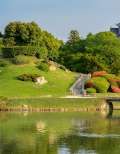
Grey gravel paths crunch underfoot as I follow their curves through a garden carpeted in moss. I walk past spongy mounds, stone walls and pagodas encrusted with green growth, huddled bushes and grand trees. Little wooden bridges with handrails of bamboo cross over a pond studded with rocks. Fed by a stream diverted from a nearby river, it’s brought alive by pockets of gold and dappled koi gifted from monks who reside in the nearby hills.

It’s between seasons, so while birdsong fills the air, the trees are largely bereft of leaves. Still, the garden is a work of beauty, serene and carefully planned as if to appear nonchalant, with pockets of loveliness hiding around corners.

Ancient traditions

I’m on the north-eastern outskirts of Kyoto, a 20-minute drive from the city, ensconced at a peaceful riverside hotel called Moksa. As the rampant moss suggests, its garden was here long before this modern ryokan was built, a recent reinvention of the previous building. It’s in the village of Yase, which lies at the base of one of two sacred mountains that gave birth to Japanese Buddhism – a village that is rumoured to boast one of the oldest steam bath cultures in Japan.
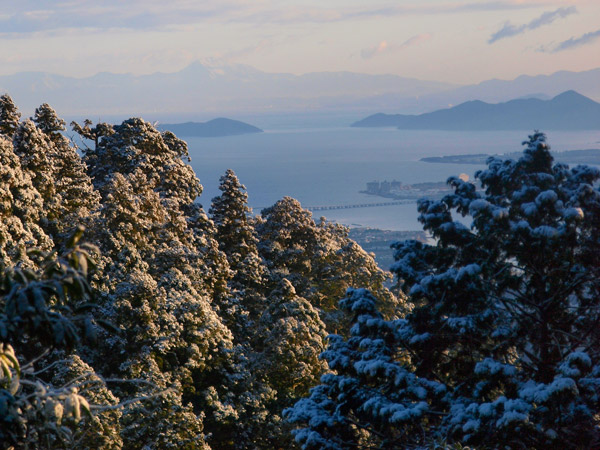
the sunrise over Lake Biwa from Mt Hiei
Soak up the sunrise over Lake Biwa from Mt Hiei. (Image: Tsuyoshi_Kaneko via Getty Images)

Since ancient times, the villagers have used a steam sauna called kamaburo, a rounded earthen kiln, to cure various ailments. It’s said that when a prince was wounded by an arrow in 672AD during the Jinshin War, the villagers offered him a kamaburo bath to heal his back. That prince went on to become the revered Emperor Tenmu, clear evidence the proffered remedy was successful. The area has been favoured since by aristocrats and samurai as a place of healing for body and mind, and today Moksa continues that history.
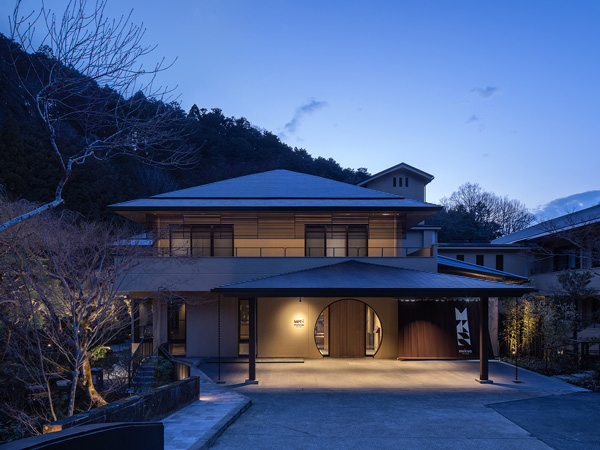
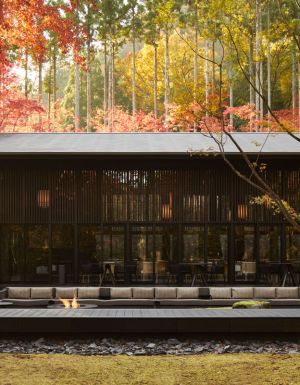
the accommodation exterior of Moksa
A stay at Moksa, which is surrounded by forest, is all about temples and nature. (Image: Blitz Studio Co.)

The hotel

I’d imagined ryokans to be small spaces, but Moksa ends that preconception. The oversized foyer is a feast of earthy tones and textures – blond timbers, slabs of natural stone and clean lines.

It showcases the works of local artisans: sculptures from twisted vines, abstract paintings and stone artworks. Throughout, massive windows frame the magic of the garden, which is well worth displaying.
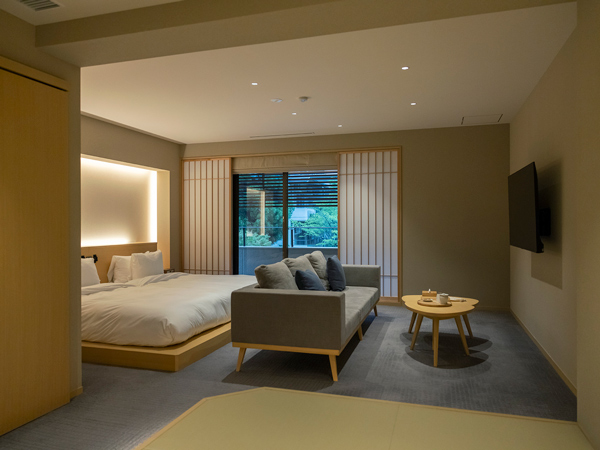
a guestroom in Moksa
Moksa offers 31 guestrooms surrounded by the nature of Yase in the north of Kyoto. (Image: Blitz Studio Co.)

The rooms are equally delightful and my Deluxe Twin Room surprises with its spaciousness. Japanese snippets – ceramic tea sets and his-and-hers pyjamas folded neatly at the foot of the beds – are offset with a thoroughly modern vibe. Simple and elegant, it features a separate bedroom, both a sofa and coffee table, a traditional tatami lounge and a large charcoal-tiled bathroom. The translucent shoji paper screen slides across to reveal a balcony running the length of the room that peers over that same garden, while others overlook the Takano River.
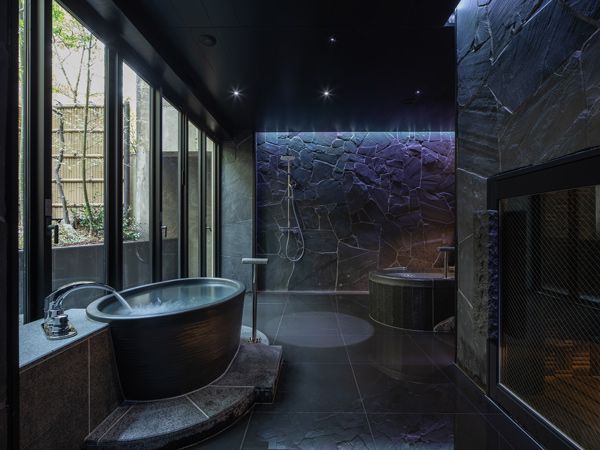
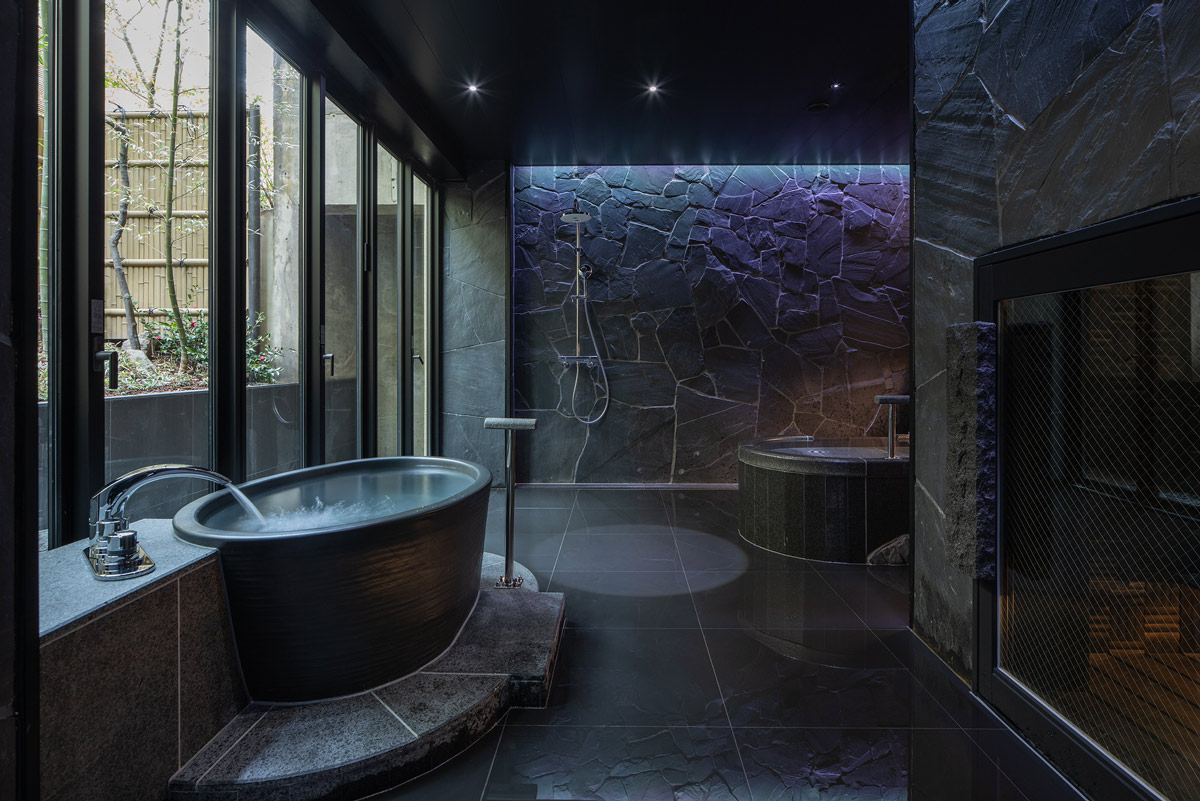
the bathroom at Moksa
Wash away the cares of modern life at Moksa. (Image: Blitz Studio Co.)

Taking its name from the Sanskrit word moksha, which means ‘liberation from earthly care’, the hotel promises a rebirth for those who stay. It’s not just the surroundings designed to provide a reset. Three key elements combine to nurture mind and spirit: nourishment from food, purification from private steam baths and a variety of tea traditions to stimulate the circulation of qi energy.
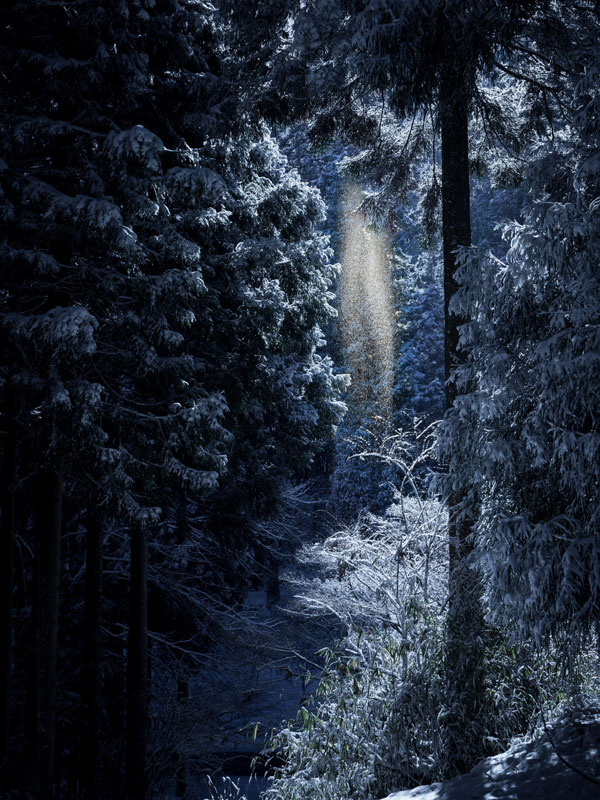
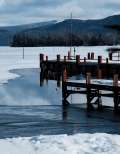
a snow-filled forest in Moksa, Japan
The name derives from a Sanskrit word meaning ‘liberation from earthly care’. (Image: Amana Images Inc./ Alamy)

Dining

With cuisine integral to the Moksa experience, breakfasts and dinners are part of any stay. The philosophy of being nourished through food is celebrated at Malamakibi, its restaurant featuring vegetables and herbs from the nearby village of Ohara.
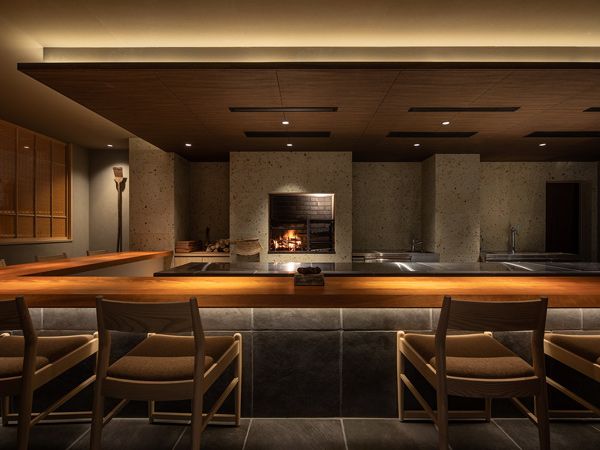
the dimly lit dining interior of Malamakibi restaurant
Malamakibi restaurant specialises in woodfired cuisine sourced from Ohara. (Image: Blitz Studio Co.)

It’s a treat to sit gazing directly into the kitchen and watch the chef and sous chef assiduously prepare the ingredients for dinner before us and grill them over woodfired coals. He also presents the dishes and explains their components. The meals are exquisite: everything from the flavours to the ingredients, attention to detail in presentation and the plates on which they’re served. Seafood features highly, each course of six an exercise in beauty and precision, ingredients matched to the turning season: sea urchin, cherry salmon, snippets of canola flower and butterbur sprout.

We finish at the bar with fresh strawberries, a macaron and a sliver of nutty tart washed down with the hotel’s signature smoked tea gin and tonic. It’s perfect.

Breakfast is equally finessed, with Japanese and Western choices including a ‘healing breakfast’ with rice porridge and five-coloured side dishes inspired by the five elements of yin-yang. Everything has a reason.
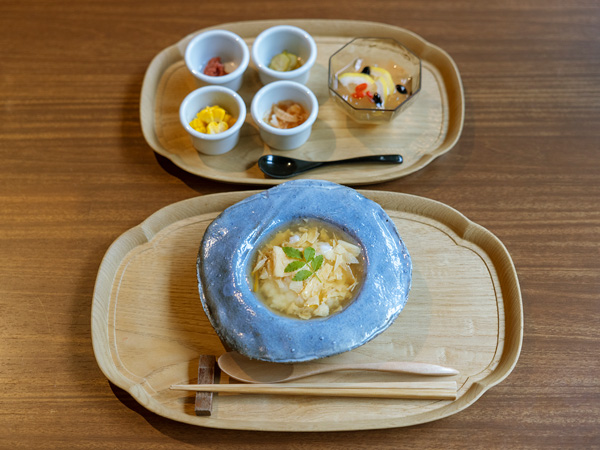
in-house dining at Moksa
Enjoy elevated in-house dining at Moksa. (Image: Blitz Studio Co.)

The saunas

Drawing inspiration from the local history and using the groundwater from Mt Hiei, Moksa offers three uniquely themed sauna and spa rooms designed for wellness and rejuvenation, available for private 90-minute sessions. Not being a great decision-maker, I try them all.

Each suite is beautifully appointed. Hijo is themed around Japanese cypress, considered sacred, with timber tubs and a scent of pine. A pink and taupe Bijo mist sauna features a special light to activate collagen in the body. Tanjo is all blacks and inky greys with deep, dark tubs and a private bamboo courtyard garden that glows at night.

I’m grateful for the fresh berries and cold drinks provided because, unsurprisingly, it’s hot in the saunas. Very hot. I’m told sauna steamers build up heat resilience, but I’m mindful of my untrained state and opt for a shorter sauna and a longer water bath soak to compensate. A cold tub provides the option of an invigorating post-sauna dip, said to increase lymphatic circulation, but I like my water warm and have no wounds to heal so I skip that part without regret and still feel thoroughly cleansed.

Tea culture

We’re offered tea at the Kikyorai tea counter to rejuvenate mind and body. In a Taiwanese ritual, a choice of blends is presented, each with a healing purpose, served deftly with contemporary tea utensils and ceramics crafted by artisans. It’s time to slow down and savour the detail.

Another tea ceremony awaits in the garden in a 100-year-old freestanding teahouse, lovingly restored in recent years. Inside, we’re privileged to be hosted by an octogenarian tea master, a sensei who’s been studying and teaching the art of the tea ceremony for more than 50 years. Dressed in a blush-pink kimono embroidered with sakura blossoms, Moriya Michiko explains her considered actions and their intent, from the turn of the bowl to the wipe of silk and the swish of the split-bamboo whisk.
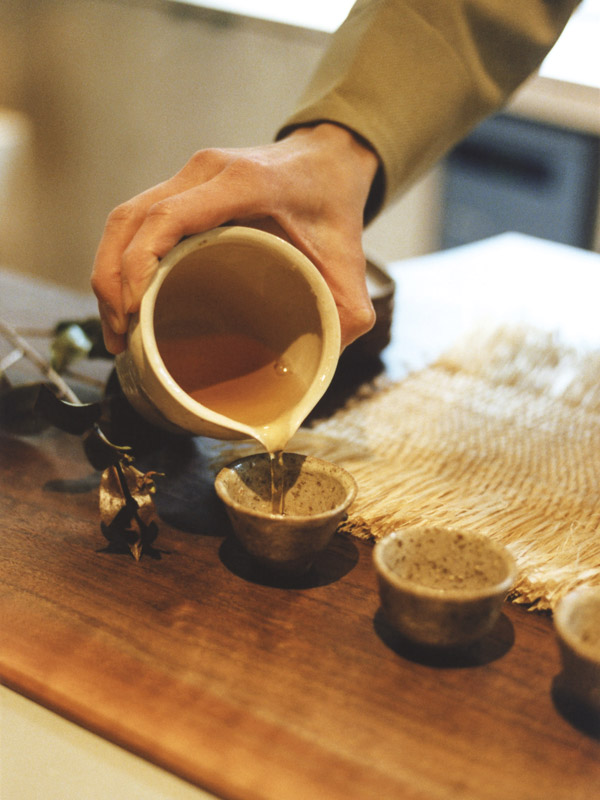
pouring tea into a cup at Malamakibi restaurant
The food at Malamakibi restaurant is paired with tea, a nod to the teahouses that have welcomed travellers since ancient times. (Image: Blitz Studio Co.)

Weekly travel news, experiences
insider tips, offers,
and more.

Beyond Moksa

There’s more to soothe the soul beyond the gates of Moksa, with forests to wander, a village to explore, shrines to visit and a mountain to hike. Mt Hiei, considered one of the three holiest places in Japan, is the home of heritage-listed Enryaku-ji Temple (that’s the collective name for the hundred-plus temple halls scattered on the mountain), founded in 788AD.
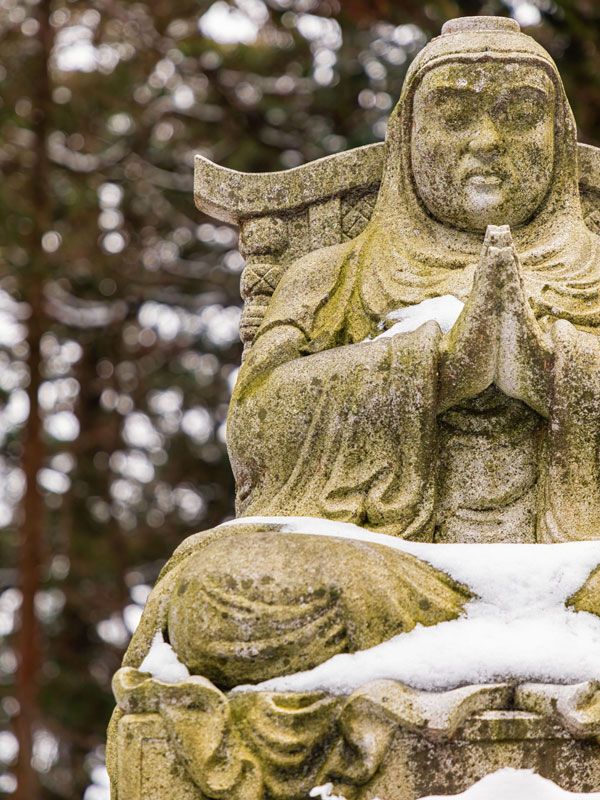
the statue of Priest Saicho at Enryaku-ji Temple
Priest Saicho was a Japanese Buddhist monk who established the Tendai sect of Buddhism in Japan. (Image: Alec Gibson/Alamy)

A cable car from Yase-Hieizan-guchi Station can deliver you to the top but timing is key as it closes in winter. Otherwise, it’s a long but peaceful walk.
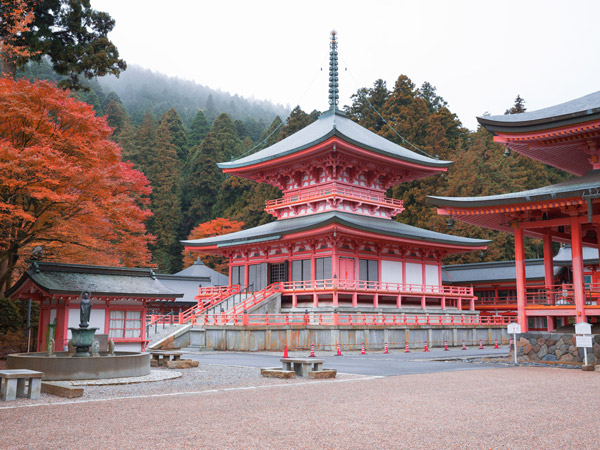
the Hokke Soji-in east hall at Enryaku-ji Temple
Visit Hokke Soji-in east hall at Enryaku-ji Temple. (Image: Amana Images Inc./ Alamy)

I’m learning the importance of timing. My mid-season visit also means the grounds of the Ruriko-in Temple in Yase – where the original kiln bath that cured an emperor can still be seen – won’t open either until a few weeks’ time in spring.
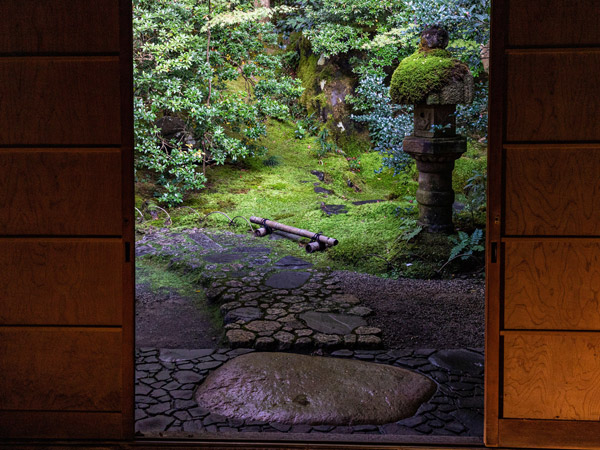
Rurikoin in Yase, Kyoto
Rurikoin in Yase, Kyoto, has been attracting people since ancient times. (Image: John Lander/ Alamy)

Regardless, I’ve bathed in steam and water and forests, sipped teas and been pampered with food, and witnessed the beauty of nature in refined surrounds. It seems ancient traditions are still providing salves for our modern lives.
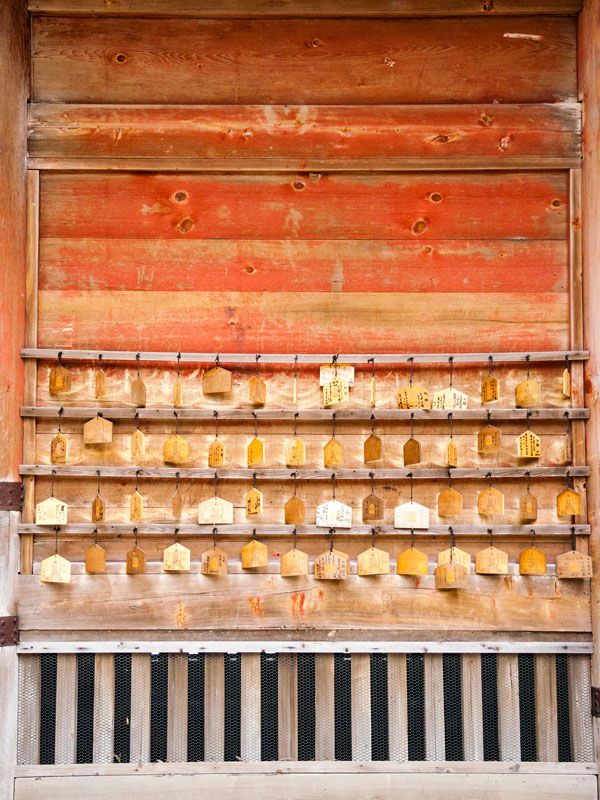
Ema prayer boards at Enryaku-ji Temple in Kyoto
Ema prayer boards hanging on the Monju-ro gate at Enryaku-ji Temple in Kyoto. (Image: Malcolm Fairman/Alamy)

Want to see more stories from International Traveller in your Google search results?

  1. Click here to set International Traveller as a preferred source.
  2. Tick the box next to "International Traveller". That's it.
Christine Aldred
Christine Aldred is a travel writer and avid wanderer. She loves delving under the surface of places she visits to uncover their histories, tales and culinary highlights, and sharing the finds. She’s somewhat obsessive about taking photos, is a chronic over-packer and spends way too much time online.
View profile and articles
hero media

This is why cruising is the best way to see Asia

    Dilvin Yasa Dilvin Yasa
    Iconic destinations, unforgettable adventures and thrilling onboard adventures; say hello to your next Asia holiday with Royal Caribbean.

    When you want to explore the gleaming skyscrapers of Shanghai and the bars of Singapore, but also embrace centuries-old traditions in Japan before traipsing through the lush jungles of Malaysia, a conundrum presents itself: how do you do it all seamlessly without the stress of flying (or repacking)? Enter, Royal Caribbean.

    With a brand designed around maximising your holiday time, sip cocktails by the pool or watch Broadway-style performances on board as the ship glides effortlessly from one atmospheric port to the next.

    Now that you have Asia at your fingertips with minimal effort, the big question is: which all-inclusive experience (and itinerary) is best for you?

    Japan

    The itinerary

    Spectras Cabaret royal caribbean
    Prepare for a show, on and off the ship.

    The Land of the Rising Sun has never been hotter, and Royal Caribbean has a vast array of unforgettable Japanese itineraries – these range from eight-night adventures to 14-night holidays circumnavigating the country’s islands.

    The eight-night Best of Japan sailing is memory-making perfection, kicking off in Shanghai (Baoshan) on 24 October 2026. Stop at fascinating ports to soak in the sweeping landscapes and seascapes of Saikaiminato, Kyoto, Niigata and Hakodate while enjoying incredible dining and adventurous activities onboard Spectrum of the Seas®. Complete your journey back in Shanghai, ‘the Paris of the East’.

    Port highlights

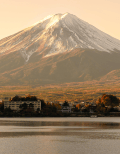
    mt fuji in japan
    See iconic vistas of Japan.

    Off the ship, hike the dramatic volcanic peaks of Sakaiminato’s Daisen-Oki National Park, explore the iconic temples of Kyoto, enjoy traditionally brewed sake made in Niigata (the birthplace of many quality sake brands), and taste local flavours at Kanemore Red Brick Warehouse, a premier dining and shopping district in Hakodate.

    Don’t miss Royal Caribbean’s Amanohashidate Highlights shore excursion in Kyoto, an exhilarating experience that features a cable car ride up to Kasamatsu Park and includes a visit to Nariaiji Temple, a hillside Buddhist site.

    The ship

    Spectrum Of The Seas in Singapore
    Step on board Spectrum of the Seas®.

    Aboard Spectrum of the Seas®, days at sea are just as action-packed as those on land. Here, 17 dining venues, along with eight bars and lounges, take guests on the ultimate global dining tour. Stop into Sichuan Red, designed specially for this ship, where you can savour a rich tapestry of authentic spices and Asian-influenced flavours. Start with the chef-recommended royal sea cucumber, then move on to a hot and savoury bowl of mapo tofu simmered in a traditional spicy sauce, or authentic pickled radish and duck soup.

    Fancy a little post-dinner entertainment? Talk salsa lessons, or book front row seats to Showgirl, a multisensory spectacular that pays homage to the ultimate siren of the stage. You can also take a visual journey into the exotic cultures of the Far East with The Silk Road at Two70®.

    Kids (and kidults), as always, are well-catered for, with aqua park Splashaway Bay℠ and the largest indoor active space at sea, SeaPlex®, which offers everything from laser tag to bumper cars. Those looking to relax can find peace in the adults-only solarium, as well as a wealth of treatments at Vitality℠ Spa.

    Thailand and Malaysia

    The itinerary

    Izumi Teppanyaki on ovation of the seas royal caribbean
    Sit down to hibachi at Izumi Teppanyaki℠.

    Royal Caribbean’s Southeast Asia sailings deliver the perfect fusion of culture, cuisine and coastlines, and the four-night Penang & Phuket cruise is proof that short escapes can still feel spectacularly rich.

    Kick off with Royal Caribbean’s iconic Sail Away Party as Ovation of the Seas® departs from Singapore on 27 February 2026. The itinerary then weaves through two of the region’s most mesmerising destinations: Malaysia’s melting pot of cultures in Penang and Thailand’s sun-soaked island of Phuket.

    Each port stop is layered with history, flavour and natural beauty, while each moment spent onboard Ovation of the Seas® is filled with fun and excitement.

    Port highlights

    iconic ‘James Bond Island’ made famous in The Man with the Golden Gun thailand
    Zoom around the ‘James Bond Island’.

    In Penang’s George Town, a maze of heritage architecture, vibrant murals and street stalls serving sizzling char kway teow and aromatic laksa come together, blending past and present. Visit the Taoist Goddess of Mercy Temple to soak up its peaceful energy, ride the century-old funicular to the forested summit of Penang Hill for panoramic views, and wander Batu Feringhi Beach, where the Andaman Sea laps gently against golden sand. Jet skis? Why not?

    Then it’s north to Phuket, where both adventure and relaxation beckon. Make the most of the local beach scene at Kata Noi and wander up Monkey Hill for sweeping vistas (and mischievous company). Be sure to book Royal Caribbean’s thrilling shore excursion here – you’ll zip along in a three-engine speedboat to the iconic ‘James Bond Island’ made famous in The Man with the Golden Gun. After a day of exploration, you’ll have enough time to enjoy a sunset cocktail on the waterfront before returning to your ship for another unforgettable evening.

    The ship

    Ovation of the Seas®, royal caribbean
    Experience thrills aboard Ovation of the Seas®.

    Of course, life on board Ovation of the Seas® is just as exhilarating as your adventures off it. Sit down to 16 flavoursome finds, from Jamie’s Italian by Jamie Oliver® to theatrical hibachi at Izumi Teppanyaki℠.

    Build up an appetite with Royal Caribbean’s iconic onboard activities, from the FlowRider® surf simulator to soaring sky-high on RipCord® by iFLY® and zipping around in bumper cars in SeaPlex®. You can really choose your own adventure.

    End the night with Spectra’s Cabaret at Two70®, a fascinating fusion of music, robotics and light that redefines entertainment at sea.

    The result? A holiday brimming with discovery, indulgence and Royal Caribbean’s signature magic: Asia, perfectly packaged.

    Start planning a cruise around Asia that you’ll never forget at royalcaribbean.com.