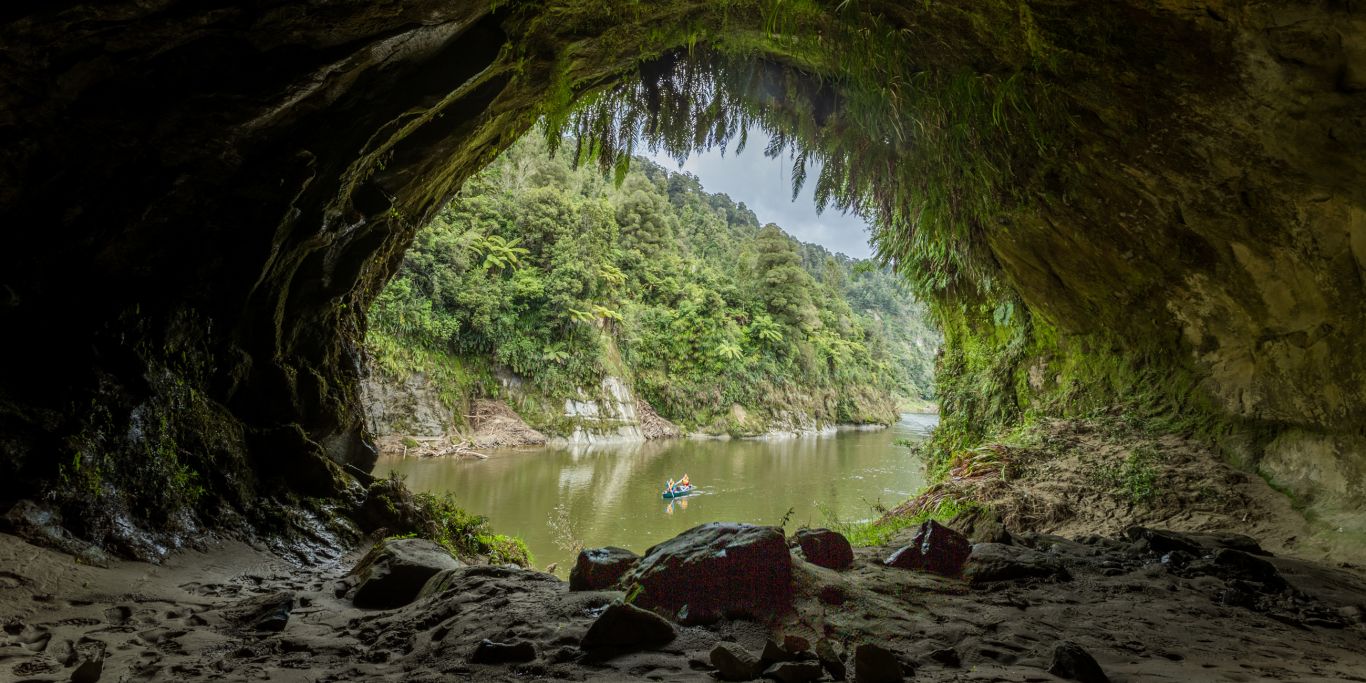

This epic multi-day journey along the Whanganui River includes an overnight stay at a traditional Māori meeting ground.
The Land of the Long White Cloud is renowned for its superlative natural beauty, so it’s little wonder there are 11 Great Walks of New Zealand. But one of those Great Walks isn’t a walk at all. On the North Island, the Whanganui Journey is actually a five-day, 145-kilometre canoe trip along the country’s longest navigable river. Incredibly, this isn’t even the most interesting thing about it. This is: In 2017, after a roughly 180-year legal battle, the Whanganui River became the first in the world to be granted legal personhood – in honour of the deep ancestral relationship the Whanganui Māori have with the sacred waterway.
The canoeing
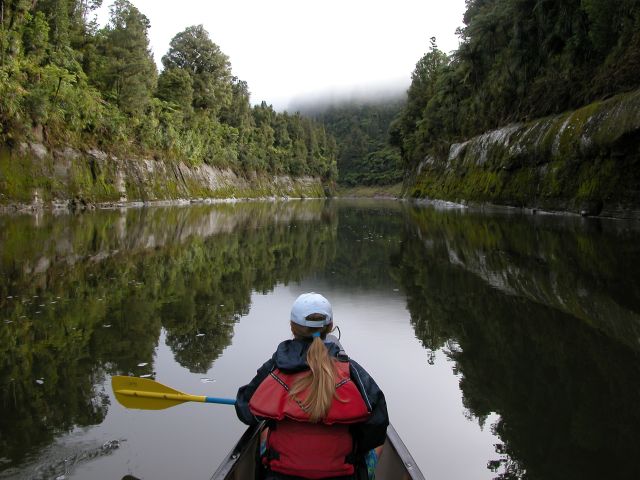
“Sometimes we get airborne on the rapids," says Hone Turu-Wi, a cultural guide with Ultimate Whanganui River Experience, who runs all-inclusive three-, four- and five-day guided tours of the awa, as the local iwi (tribes) call it. But for my three days on the river, we have idyllic, almost lake-like conditions – with the exception of a few unexpected whirlpools that gurgle up from the depths to try and relieve me of my hoe waka (paddle).
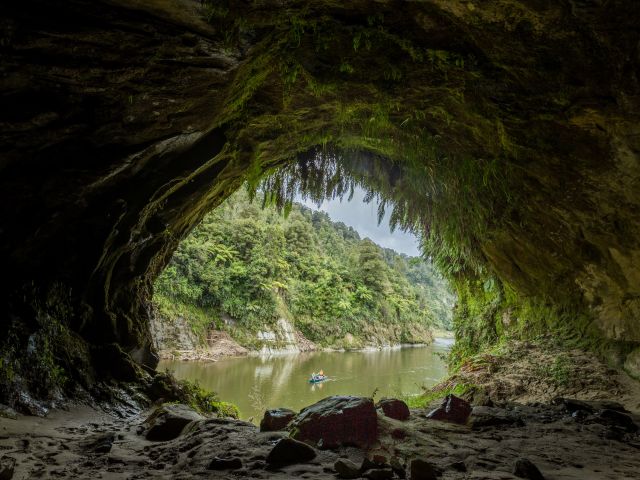
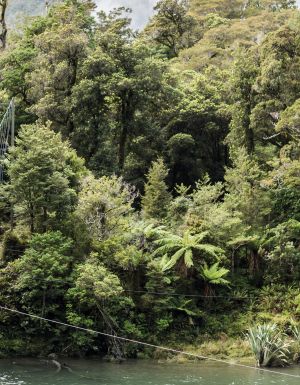
The Great Walks season runs from October to April, and when I visit a few weeks before it ends, there’s the occasional sun shower. But for the most part, the sky is blue and the landscape’s a vivid green; mamaku ferns line the bank and rock walls are blanketed in moss. While you don’t need to be an expert kayaker to attempt the river, good fitness and confidence in a canoe are recommended, and you must be able to swim; it isn’t unusual for people to end up in the water as they navigate the rapids.
We paddle in a double waka (canoe) with all of our belongings for between four and nine hours a day, as we move from camp to camp, but time – or a 29-kilometre stretch of river – seems to just evaporate here. The river moves so quickly, we barely break a sweat, and it often carries us along when we stop to admire slender waterfalls and acrobatic welcome swallows. As we go, I learn the river’s history and why it’s sacred to the Whanganui Māori.
The marae
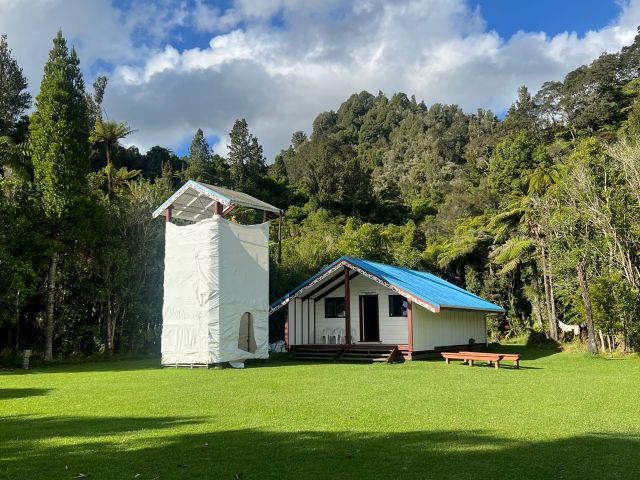
On the final night of my trip, I stay at the Tieke Kāinga Marae; this happens regardless of whether you’re doing the three-, four- and five-day journey. Used for gatherings and celebrations, a marae is a traditional Māori meeting place that belongs to a specific iwi, hapū (sub-tribe) or whānau (family). Tieke Kāinga has an ancestral meeting house, a dining hall and a hut with 20 bunk beds, and I’m greeted with a rousing pōwhiri (welcome ceremony) that makes the hair on the back of my neck stand to attention.
We spend the other nights along the river at a backcountry hut. There are 950 huts of various shapes and sizes all over New Zealand, which are managed by the Department of Conservation. They typically have a shared bunkroom and separate long-drop or compost toilets. There are no showers in huts or at the marae. Unique Whanganui River Experiences provide tents, bedding and three catered meals each day. If you want to stay inside a hut, it’s essential to book ahead.
How do I get to the Whanganui River?
The Whanganui River runs through Ruapehu in the centre of New Zealand’s North Island. Most travellers fly into Auckland, further north. From there, it’s a 55-minute flight to Taupo, which is a good place to stay overnight. Alternatively, it’s a three-hour 15-minute drive from Auckland to Taupo.
Either way, you’ll probably want to rent a car; it’s just shy of two hours from Taupo to the meeting point at Raetihi Holiday Park, where Unique Whanganui River Experiences pick you up and take you to the river.
How much does it cost?
Prices start from $1,020 per person for a three-day, two-night journey.
When does it run?
The Whanganui Journey’s official Great Walks season runs from October to April, but guided operators such as Unique Whanganui River can arrange departures year-round, subject to weather, river conditions and minimum guest numbers.
Want to see more stories from International Traveller in your Google search results?
- Click here to set International Traveller as a preferred source.
- Tick the box next to "International Traveller". That's it.