When picking your bases of operation on this Asian island, not everywhere is created equal.
Despite the fact that Taiwan is one of East Asia’s smallest destinations, geographically speaking, there are a surprising number of things to see and do and great places to eat. Any serious trip to this rugged and scenic island will likely have you spending time in multiple locations, so the question is: where is the best place to stay in each place? While the capital, Taipei, offers an array of alluring districts to choose from, when it comes to smaller cities such as Taichung, Tainan and Kaohsiung, things are less obvious. However, a bit of specific information — such as the following list — can help you narrow down your options and pick exactly where to stay during your travels in Taiwan.
In short
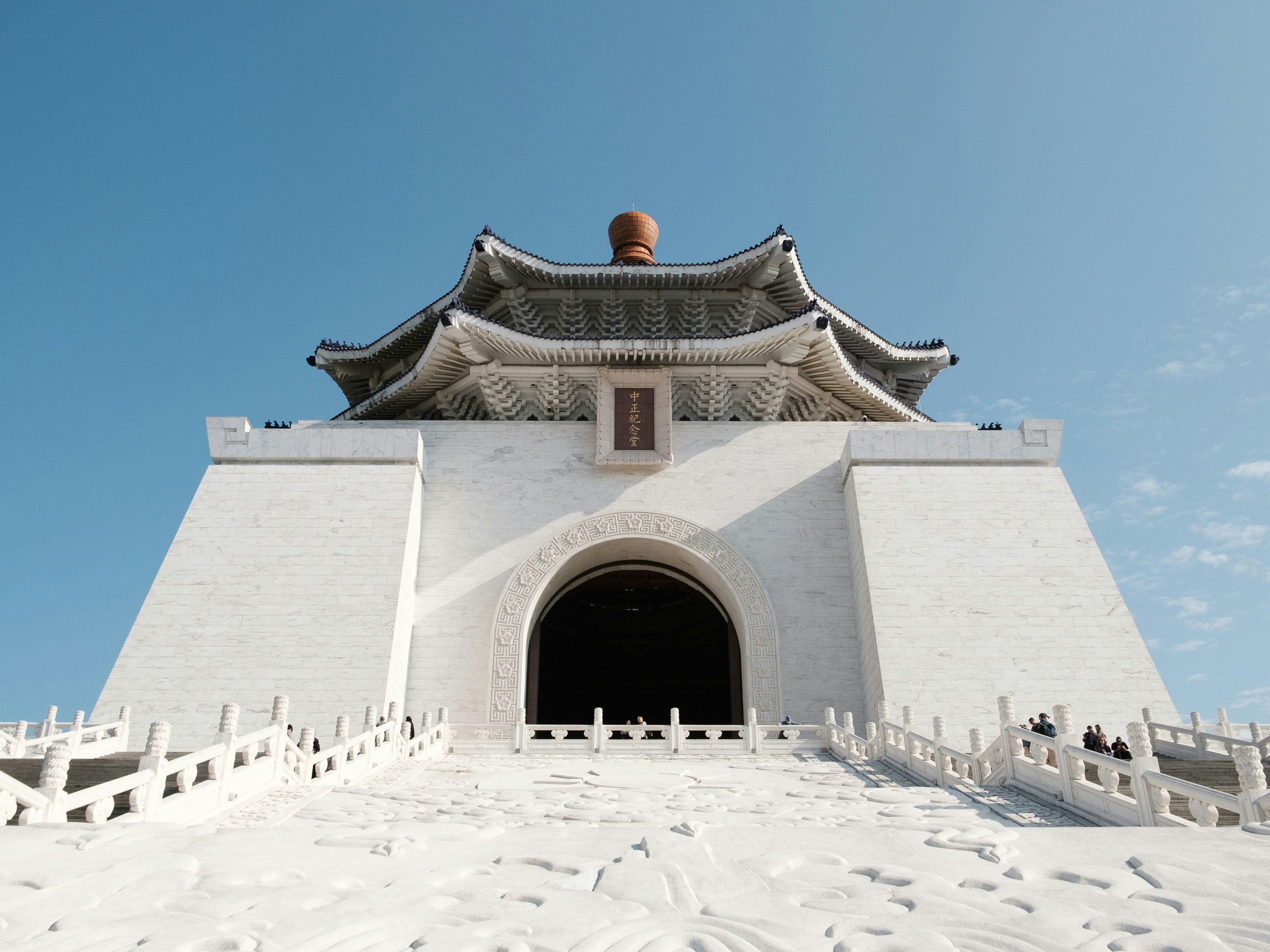
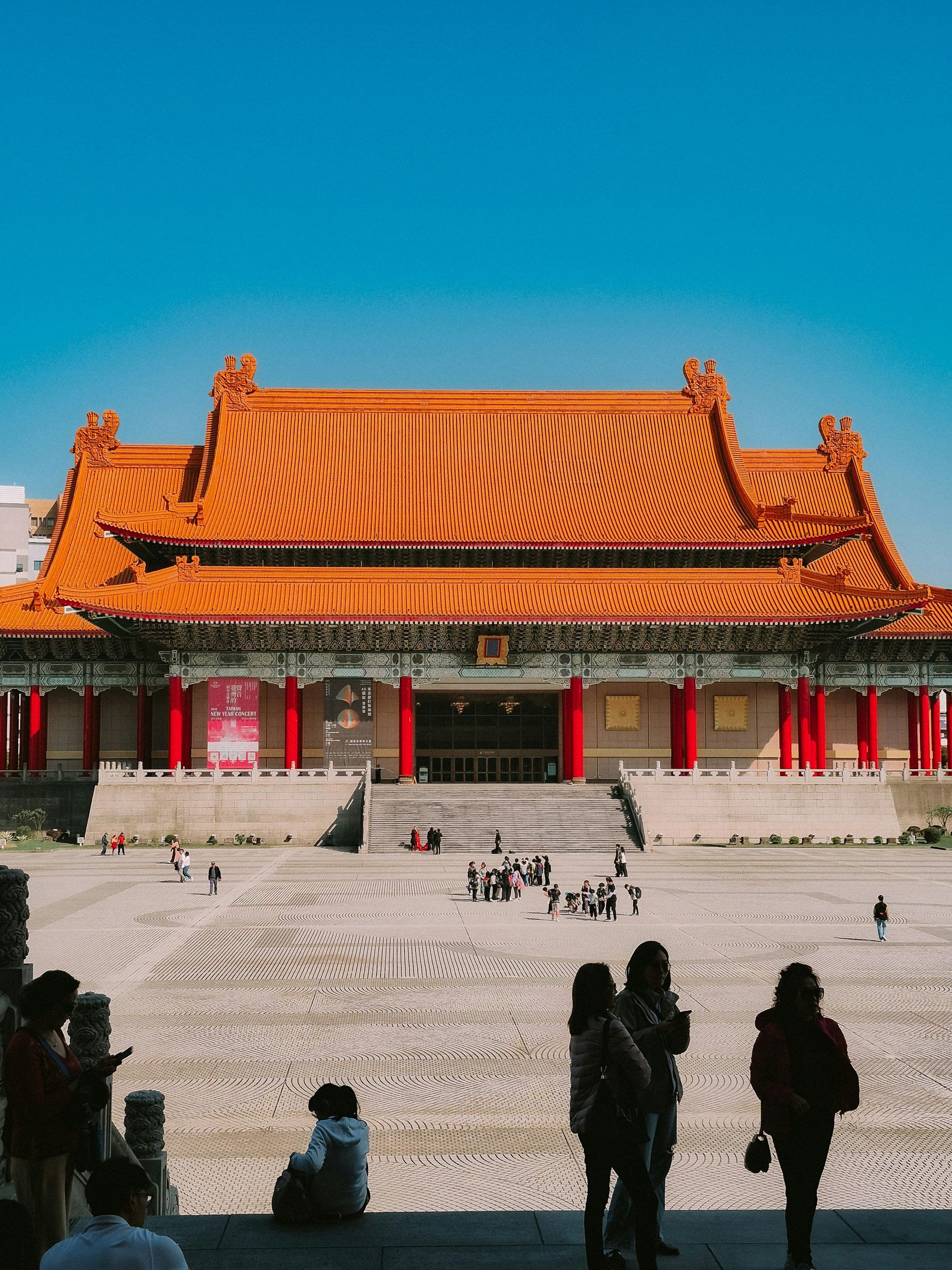
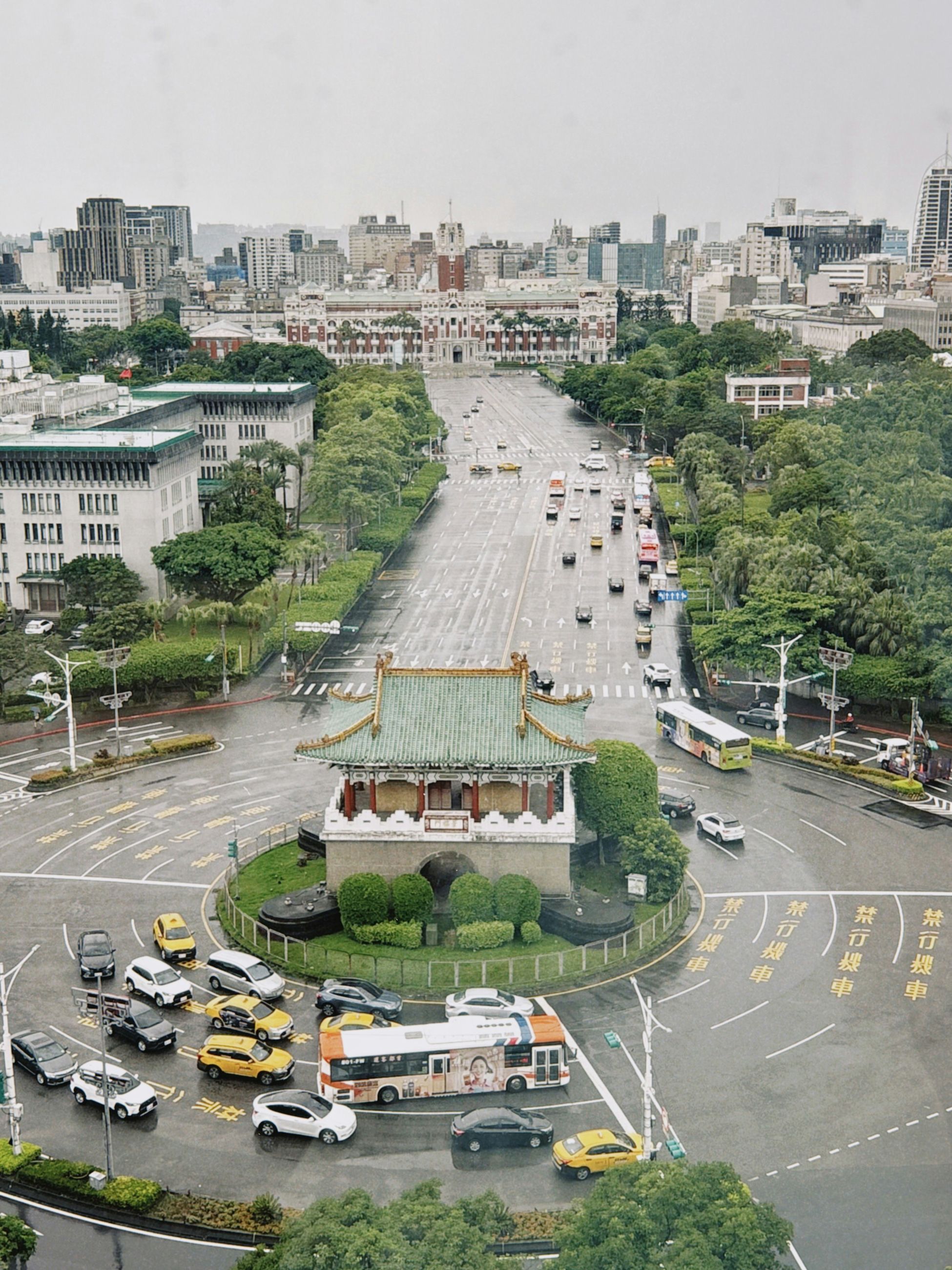
If you only base yourself in one place in Taiwan, make it the area just north of Taipei Main Station, near Zhongshan MRT Station. This neighbourhood is very central, easy when it comes to accessing the MRT, and has loads of good restaurants, cafés and bars. It’s also close to the Zhongzheng District, a historic area that’s home to many impressive structures, including the Baroque-style Presidential Office Building, the National Taiwan Museum, National Concert Hall and Chiang Kai-shek Memorial Hall.
Chiang Kai-shek Memorial Hall. (Credit: Christie Chau via Unsplash)
The National Concert Hall is beside the Chiang Kai-shek Memorial Hall. (Credit: Gian Paul Guinto via Unsplash)
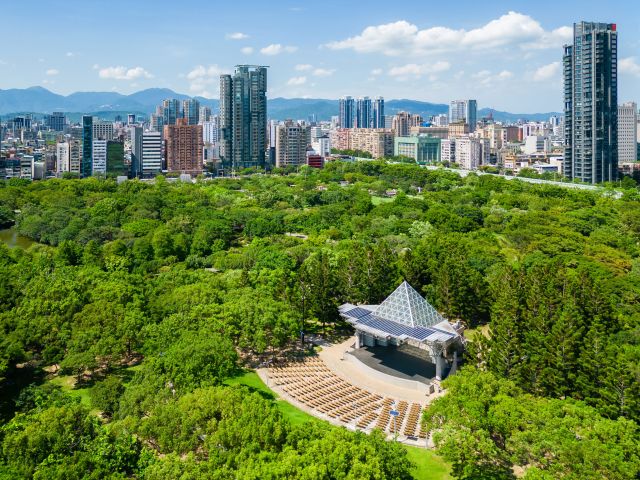
The Zhongzheng District of Taipei from above. (Credit: Min Lee via Unsplash)
Where to stay in Taipei
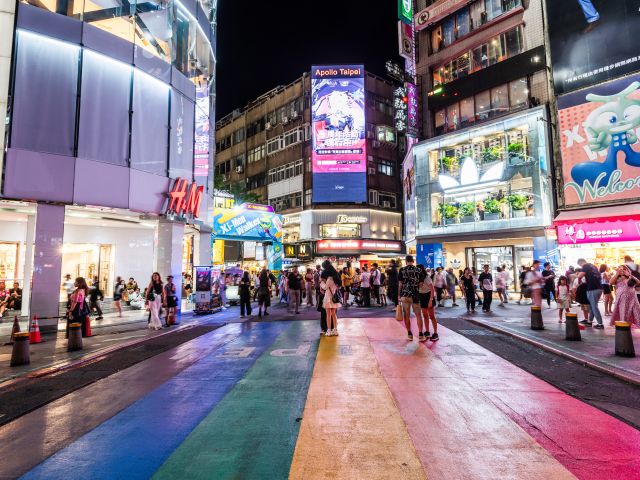
Xinmending, situated in Taipei’s larger Wanhua District, is often compared to Harajuku in Tokyo. (Credit: Bing Jhen Hong/ Getty Images)
While the Taipei Main Station/Zhongshan district is most convenient for transport links, there are plenty of other good areas to choose from in the capital. Topping the list is Xinyi, where you’ll find Taipei 101 — the city’s iconic skyscraper — along with plenty of nightlife, shopping, and top-tier hotels, including the Eslite and Le Méridien Taipei.
Stay near the “green lung" of Taipei, aka Da’an Forest Park. (Credit: Jui-Chi Chan/ Getty Images)
Da’an — home to two large universities — offers a quieter, more local feel, along with plenty of greenspace in the form of Da’an Forest Park, known as the “green lung" of Taipei. If you’re looking for youth culture, nightlife and a fast-paced urban feel, consider Xinmending, which is situated in the larger Wanhua District and often compared to Harajuku in Tokyo.
Where to stay in Taichung
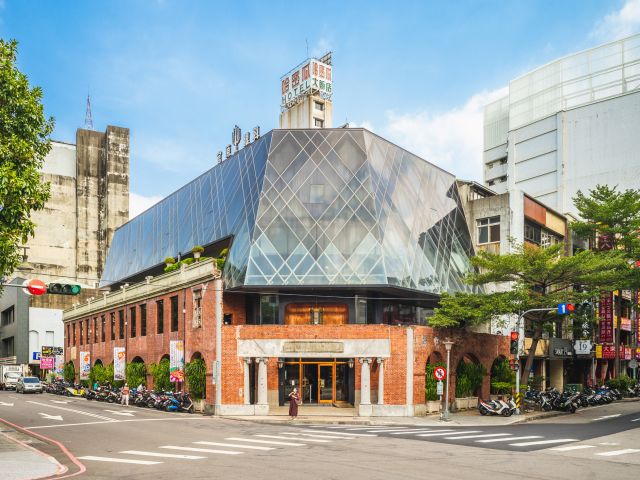
The historic Miyahara building was once an eye hospital, now a famous ice-cream shop in Taichung’s Central District. (Credit: Jui-Chi Chan/ Getty Images)
Taichung is Taiwan’s second-biggest city and while it’s long lingered in Taipei’s shadow, it’s beginning to come into its own. It’s also a convenient stop-off en route to Sun Moon Lake or Alishan, which makes the city’s Central District one of the best places to lay down your head. This is the downtown, and is home not only to landmarks such as the historic Miyahara building (and its famous ice-cream) and the Taichung Second Market — the city’s oldest and largest traditional exchange — but it’s also where you’ll find Taichung Railway Station, as well as the new bus hub.
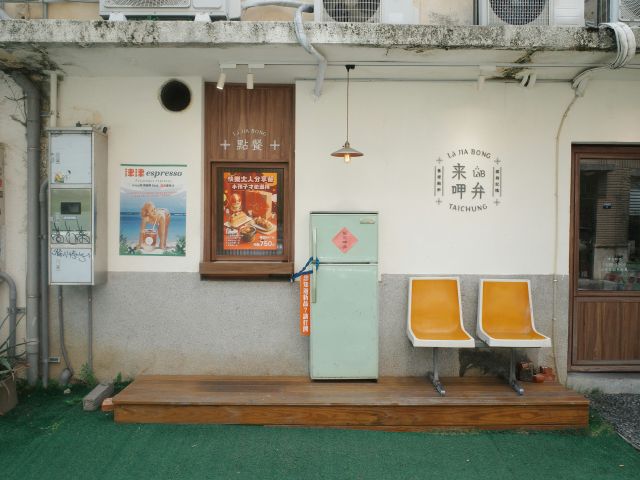
Taichung’s West District is home to the city’s cafe culture. (Credit: Claire via Unsplash)
For those interested in arty vibes, the West District is the place to be, with the Calligraphy Greenway — a 3.6-kilometre-long urban space featuring galleries, museums, street performances and plenty of trees and grass — acting as its core. The West District is also the centre of Taichung’s café culture, with dozens of hip coffeehouses sprinkled throughout the area.
Where to stay in Alishan
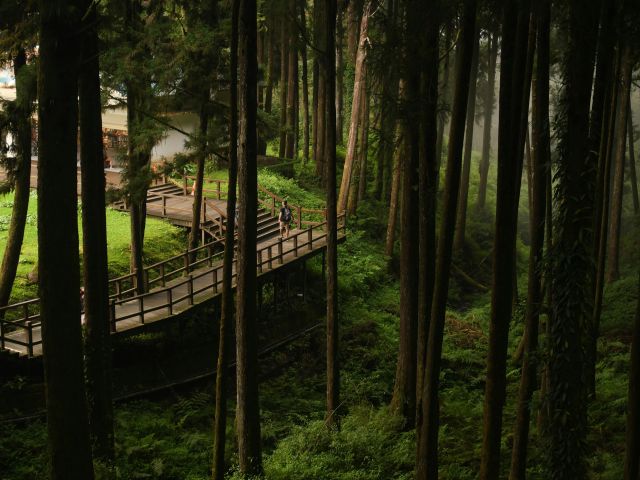
Stay in one of the mountain accommodations for best access to Alishan Forest Recreation Area. (Credit: Suzi Kim via Unsplash)
Alishan — Taiwan’s alpine Eden — is a popular retreat for its pristine mountain air, “sea of clouds" and stunning sunrises. The most convenient way to access the key attractions is to stay inside the Alishan Forest Recreation Area itself, which is home to a number of on-mountain accommodations such as the Wankou Hotel and — if you feel like splurging — the Alishan Hotel.
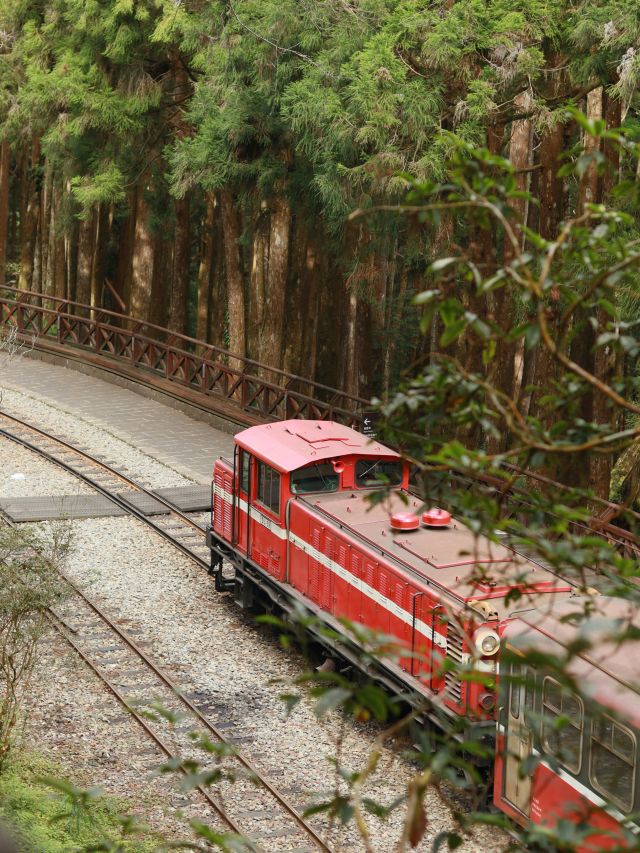
Ride the Alishan Forest Railway. (Credit: Michelle Sun via Unsplash)
However, nearby settlements such as Laiji (an indigenous village) and Fenqihu offer more value and better facilities, but you’ll need your own transportation. Another option is to stay in the nearby city of Chiayi and hop on the Alishan Forest Railway, which — over the course of an incredibly scenic trip featuring dramatic switchbacks — takes you directly into the park. You can also hire a car or drive yourself from Chiayi as a day trip.
Where to stay in Kaohsiung
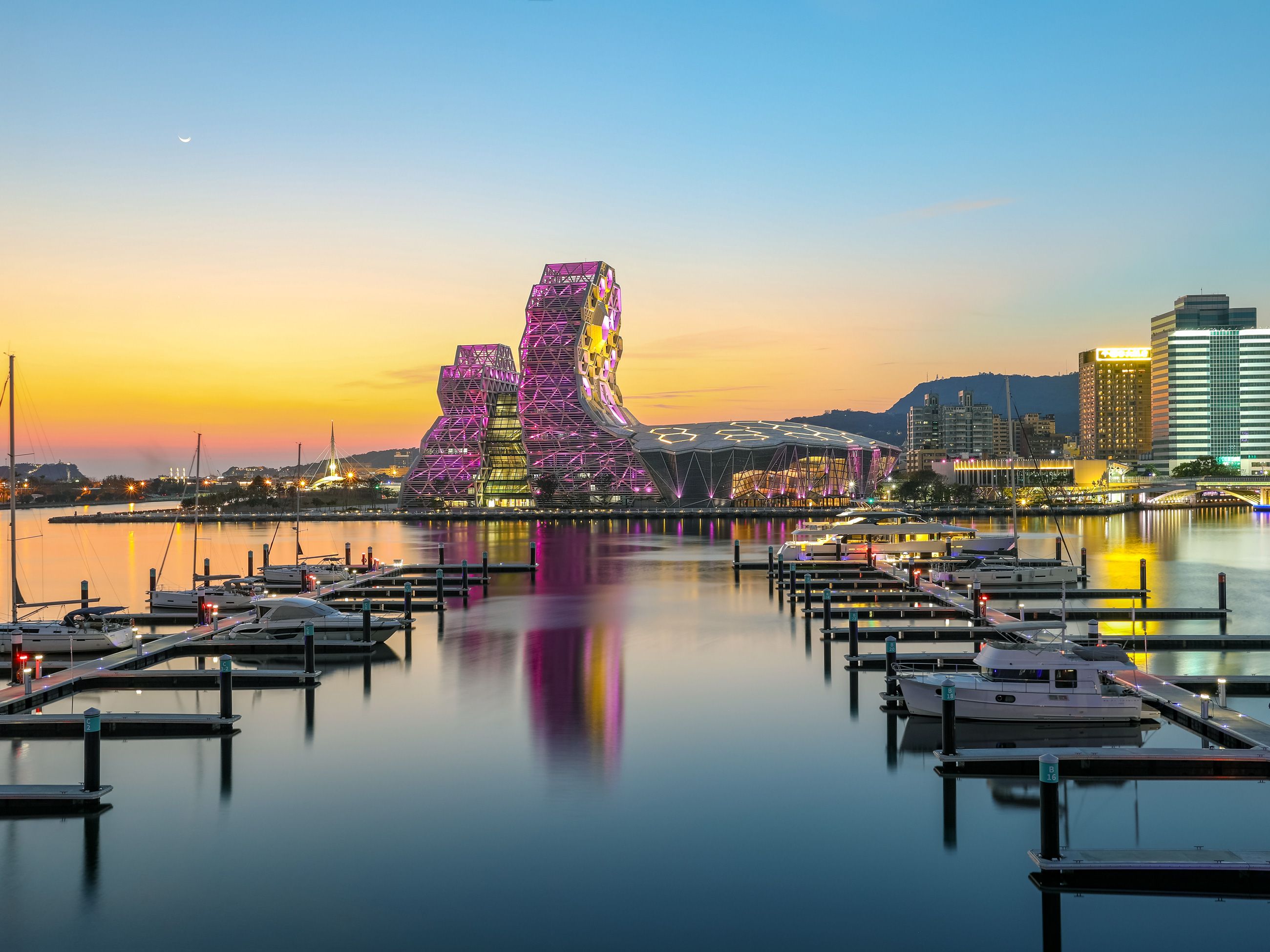
Kaohsiung Music Center lit up at night over the harbour. (Credit: Sean3810/ Getty Images)
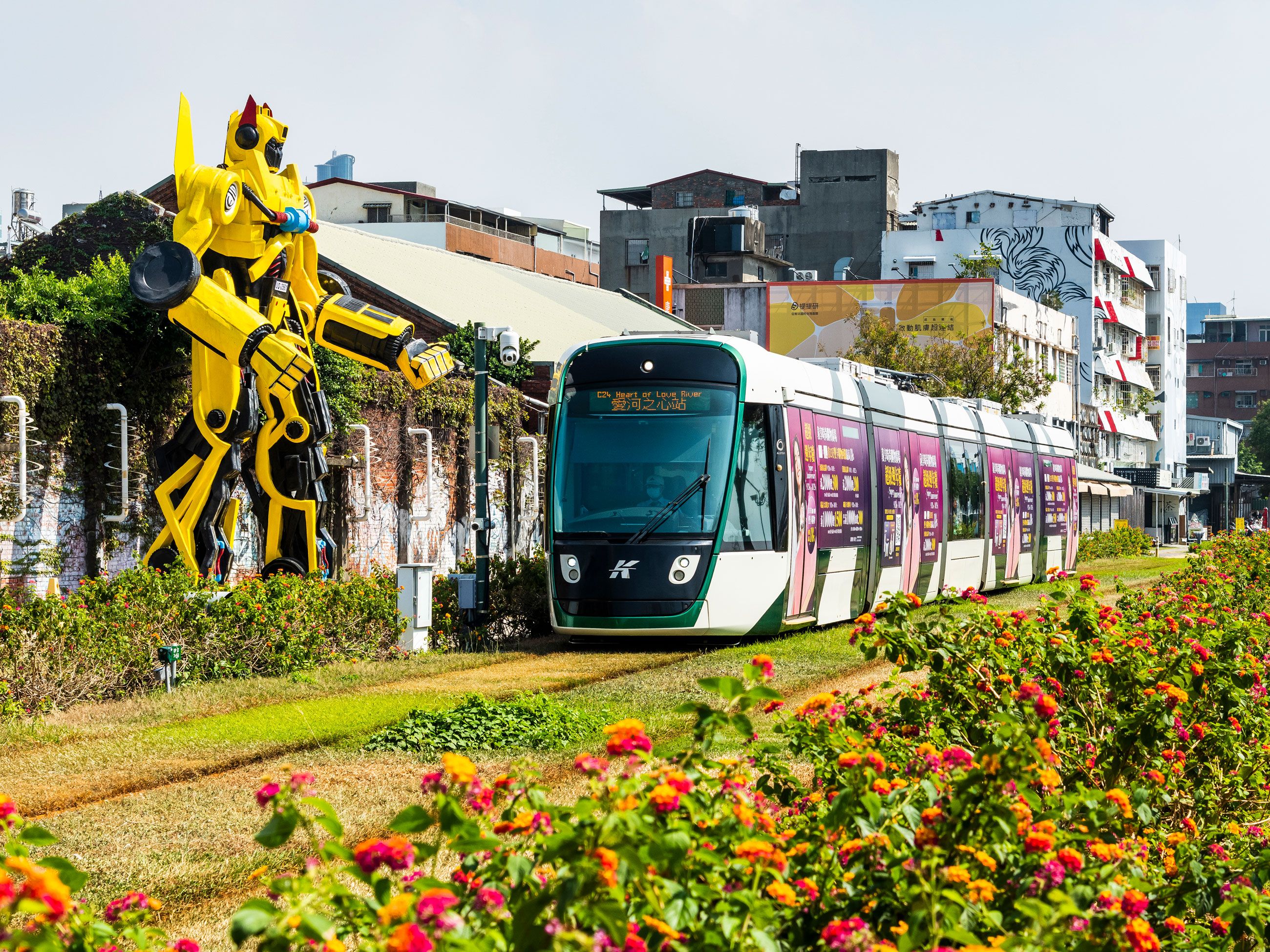
The circular light rail train drives past Pier-2 Art Center. (Credit: Bing-Jhen Hong/ Getty Images)
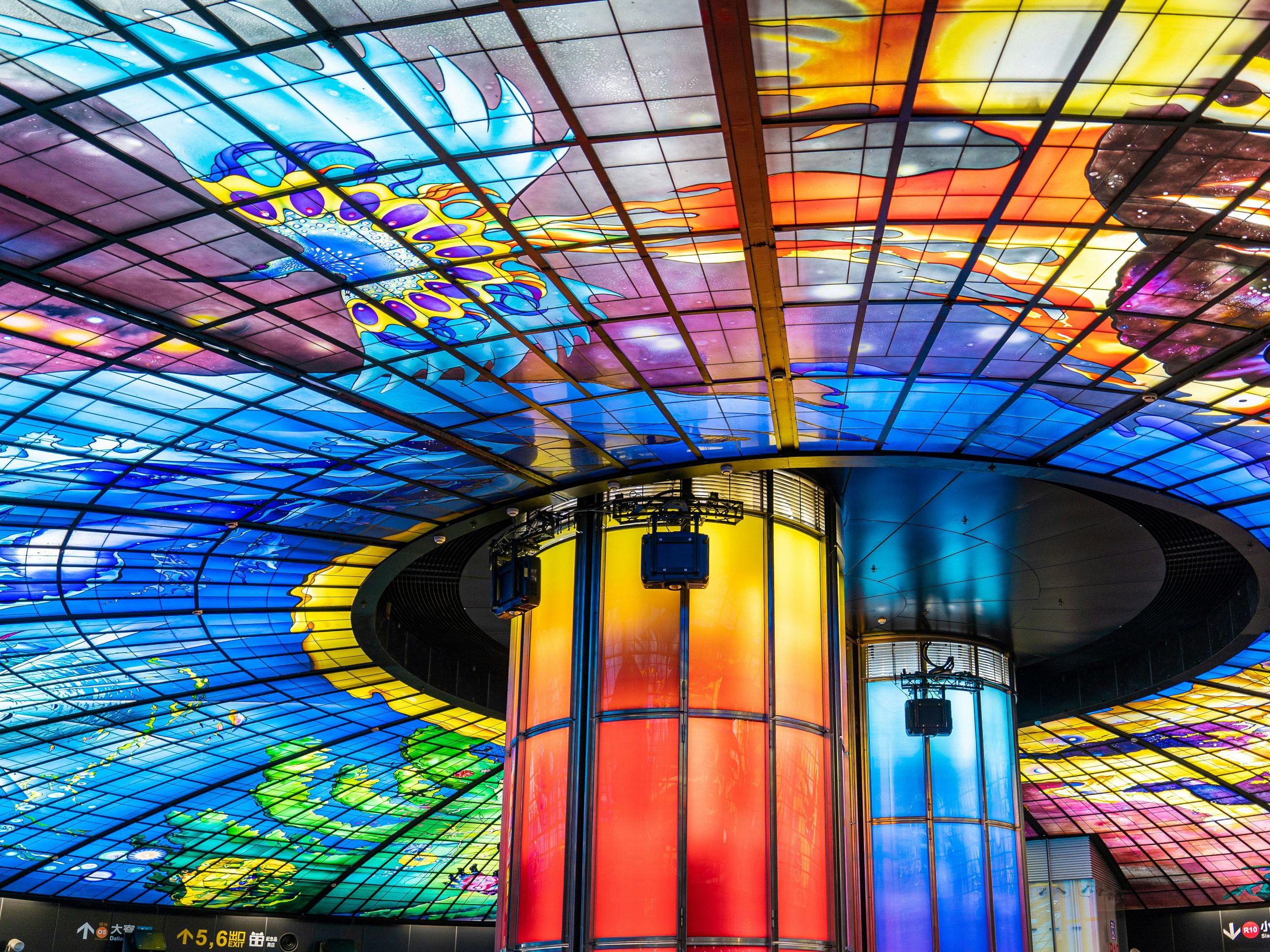
The glass art installation, 'Dome of Light' inside Kaohsiung's
Formosa Boulevard MRT station. (Credit: Winston Chen via Unsplash)
Kaohsiung is Taiwan’s main port city, so you may want to base yourself near the harbour. This means Yancheng, where you’ll find the Pier-2 Art Center, a former warehouse district that’s been transformed into an urban wonderland of galleries, hip cafés, bars and public works of art. Yancheng is also home to Glory Pier – a waterfront promenade offering views of the magnificently designed Kaohsiung Music Center and surrounding harbour.
If convenience is at the top of your list, consider making the Sinsing and Qianjin districts your home. These encompass the city’s downtown, where the red and orange MRT lines cross at Formosa Boulevard MRT station (which hosts the dazzling glass art installation, Dome of Light), and where you’ll also come across Liuhe Night Market, Kaohsiung’s biggest post-sunset bazaar.
Where to stay in Tainan
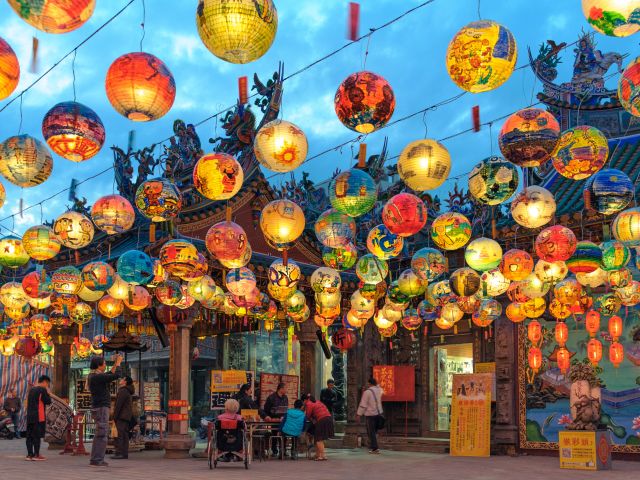
Pu Ji Temple Lunar New Year Painted Lantern Festival in Tainan’s Central West District. (Credit: Richie Chan/ Getty Images)
Tainan is Taiwan’s oldest city and former capital; for maritime and coastal history, look no further than the popular Anping District. This area is home to many good hotels and some compelling attractions such as the ruins of Fort Zeelandia — a military installation built by the Dutch East India Company in the early 1600s — and the Anping Tree House, a former Japanese trade warehouse covered by the roots and branches of banyan trees.
The West Central District may be even a better choice, as it is considered the cultural and historic heart of Tainan, with winding alleys, Japanese colonial architecture, great street food and Buddhist complexes such as the Confucius Temple, which was constructed in 1665 under the Qing Dynasty.
Weekly travel news, experiences insider tips, offers, and more.
How to get around Taiwan
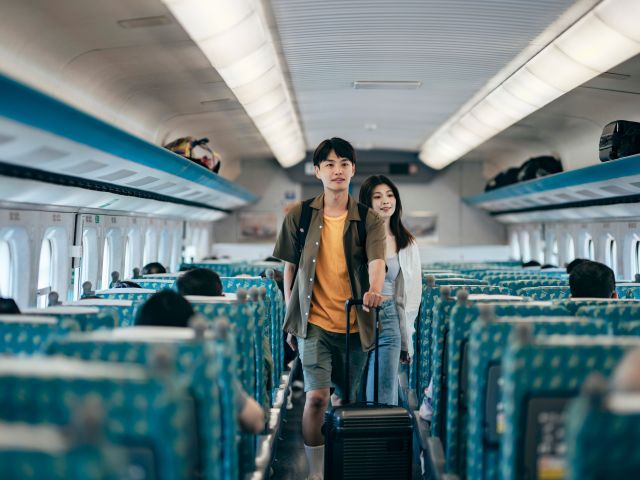
Travel onboard the Taiwan High Speed Rail. (Credit: Shih-Wei/ Getty Images)
Taiwan has one of the most advanced rail systems in the world, making travel — particularly along the heavily populated Western Corridor — fast and convenient. There are two main networks on the island: Taiwan High Speed Rail (THSR), along with the slower and older Taiwan Rail Administration (TRA).
THSR runs approximately 350 kilometres from Taipei’s Nangang Station in the north down to Kaohsiung’s Zuoying Station in the south, with 12 stops along the way. TRA Western Line follows the same basic route, though it stops directly in the downtowns of cities such as Taipei, Tainan and Kaohsiung. There is also a TRA Eastern Line along Taiwan’s rugged Pacific coast, as well as a South Link Line that loops around the island’s southern tip, connecting the city of Taitung with Kaohsiung.
Several cities also have metros (MRT), including Taipei, Taichung and Kaohsiung, as well as Taoyuan, whose MRT line links Taoyuan International Airport with the capital.
Getting to Taiwan
You can fly direct from Australia to Taiwan’s capital, Taipei, with China Airlines from Sydney, Melbourne and Brisbane. Flight time ranges from just under nine hours to 9.5 hours.
Want to see more stories from International Traveller in your Google search results?
Wellbeing means different things to different travellers. Here’s how to pick a hotel that gets it right for you.
The best wellness holidays aren’t necessarily spent wrapped in a spa robe. Sometimes they’re found around a dinner table in Cambodia, on a hiking trail in New Zealand or after finally beating jet lag on the other side of the world. The hotel you choose is what makes them happen.
1. Easy access to good food
Taste delicious meals at Novotel Bangkok Sukhumvit 20.
One of the quickest ways to derail healthy habits on holiday is to spend half of it working out where to eat instead of digging into the culture around you. Thankfully, Novotel has done much of the hard work already, with chefs building menus that lean into the flavours, ingredients and traditions of each destination.
In Sihanoukville, Cambodia, Korkor soup – often dubbed ‘Cambodian ratatouille’ – sits alongside raw blue crab dressed with lime and chilli, best enjoyed with views across the Gulf of Thailand.
In the lovingly chaotic city of Bangkok, the presence of food cranks up the sociability. At Novotel Bangkok Sukhumvit 20, you can settle in with mango sticky rice and stranger-turned-friends beside the pool at Sky on 20 rooftop bar, or bring them along to tackle river prawns and stir-fried crab with holy basil at the buzzing Crab Paradise Dinner Buffet.
Then Novotel Dubai Al Barsha welcomes you with a laidback twist on the level of indulgence the Middle Eastern city is best known for up on Deck Se7en. Looking towards Burj Al Arab, the rooftop lounge has everything from Mediterranean-style dishes like seabass ceviche to Italian prosecco sundowners.
At the other end of the scale, in the hills that surround the Novotel Bali Ubud Resort, calm comes from nature. At Siralada restaurant, Balinese traditions shape the menu while thunder rumbles over the surrounding jungle – proving the setting is as nourishing as the food itself.
While at Novotel Nha Trang, chef Kieu Thi My Hanh and her team showcase Vietnam’s knack for balancing freshness, texture and fragrant herbs. Pho remains a favourite, while seafood salad with pomelo and mango brings those flavours together in one bright dish.
It’s all an approach backed by partnerships with expert food creators such as Alfie Steiner, whose plant-forward recipes prove healthy food should never taste plain.
2. Better sleep options
Sleep deeply with Novotel.
There are few travel experiences more disappointing than arriving in a new country, determined to seize the day, only to fall asleep fully clothed by 3pm.
For Australian travellers, jet lag is often an unavoidable part of the journey. That’s one reason Novotel runs sleep-focused initiatives that help guests adjust quickly without compromising on health. We’re talking partnerships with Sydney-based sleep specialist Olivia Arezzolo, known for her advice on everything from better sleep habits to beating jet lag, alongside features like pillow menus, in-room yoga content and tailored sleep guidance.
The sooner you’re operating on local time, the sooner you can get back to more pressing matters – like deciding which spa treatment to book.
3. More ways to move
Stay at Novotel Queenstown Lakeside and explore local hiking trails. (Credit: GettyI mages/ naruedom)
Every place in the world has its own way of getting you moving: whether that’s hiking up ice-bitten mountains before a sauna or gentle stretching by the pool before a facial. From fitness centres to spas, Novotel recognises that wellbeing rarely looks the same.
At Novotel Queenstown Lakeside, activity is inescapable. Here, hiking trails, ski fields, bungee jumps, and white-water rafting have made the region famous. The hotel’s location on the shores of Lake Wakatipu means less time spent organising yourself and more time out there experiencing them. To top it all off, you can book a private hot tub for the evening before heading back into the wilderness tomorrow.
Bali, of course, takes a softer approach. At Novotel Bali Ubud Resort or Novotel Bali Nusa Dua, movement is less about conquering a mountain and more about a dance class between the tropical gardens and lagoon pools. Afterwards, the spa takes over, with traditional treatments like a Lulur body scrub: a combination of rice, turmeric, sandalwood, ginger and jasmine that’ll soothe muscles already relaxed by the Balinese heat.
4. Better connections
Kids will love a stay at Novotel Sharm El Sheikh.
One of the best things about travel is that it gives your family stories you’ll be telling for years. Novotel helps create them with activities that bring everyone together, whether that’s trying something new, learning a local skill, or simply spending more time together.
Go for a distinctly Thai twist at Novotel Phuket Vintage Park, where many of the family activities draw on local culture. Kids can try everything from beginner Thai boxing and language lessons to umbrella painting and – a pastime beloved by children the world over – pool foam parties. Everyone is welcome to join in, whether that’s getting splashed, covered in paint, or simply watching their children discover a new side of Thailand during the dedicated Family & Kids Day.
A different adventure awaits at Novotel Sharm El Sheikh. Kids could be perfectly content with discos, drawing classes and new holiday friends, but the Red Sea has other ideas. Sitting on the edge of Naama Bay, days here might involve snorkelling colourful reefs, taking a boat trip to Ras Mohammed National Park or heading into the desert by quad bike or camel for a Bedouin-style dinner beneath the stars.
Everyone’s idea of wellness looks a little different. With more than 600 hotels across 65 countries, Novotel gives guests the freedom to choose the destination that suits them best. Whether that’s a beachside escape in Phuket, an alpine expedition in Queenstown or a city break in Bangkok, there’s a good chance a Novotel isn’t far away.
All that’s left? Choosing your version of wellbeing.