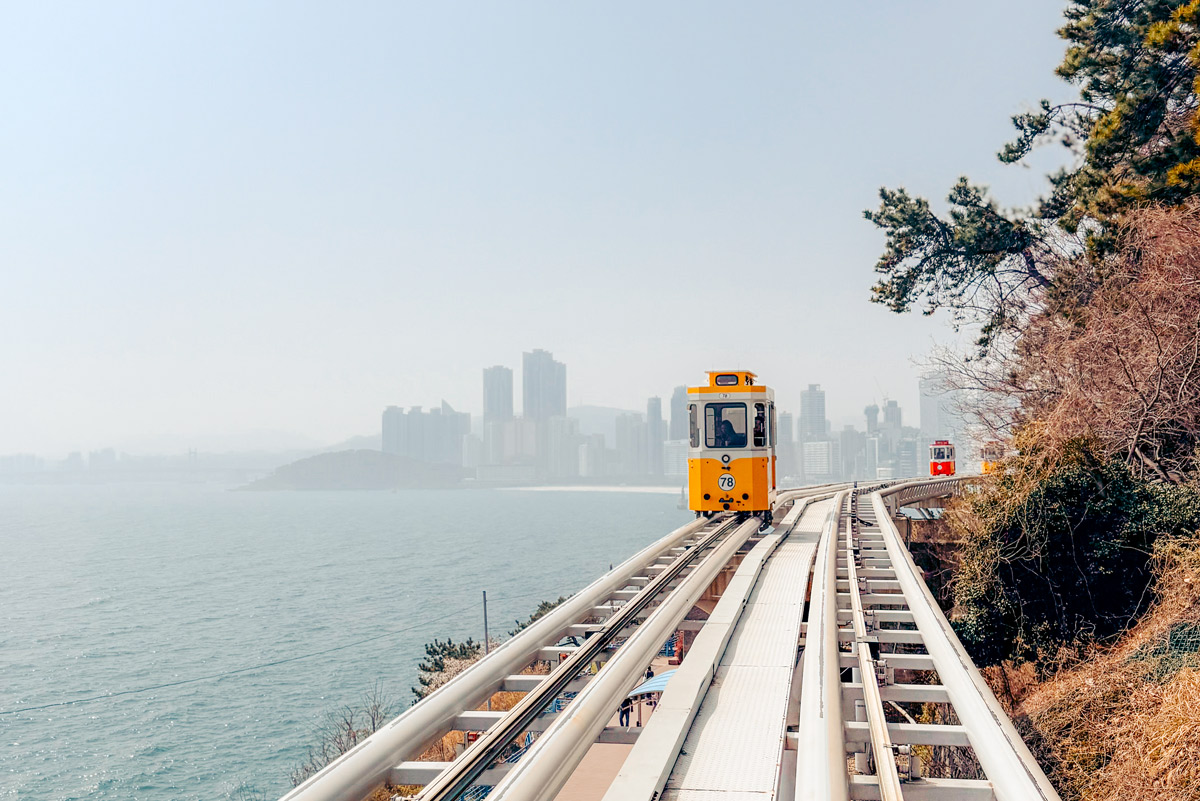

From K-pop to beauty, South Korea serves up culture in constant motion alongside meaningful connections to its rich heritage.
It is rude to bite bossam, so you have to “shove the whole thing into your mouth". So says Local Insider Meggie Yu. We’re seated cross-legged and shoeless at a table too low to the ground for chairs as she proceeds to show us how to assemble our first Korean dish in Seoul. Tucked away down a side street in the Jongno District (one of 25 districts in Seoul), it would be easy to walk right past Daeryeonjip. It’s not listed in guidebooks and doesn’t have a website, but on any given day you’ll be hard-pressed to find an empty table. And according to Meggie, it’s legendary among locals.
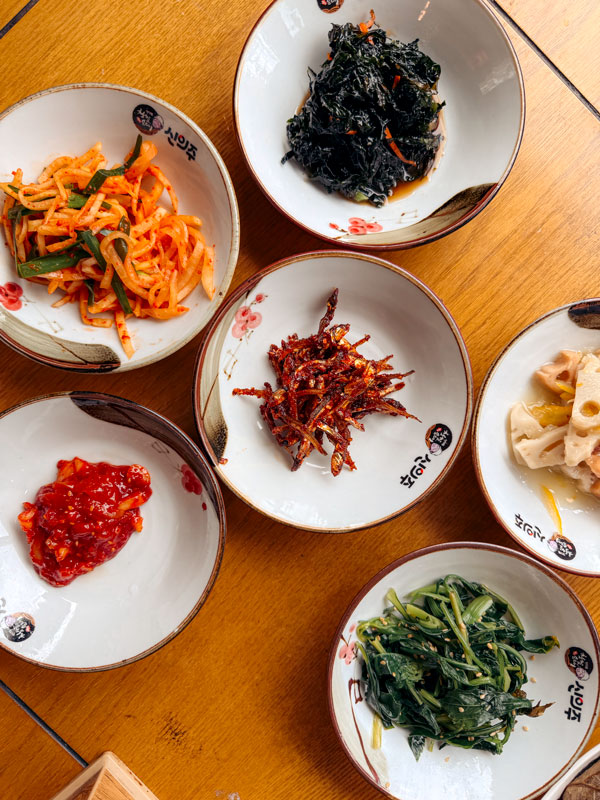
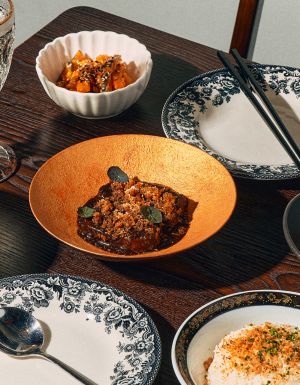
“You take a piece of boiled pork and place it on a cabbage leaf, then you can add anything you want," says Meggie while pointing her chopsticks at the collection of banchan (side dishes) scattered across the table. “This is brine shrimp, it’s very salty. It’s what Koreans used before they got mineral salt. I like to take a little bit of the soybean paste and then a bit of raw garlic," she adds as she pushes the wrap into her mouth.
All meals in South Korea begin with a tutorial on what we’re eating and how to tackle it. It’s a task InsideAsia tour leader Jun Jang performs for us multiple times a day over the course of our week-long ‘Soul of Korea’ small group tour. He’s been a licensed guide and tour operator for over 10 years and, like Meggie, is one of a network of local experts delivering up-to-the-minute hyperlocal experiences for InsideAsia guests.
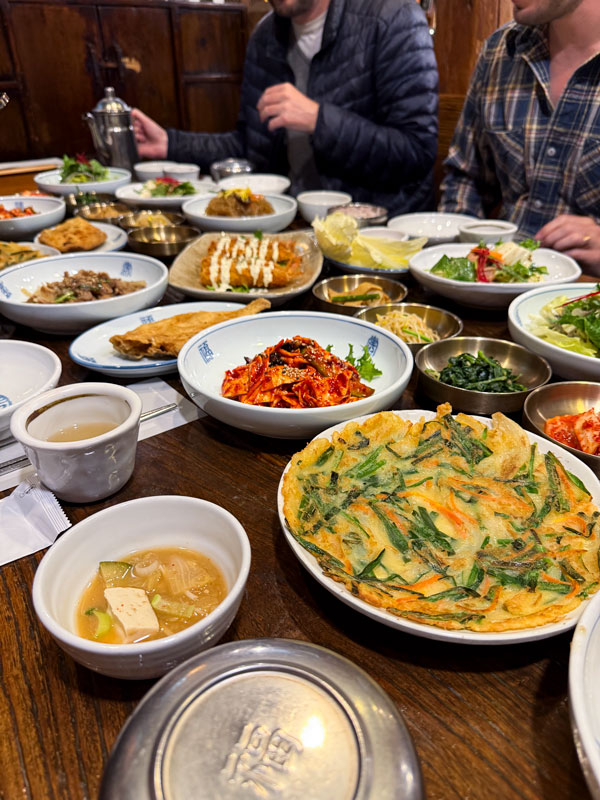
Soon plates of pajeon (green onion pancake) and steaming bowls of kalguksu (noodles in beef broth) join the chaotic collection of dishes our group of seven are enthusiastically making our way through. Meggie tells us that because these noodles are knife-cut, no two dishes will taste the same. It’s put down to something called “the effect of the maker". But food isn’t the only facet of Korean culture that’s having an effect.
Experiencing the Korean Wave in Seoul
Walking the streets of Seogyo-dong in the Mapo District of Seoul, the stars of South Korean girl group Blackpink and boy band BTS stare back at me from pillows, backpacks and shirts. There are large-scale murals of the bands painted onto walls and I even find them printed onto pre-packaged bowls of noodles in a 7 Eleven. The impact of K-pop can be seen everywhere, but it’s not isolated to South Korea.
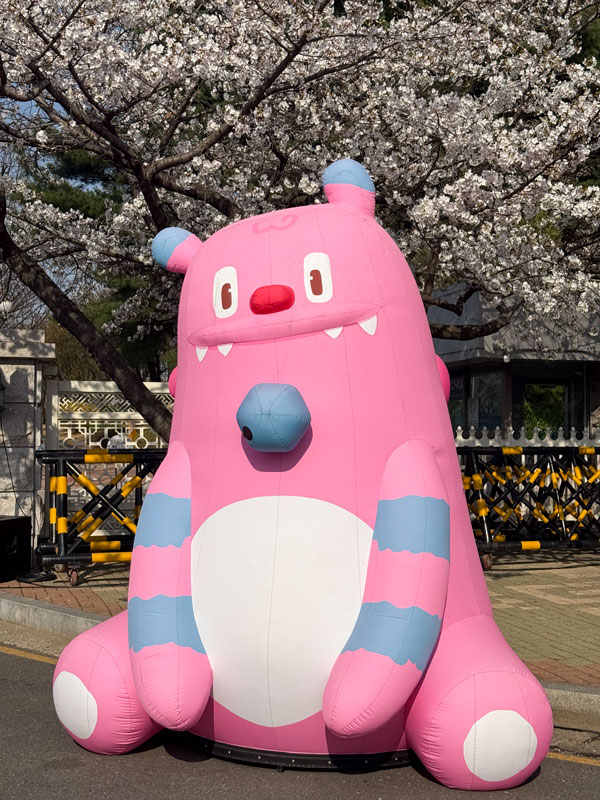
Hallyu, the so-called ‘Korean Wave’, has been gaining momentum since the late 1990s when South Korean pop music first gained global attention. Today, everything from K-beauty to K-food and K-dramas are having an effect – think Netflix’s Squid Game, Korean barbecue, and health and beauty juggernaut Olive Young. Korean culture has found an audience of international devotees and Australians are far from immune to its charms.
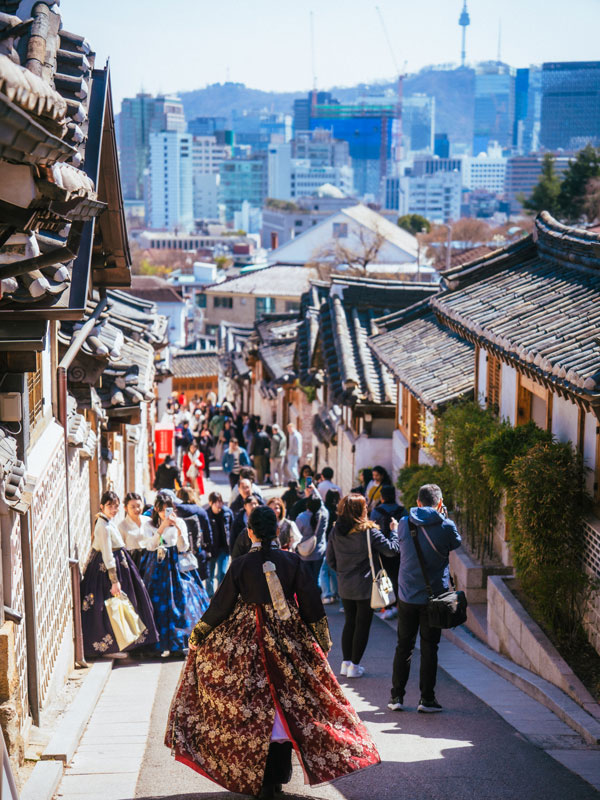
Appetite for travel to South Korea among Australians has never been greater, a trend that Inside Travel Group Australia branch director Tim Oakes has seen reflected in bookings. “South Korea is InsideAsia Tours’ number one destination, accounting for 43 per cent of all Australian bookings in the first quarter of 2025 across our wide portfolio of nine destinations. We are continuing to see a significant increase in demand and we don’t anticipate that to change any time soon," says Tim. A demand that’s no doubt fuelled in part by hallyu. It’s a fascinating cultural phenomenon. But even in the face of its growing popularity, South Korea still feels like a country on the verge.
All aboard the bullet train to Busan
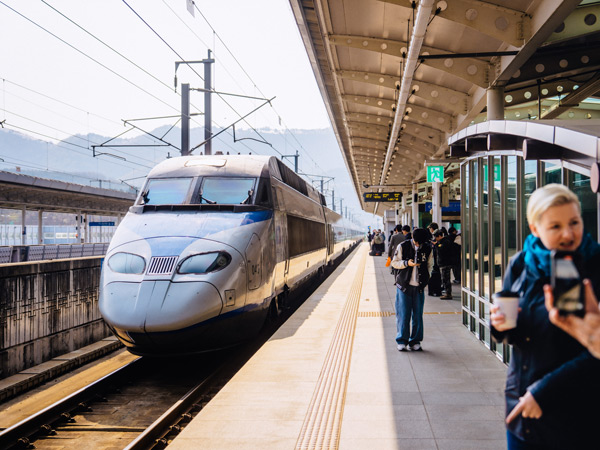
It’s taken a mere five decades for South Korea to transform from one of Asia’s poorest countries to one of its richest, thanks in part to the global success of high-tech firms like Kia, Hyundai, LG and Samsung.
It’s been a dizzying rise to the top; one reflected in the landscape as I pass the lofty skyscrapers of ‘new Busan’ and arrive at the sprawling markets and villages of ‘old Busan’ in the country’s south. The coastal city became a haven for refugees fleeing from the north during the Korean War in 1950. Today, it’s South Korea’s second most populous city after Seoul (a short 2.5-hour bullet train away).
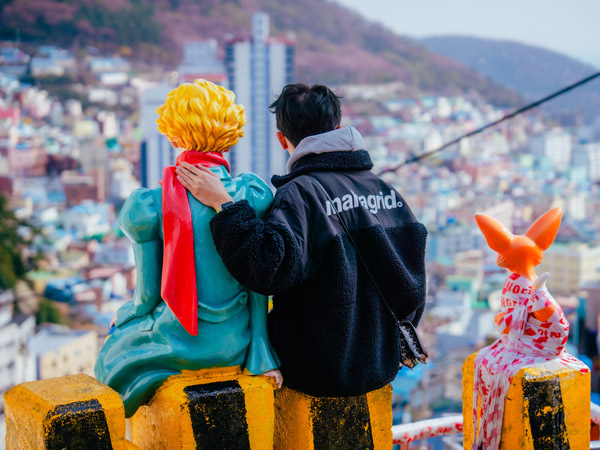
The candy-coloured houses of Gamcheon Culture Village have a charm all their own. Residents allow visitors to explore the art-filled streets for a fee and there are shops filled with ceramics and wearable art and Korean bakeries selling sogeum-ppang (salt bread) and a flaky pastry known as tissue bread.
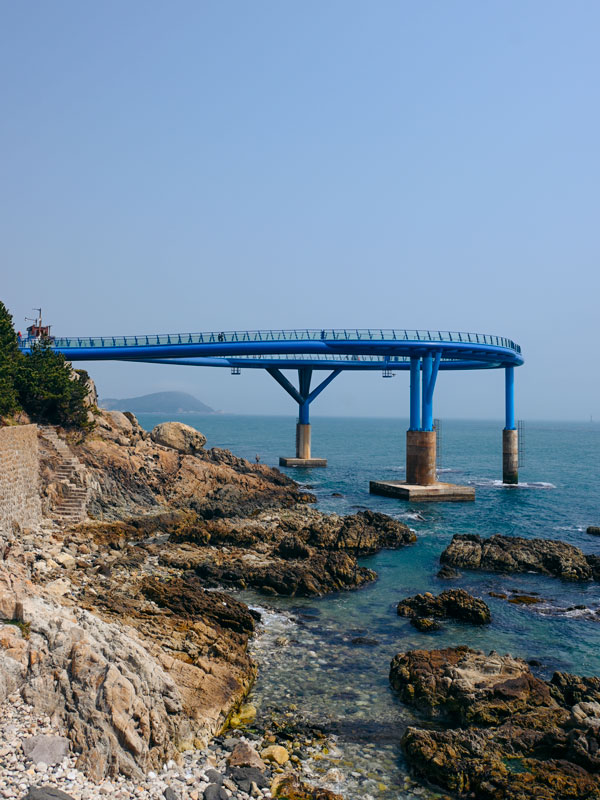
I catch up with the group just as Jun starts handing around yakgwa (honey cookies). He says Busan is his favourite part of South Korea. “You can feel the lively energy of bustling markets, relax in peaceful spots or walk along the coastal trails. There are also opportunities to enjoy the quiet moments."
A foodie tour through the local markets
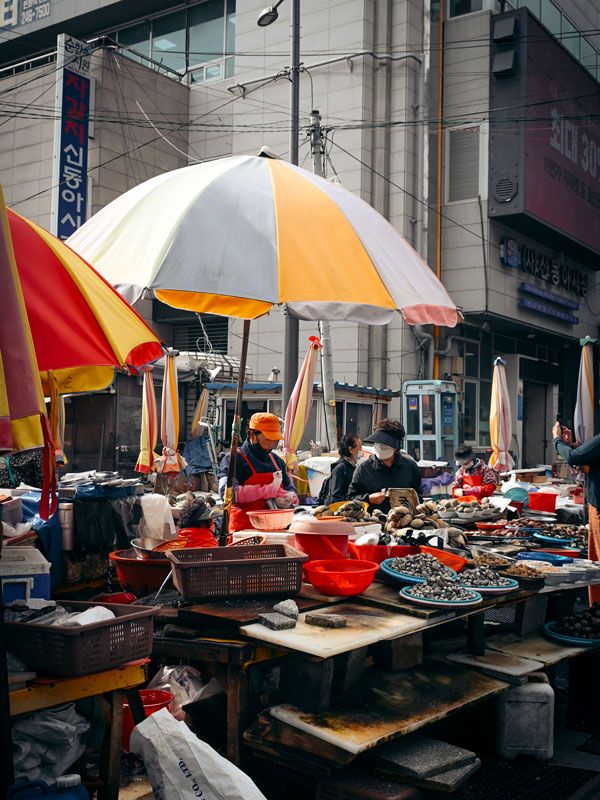
A salty sea breeze mingles with the unmistakable smell of fresh seafood at Jagalchi Fish Market. Originating in the early 1950s as a means for war refugees to make a living, it remains one of the largest fish markets in Korea.
Clams are piled high on tables, silvery fish are hung to dry over boxes and I pass an octopus climbing from one bucket to another, its efforts to escape thwarted by a militant vendor guarding her stock. Women tend to their catch under the shade of the red-and-yellow umbrellas that line the open-air markets. Most of them have been working here for decades and are referred to as Jagalchi ajumma, a term meaning ‘middle-aged woman’ in Korean.
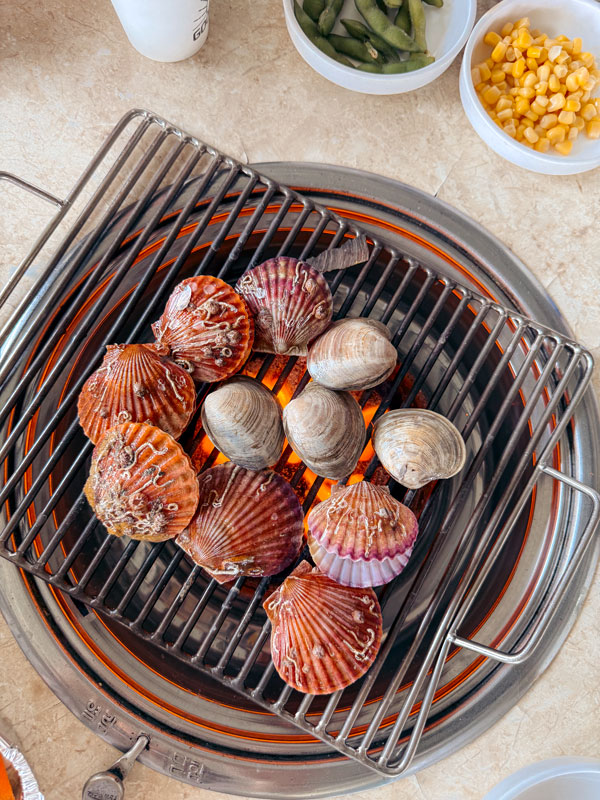
Inside, tanks full of various fish and crustaceans are stacked between tables and visitors order fresh sashimi or spicy fish. I spot one tank swimming with gaebul (a spoon worm, also known as a penis fish) and decide to save my appetite for tonight’s feast.
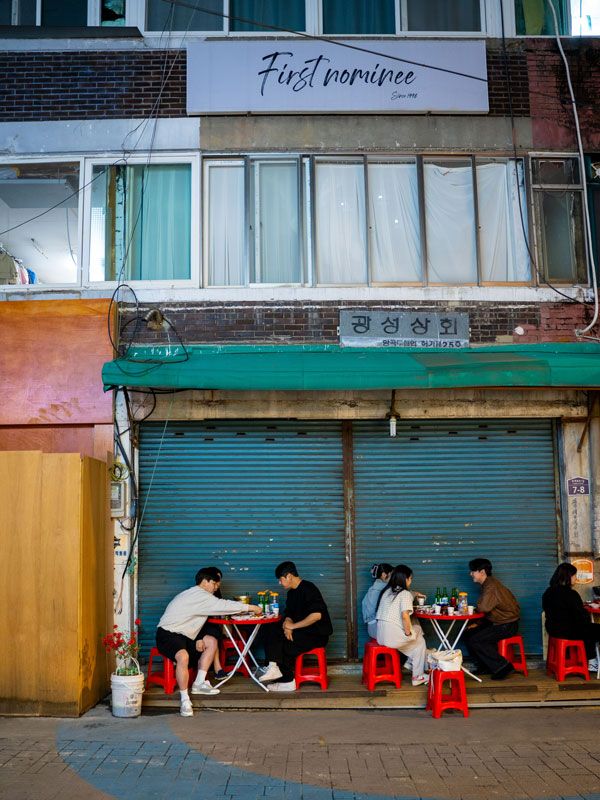
The sun is setting as I trail after Local Insider Chris Tarp weaving his way through Gukje Market. His mission tonight is to take our group on a food crawl of Busan and this is the first of three stops. We squeeze past two women cooking in a makeshift kitchen out front and follow another inside. Within minutes, plates of duruchigi (spicy stir-fried pork), ojingeo muchim (spicy squid salad) and dotori mook (acorn jelly salad) are piled onto the tables.
Bottles of Korean beer are passed around and the standard plates of banchan – kimchi, garlic greens, pickled onion and chillies – fill the remaining space. This is one of Chris’s favourite spots in Busan for street food. He’s lived in Korea for 20 years and it’s this food that first made him fall in love with Korean culture. “When I first moved here, I would just walk up to stalls and start pointing. I had no idea what I was ordering, but now I run my own foodie tours," he says. Food often acts as a window into different cultures, something I’m reminded of two days later in Gyeongju when I taste my first mouthful of samgyetang (ginseng chicken soup).
Discovering South Korea’s cultural heritage
I use my chopsticks to shred the chicken, scooping it up to consume with the steaming hot broth. The chicken has been stuffed with rice, ginseng, garlic and a plump jujube, which I mix into the soup, too. It feels deeply nourishing – and come sambok, a Korean term referring to the three hottest days of the year, samgyetang restaurants will be filled with Koreans eating the hot ginseng-infused soup to ‘fight fire with fire’ by balancing the body’s heat.
It seems every meal has a backstory. And, in a nation where nothing stays the same for long, food is an important link to the past. Yet there are still pockets of the country that appear frozen in time. Gyeongju is one of them.
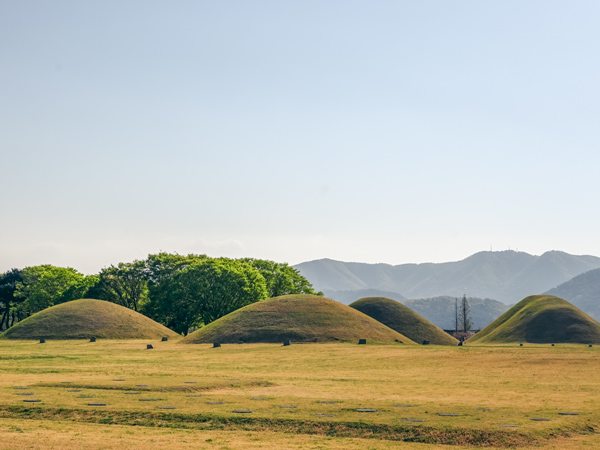
It’s an hour’s drive north-west of Busan, but it takes only a moment to realise why the city is called ‘a museum without walls’. Gyeongju is anchored around a park filled with grassy mounds that Brian Huh, our Local Insider for the day, tells us are tumuli (ancient royal burial chambers) designed to be inaccessible and hiding in plain sight.
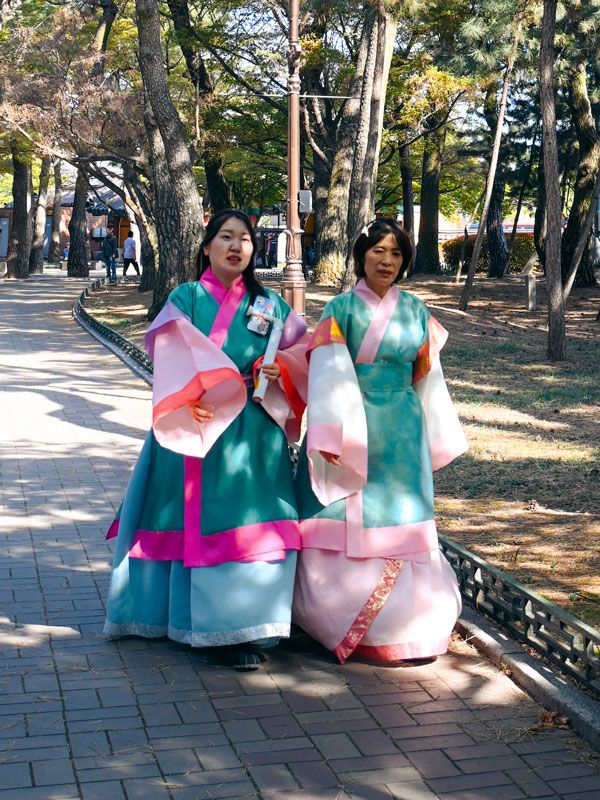
But the Daereungwon Ancient Tomb Complex is just one of several sites that has earned this region UNESCO World Heritage site status. As the capital of the Silla kingdom for over 1000 years, it’s home to more palaces, temples, tombs and pagodas than anywhere else in South Korea.

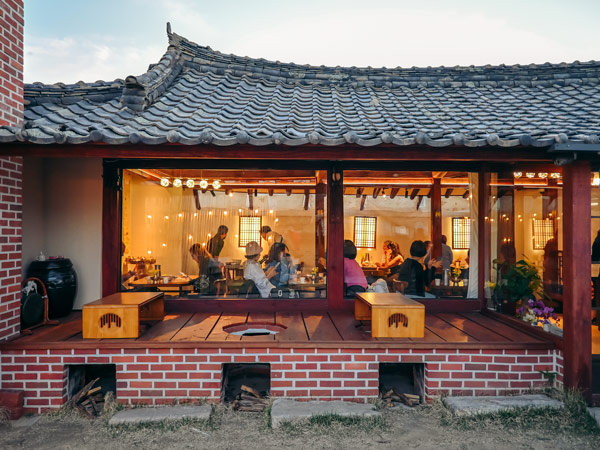
Even our accommodation gives us a taste of traditional life. Heritage Yuwa has six hanok houses divided into several rooms (some with private outdoor tubs) that blend traditional design with modern comforts for guests – think curved tiled roofs with ornate beams, wooden interiors with under-floor heating, a bar fridge, bathroom and a comfortable bed instead of a mat.
I walk past pink flowering Japanese camellia on my way to the hotel’s firepit to wait for the group. A small frog hops towards me and sits quietly at my feet. The moon is rising in the twilight hour and a peace seems to fall over this ancient city. It sits in stark contrast to the neon lights of Seoul and skyscraper-lined beaches of Busan, but each city has stitched a rich tapestry of experiences into one unforgettable trip.
Weekly travel news, experiences
insider tips, offers, and more.
Reinvention as a way of life
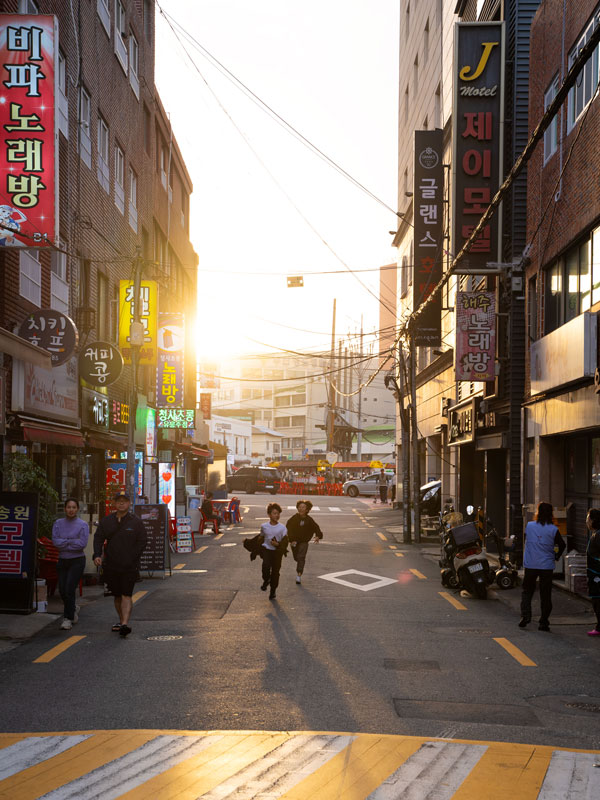
“Everyone wants to be discovered," says Jun. It’s our final night of the tour in Seoul and, after meeting in the lobby of RYSE, Autograph Collection, we pass a street busker singing Ed Sheeran’s Perfect. His hair is swept to the side and there’s a circle of onlookers forming around him as he strums his guitar.
But trends change rapidly here. “There’s a constant sense of movement and evolution, from food to fashion to pop culture. Even second- or third-time visitors will always find a new side of Seoul to discover," he adds.
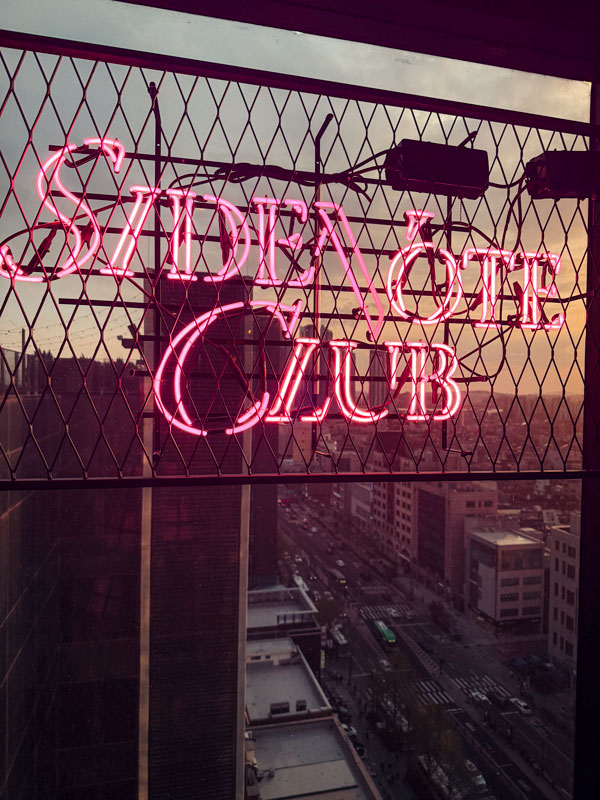
It’s easy to get caught in Seoul’s orbit. A shopfront with a neon sign that reads ‘Sorry Mum…but I love you’ draws me in and I walk out 15 minutes later with an extra ear piercing on each lobe. It’s not on the itinerary, but it seems a good way to farewell this version of Seoul before it makes way for the next.
A traveller’s checklist
The writer experienced South Korea on InsideAsia Tours’ Soul of Korea small group tour. The 10-day trip, led by an InsideAsia tour leader, explores Seoul, Jeonju, Busan, Gyeongju and Yangdong Folk Village and includes nine nights’ accommodation, breakfast daily, four lunches and five dinners, internal travel, activities and more with a max of 14 guests from $6080 per person. Tailormade itineraries are also available.
Getting there
Jetstar Airways operates 10 return flights between Australia and Seoul each week. Since its launch in October 2022, more than 240,000 passengers have flown on Jetstar’s Sydney to Seoul route. Fares start as low as $269 from Brisbane and $318 from Sydney.
Want to see more stories from International Traveller in your Google search results?
- Click here to set International Traveller as a preferred source.
- Tick the box next to "International Traveller". That's it.