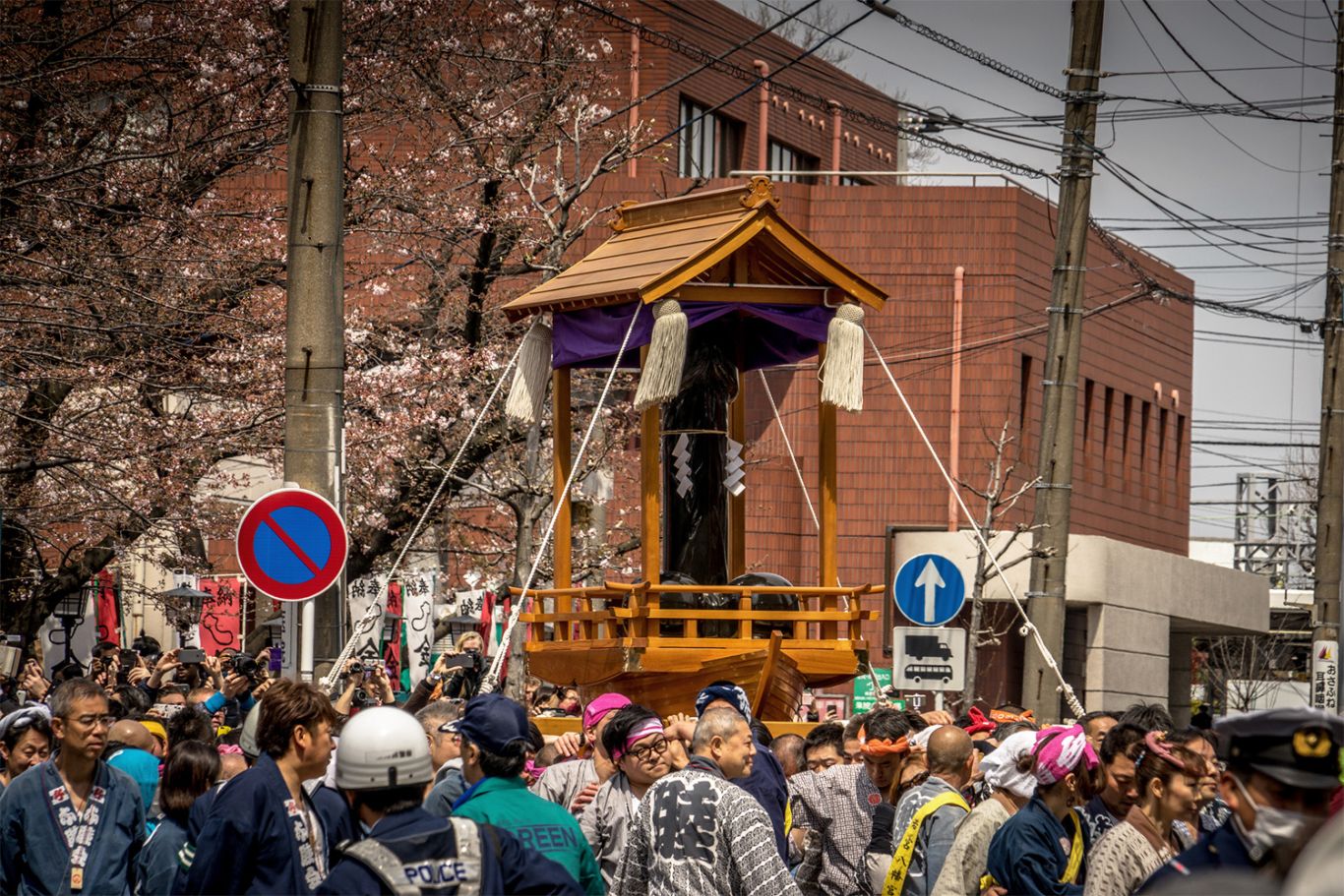
hero media

5 unusual festivals in Japan you need to know about 

The eccentricities of Japan have been well documented, particularly regarding its place in modern pop culture, from zany game shows where people eat furniture, to a pervasive kawaii culture which takes the love of cute things to a level of unwavering religious devotion.

However, peculiarities in Japanese culture actually date back centuries, and often come with much deeper meanings than outsiders would originally assume. The best way to experience this is through the many iconic Japanese festivals that take place, usually around shrines, throughout the year. Some may seem strange and unusual to visitors, but all have long histories that hold an important place in the story of this endlessly compelling country.


Here are just five of those esoteric festivals, illustrating how certain beliefs throughout history have been interpreted in unique ways.

1. Nakizumo Crying Baby Festival

Japan’s seemingly bizarre Nakizumo Crying Baby Festival is based on the ancient proverb naku ko wa sodatsu, which roughly translates as ‘crying babies grow fast’. For over 400 years, this has led to the idea that parents are doing their toddler a great service by watching them wail in public, whilst cradled in the arms of a very burly sumo wrestler, to bless them with healthy lives and ward off evil spirits.


Each April/May, this festival takes place in several locations across the country, although the most notable is behind the iconic Senso-ji Temple in Tokyo’s traditional Asakusa district. On the day, two different sessions – one around 11am, and one around 2pm – are each made up of dozens of rounds where two sumos stand on opposing sides of a small stage, and are given a one-year-old baby to hold from the procession of participating parents.


A referee/priest officiates each round, which involves both sumos lifting their respective baby and gently swaying it to encourage it to cry. Whichever baby cries first is declared the winner of that round, but it’s not often that simple. When both babies cry at the same time, the wrestler will intensify his actions to see which cries the loudest, thereby determining a winner. If neither baby cries, a duo of elderly priests sitting on either side of the stage spring into action, donning colourful bird-demon masks to try and bring the baby closer to tears. Throughout, the priest softly yells “nake, nake" at each baby, which means “cry, cry".
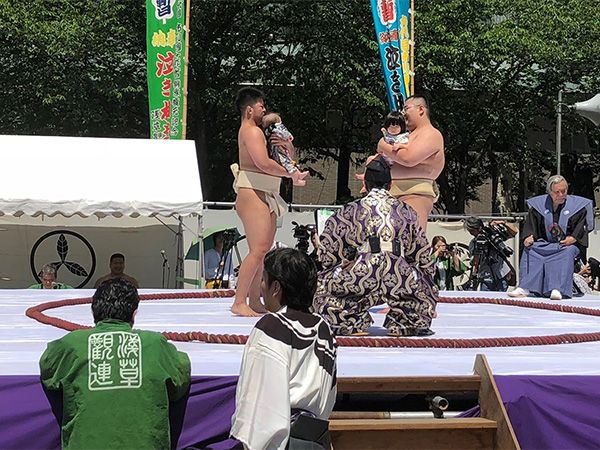
Nakizumo Crying Baby Festival
Nakizumo Crying Baby Festival (Photo: Chris Singh)

2. Akutai Matsuri

Referred to in English as the ‘Festival of Abusive Language’, Akutai Matsuri turns the otherwise stoic atmosphere of the small city of Kasama in Ibaraki Prefecture into a cathartic shouting match of local cuss words.


This annual festival, which dates back to the Edo Period (1603-1968), is hosted each December by the Atago and Iitsuna shrines, though there are several smaller iterations across the country. It began as a way for overworked factory workers to purge any pent-up frustrations, but today has turned into a rowdy celebration of insults like bakayaro (idiot) and konoyaro (bastard).


During the festival, hundreds of people march behind a group of 13 priests who are dressed up as red-faced goblins, shouting at them as they make the 40-minute climb to Atago Shrine from the area around Iwama Station.


Stops at smaller shrines along the way are expected so the ‘goblins’ can present their offerings, which many try to steal as they are known to bring good luck to whoever gets a hold of them. The race to steal the offerings is often why the festival has a reputation for getting quite rowdy.
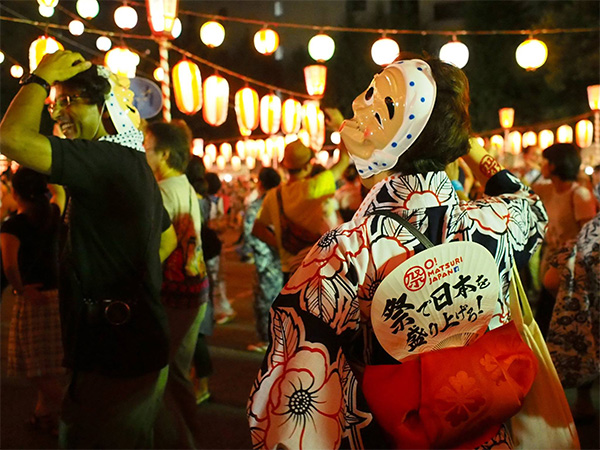
Akutai Matsuri translates to the ‘Festival of Abusive Language’

3. Kanamara Matsuri

Perhaps the most recognised of Japan’s unusual practices, Kanamara Matsuri is widely known as the Fertility Festival (or sometimes the Penis Festival). Held in April, the festival takes place in the city of Kawasaki at Kanayama Shrine, only one hour south of Central Tokyo, with a history said to reach all the way back to the 17th century.


During this time, various maids and prostitutes would visit the shrine to pray for protection against sexually transmitted diseases and similar misfortunes. This prompted the shrine’s parishioners to start this festival, which has grown to become one of the most inclusive and celebratory events in the region.


People of all identities and ages come to celebrate on the day, which involves a mikoshi parade of human-sized phalluses being marched through the streets, carried on palanquins to the Kanayama temple. Around this, there are various phallic-shaped objects, both edible and artistic. Participants can learn the art of carving vegetables into phallic shapes, come dressed in penis-themed costumes, and even pose for pictures on large, wooden phalluses.
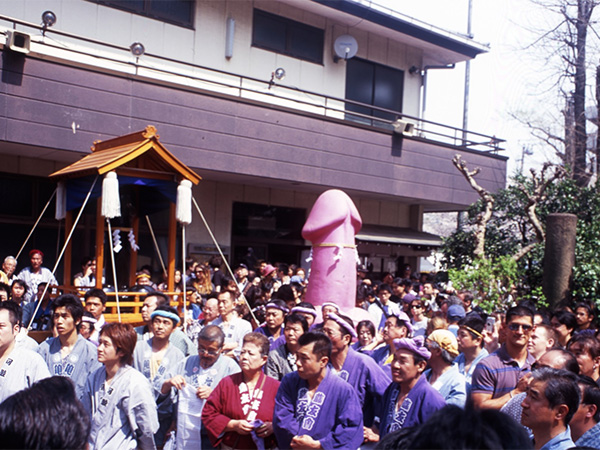
Kanamara Matsuri is widely referred to as the fertility festival

4. Paantu Festival

If you’re visiting the small island of Miyako-jima in Okinawa during September (or sometimes, October), don’t be surprised if a masked man, covered in leaves and mud, runs up and enthusiastically smears some of that slimy sludge onto you.


The Paantu Festival is named for supernatural beings once believed to descend upon a village to chase evil away and bring good fortune to its residents. According to this legend, any home, newborn baby, or adult who is splashed with mud by these deities would be blessed with good luck for the coming year.


The result is an island usually full of terrified children as the mud men run around in their odd appearances and dirty anything they can get their hands on, from cars to humans to houses. Visitors who happen upon the island during the festival can also expect to be splashed by the Paantu, who are sometimes known to chase adults and pin them to the ground before blessing them with their boggy bodies.


Although the festival has historically been spread wider throughout the Okinawa islands, nowadays you’re only likely to find it in Hirara City in Shimajiri, and the Nobaru district of Ueno village.
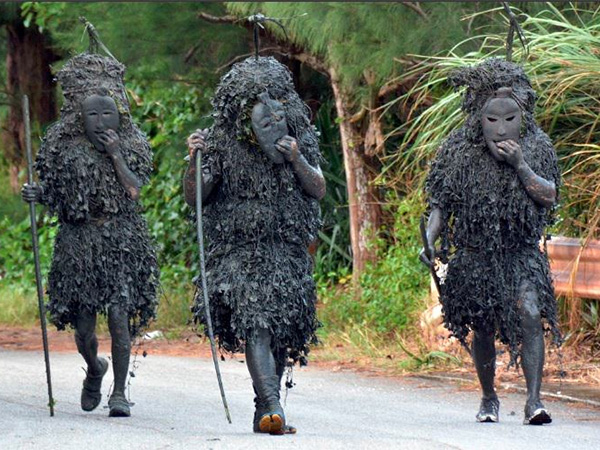
The Paantu Festival is named for supernatural beings

Weekly travel news, experiences
insider tips, offers,
and more.

5. Otaue Matsuri

Twice a year in early May and early September, the stunning, large Omishima island in Ehime Prefecture hosts a seemingly normal and bountiful rice-planting festival called Otaue Matsuri. The Japanese staple food takes pride of place at this event, which marks the rice-planting season in spring, and the harvest in autumn.


Located at Oyamazumi shrine, the festival isn’t all too different from similar events which happen throughout the year in different parts of Japan. There is one very distinctive element though, and the reason for its inclusion on this list.


The wildest and most unusual aspect of this festival is called hitori zumo, which roughly translates to ‘one-man sumo’. During this, the god said to take up residence in the shrine is the sole opponent for the region’s sumo champion, spurring three bouts of man versus deity that plays out exactly as you would expect: a sumo wrestling with what looks like thin air.


Each year, the god has won at least two of the three bouts, which is taken to mean a plentiful harvest for the year.

Want to see more stories from International Traveller in your Google search results?

  1. Click here to set International Traveller as a preferred source.
  2. Tick the box next to "International Traveller". That's it.
Chris Singh
Chris Singh is an arts, travel and food journalist with 17 years of experience in digital media and 4 years of experience in SEO writing. He is the former travel editor of premium men's lifestyle title Boss Hunting and currently balances his role as Deputy Editor-At-Large of the AU review with freelance travel writing gigs at Australian Traveller, Luxury Escapes, Cruise & Travel and Sydney Travel Guide. Chris holds a Bachelor of Arts & Sciences (Sociology and Psychology) from the University of Sydney and once worked as a line dancer for steakhouse chain Lone Star (no, seriously). He's always got his finger on the pulse for good live music and delicious new restaurants, has a particular love of historic hotels and is starting to see the restorative value of the ever-present wellness industry. Although he is a born-and-bred Sydneysider, his favourite Australian cities are Hobart and Adelaide. Internationally, he can never get enough of big cities like Tokyo, New York and Chicago. If you're looking for him, he's either at a concert, on a plane or behind a laptop.
View profile and articles
hero media

This is why cruising is the best way to see Asia

    Dilvin Yasa Dilvin Yasa
    Iconic destinations, unforgettable adventures and thrilling onboard adventures; say hello to your next Asia holiday with Royal Caribbean.

    When you want to explore the gleaming skyscrapers of Shanghai and the bars of Singapore, but also embrace centuries-old traditions in Japan before traipsing through the lush jungles of Malaysia, a conundrum presents itself: how do you do it all seamlessly without the stress of flying (or repacking)? Enter, Royal Caribbean.

    With a brand designed around maximising your holiday time, sip cocktails by the pool or watch Broadway-style performances on board as the ship glides effortlessly from one atmospheric port to the next.

    Now that you have Asia at your fingertips with minimal effort, the big question is: which all-inclusive experience (and itinerary) is best for you?

    Japan

    The itinerary

    Spectras Cabaret royal caribbean
    Prepare for a show, on and off the ship.

    The Land of the Rising Sun has never been hotter, and Royal Caribbean has a vast array of unforgettable Japanese itineraries – these range from eight-night adventures to 14-night holidays circumnavigating the country’s islands.

    The eight-night Best of Japan sailing is memory-making perfection, kicking off in Shanghai (Baoshan) on 24 October 2026. Stop at fascinating ports to soak in the sweeping landscapes and seascapes of Saikaiminato, Kyoto, Niigata and Hakodate while enjoying incredible dining and adventurous activities onboard Spectrum of the Seas®. Complete your journey back in Shanghai, ‘the Paris of the East’.

    Port highlights

    mt fuji in japan
    See iconic vistas of Japan.

    Off the ship, hike the dramatic volcanic peaks of Sakaiminato’s Daisen-Oki National Park, explore the iconic temples of Kyoto, enjoy traditionally brewed sake made in Niigata (the birthplace of many quality sake brands), and taste local flavours at Kanemore Red Brick Warehouse, a premier dining and shopping district in Hakodate.

    Don’t miss Royal Caribbean’s Amanohashidate Highlights shore excursion in Kyoto, an exhilarating experience that features a cable car ride up to Kasamatsu Park and includes a visit to Nariaiji Temple, a hillside Buddhist site.

    The ship

    Spectrum Of The Seas in Singapore
    Step on board Spectrum of the Seas®.

    Aboard Spectrum of the Seas®, days at sea are just as action-packed as those on land. Here, 17 dining venues, along with eight bars and lounges, take guests on the ultimate global dining tour. Stop into Sichuan Red, designed specially for this ship, where you can savour a rich tapestry of authentic spices and Asian-influenced flavours. Start with the chef-recommended royal sea cucumber, then move on to a hot and savoury bowl of mapo tofu simmered in a traditional spicy sauce, or authentic pickled radish and duck soup.

    Fancy a little post-dinner entertainment? Talk salsa lessons, or book front row seats to Showgirl, a multisensory spectacular that pays homage to the ultimate siren of the stage. You can also take a visual journey into the exotic cultures of the Far East with The Silk Road at Two70®.

    Kids (and kidults), as always, are well-catered for, with aqua park Splashaway Bay℠ and the largest indoor active space at sea, SeaPlex®, which offers everything from laser tag to bumper cars. Those looking to relax can find peace in the adults-only solarium, as well as a wealth of treatments at Vitality℠ Spa.

    Thailand and Malaysia

    The itinerary

    Izumi Teppanyaki on ovation of the seas royal caribbean
    Sit down to hibachi at Izumi Teppanyaki℠.

    Royal Caribbean’s Southeast Asia sailings deliver the perfect fusion of culture, cuisine and coastlines, and the four-night Penang & Phuket cruise is proof that short escapes can still feel spectacularly rich.

    Kick off with Royal Caribbean’s iconic Sail Away Party as Ovation of the Seas® departs from Singapore on 27 February 2026. The itinerary then weaves through two of the region’s most mesmerising destinations: Malaysia’s melting pot of cultures in Penang and Thailand’s sun-soaked island of Phuket.

    Each port stop is layered with history, flavour and natural beauty, while each moment spent onboard Ovation of the Seas® is filled with fun and excitement.

    Port highlights

    iconic ‘James Bond Island’ made famous in The Man with the Golden Gun thailand
    Zoom around the ‘James Bond Island’.

    In Penang’s George Town, a maze of heritage architecture, vibrant murals and street stalls serving sizzling char kway teow and aromatic laksa come together, blending past and present. Visit the Taoist Goddess of Mercy Temple to soak up its peaceful energy, ride the century-old funicular to the forested summit of Penang Hill for panoramic views, and wander Batu Feringhi Beach, where the Andaman Sea laps gently against golden sand. Jet skis? Why not?

    Then it’s north to Phuket, where both adventure and relaxation beckon. Make the most of the local beach scene at Kata Noi and wander up Monkey Hill for sweeping vistas (and mischievous company). Be sure to book Royal Caribbean’s thrilling shore excursion here – you’ll zip along in a three-engine speedboat to the iconic ‘James Bond Island’ made famous in The Man with the Golden Gun. After a day of exploration, you’ll have enough time to enjoy a sunset cocktail on the waterfront before returning to your ship for another unforgettable evening.

    The ship

    Ovation of the Seas®, royal caribbean
    Experience thrills aboard Ovation of the Seas®.

    Of course, life on board Ovation of the Seas® is just as exhilarating as your adventures off it. Sit down to 16 flavoursome finds, from Jamie’s Italian by Jamie Oliver® to theatrical hibachi at Izumi Teppanyaki℠.

    Build up an appetite with Royal Caribbean’s iconic onboard activities, from the FlowRider® surf simulator to soaring sky-high on RipCord® by iFLY® and zipping around in bumper cars in SeaPlex®. You can really choose your own adventure.

    End the night with Spectra’s Cabaret at Two70®, a fascinating fusion of music, robotics and light that redefines entertainment at sea.

    The result? A holiday brimming with discovery, indulgence and Royal Caribbean’s signature magic: Asia, perfectly packaged.

    Start planning a cruise around Asia that you’ll never forget at royalcaribbean.com.

    5 Unusual Festivals In Japan You Need To Know About