
A luxury sleeper train through the tropics of Southeast Asia captures the romance of rail and a new view on travel. This is life onboard the Eastern & Oriental Express, A Belmond Train, Southeast Asia.
For many, train travel conjures romantic sojourns, late-night revelry and old-world glamour. Yet while boarding a bells-and-whistles sleeper train in the tropics is steeped in nostalgia, modern rail travel is proving to be far more than a relic of the 20th century.
Although interest in rail travel waned two decades ago in favour of speed, efficiency and a focus on the destination, its resurgence speaks to how we travel today: slower and more purposefully, eschewing tangible luxuries in favour of connection and ways to immerse ourselves deeper, culturally and geographically. Few experiences capture this shift quite like the Eastern & Oriental Express, A Belmond Train, Southeast Asia, making a compelling case for taking the scenic route. Here’s what to expect onboard.
Boarding the train
Our 1750-kilometre journey begins in Singapore, where we’re ferried from our hotel to a private check-in at Woodlands Station. We are escorted through a station closed to the public, passing through immigration and customs, before being met with jewel-toned orchids by our butler, Navein Prakaash Jayaraman.
From the Presidential Cabin, the city limits of Singapore quickly slip away as we cross the causeway – opened in 1924 to link Singapore to the Malay Peninsula – into Johor Bahru, settling into a new tempo.
The design of the Eastern & Oriental Express
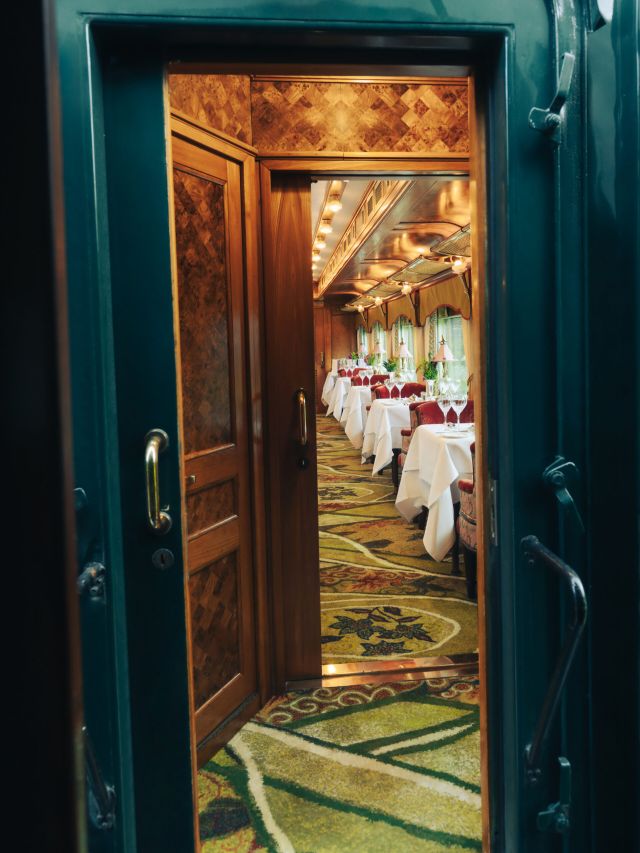
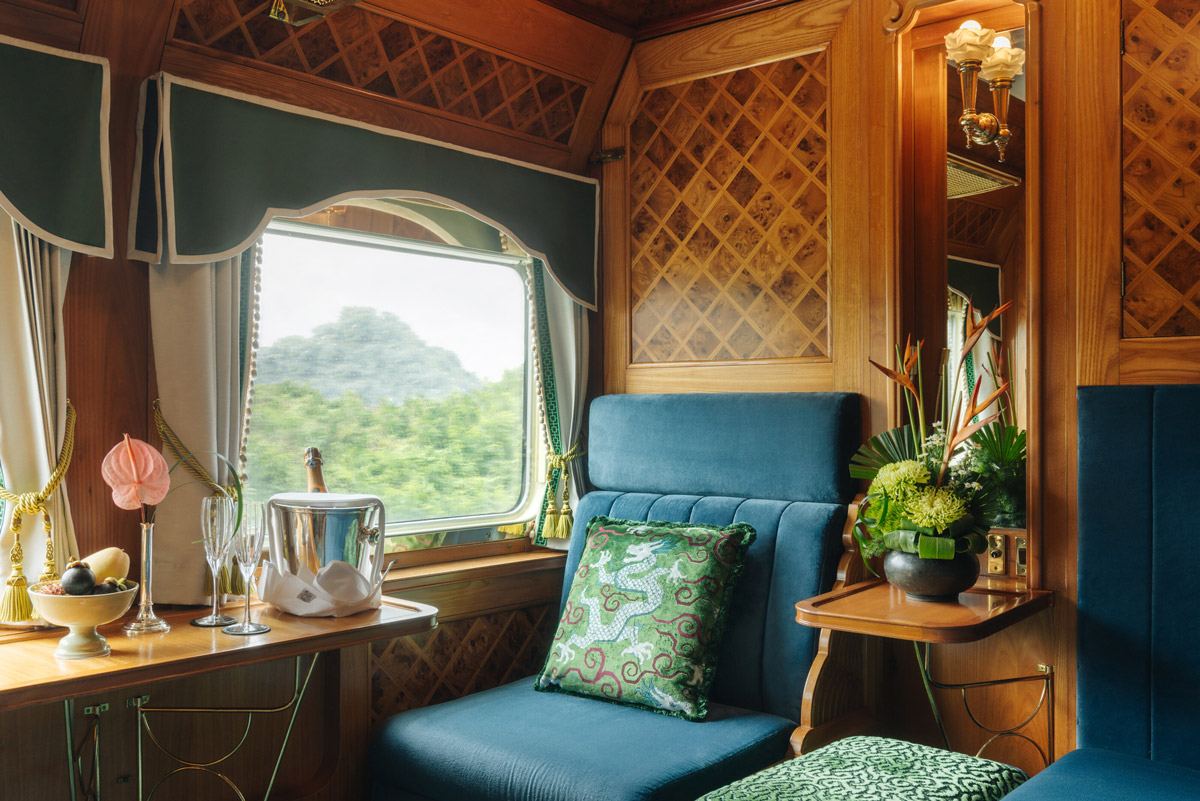
Inside the train, each carriage is clad in hand-cut marquetry – elm burr, cherrywood and teak – layered with oriental silks and embroidery. The Dior Spa is enveloped in the iconic emerald Toile de Jouy motif, while the dining cars, Malaya and Adisorn, pay homage to the passing landscape in coral, green and gold batik. It’s been more than 30 years since the Eastern & Oriental Express made its inaugural journey from Bangkok to Singapore, becoming the first luxury locomotive to complete the 1943-kilometre journey.
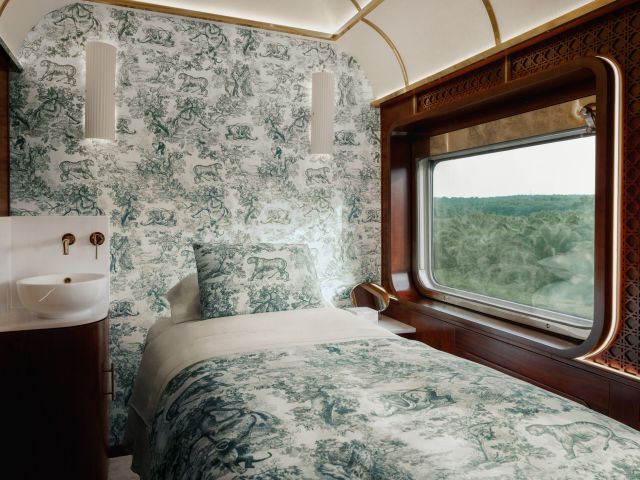
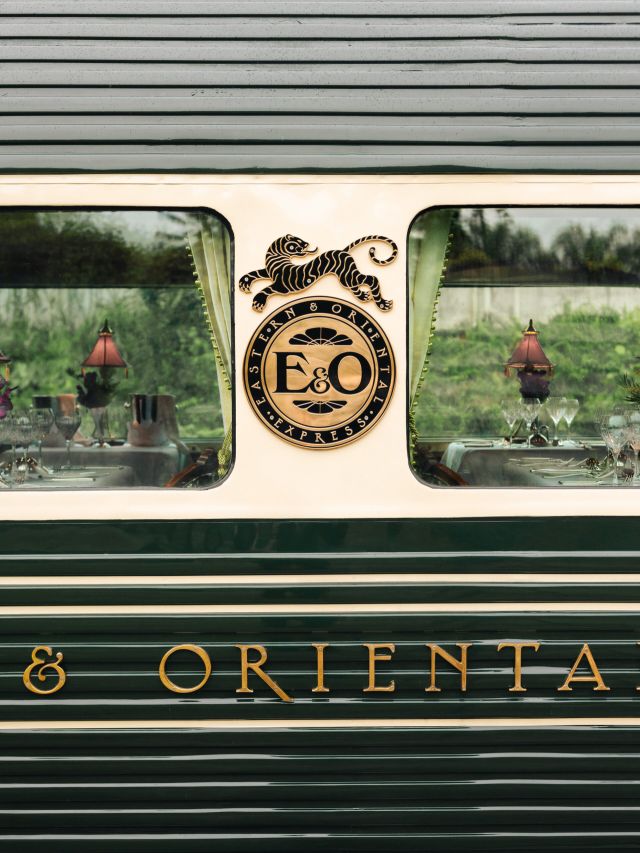
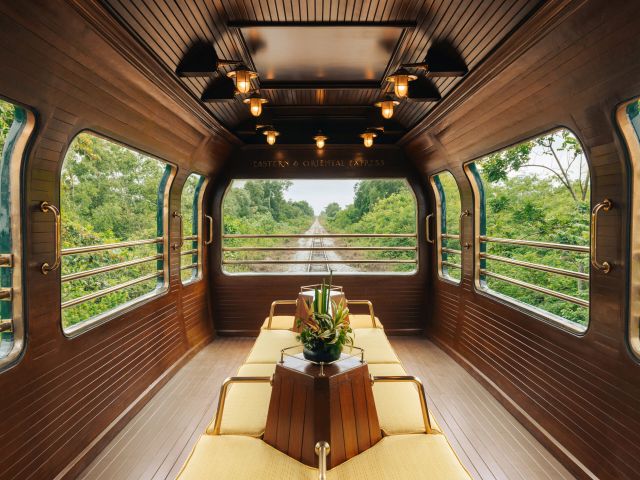
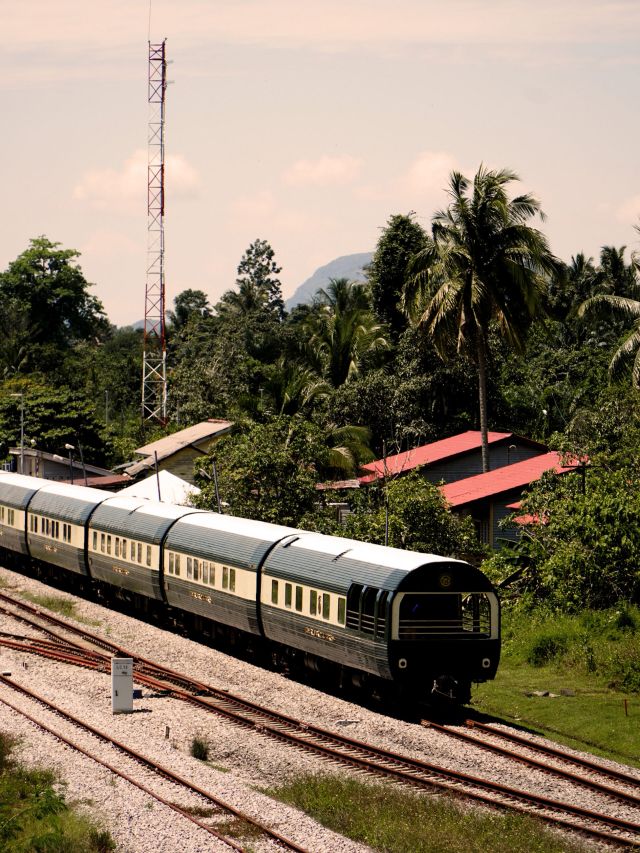
The train – a 1970s sleeper – was sourced from Japan by James B. Sherwood, the founder of Belmond (then Orient-Express Hotels), after it was retired from service as the Silver Star in New Zealand/Aotearoa. After a complete remodel, it now houses 32 suites and cabins alongside two restaurant cars, the Piano Bar, the Dior Spa and the open-air Observation Car.
The train rocks and tilts along tracks first laid in 1885 to connect a matrix of tin mines and palm plantations across the Malay Peninsula, feeding one of the busiest maritime routes on Earth. Gold, spices and silk were exchanged in bustling ports by merchants from China, India, the Middle East and eventually Europe.
Wild Malaysia itinerary highlights
The Wild Malaysia journey (running from March to October) is a three-night affair that weaves north through emerald-green palm plantations to Taman Negara National Park, before skirting the west coast through Gemas and Ipoh to Penang, then zipping back to Singapore. Each day, guests are invited off the train to seek discovery and presence in contrasting landscapes.
Taman Negara National Park
The train slows to a halt at Merapoh Station, where mist clings to the nearby limestone cliffs. Here, a small number of villagers gather, bent over gendang ketawa (or laughing drums), while others move in a steady rhythm in silat, a traditional martial art.
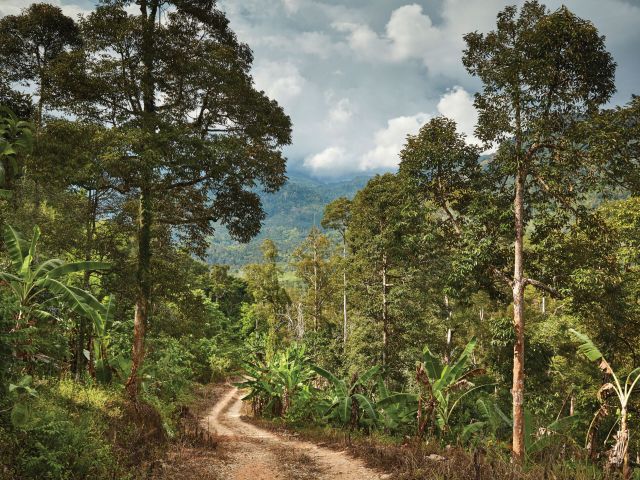
While some set out to explore caves and ancient stalactites, others take to jungle trails by e-bike. We opt to set off on foot with wildlife photographer and conservationist Sanjitpaal Singh for a slow-paced wander through the jungle.
The short drive past endless rubber and palm oil plantations is striking. In the 1960s and ’70s, swathes of land were cleared to bolster exports. Decades on, the commodities-first mindset has encroached further into wild spaces. In some parts, quarries and plantations straddle the foothills of the rainforest.
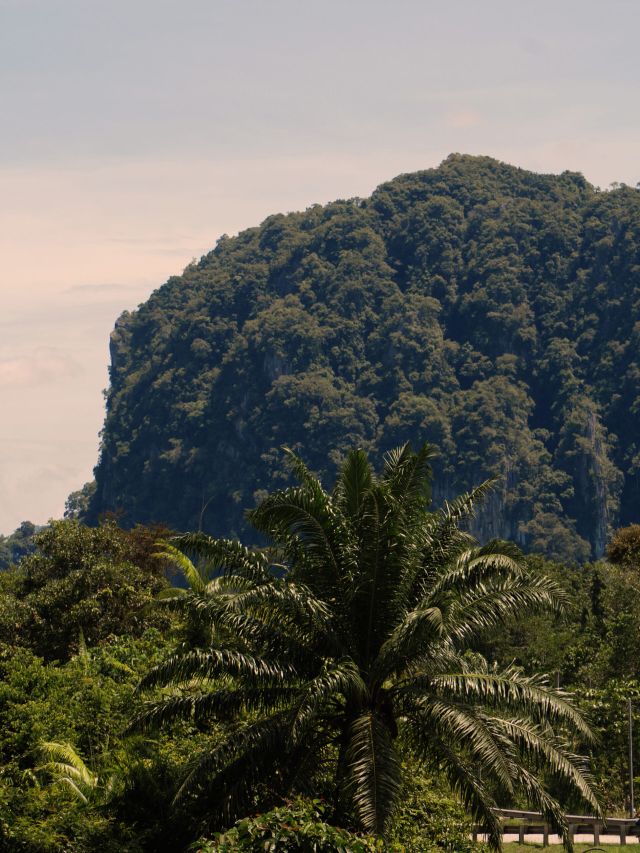
But the 130-million-year-old rainforest within Taman Negara National Park is protected and remains largely untamed. “It’s seven times larger than Singapore," Sanjit tells us as we descend into the lowland forest. Elephant dung lines the roadside. Tualang and jelutong trees rise on either side with canopies lost high above. “If you don’t see any large mammals, rest assured, they are happy, somewhere in there."
He means the clouded leopard, the Malayan sun bear, the Asian elephant and the elusive tiger. Two decades ago, this western corridor held the highest density of Malayan tigers, but habitat loss and poaching have pushed them so deep into the interior that sightings now border on myth. The mere chance of an encounter is enticing enough for us.
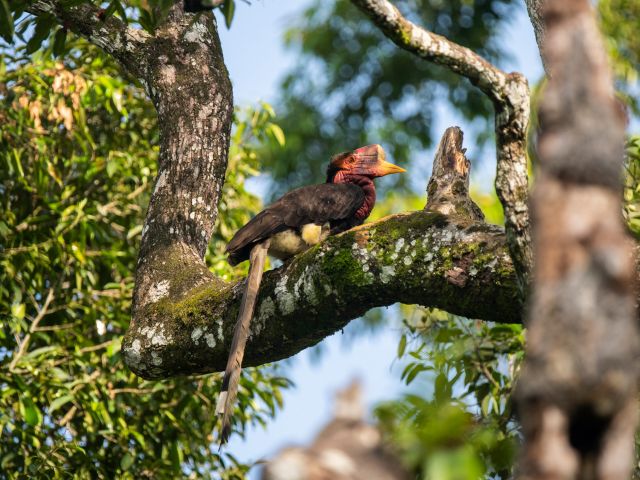
We continue on foot down an unmarked, overgrown pathway that feels cool and damp. We crouch beside a trail of ants and flowering orchids clinging to tree trunks. The jungle reverberates with chanting gibbons and birdsong. We spend the morning scanning the canopy for helmeted hornbills, which Sanjit has spent the last two decades documenting. We eventually emerge to overlook Mount Tahan, the region’s highest peak, while snacking on akok pancakes and sweet black coffee.
George Town
By morning, we’re arriving on the west coast to Butterworth Station. Penang Island is a short ferry ride away, where the boat docks in the heart of George Town as the humidity settles. Here, rambutan-red rickshaws festooned with flowers and flags, alongside a fleet of Vespas, await to meander through the city. The UNESCO-listed George Town still bears the imprint of 500 years of trading and cultural exchange, etched into the peeling shophouse facades, butter-yellow houses and ornate temples. In the 18th and 19th centuries, when Chinese migrants settled here among Malay communities, Peranakan culture emerged from a collision of languages, architecture and food.
At Chowrasta Market, stalls overflow with mangoes and giant durians, fresh-caught seafood, mounds of spices and flowers strung into long ceremonial garlands. A woman ladles sour asam laksa while others stack lemongrass and bananas on the roadside. At Eythrope, a 1920s colonial villa perched on Penang Hill, we trade the bustle for a languid rhythm with a cooking class exploring Indian and Peranakan fare. By the time lunch is served – fragrant pani puri morsels and nasi ulam rice salad – Kedah Peak and the Titiwangsa Mountains have emerged from the haze.
Weekly travel news, experiences
insider tips, offers, and more.
Onboard delights
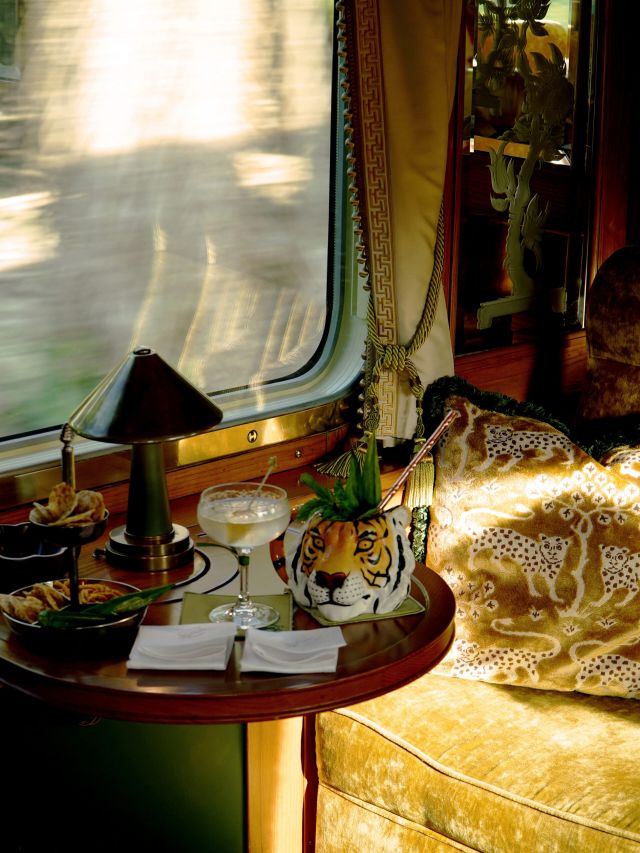
Back onboard, we idle on the observation deck, stretching over lakes and passing rural villages bathed in wood smoke, towards Ipoh. After a brief interlude through the buzzing town, we rejoin the train. We spend the evening lingering over another long, indulgent feast by André Chiang, who’s celebrated for his amalgam of cuisines – Laksa Bouillabaisse and Penang duck curry with muscat grapes. Menus are inspired by the route; expect multi-course regional interpretations such as shrimp and clam miso bisque, mapo tofu spring roll, wagyu beef sukiyaki and seafood laksa.
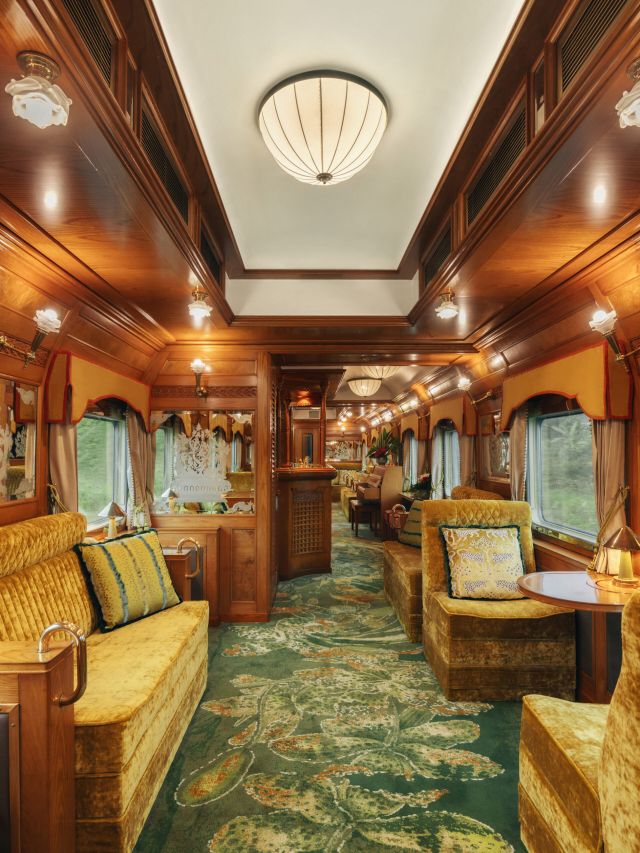
Post-dinner, we join convivial guests swaying to live jazz in the Piano Bar. The late-night rendezvous is a blur of glitzy dresses, dinner jackets and old-fashioned tipples. That night, we’re lulled to sleep by the rumbling and rattling of the diesel train as we pass Kuala Lumpur.
In decades past, opulence defined such a journey. However, the new era of travel favours something intangible – time, presence and the luxury it affords in the haste of modern life.
Where does the Eastern & Oriental Express start?
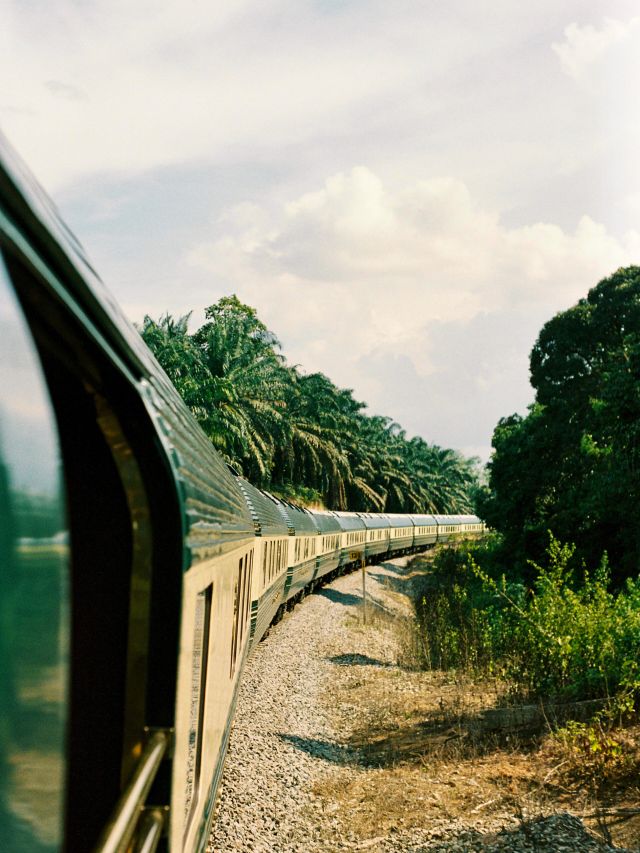
The Eastern & Oriental Express, A Belmond Train, Southeast Asia operates between Singapore and Malaysia, departing from Woodlands Station. Guests fly into Singapore Changi Airport and are transferred directly to the station for private check-in and boarding.
Itinerary details
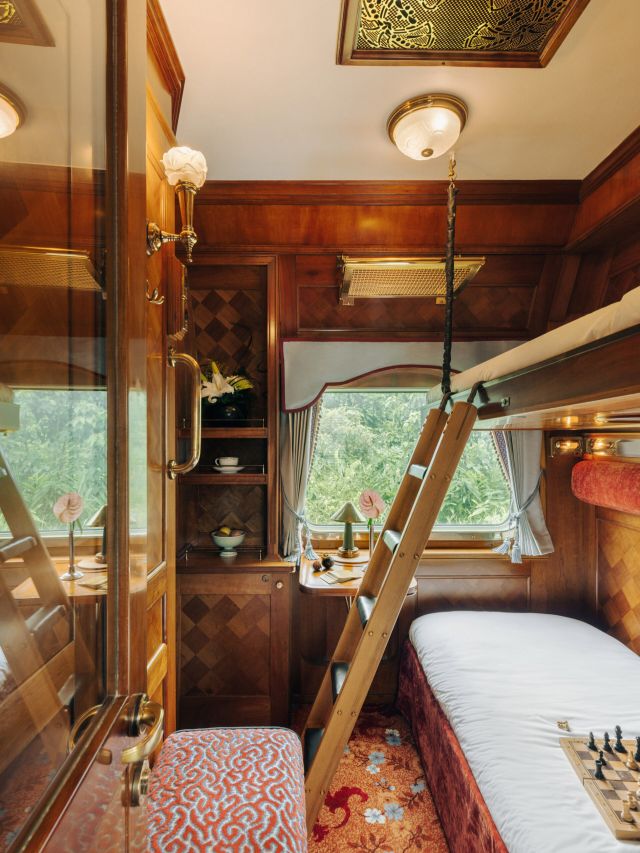
The three-night Wild Malaysia route runs from March to October, with limited departures per month and cabins starting from AU$7297. The journey includes off-train excursions into Taman Negara National Park and George Town in Penang, as well as a short stop in the former tin-mining capital of Ipoh. Onboard, don’t miss the Dior Spa for a late-night, high-performance Kobi-Dior facial.
For longer experiences, opt for the unique six-night Tiger Express route – a deep dive into conservation efforts protecting the Malayan tiger, which includes a visit to scenic Langkawi.
Want to see more stories from International Traveller in your Google search results?
- Click here to set International Traveller as a preferred source.
- Tick the box next to "International Traveller". That's it.