
A cruise through Egypt along this legendary river is a gateway to discoveries old and new: from unforgettable excursions to ancient wonders to recent archaeological discoveries and the languorous joy of watching the ever-changing landscape go by.
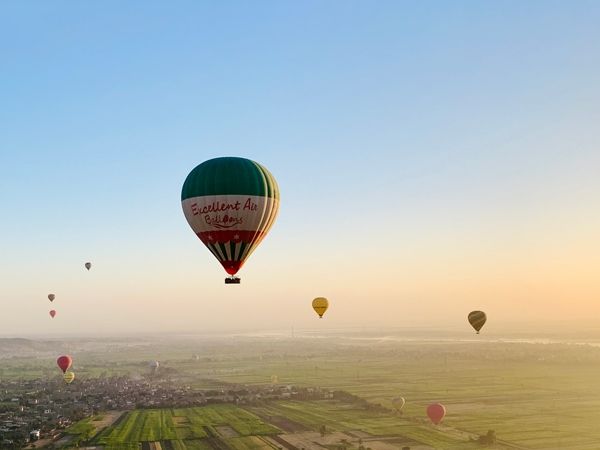
Against the flat backdrop of the desert and sugarcane fields, the fantastical scene of two dozen hot air balloons looks like a cartoon. Rising into the brightening sky, our multicoloured convoy floats above the ancient temples and tombs that we will visit this week on a Nile River cruise.
Sights to see
The newest ship in Egypt, Viking Osiris is docked next to Karnak, the largest religious complex of the ancient world. Sources differ on dates, but there are relics of temples within the complex dating back to the 20th century BCE. This sprawling place of worship was built over more than a millennium and was believed to be the place creation began.
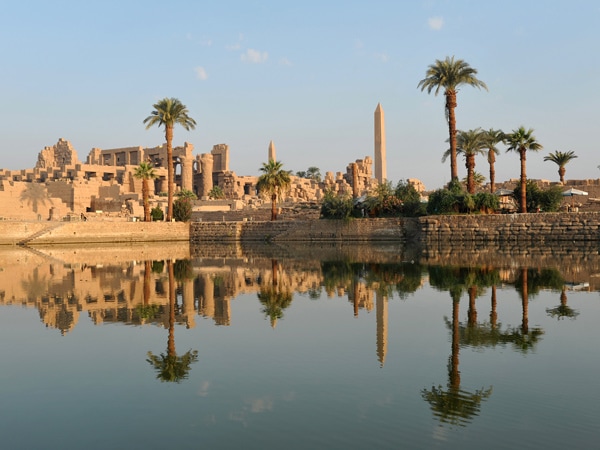
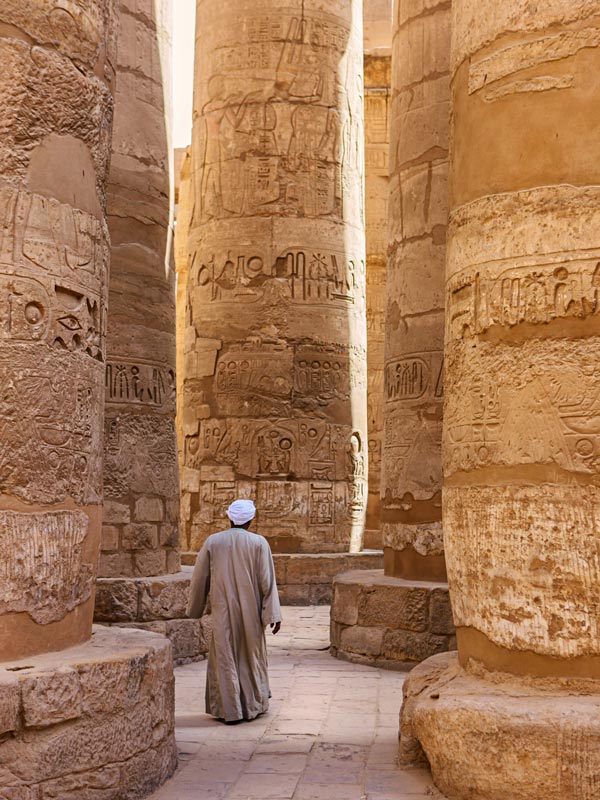
As explained by our Egyptologist guide, Walid El Bhaouty, this is where the sun god, Atum-Ra, would interact with people on Earth. Due to a recently completed restoration, thousands of years’ worth of dust and mud have been removed, revealing the original colours of the temples and 134 towering pillars.
The ongoing restoration works by the Supreme Council of Antiquities extend across the country, transforming several archaeological sites. We head to the Temple of Luxor, the most significant religious site of the ancient Egyptian world, at sunset. Lit up at night, this sacred structure was built over centuries, primarily by the pharaohs Amenhotep III and Ramses II.
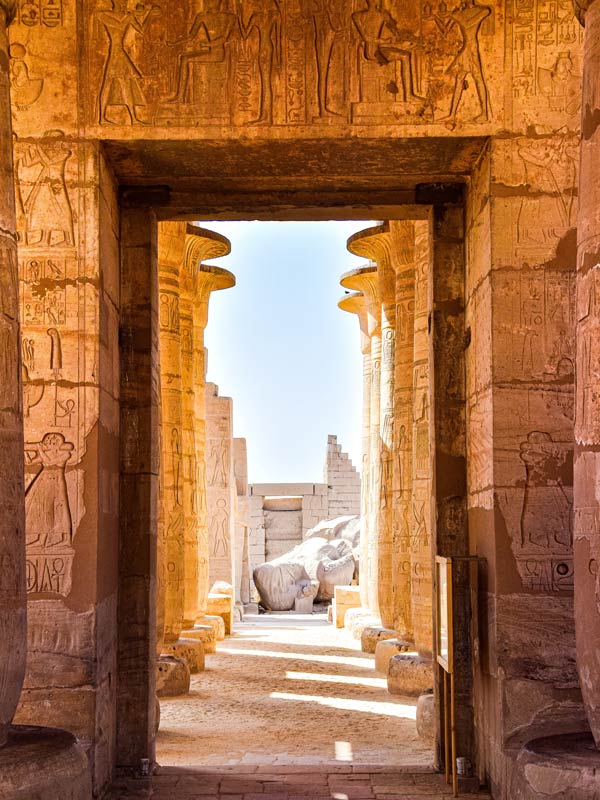
Evocative chanting from a mosque resonates around the open-air courts, pylons and obelisks as we learn about their history and the meaning of the hieroglyphs etched into every surface. Luxor and Karnak are linked by the Avenue of Sphinxes, where more than 1000 statues are spread over three kilometres.
Buried under sand for 5000 years, the road was uncovered in 1949 but efforts to excavate were repeatedly interrupted by various political upheavals. After decades of delays, it has finally opened to the public, allowing us to freely explore until we return to the ship for dinner.
What’s inside the Valley of the Kings?
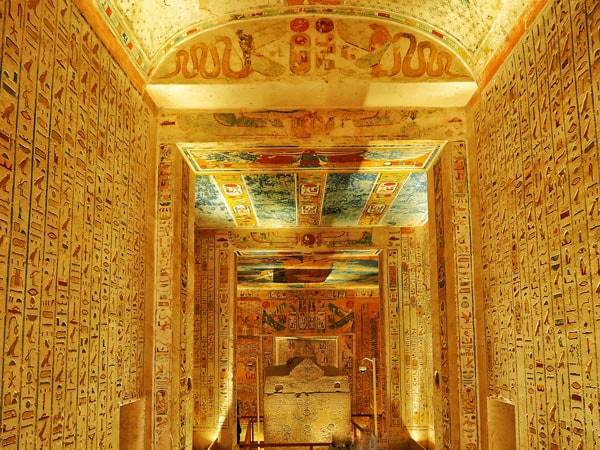
The headliner excursion is to the Valley of the Kings, a collection of the most famed tombs of Egypt’s great pharaohs. The highlight is the tomb of Tutankhamun, who ruled the country from the age of nine. The mummy of the legendary king lies under a white sheet in a glass-enclosed case, with his withered face and feet exposed in full view.

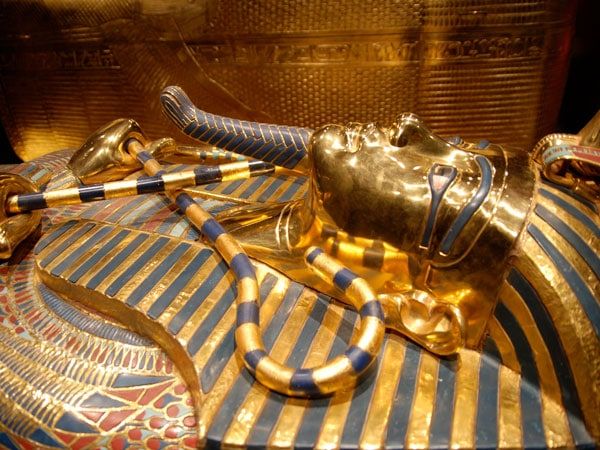
The gold sarcophagus, which once contained his nested coffins, is in another elaborately decorated room. The recent restoration of the tomb followed a sustainable system including new ventilation that will reduce the need for future cleaning, a raised viewing platform and barriers that restrict access to the previously soot-covered, scratched wall paintings, which are now impressively repaired and vibrant.
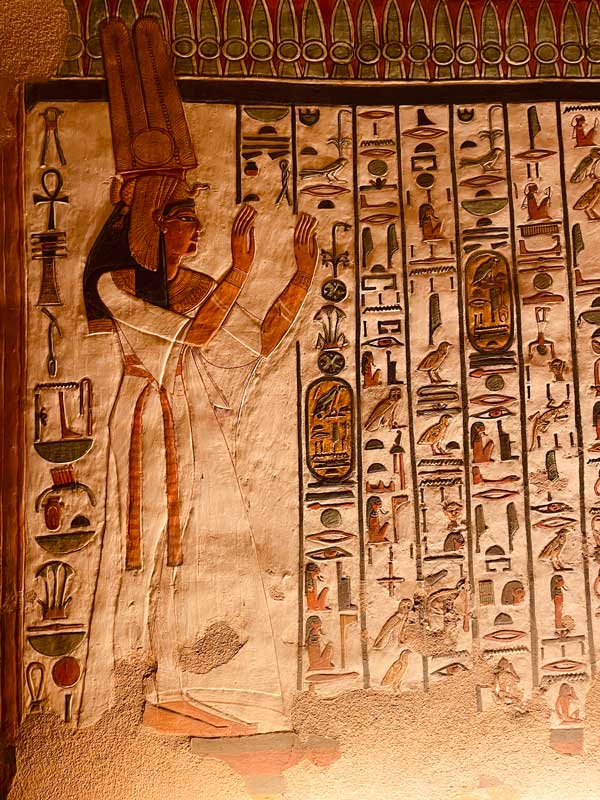
In the less-visited Valley of the Queens is the most exquisite tomb, dedicated to Nefertari, Ramses II’s first wife. The 500-square-metre tomb is divided into small rooms and adorned with well-preserved art depicting the beloved queen. Fewer tourists flock to this lavish lair due to its time limit of 10 minutes per person and the cost of entry (about $95, included in Viking’s fares).
Where to stay
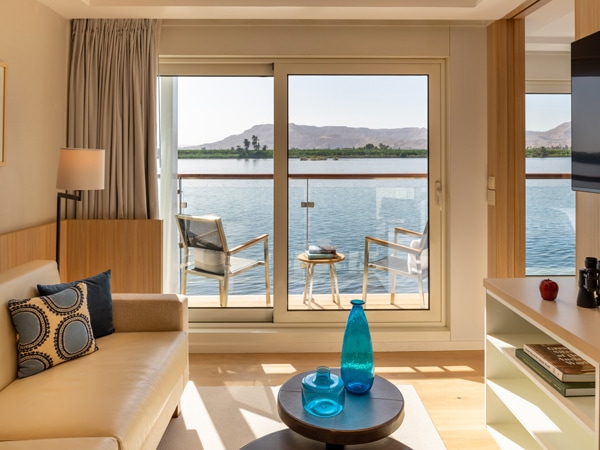
In between these unforgettable tours, Viking Osiris is our air-conditioned haven to relax in – its spacious cabins, infinity pool, library, bar and two restaurants staffed by Egyptian crew. On the top deck, we unwind on lounges and rocking chairs to watch the ever-changing landscape with a cold drink in hand.
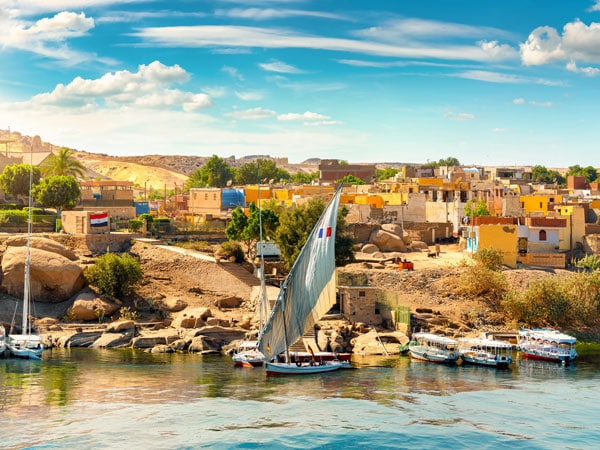
The riverbanks are lined with date palm trees, lush farmland and sandy mountains. Giggling children play on the shoreline, while fishermen and farmers work in the scorching sun and single-sailed feluccas gracefully glide along the calm waters.
No pyramids on the Nile
If you’ve read the book or watched the movie adaptations of Agatha Christie’s Death on the Nile, it may come as a surprise to learn that the pyramids cannot be viewed from the ship. This is because parts of the river dried up long ago.
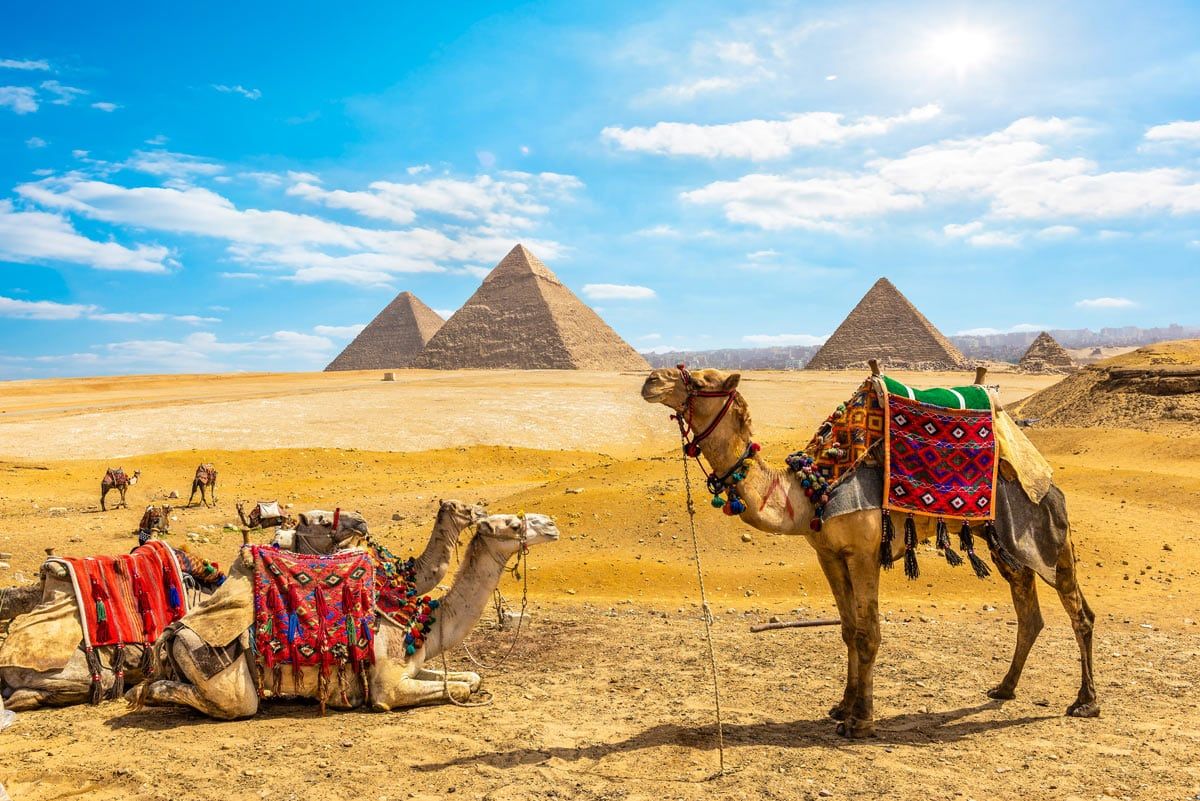
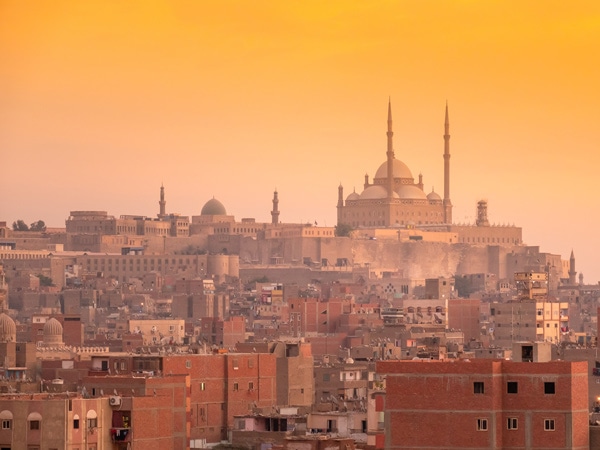
When the Pyramids of Giza were built, an arm of the river conveniently extended to the construction site, but a land journey is now required to reach these icons of the Sahara Desert. Viking Cruises’ trip begins and ends in Cairo, with four days of coach tours to the Giza Plateau, as well as the National Museum of Egyptian Civilization, the Egyptian Museum, the 14th-century Khan el-Khalili bazaar and the Citadel of Salah El-Din, a medieval fortress from Islamic-era Cairo.
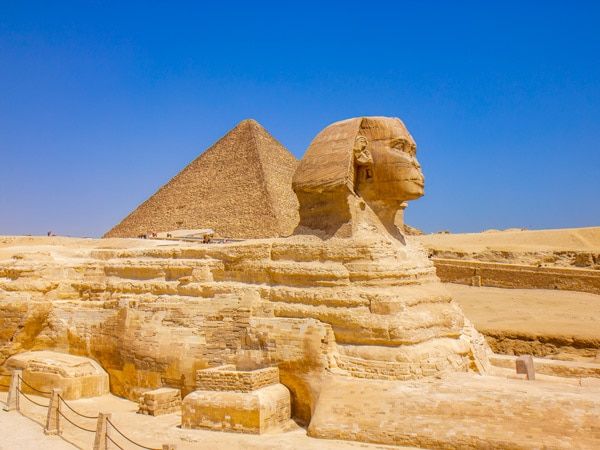
One day is devoted to the three most famous landmarks: the Step Pyramid of Djoser at Saqqara, believed to be the oldest pyramid of Egypt; the 4500-year-old Pyramids of Giza, a trio of tombs used for three pharaohs as they prepared to become gods in the afterlife; and the Great Sphinx (Abu al-Hol), erected to ward off their enemies.
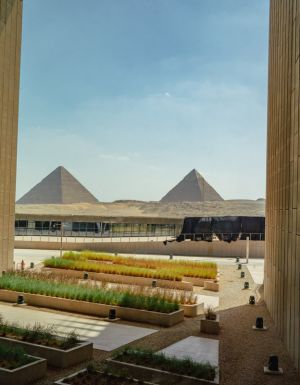
To finally see the Great Pyramid of Giza, the only surviving Ancient Wonder of the World, is a breathtaking moment. As the biggest of the three, Pharaoh Khufu’s pyramid is almost 140 metres tall. Our first glimpse happens on the drive to the site, before we are dropped off within a two-minute walk of these massive monuments.
We climb upon the first rows of limestone blocks that are accessible to tourists, while the non-claustrophobic venture inside a narrow passageway to reach an empty chamber. About one kilometre away, the Sphinx reclines like a professional model for one big photo shoot, as everyone poses for the classic nose-to-nose shot.
Recent discoveries by archaeologists
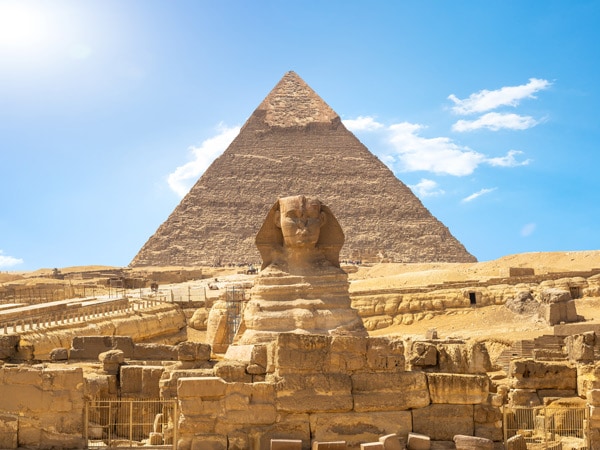
These incredible structures may be renowned for their histories and mysteries, but the latest archaeological discoveries are increasingly exciting. In March, a hidden corridor was revealed inside the Great Pyramid; archaeologists are yet to determine its purpose or what lies beyond it.
In January, a series of significant tombs was unveiled after a year-long excavation at the Saqqara necropolis. The team discovered a wealthy man of unknown origins, known as Hekashepes – the oldest complete mummy covered with gold ever found – in a sealed sarcophagus. Among other findings were tombs belonging to a palace official and a priest from the 5th Dynasty of the Old Kingdom.
Our knowledgeable guide, Walid, predicts Saqqara will become “the new Valley of the Kings" this year, due to the discoveries occurring almost every week. To know that priceless antiquities may be buried centimetres beneath our feet adds a thrill to every step we take. Listening to the commentary, we feel our fascination deepened by the connection of Egypt’s ancient history to these modern breakthroughs, bringing the past into the present.
Grand Egyptian Museum
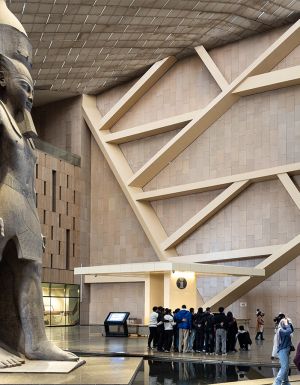
The flurry of findings at Saqqara and the national restoration works – especially the reopening of the Avenue of Sphinxes and the revamp of Tutankhamun’s tomb – might make up for the delayed Grand Egyptian Museum. Two decades since this major project was announced, GEM’s opening date has again been postponed to ‘late 2023’.
Located next to the pyramids, it will be the world’s largest archaeological museum complex, containing more than 100,000 artefacts from Egypt’s pharaonic, Greek and Roman periods. The most anticipated exhibit is King Tut’s entire collection of treasures on display for the first time.
Construction of the world-class landmark began in 2005, but it has been thwarted by environmental, political and pandemic-related setbacks. Following the restabilisation of the government, international loans have helped fund the shortfall caused by the lingering impact of reduced tourism. Currently, there’s no official opening day set in stone – so to speak.
Cruising the Nile with Viking Osiris
Viking has operated Nile cruises since 2004 and the 82-passenger Viking Osiris is the newest Nile-based ship in the company’s Egypt fleet. A newer vessel, Viking Aton, is set to debut in August to keep up with demand. With this season sold out and many of next year’s dates showing limited availability, 2025 bookings have been opened early.
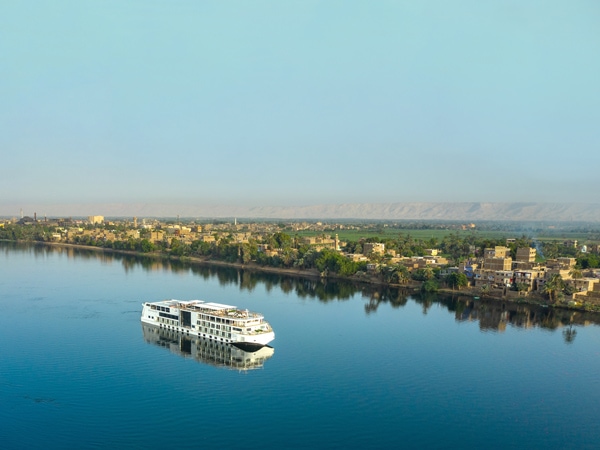
These upscale ships exemplify why a Nile River cruise is the best way to see Egypt, combining dining, entertainment, accommodation and touring. All the major attractions are effortlessly covered without the need to self-drive or take a large coach trip. With a police car escort in Cairo to help manoeuvre through the worst bottlenecks and three onboard Egyptian tour guides joining excursions in every port, Viking eases the whole experience.
The government also provides cruise passengers with a security guard, reassuring those who are concerned about safety. On typically hot days, the ship’s air-conditioning alone is welcome relief, but the relaxing elements of cruising and riverside views are unparalleled.
Weekly travel news, experiences
insider tips, offers, and more.
A traveller’s checklist
The 11-night Pharaohs & Pyramids package includes a seven-night river cruise and four nights in a five-star hotel in Cairo. Priced from $7295 per person twin share, fares also include flights within Egypt, shore excursions, wi-fi, onboard gratuities and meals, with complimentary wine, beer and soft drinks served during lunch and dinner. Departures are year-round, except June and July.
Getting there
Emirates, Etihad and Qatar fly to Cairo with a layover in Dubai, Abu Dhabi or Doha. Qantas also sells flights operated by Etihad.
Playing there
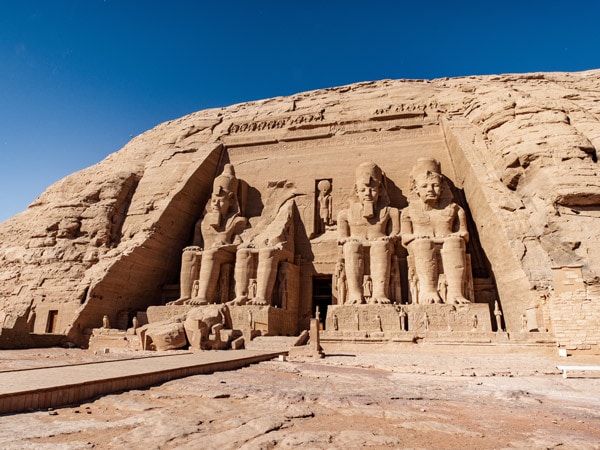
For an extra charge, take the day trip to Abu Simbel (twin temples built 1264–1244 BC), which was dismantled in 1964 and reassembled in a less flood-prone location. The hot air balloon ride is also an additional cost.
Eating there
Viking serves delicious Western and Egyptian cuisine. Try the hawawshi, pita filled with minced meat, vegetables and pine nuts. The local falafel is made with fava beans, creating a bright green centre.
Conscious traveller
With its landscape of desert, farms, overdeveloped cities, a long coastline and one main river, Egypt is highly vulnerable to climate change. Rising sea levels threaten to submerge the port city of Alexandria and to turn areas of the Nile Delta toxic with salinity.
The government has taken notable steps to address these issues, from doubling its wind energy production to building desalination plants and infrastructure for flood control. Egypt hosted last year’s COP27 (the 27th Session of the United Nations Climate Conference) in Sharm el-Sheikh, which it plans to transform into a ‘green city’.
The World Bank is also supporting projects such as cleaner public transport (monorail, electric buses, light rail and a low-carbon train system), sustainable water supplies, air pollution and waste management. A new bus rapid transit system on Cairo’s Ring Road, consisting of six lanes for motorists and a separate lane for buses, aims to reduce the city’s notorious traffic congestion.
Want to see more stories from International Traveller in your Google search results?
- Click here to set International Traveller as a preferred source.
- Tick the box next to "International Traveller". That's it.