
For years, the travel industry has spoken the language of sustainability – though the reality has often been more complicated. At times, sustainability appeared more visible in messaging than in measurable outcomes. But something has shifted.
Why sustainability isn’t enough
Regenerative travel is no longer a fringe ideal. Nor is it a shiny new sub-category of luxury. Instead, it’s becoming a benchmark for how travel defines its future – and a response to growing questions around credibility and impact.
The premise is clear: travel must leave places measurably better than it found them. That shift from minimising harm to actively restoring ecosystems, and therefore communities, represents a moral recalibration.
Luxury’s new responsibility
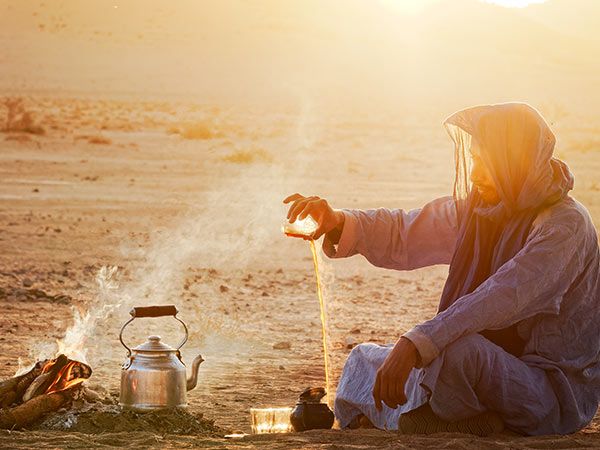
Thierry Teyssier, the French hotelier behind 700’000 heures Impact, is a driving force behind the pivot. “Regenerative travel is not about doing less harm; it’s about actively helping places, cultures and people rebuild and thrive," he says.
Early projects such as the Dar Ahlam property in Morocco helped shape what we once called ‘transformational travel’ – emotionally immersive, culturally sensitive, personally expansive. But powerful, personal transformation is no longer the end point, he argues.
“If travelling itself contributes to erosion, then we’re just decorating the problem," Teyssier says. “Today, whether we travel or not, we must ask ourselves how we regenerate our own lives and the systems we are part of. This responsibility is amplified when we intervene directly in fragile ecosystems and communities." It’s a sentiment increasingly shared across the industry.
Teyssier’s current work, including The Memory Road in Morocco, reflects this deeper change – from designing emotionally charged guest journeys to designing long-term value for communities and landscapes. “Luxury travel has been very good at extracting emotion," he says. “The question now is: What does it give back that lasts?"
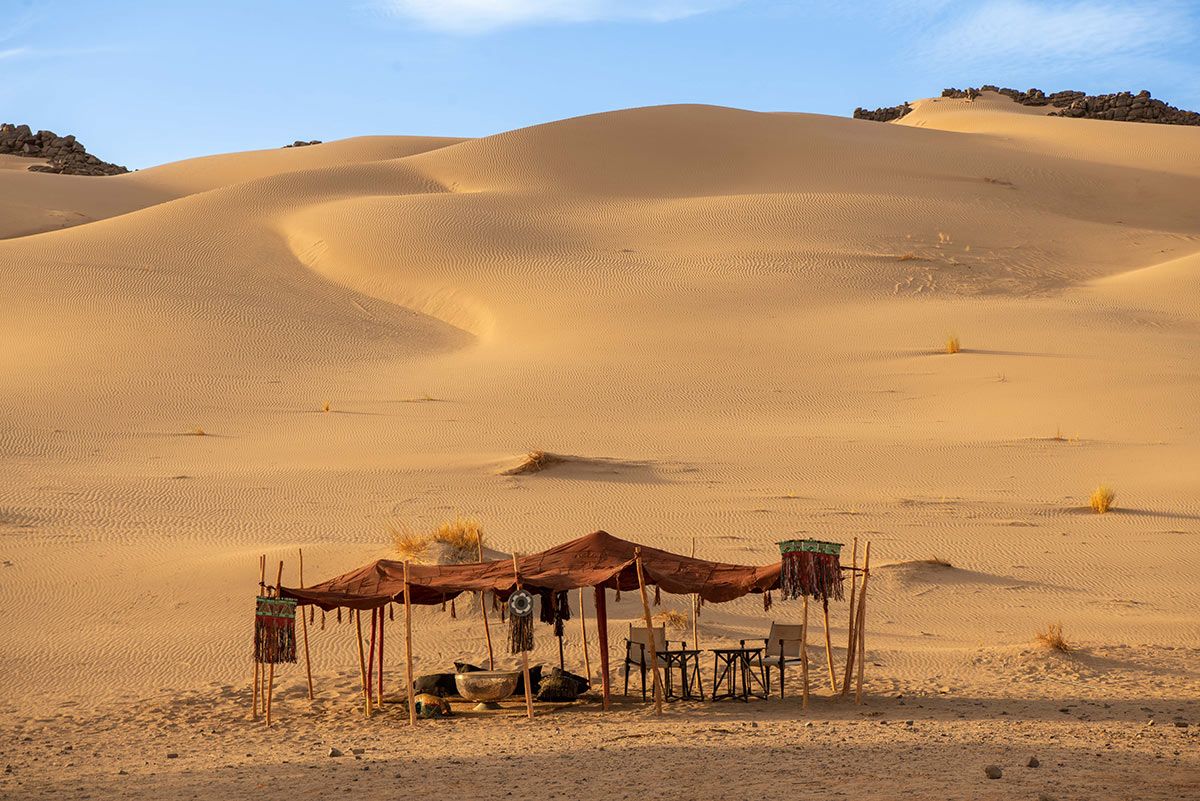
The Memory Road is a bespoke odyssey that follows ancient caravan routes from the Atlantic to the Sahara. The 1200-kilometre journey connects small groups of just six guests with Berber culture, visiting traditional villages, argan groves and vast Sahara Desert scenery while staying in luxury properties like Dar Ahlam. The cooperatives involved, Teyssier says, have gone from “100 per cent dependency to more than 85 per cent autonomy in just two years and will soon be profitable on their own".
How luxury sets the standard
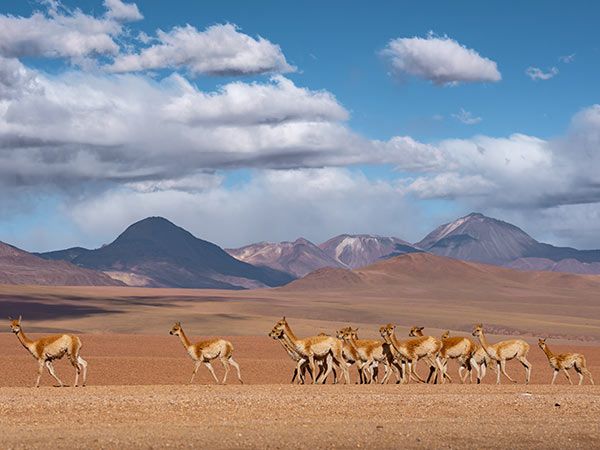
Luxury travel has long functioned as a testing ground for the broader industry. Design standards, service models and even sustainability practices often debut at the high end before filtering into the mainstream. If regeneration becomes embedded at this level, its influence has the potential to extend far beyond the most rarefied experiences.
It is the modus operandi at the heart of Beckons – the newly unified portfolio of Baillie Lodges and Tierra Hotels – as it enters a new chapter of investment and expansion in Australia and overseas. For CEO Michael Crawford, the approach is embedded in operations rather than confined to simply messaging, particularly important given the remote environments in which its lodges are located. “It’s a real commitment," he says.
That commitment spans from Ulur̲u, where Longitude 131° has made sustained investment in the arts community, to Clayoquot Wilderness Lodge on Vancouver Island, where the company has built the largest privately owned solar field in Canada.
As the brand expands, Crawford says the ability to be additive to the social and environmental landscape – and to re-create that formula across future acquisitions – will be a primary consideration.
Regeneration in practice
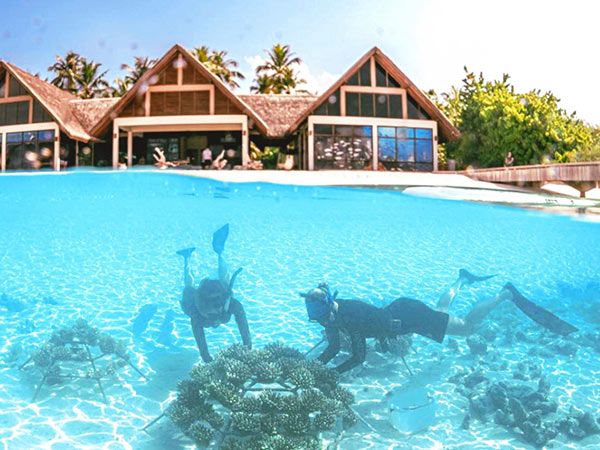
These principles are also being tested in practice in the Maldives. The island nation is extremely vulnerable to rising sea levels and reef degradation.
Coral restoration at Four Seasons Resort Maldives at Landaa Giraavaru began more than 20 years ago – well before ‘regeneration’ entered the lexicon. What started in the early 2000s as a partnership with Reefscapers to establish the Marine Savers program and trial coral frames has evolved into one of the Indian Ocean’s most ambitious private marine programs. As research evolved into outreach and education, Marine Savers rapidly scaled its efforts, initiating extensive restoration programs grounded in both scientific expertise and local knowledge.
A team of marine biologists on the island now research spawning cycles, develop spawning-retention devices and prioritise bleaching-vulnerable species. A turtle rehabilitation centre also treats ghost-net injuries caused largely by industrial fishing beyond Maldivian waters.
The important detail isn’t just the science. It’s that guests participate in real research. The emphasis is not on performative conservation moments or curated photo opportunities, but on education, data and accountability.
Kate Moody, coral biologist at Four Seasons Resort Maldives at Landaa Giraavaru, says Marine Savers is not only reducing its environmental footprint but actively restoring ecosystem function. “The project is strengthening habitat complexity, supporting natural reproduction, improving animal welfare, and providing sustainable food solutions. All of these factors contribute to a more resilient future for the atoll and the wider Maldivian marine environment," Moody says.
“We design every activity to contribute to real research or restoration work," she adds. “Guests are briefed on context; debriefed on outcomes and shown how their actions feed into long-term impacts." What makes Four Seasons Resort Maldives at Landaa Giraavaru particularly instructive, she says, is not just the science. It’s how regeneration is woven into the guest experience.
The power of accountability
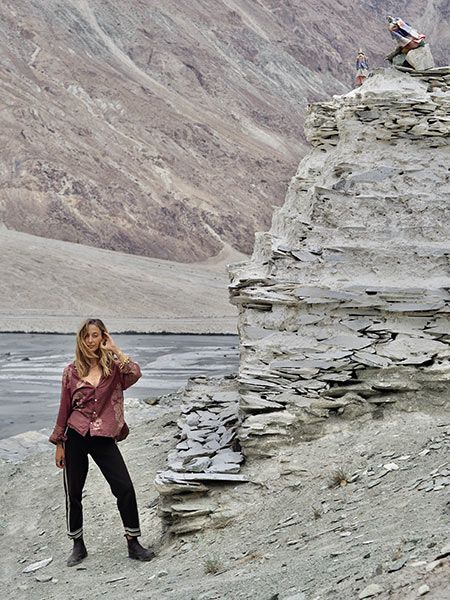
Australian writer Nina Karnikowski, a finalist in the Regenerative Travel Impact Award for Storyteller of the Year, agrees regeneration begins with accountability. In her recent memoir, The Mindful Traveller, Karnikowski explores how tourism, development and globalisation are reshaping fragile cultures and landscapes – from Ladakh and Upper Mustang to Bhutan.
Much of Karnikowski’s work circles around a simple but profound question: ‘What do we really mean by progress?’ “In places often labelled ‘remote’ or ‘underdeveloped’ I’ve seen extraordinary social cohesion, ecological intelligence and resilience, and also the costs that arrive with rapid modernisation," she says.
For Karnikowski, the pivot from personal transformation to place-based responsibility began in the Canadian Arctic. “Watching polar bears swim beside our boat under a bright sun made it impossible to separate travel from environmental impact," she says. “Personal transformation isn’t enough if the act of travelling itself contributes to the very crises these places are experiencing."
Karnikowski’s writing now seeks to inspire through intimacy rather than guilt. She also urges travellers to stop seeing destinations as backdrops and start seeing them as living systems. “My hope is readers begin to ask different questions: ‘Where does my money go?’, ‘Whose land am I walking on?’, ‘What kind of future am I helping shape by being here?’"
It’s a sensibility the writer will expand on when she hosts her annual Go Lightly retreat at The Happy House in Nepal (from 31 March to 9 April), inviting travellers to engage more consciously with place, community and impact.
Like Karnikowski, travellers are asking sharper questions: Who owns this land? Where does my money go? What remains when I leave?
Weekly travel news, experiences
insider tips, offers, and more.
Travel’s rebalancing act
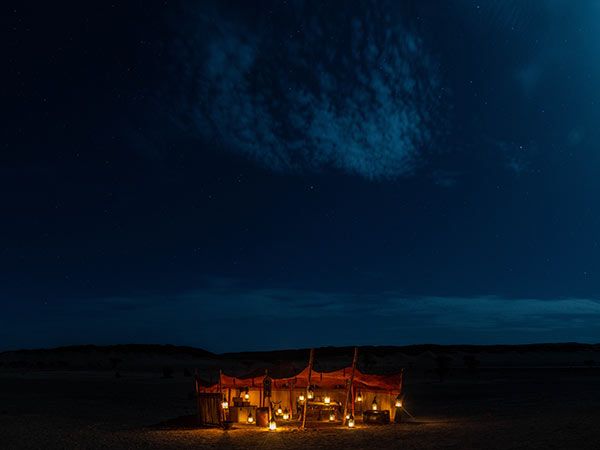
As with any emerging movement, there is a risk that the language outpaces the action. But the direction of travel is clear. Neutral impact is increasingly seen as an insufficient ambition. Luxury once signalled excess. Then it signalled experience. Increasingly, it signals accountability.
The future of travel may be defined less by how extraordinary it feels in the moment, and more by whether the places we love can still thrive after we’re gone. Regenerative travel is not a trend or a category. Rather, it’s a rebalancing of what tourism takes and what it contributes to in return.
Want to see more stories from International Traveller in your Google search results?
- Click here to set International Traveller as a preferred source.
- Tick the box next to "International Traveller". That's it.