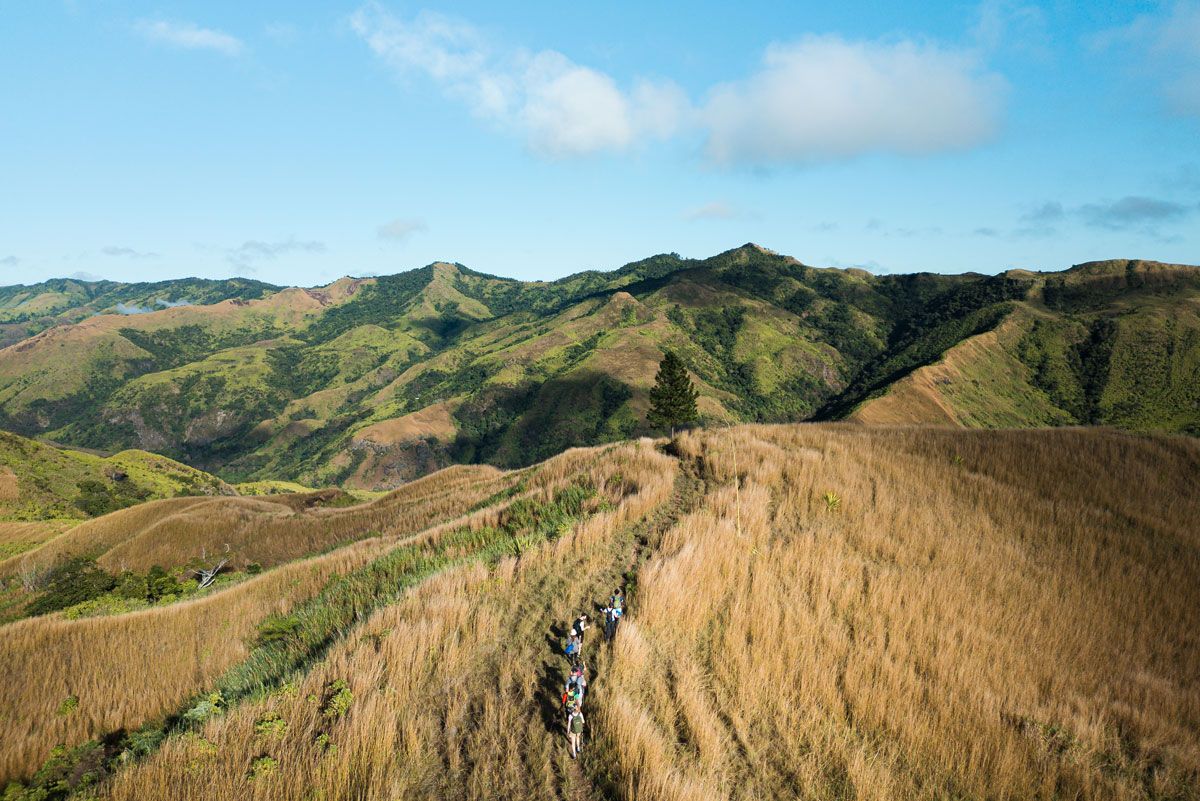

Reset your radar on your next South Pacific holiday. From the city to the highlands to cultural experiences, a different side of Fiji and Samoa is revealed through a local lens.
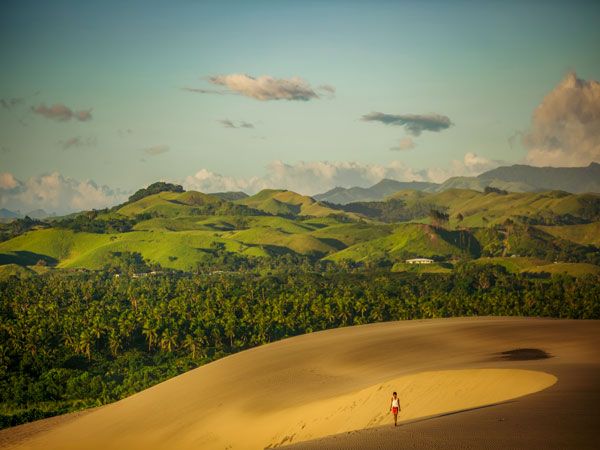
The Sigatoka Sand Dunes are a place of secrets and legends, both ancient and new. But from their sunlit summit, they hide nothing, revealing 360-degree views of Fiji’s main island, Viti Levu, to anyone willing to make the roughly 20-metre climb. To the north, it’s green from here to the horizon.
Low-lying hills undulate around a grove of palm trees that spans hundreds of hectares and is scattered with the corrugated iron roofs of village bures (locals have long since swapped straw for steel, so the bungalows fare better against tropical storms). To the south, there’s the wild and vast Pacific Ocean.
The secrets of the dunes
According to local lore, the dunes and some of the 300-plus islands that make up Fiji were created by two warring, flying giants, who unintentionally dropped handfuls of soil into the ocean.
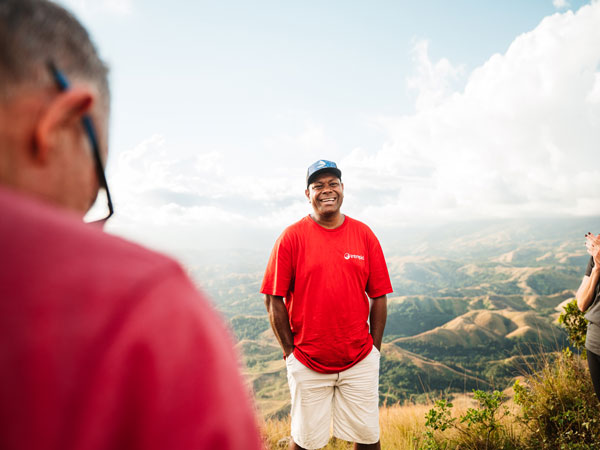
The history books tell us that, just over 3000 years ago, the Lapita people – who were originally from Taiwan but had established themselves in the Bismarck archipelago north-east of New Guinea – arrived on the beach here and became the first human settlers of Fiji. More recently, according to local guide Ben Semira, the dunes are where the men’s Rugby 7s team come to train.
“It’s our secret weapon," says Ben. At least, it was, until those kind-hearted Fijians invited the French team to join them for a training session one year, and subsequently lost to them. “It’s very Fijian, we share everything," admits Ben.
The dunes disclose their secrets, too. Pottery shards, tools made of shell and stone, and more than 60 ancient human remains have been uncovered as the mounds shapeshift in strong winds (some artefacts are on display in the visitors’ centre). And Ben doesn’t hesitate to offer his knowledge on the subject to our group, which is here to experience a condensed preview of Intrepid Travel’s 16-day itinerary through Fiji and Samoa.
A relatively new market for the tour operator, Intrepid has only led guests through the South Pacific since 2023, in partnership with Market Development Facility, an Australian initiative promoting sustainable economic development throughout the Asia Pacific.
Beyond the resorts
Right now, Fiji is more popular than ever, especially with Australians, who make up 44 per cent of tourists. In 2024, the island nation notched up more than one million arrivals, the largest number ever recorded, and, at the time of going to print, 2025 looked set to surpass those figures.
While most travellers arrive via the international airport in the city of Nadi, on the western side of Viti Levu, few linger. Though exact numbers are hard to pinpoint, the overwhelming majority make a swift departure by boat or plane towards the ice-cold cocktails and kids’ clubs of Fiji’s resort islands. But if you’re keen to experience local life, Viti Levu – home to 70 per cent of the population and the capital city, Suva – is as authentic as it gets.
Bula, you may say, we’ve tasted kava at those resorts! We’ve arrived and departed to choruses of Fijian song! “Many traditions are being misappropriated," says Ben, who was born and raised in Nabulini, a village in the island’s north-east.
“Warriors are serving kava to hotel guests. That would usually be reserved for visits by clan leaders. The lali [wooden slit drum] that’s used to welcome them? That is used to call people to church." (About 64 per cent of the population identify as Christian.)
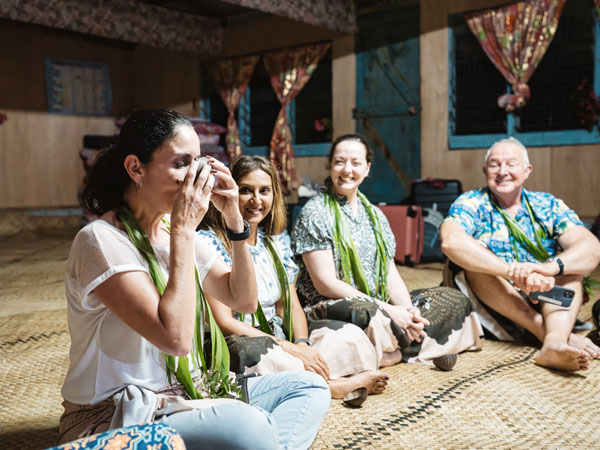
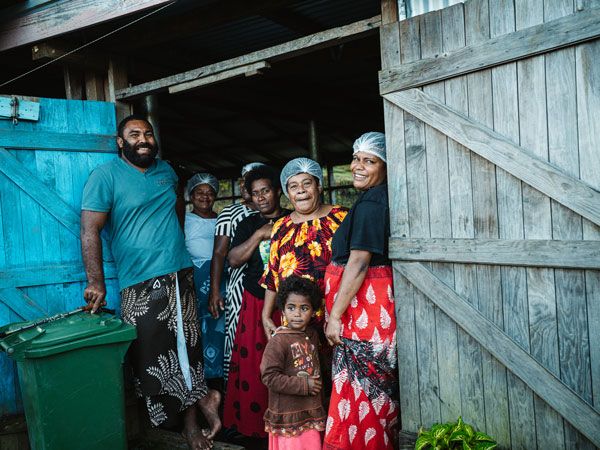
In the Fijian highlands, a group of young men in the village of Naga welcome us with a yaqona (kava) ceremony unlike anything I’ve experienced in a resort. Yaqona, as it’s known here, is made from the powdered roots of pepper plants. It numbs teeth and tongue, and is followed by a lovo, a feast cooked in an earth oven.
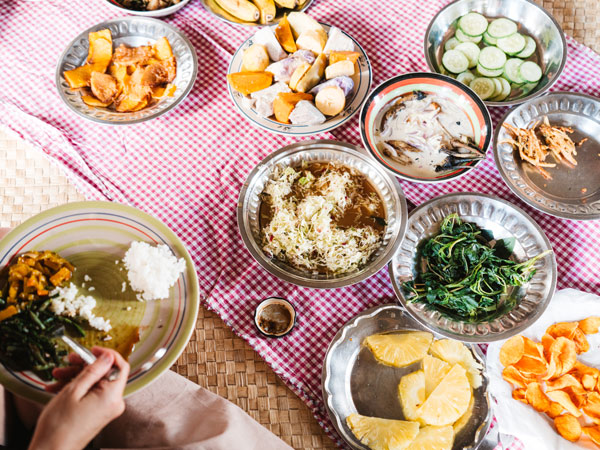
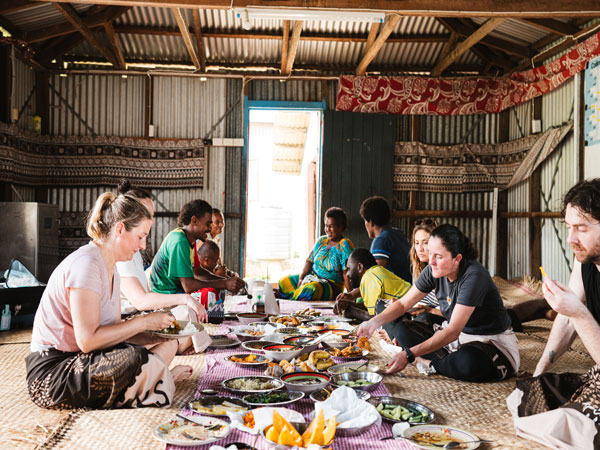
At the local community centre, we sit on mats handwoven from pandanus leaves, tucking into generous portions of dahl and pumpkin curry. The next day, after sleeping on that same floor, we embark on a seven-hour hike to the neighbouring village of Nabutautau.
Hiking rainforests and crossing rivers

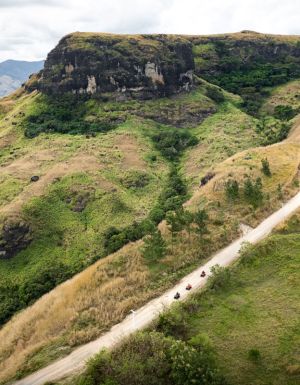
When Ben isn’t leading tours for Intrepid, he and conservationist Jake Taoi run Talanoa Treks, Fiji’s only dedicated hiking company, which has plotted today’s path. The 11-kilometre route follows a narrow goat track used by local farmers and the Sigatoka River. We traverse grasslands, rainforest and sections slick with mud, and make three river crossings, rock-hopping and rappelling boulders as we go.
Mercifully, the scenery is as spectacular as the track is challenging. Just after midday, as we begin to climb a crumbling, near-vertical dirt path, the humidity saps the last of my energy. “The hardest part is going uphill," says hiking guide Siteri Viledawa as she offers her hand. “But we help each other, it’s how we do it here."
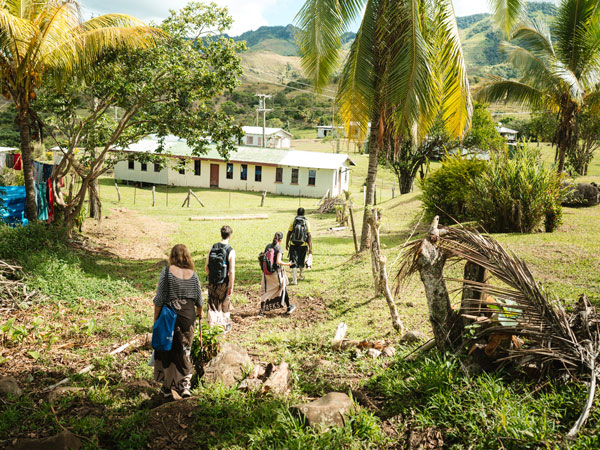
Softly spoken and patient, Siteri is as strong as she is kind and has walked this route five times this month alone. If it came to it, she’d have little trouble throwing my five-foot-eight-inch frame over her shoulders and carrying me out of there. But her compassion is all the boost I need to make the final ascent to Nabutautau.
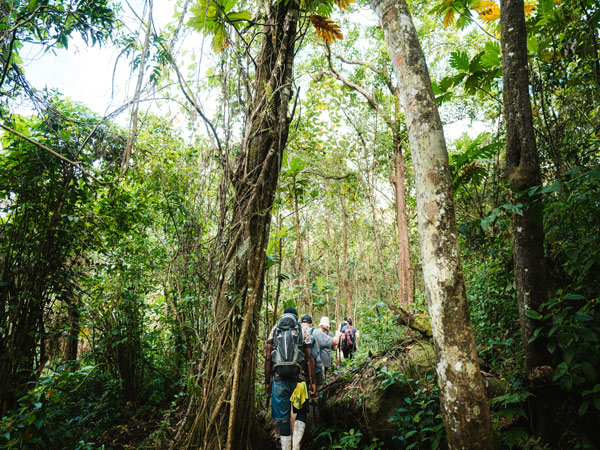
When she tells me she plans to run back to Naga that afternoon, completing the same route in two hours so she can greet her daughter as she arrives home from school, I’m in awe. It shouldn’t come as a surprise; this is her backyard.
A whitewater-rafting adventure in Upper Navua
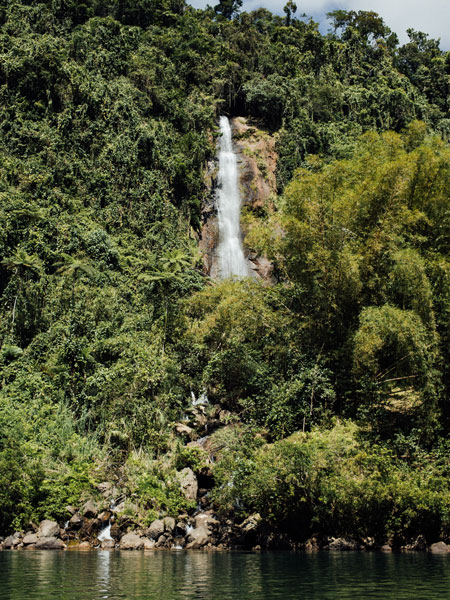
It’s a similar story in Upper Navua Gorge in the island’s south. “The river here is the river all of the guides grew up on," says Moses Batiru as we gingerly step into inflatable rafts. He’s one of the all-local guides employed by Rivers Fiji, a company offering low-impact whitewater rafting, which was founded in 1998 with the support of American rafting pioneer George Wendt.
Since then, the company has generated more than $637,000 for local communities and, in 2000, helped establish the Upper Navua Conservation Area, protecting the river and surrounding land from logging and mining.
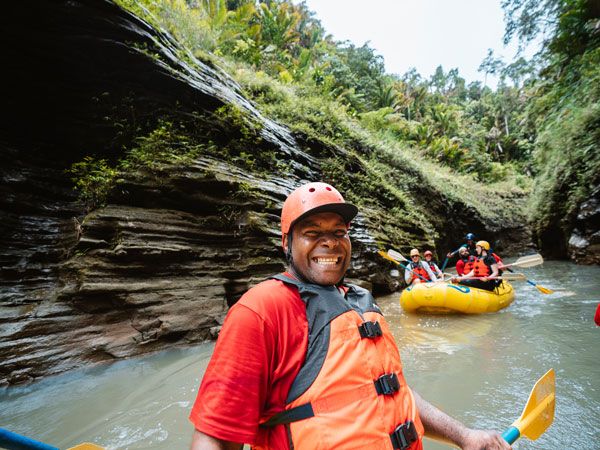
The river’s Class II and III rapids are beginner friendly and snake through a narrow canyon bordered by sheer, 60-metre-high walls of sedimentary rock, studded with coral and topped with ferns in such a vibrant shade of chartreuse they look radioactive.
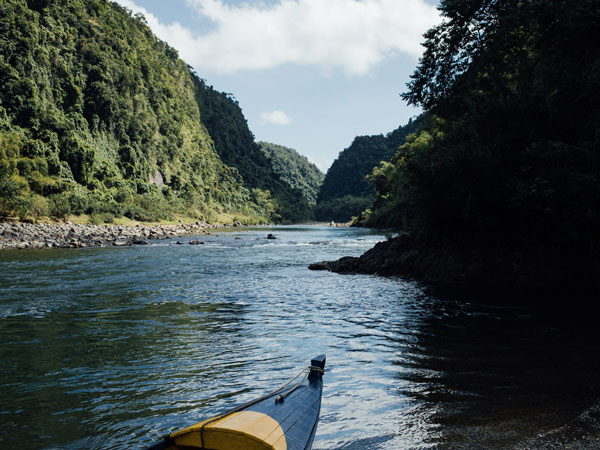
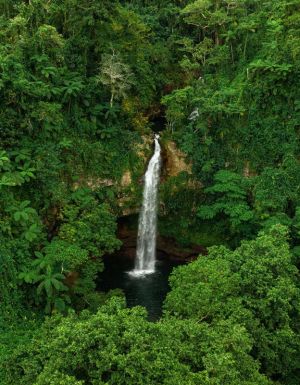
During the dry season, some 50 waterfalls cascade into the Upper Navua, which locals have nicknamed the River of Eden, and many believe leads to their ancestors. With the exception of one other boat, filled with a rowdy group of American teens on a holiday camp, we don’t see another soul.
On a quiet stretch of river, our rafting guide bursts into song: John Denver’s Take Me Home, Country Roads. Our entire group joins in. When I request something Fijian, he confers with his fellow guide, and they launch into a heartfelt rendition of Isa Lei, a local farewell song. Now the group is silent as the men’s ethereal duet echoes off the canyon walls, and suddenly the waterfalls aren’t the only ones weeping. It isn’t the first or last time we’re moved by the island’s storytellers.
A guided tour of the city of Suva
The founder of Guided Walking Tours Suva, Peter Sipeli leads us on a no-holds-barred jaunt through the capital city.
“Suva is the cultural hotspot," he says. “If you’re interested in how the country works, this is where you come." A poet and gay rights activist who grew up in the city, he began leading tours in 2022.
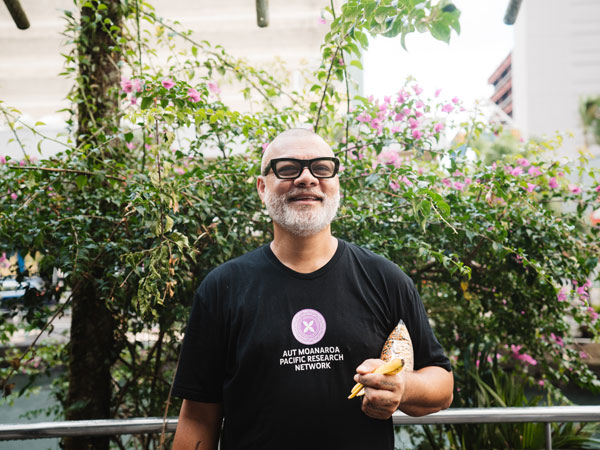
“It had to be decolonised," says Peter. “It couldn’t just be, ‘Look at these colonial buildings’, it had to be ‘Look at us’. Embed our story. Our Indigenous story. The Fijian and Indian experience." (One of the country’s two main ethnic groups, most Indo-Fijians are descendants of indentured labourers who arrived in the late 19th century to work on sugarcane farms.)
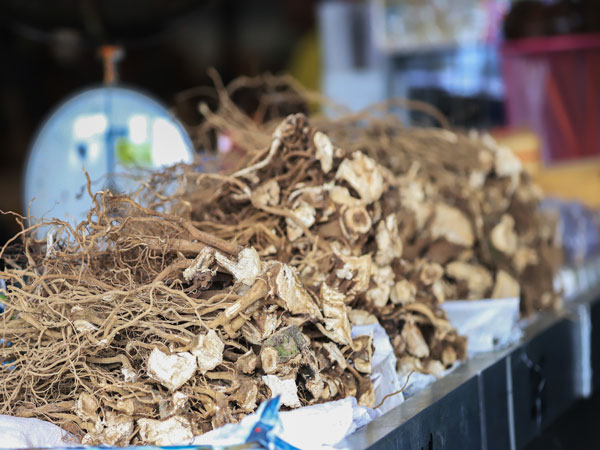
We file through Suva Municipal Market, which opened in the 1950s, and where the prevailing aroma is kerosene from stoves used to boil cassava and fish. Upstairs, the air is thick with spices, and bundles of dried yaqona root can be purchased for about $50 a kilo.
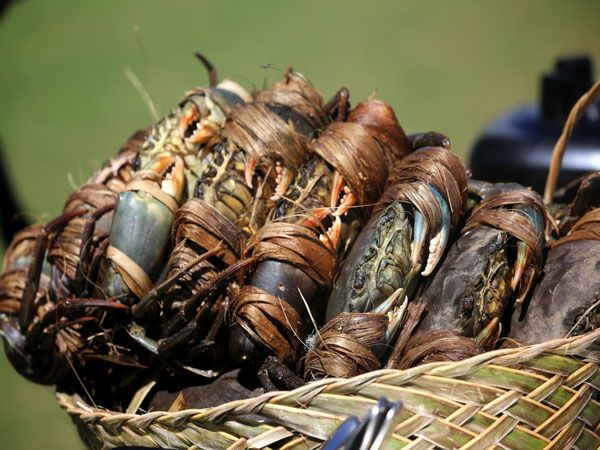
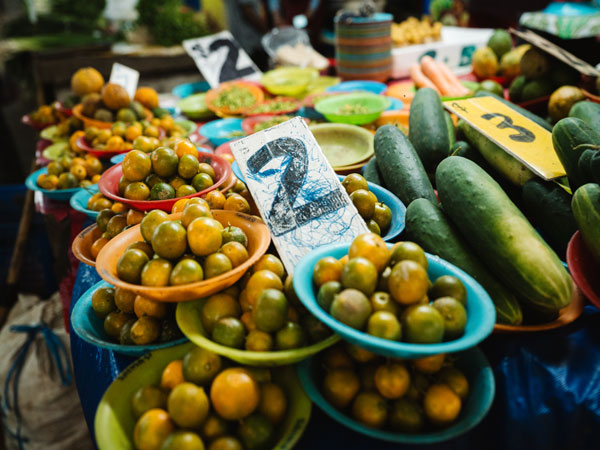
Around 3500 vendors hawk their produce on weekends. Trestle tables offer enormous mangoes, papayas and breadfruit. Peter hands me a pseudostem thick with bananas. “Everything ripens on the vine," he says, “So you better be ready to eat it right away."
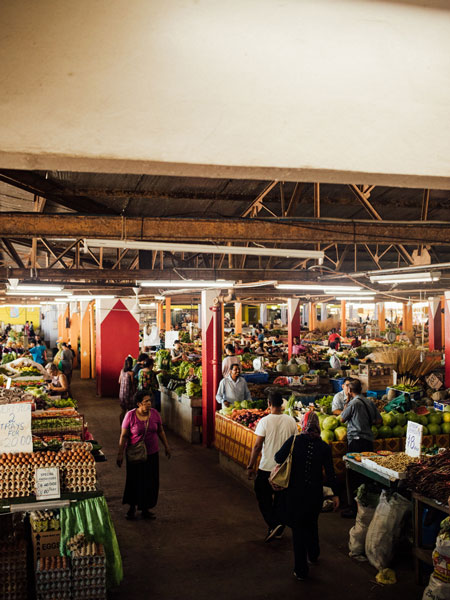
We stop at a cafe, a church, and the Reserve Bank to see the world’s only $7 banknote, released to commemorate Fiji’s first Olympic medal, when the men’s Rugby 7s team won gold at Rio 2016. The tour ends in the city’s botanic gardens, just outside the Fiji Museum.
But before we can peruse its excellent collection, Peter shares one of his poems. “The farmer’s boy was born in the season of drought, where he dreamt nightly of the western coastline, where it was rumoured that all of the stars were migrating to crash into the sea…" Peter spills his exquisite truth, baring his soul, giving freely. It is, after all, the Fijian way.
Weekly travel news, experiences
insider tips, offers, and more.
Highlights of a side trip to Samoa
Giant Clam Sanctuary
In the village of Savaia, a marine reserve protects about 80 faisua (giant clams), plus a small flotilla of sea turtles. If its vivid turquoise lagoon is impressive, wait until you see the iridescent blue-and-green mantles (fleshy ‘lips’) of the clams. For a small fee, which funds local conservation efforts, you can swim out to the large bivalve molluscs, some with shells a metre wide.
To-Sua Ocean Trench
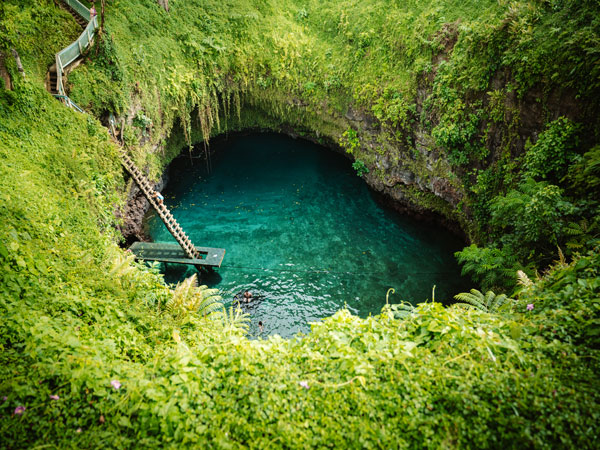
When we visit on a Sunday, Samoa’s No. 1 tourist attraction is relatively quiet as much of the island closes for church. There are perhaps 20 other people in the 30-metre-deep natural pool, which was formed by an ancient lava eruption and is connected to the ocean by an underground cave. Entry to the pool is via a sturdy, but at times slippery, bamboo ladder.
Church on Sunday
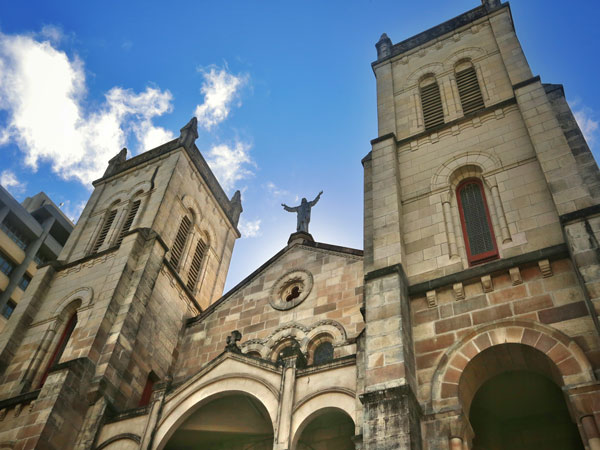
Wherever you go in Samoa, there is music. But no beachside crooner or concert can compare to the islands’ choirs as they sing hymns in church. About 90 per cent of the population is Christian, and they turn out en masse in their Sunday best – wearing white – to raise their voices to the heavens. Travellers can attend a service at one of the country’s 400-plus churches.
A Traveller’s Checklist
Getting there
Qantas flies direct from Sydney and Brisbane and operates one-stop flights from Adelaide, Canberra and Cairns to Nadi.
Playing there
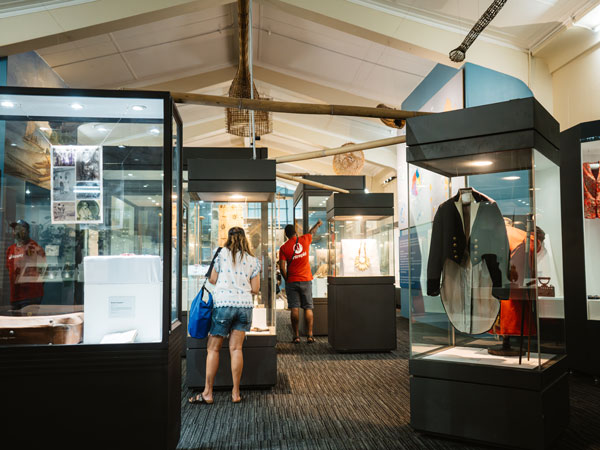
Intrepid travel’s 16-day Samoa & Fiji Adventure includes accommodation, transport, some meals and activities. Prices start from $8330. In Suva’s Thurston gardens, the compact Fiji Museum tells the country’s history, from the arrival of the island’s First People. See pottery shards, a dura (double-hulled canoe) and 18th-century portraits of Fijian princesses.
Staying there
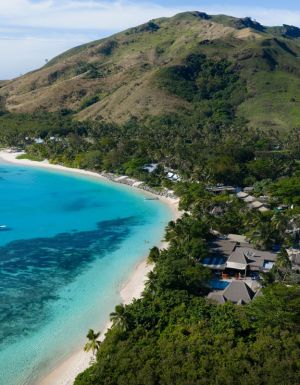
A 2.5-hour drive from Nadi, Pacific Harbour is Fiji’s adventure capital. Opened in 2007, Uprising Beach Resort is locally owned and managed, and has 24 traditional thatched bures and villas.
Want to see more stories from International Traveller in your Google search results?
- Click here to set International Traveller as a preferred source.
- Tick the box next to "International Traveller". That's it.