
The hosts of a farm stay in northern Thailand sow seeds of hope in the community with a range of down-to-earth activities.
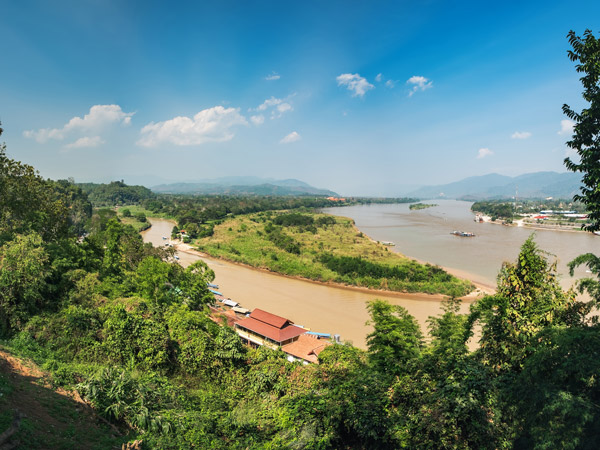
I’m looking out over the mighty Mekong at the point where Thailand meets Laos and Myanmar in the light of the late afternoon. Here, where the muddy waters merge with an even murkier past, I can’t help but think how life has changed for the people of Thailand’s northern farming communities, including the one we have just visited.
The journey to Ahsa Farm Stay
The family-operated Ahsa Farm Stay rests in the foothills of Doi Mae Salong. It’s an hour’s drive north from the city of Chiang Rai and south of where I am standing on the viewing platform at Sop Ruak, in the heart of Southeast Asia’s infamous Golden Triangle.
To get there, my two Australian travelling companions and I set out from Chiang Rai together with local guide Kantapong Thepsurin, identified as one of Thailand’s Best Tour Guides by the Tourism Authority of Thailand.
From my place in the passenger van I spy the stupa of a golden Buddhist temple poking up through low-lying cloud, which is clinging to the top of lush hillsides. And, up close, there’s the green rush of rice fields and plantations of pineapple, coffee and corn.
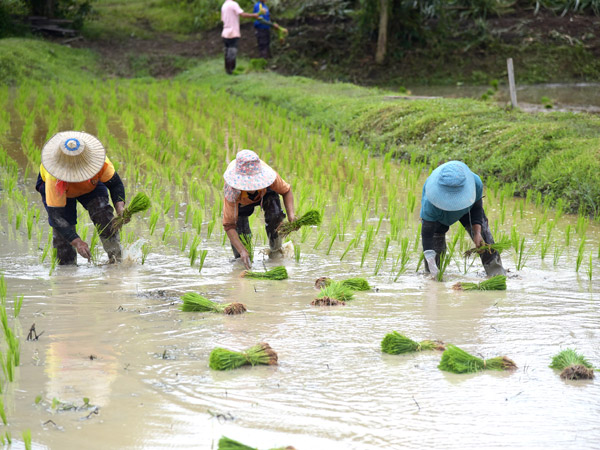
“Coffee grown in this area has become famous and each year we have visitors from all over the world, especially Italy where Arabica is popular," says Kantapong. “Farmers here used to grow poppies for opium but since the government’s ban in 1958, and thanks to the Royal Project, they now grow many different crops like fruit, coffee and Oolong tea."
The Royal Project Kantapong is referring to is the one implemented by the late King of Thailand, King Bhumibol Adulyadej. The charitable project partnered with the UN’s Fund for Drug Abuse Control in 1971 with the aim of tackling poverty and drug addiction in northern hill tribe communities and farming villages through alternative development.
It has led to the transition of more than 150 replacement crops – with poppy cultivation falling by 97 per cent between 1985 and 2015.
How tourism is blooming in rural Thailand
Turning off the main road and following an unsealed track to our destination, we are keen to see what life looks like today for farmers and their families. What we discover is that tourism in these parts is also a growing business.
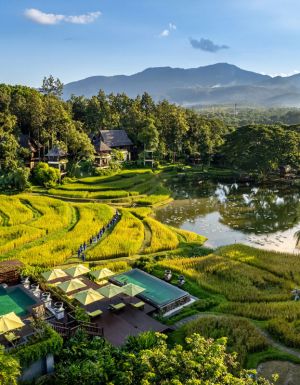
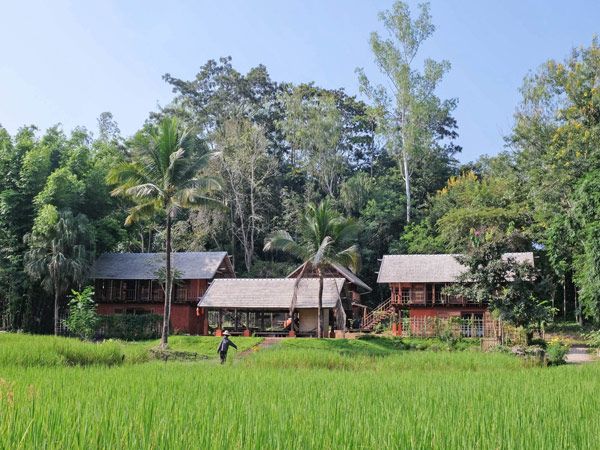
Ahsa, which means ‘life’ in the local dialect, was established in 2017 by local boutique tourism company Rung Rak Chan. The farm stay, which was conceived by founder Rossawan Kamwang, is located in the heart of Doi Mae Salong’s rural community and set amid 14 hectares of organic working farmland.
Rossawan’s vision was to introduce guests to a taste of northern hospitality and provide the opportunity to ‘live like a farmer’ through authentic hands-on experiences.
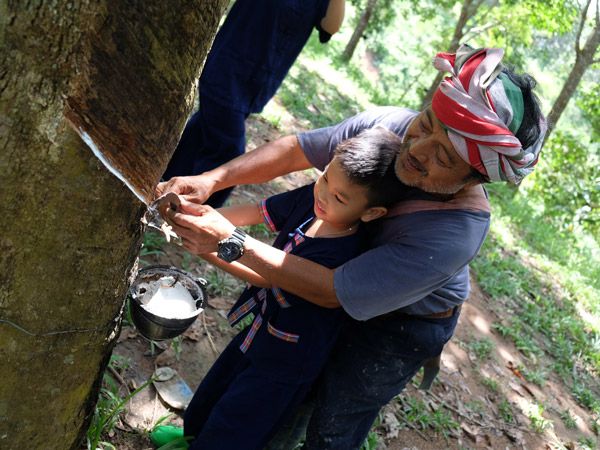
Activities such as rice harvesting, rubber-tree tapping and cooking Lanna (North Thai) cuisine offer opportunities for cultural connections under the guidance of the host family that call Ahsa home.
“One of our aims is to create employment for young people and activities that support the community," Rossawan says. “We also invite local people with expert skills to help us run activities, such as our trekking excursions to Akha hill tribe villages."
“One of our aims is to create employment for young people and activities that support the community," Rossawan says. “We also invite local people with expert skills to help us run activities, such as our trekking excursions to Akha hill tribe villages."
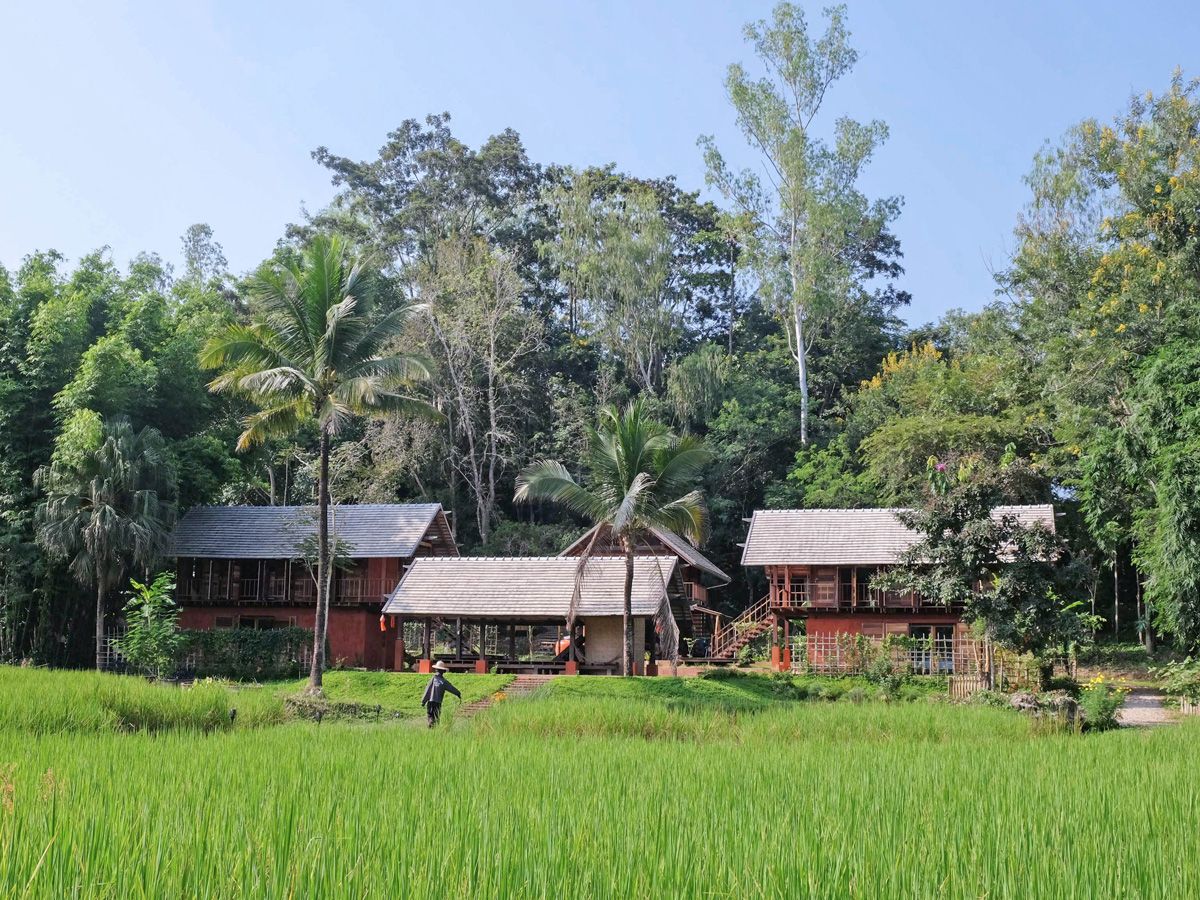
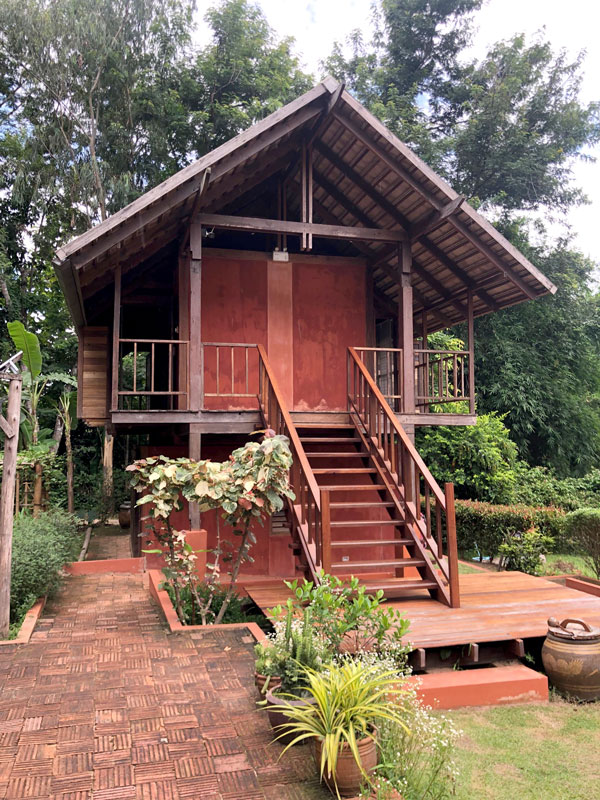
Expert skills were also used to construct Ahsa’s architecturally designed accommodation, with four traditional farmers’ cottages built using vernacular design principles and the knowledge of skilled local craftsmen.
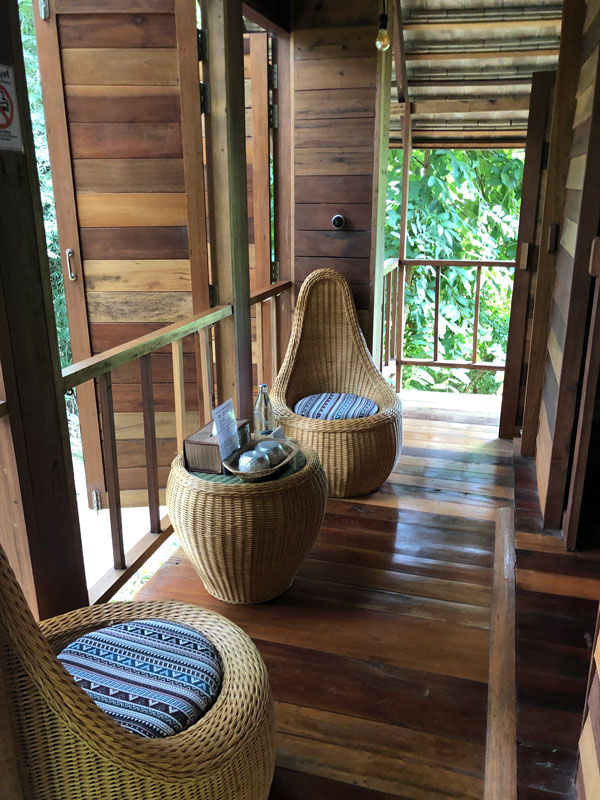
The dwellings are designed to exist in harmony with natural surrounds using sustainably sourced materials such as recycled teak from the old village school. It’s these eco-conscious principles that played a pivotal role in Ahsa Farm Stay earning BCI Asia’s Interior Design award and a finalist nomination in Completed Buildings at the World Architecture Festival.
The best experiences on offer at Ahsa
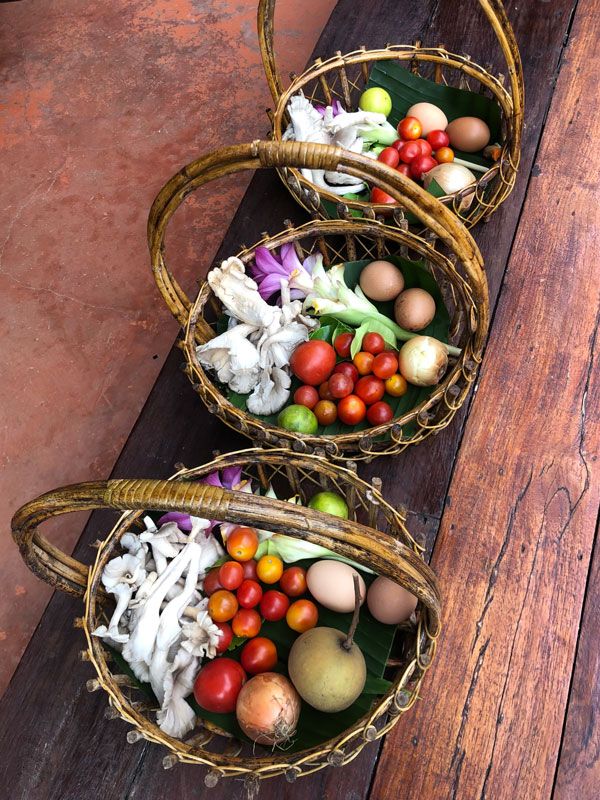
Our first task is to gather ingredients for lunch accompanied by host family members Aong Aiyod – who first came to live at Ahsa with his wife and their two young daughters – and his cousin, Aun Wannamala – who also acts as manager. We each grab a wicker basket, don a traditional straw hat and follow Aong for a foraging tour of the farm.
With waddling geese in tow, we wander past paddies of jasmine rice, pausing to pull garlic, ginger and turmeric from the ground, and marvel at the majesty of water buffalo, casually grazing in a field.
“They were used for ploughing but now we let them roam free," Aong tells us. Culturally significant and bearing the brunt of hard labour for centuries, these gentle creatures were once a prized possession for farmers. These days, they have been mostly replaced by tractors – except for ones like these that have been rescued by the farm.
We join Aong gathering fruit from the orchard, collecting freshly laid eggs from the henhouse and picking chilli, coriander and lemongrass from the herb garden. Before preparing our farm-to-table feast, we have the opportunity to press pause at Ahsa’s spa.
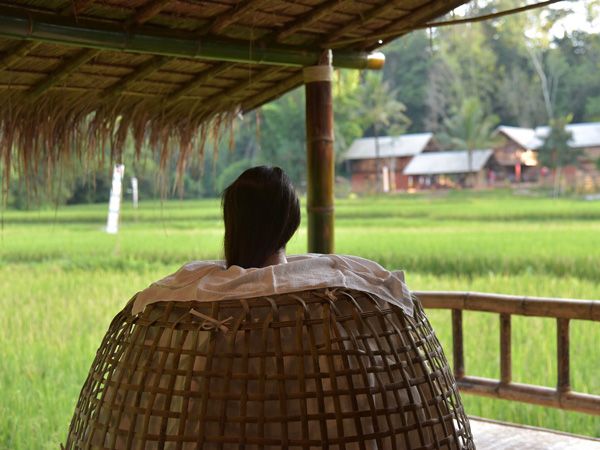
Ahsa’s spa is an open-air structure where Thai massages take place overlooking the rice paddies. It is also where you can experience traditional beauty treatments unique to the area, including a sauna session in a rattan chicken coop and a facial using thanaka – a paste made from ground bark.
“This style of sauna was traditionally used by women after giving birth because we use boiled herbs to create a cleansing steam," Aun tells me as I sit within the scented dome that doubles as a chicken enclosure, my head poking comically from the top.
“And this paste for the face is one my mother used to make. It came from Burma originally where it’s used to protect against the sun."
Why it’s important to keep the culture alive
Raised in the nearby village, Aun shares more of her past with me as we walk over to the cooking shala after my treatment. “I moved to Chiang Rai when I was young where I learned to speak Italian and work as a tour guide," Aun says. “But I had to return to look after my ageing parents who could no longer work on the farm."
A shortage of agricultural workers and loss of cultural knowledge are now the main concerns among the farming communities in northern Thailand; the current trend is for the area’s younger generations to move to urban areas in search of alternative work and lifestyles.
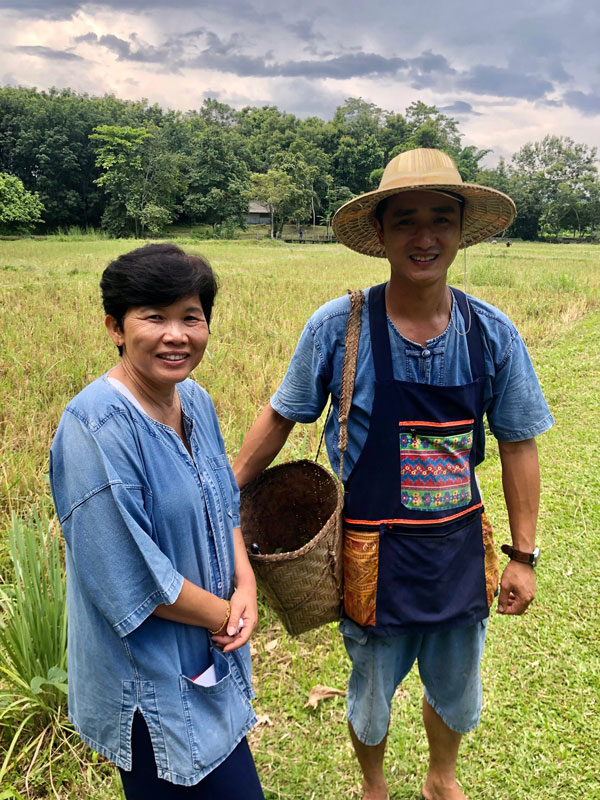
Aun, who now has a 15-year-old-daughter of her own studying in the city, says community-based tourism operations such as Ahsa Farm Stay are important because they provide more diverse job opportunities for young people and help keep culture alive. “It’s something I talk to my daughter about, because if young people continue to move away from the area, we will lose our lifestyle and traditional ways," says Aun.
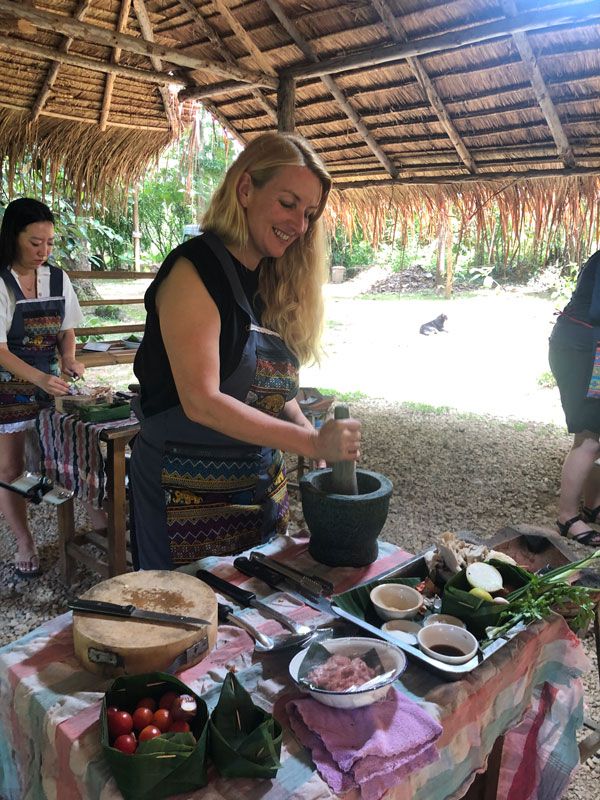
Finally, at our outdoor cooking stations, we are eager to make nam prik ong (minced pork), thom kha kai (sweet and sour chicken with coconut) and kanam klauy (steamed banana cake).
Aun says she learned to cook these three traditional Lanna dishes from her grandmother. Before we start cooking, Aun shares one last piece of advice. “Here, we don’t have strict rules, no exact weights or measures. Here, just like everything we do, we do it from the heart." Sounds like a recipe for success.
Weekly travel news, experiences
insider tips, offers, and more.
A traveller’s checklist
Getting there
With daily connections from Bangkok, the city of Chiang Rai is accessed by operators such as Bangkok Airways, Thai Smile, Air Asia, Lion Air and Nok Air. Ahsa Farm Stay is located 35 kilometres north of Chiang Rai International Airport and can be reached by taxi or car hire. Alternatively, Ahsa Farm Stay provides a return transfer service from the airport for $127, which can be booked in advance.
Staying there
Family rooms at Ahsa Farm Stay start at $238, while double rooms start at $263 and include all daily meals.

Playing there
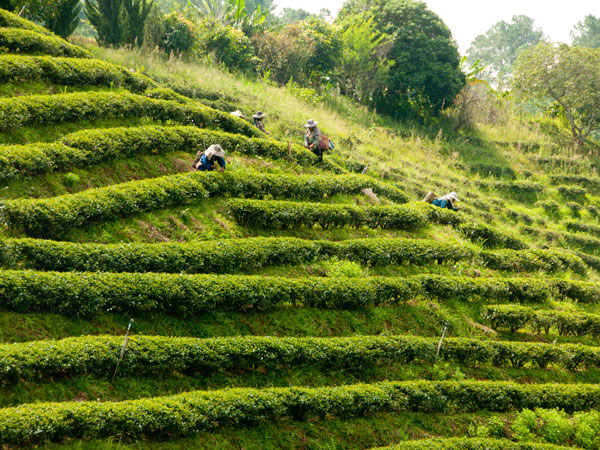
While the city of Chiang Rai is known for its night markets and contemporary works of art, including Chalermchai Kositpipat’s famous White Temple, Doi Mae Salong is home to scenic mountain trekking, traditional hill tribe communities and some of the best tea and coffee plantations in Thailand.
Check out Choui Fong Tea Plantation, which has a tea cafe and shop. Visits to the area’s best attractions, within an hour’s drive of Ahsa Farm Stay, can be accessed independently or arranged via your hosts.
Want to see more stories from International Traveller in your Google search results?
- Click here to set International Traveller as a preferred source.
- Tick the box next to "International Traveller". That's it.