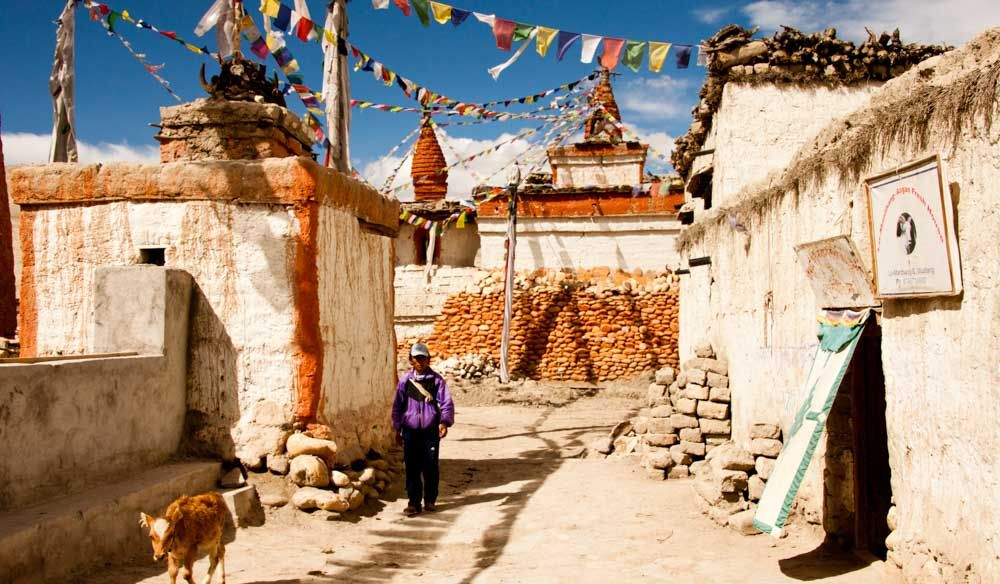
The once forbidden kingdom of Mustang in Nepal, with some of the last vestiges of traditional Tibetan Buddhist culture on Earth, is slowly revealing its dramatic beauty to intrepid explorers, writes Saransh Sehgal.
Location
So secluded is the ancient Himalayan kingdom of Mustang (or the Kingdom of Lo as it is also known) that those taking it on will need to calculate the journey in days rather than distance, and commit to a medieval-style caravan in order to get there.
Lying beyond the 8000-metre peaks of the Annapurna and Dhaulagiri in the Himalayas, just inside Nepal’s border with Tibet, the region stretches far into the vast Tibetan plateau and its mystical wilderness, presenting an untrammelled paradise for travellers looking for that elusive ‘last great frontier’.
Although the landlocked sovereign state of Nepal has long offered a treasure-trove of epic trekking expeditions, the vastness of the Himalayan range has also aided in preserving hidden societies that maintain a level of ethnic diversity, adding more layers to the journey.
The region and culture
In Upper Mustang the Tibetan culture, religion and traditions are believed to be at their purest, harking back to a Tibet before the Chinese occupation in 1951.
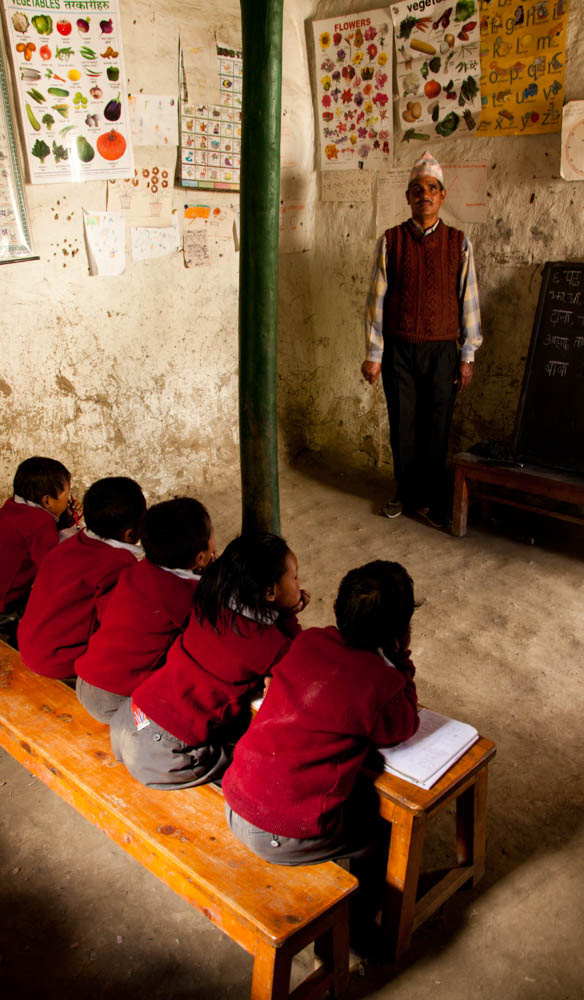
The Mustang region is made up of Upper Mustang and Lower Mustang, which occupies the far southern fringes of the Tibetan plateau and is more attached to Nepali tribes.
Upper Mustang is populated by the Loba tribe, the ethnic Tibetans who still believe that the world is flat.
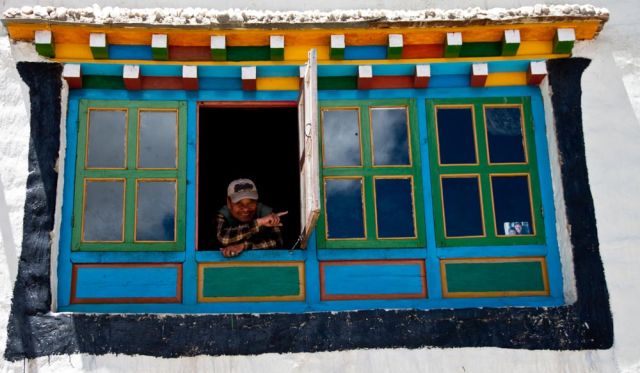
The Loba are considered highly religious and prayers and festivals are an integral part of their daily lives.
History
By the time the first Western explorers became interested in Upper Mustang, they could only gain a peek into the kingdom due to restrictions in the region (imposed by both the Chinese and the Mustang people themselves, the latter in an effort to protect their ancient way of life).
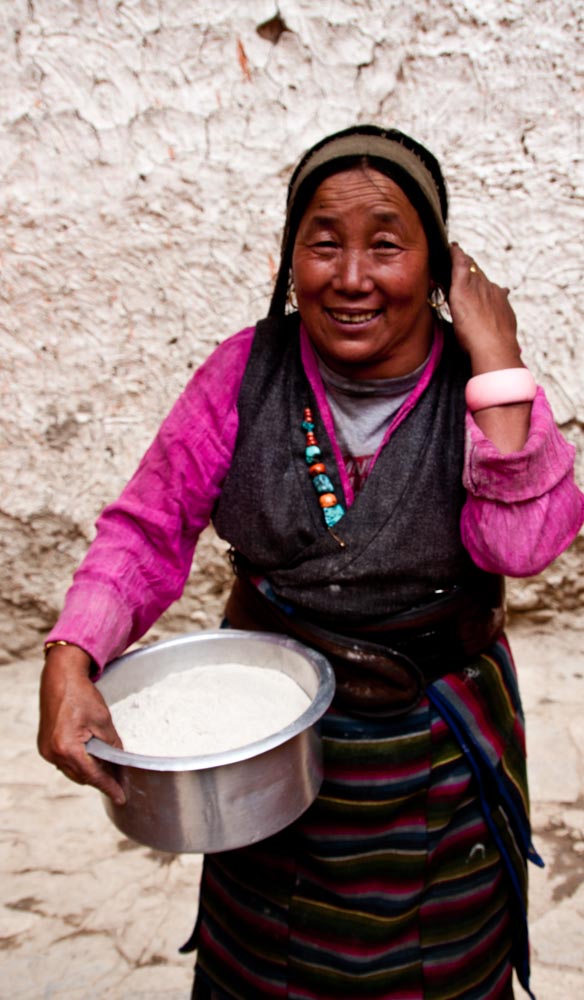
The first official tourist groups didn’t gain access to Upper Mustang until 1992, and there are continued restrictions today: the Nepalese government in Kathmandu offers a special 10-day permit and it is mandatory for explorers to travel in groups (two people or more) with a guide.
This allows for a tantalising glimpse of Upper Mustang’s barren moonscape of eroded sandstone pillars and discontinuous moraine terraces, which together present a vibrant mosaic of earthen reds, yellows and brown, as well as its fascinating people.
Getting there
The journey into the lost kingdom begins with a 20-minute flight from Nepal’s second largest city Pokhara to Jomsom, where the restricted area of Upper Mustang starts.
The flight is an adventure in itself, flying through what’s considered to be the deepest gorge in the world between the Annapurna and Dhaulagiri mountain ranges.
Getting started
Once on the ground, my German friend and I are joined by our local guide and a porter, who navigate us straight from the airport past the dramatic cliffs of the high mountains.
We follow the famous Kali Gandaki River upstream, sometimes walking in the riverbed itself, to Kagbeni and the entrance to Upper Mustang.
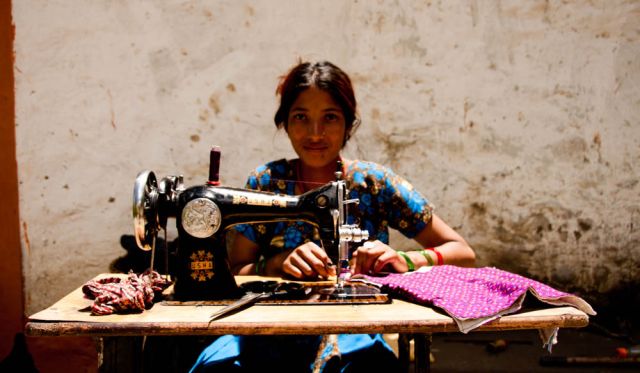
The terrain is striking, a semi-arid desert with deep ravines and rock shelves, flanked by snowy peaks.
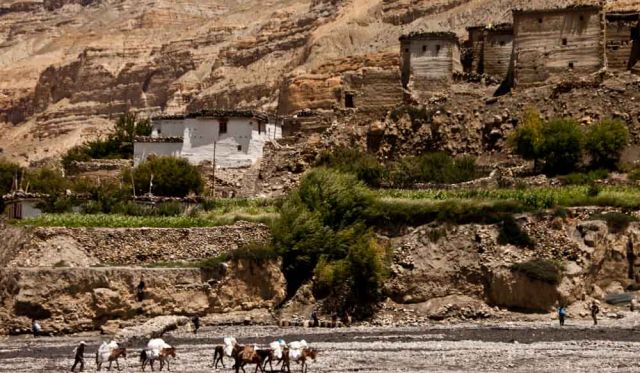
We hike along the mountains, through valleys and riverbed paths, passing villages of few inhabitants that offer a unique blend of culture, history and nature.
Each day we venture deeper into this mysterious land, marching across the high-altitude desert with its idyllic setting, ancient dwellings and rare wildlife.
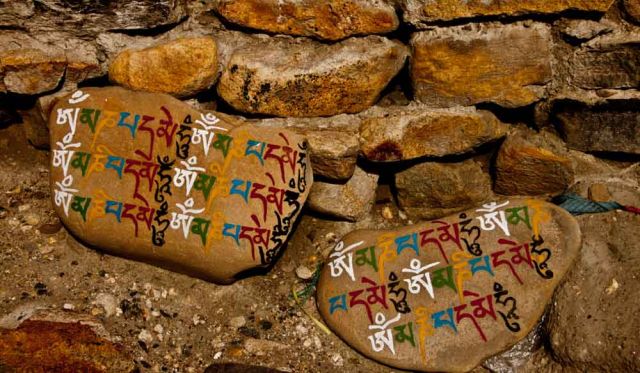
I find tangled webs of Buddhist prayer flags, bleached by the sun and worn by the mountain winds, and stone-carved sacred text at every mountain pass, and encounter the smiling Loba people as they chant their prayers.
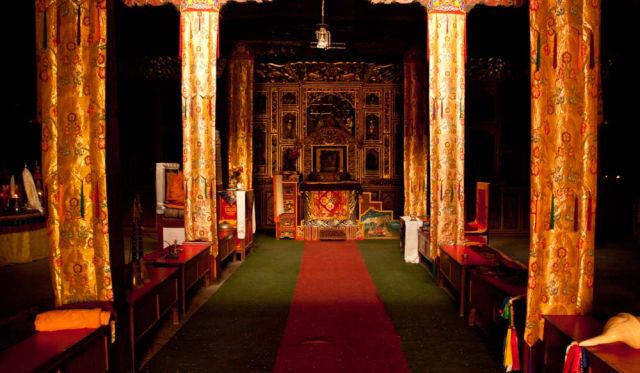
The richness of the kingdom dates back to the 15th century when the region was an important transit point on the salt trade route, between the dry saline lakes of Tibet and the large markets in the Indian subcontinent.
Mustang was once an independent kingdom in its own right, under the rule of Ame Pal, who founded the Kingdom of Lo in 1380.
Its kingdom status ended, however, in 2008 following the end of its suzerain with the Kingdom of Nepal.
(The Kingdom of Lo became a dependency of Nepal in the 18th century but was allowed to keep its hereditary rulers as long as Nepal also remained a kingdom; Nepal transitioned from a kingdom to a republic in 2008.)
It was from the walled city of Lo Manthang that the royal family, which could trace its history back 25 generations directly to Ame Pal, sat surveying a world that – even to this day – has much more ethnic proximity to Tibet’s capital Lhasa than to the bazaars and shrines of Nepal’s Kathmandu.
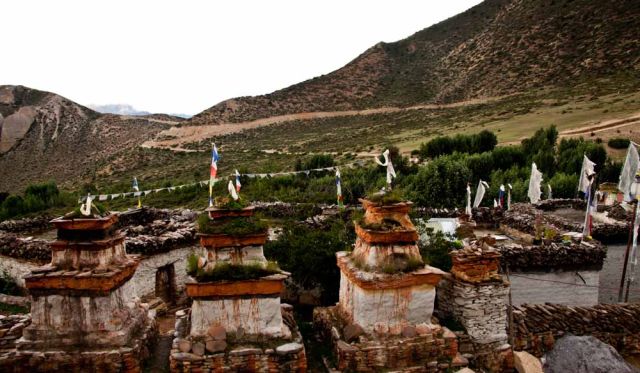
In fact, Mustang makes few concessions to modern civilisation, with life proceeding at the same unhurried pace that it has for centuries.
The day-to-day here revolves around local trade, controlled tourism and animal husbandry. A partial road connecting Lo Manthang with Tibet has been constructed, but yaks or ponies are still the only way to transport goods between villages.
The ancient traditions and practices of Tibetan Buddhism also play an essential part in the daily existence of Upper Mustang’s people.
Findings and learnings along the way
Every village I encounter has its own monasteries cloaked in the smoke and aroma of butter lamps.
Some of the most mesmerising sights in the region are the hundreds of isolated cliff dwellings that are believed to date back to between 8 and 10,000 BC.
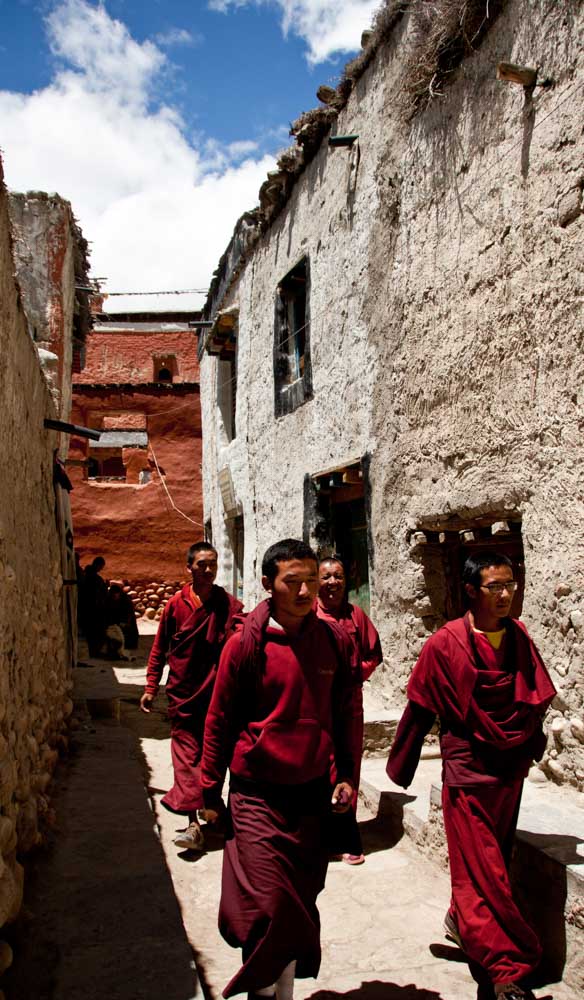
Recently, a team of mountaineers and archaeologists discovered more of these cliff-side caves, many of which were used by Buddhists as meditation chambers (others seem to have been used as storage units).
Some of them remain in use to this day; there are even a few families living in them permanently.
Crossing Lo-La, the final pass into Lo Manthang, I catch a glimpse of the remarkable 14th-century citadel, with its seven-metre-high boundary walls and square towers (dzongs).
The whitewashed palace at the heart of the walled city remained the hereditary royal residence of the last Mustang king, Jigme Dorje Palbar Bista, until he passed away on 16 December, 2016, at the age of 86.
Lo Manthang
Inside the citadel a settlement of no more than 200 households makes up the population of Lo Manthang.
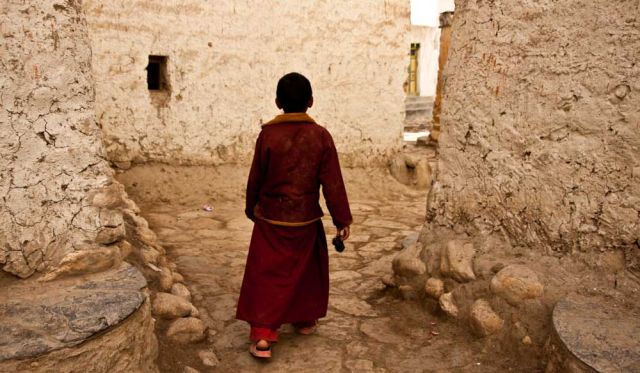
The compact city offers up a unique walking experience, during which we explore mani walls, chortens, and monasteries that have housed veiled Buddhist texts and artwork for centuries.
Down narrow lanes I see local women sitting outside their houses spinning yak wool in preparation for the next winter.
The compelling mix of nature and culture that makes Lo Manthang such a wholly unique experience for outsiders is what has kept modern transformation from touching the lives of its people: there is no mains power or use of any technology, and the only traffic jams occur when local shepherds herd sheep through the streets.
What I know now
A highlight of a visit to Lo Manthang is the Tiji Festival, a three-day ritual known as the ‘chasing of the demons’, held here during the summer.
Centred on the Tiji myth, which tells the story of a deity named Dorje Jono who battles against his demon father to save the Kingdom of Mustang from destruction, Loba villagers converge on the capital to participate in masked dances, offering prayers and celebrating a new season.
It is also possible to request a brief audience with the titular royal family, with guests welcomed with the Khata, the traditional Tibetan ceremonial scarves, and wishes and prayers for a safe return.
For an outsider, this unforgiving land is a sea of myths and mountains that shed light on a once great civilisation.
While the hidden Himalayan outpost is slowly feeling the influence of the outside world, from China to the north and Nepal in the south, the Loba people remain wary of any change that may cause its centuries-old culture to vanish.
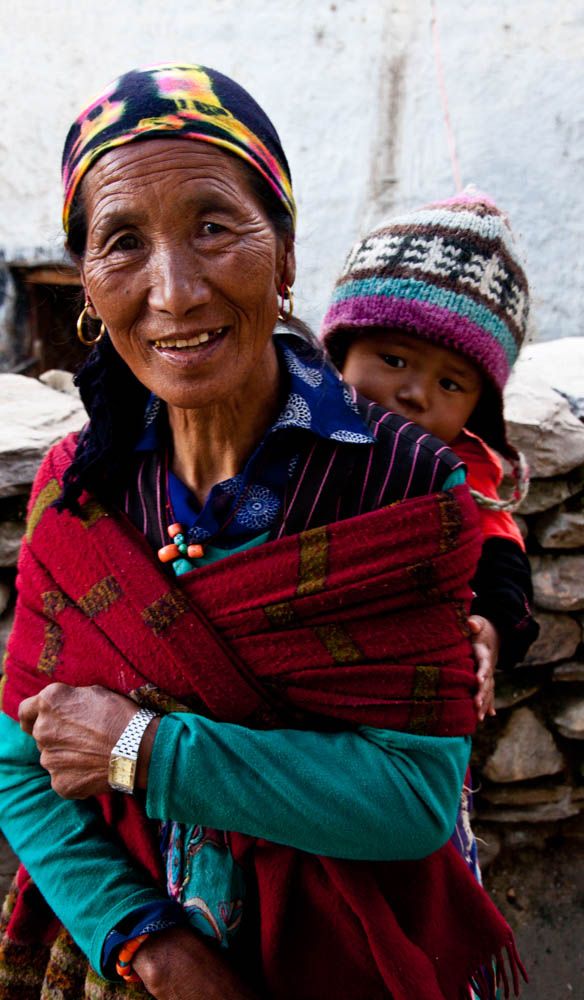
“We are trying to preserve our ethnicity and ancient culture," a member of the royal family told me during my audience. “Even though we are slowly opening to the world." IT
Weekly travel news, experiences
insider tips, offers, and more.
The Details:
Getting There
Most trekkers fly from Pokhara to Jomsom, and enter Upper Mustang at the village of Kagbeni, a three-hour walk from the airport. The view from the plane, which passes between some of the world’s highest mountains, is mind-blowing.
Walking There
The trekking season takes place from April to July. The maximum altitude reached while trekking in Upper Mustang is 4230 metres, while the level of difficulty is moderate.
Foreigners will need to arrange a special permit through trekking agencies; most Kathmandu- and Pokhara-based trekking agencies offer English- and Tibetan-speaking guides and local Sherpas.
Staying There
Every major village on the trekking trails in Upper Mustang offers homestays; experienced guides know the best ones.
Can’t get enough of Nepal? Check out 20 things you didn’t know about Nepal
Want to see more stories from International Traveller in your Google search results?
- Click here to set International Traveller as a preferred source.
- Tick the box next to "International Traveller". That's it.