The world once saw the Northwest Passage as something to be conquered, but cruising through this ‘Arctic labyrinth’ with local knowledge opens up an entirely different storybook.
A millennia-old iceberg time-lapses across the fjord, as if towed by a ghost ship under full spinnaker. It dips behind Nuuk’s colour-coded cottages and stern public housing blocks, animating seascape and landscape alike. To my impatient eyes, the scene had been an impressionistic still life; too immense to fathom, rendered two-dimensional by a summer sky casting wintry light.
Arctic visitors, especially European explorers of days gone by, also often failed to truly focus on what was before them, preoccupied with grand quests and the landscape’s potential economic utility instead of its nuances and people.
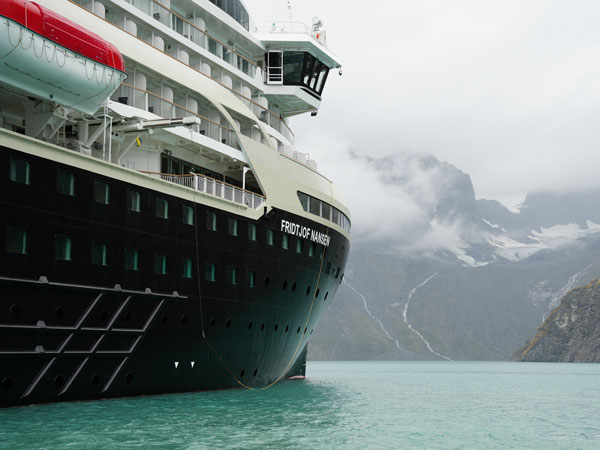
Before I board HX Expeditions’ MS Fridtjof Nansen in the capital city of this autonomous Danish territory, bound for Alaska via the ‘Arctic labyrinth’, I visit the Greenland National Museum. Its exhibits underline the fact that many of the straits, bays and islands on our journey are still named in the “language of explorers and conquerors who sometimes map[ped] territories before they were explored, erased Indigenous place names and ways of knowing, imposing borders".
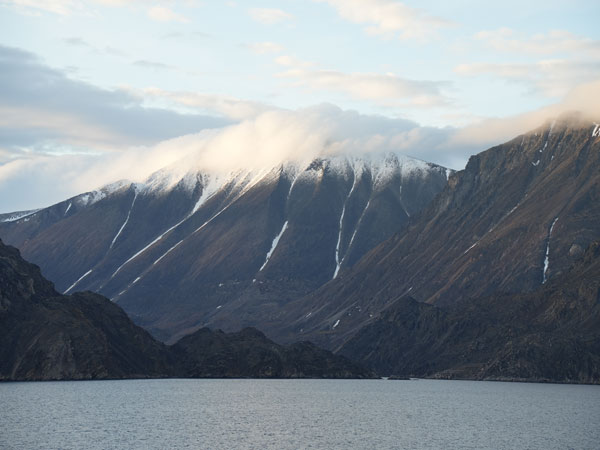
The 26-day cruise with HX, formerly Hurtigruten’s expedition arm, follows these explorers’ paths as they raced to find a navigable route between the Atlantic and Pacific oceans – the ‘Northwest Passage’ eventually crossed by Norwegian Roald Amundsen over three years (1903–06).
Among our ship’s 300-plus passengers is a consortium of scientists and cultural ambassadors from small Inuit communities of Greenland and Canada, onboard to make sense of the immense, discuss the minutia and challenge notions that the Arctic is a lacuna, a void to be discovered and exploited.
The most luxurious suite at sea
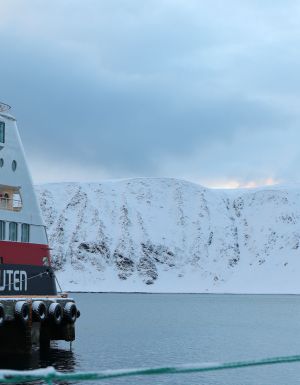
Come twilight, we set sail from Nuuk, a nuanced settlement with an EU exterior and Inuit soul. The polar-class MS Fridtjof Nansen is stable in the stout swell, navigating northwards up Greenland’s west coast. Soupy sea fog, billowy rain squalls and snow flurries sift and refract treasured daylight, the bluebird of sunshine landing sporadically. The contrast between the ship’s handsome interior and the wild goings-on outside is dreamlike.
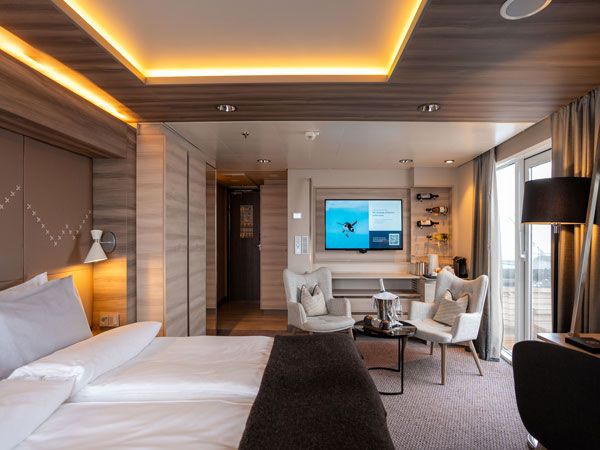
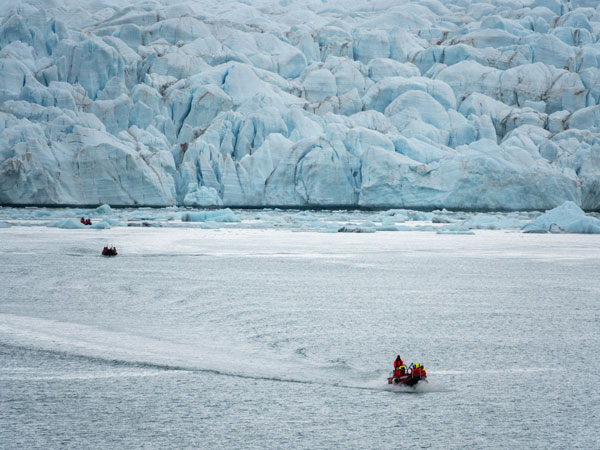
I zodiac along the preternatural Evighedsfjorden (Fjord of Eternity) to face a shocking-blue glacier, calving into luminous aqua water. Minutes later, I sprawl over one of my light-hued suite’s chaise lounges; post-bath pink, swaddled in robe, a smokeless fireplace glowing, gazing out my bow-facing windows (just under the captain’s bridge), ‘wine wall’ lighter by one bottle (Francois Dubois Champagne).
At more than $50,000 per person, my Corner Suite, one of the ship’s Expedition Suites, comes loaded with expectations. It’s an Alaska of space with a terrestrial-room aura, exceptionally well-appointed without grandstanding. It’s easily approachable, long-afternoon comfortable and practical in that oh-so-Scandi way.
Exploring Sisimiut
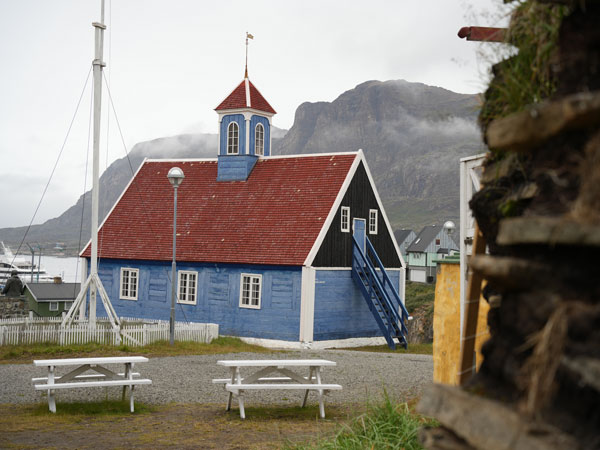
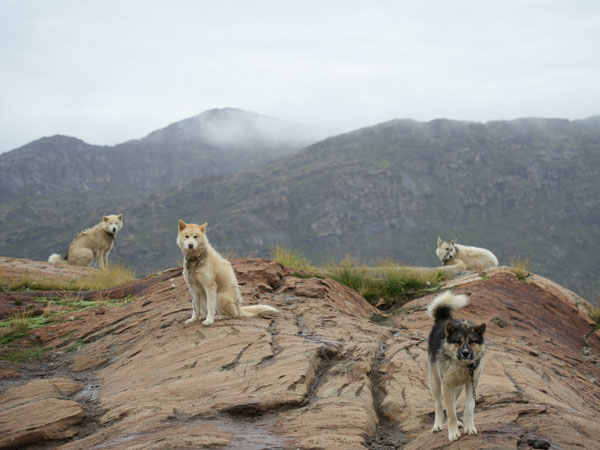
With one day to explore Greenland’s second-largest city, Sisimiut, I hike part of the only road connecting two major settlements in the territory (Kangerlussuaq, 160 kilometres away), past chained-up Greenland sled dogs and their free-ranging puppies, known to enjoy a good gnaw on a hiking pole.The mottled, misty, mountainous backcountry is treeless splendiferous-ness.
I speedboat to Nipisat Island, a UNESCO-listed archaeological cache of various cultures dating back 4500 years. Guide Aviaq leads me up a spongy, mossy hill to an open-air lichened-rock grave. Three human skulls in situ, from the proto-Inuit whale-hunting Thule people, were intentionally interred ‘looking’ seawards.
Visiting the glacier behind the Titanic’s sinking
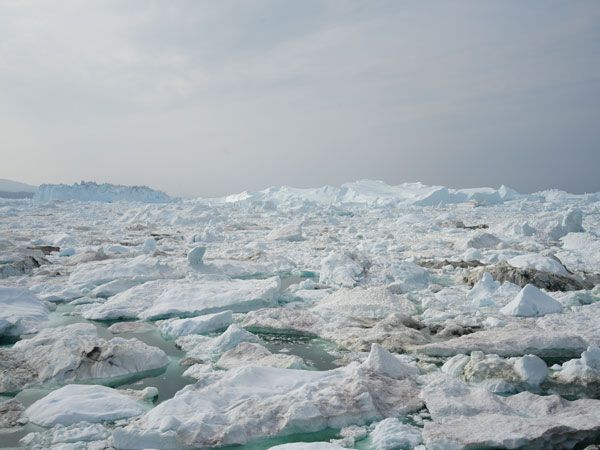
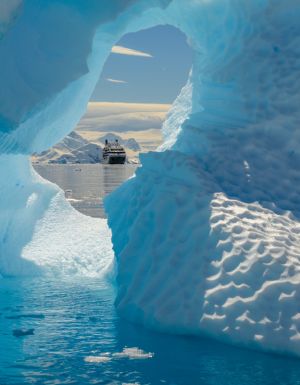
In a coppery sunrise, the ship does a slow-mo slalom around Disko Bay’s sea ice. Soft whirrs from its hybrid powerplants and thuds from SUV-sized icebergs glancing the hull create unworldly music. Small fishing boats with huge outboard engines crowd Ilulissat’s harbour, reeling in this 5000-person town’s dominant income: line-caught halibut.
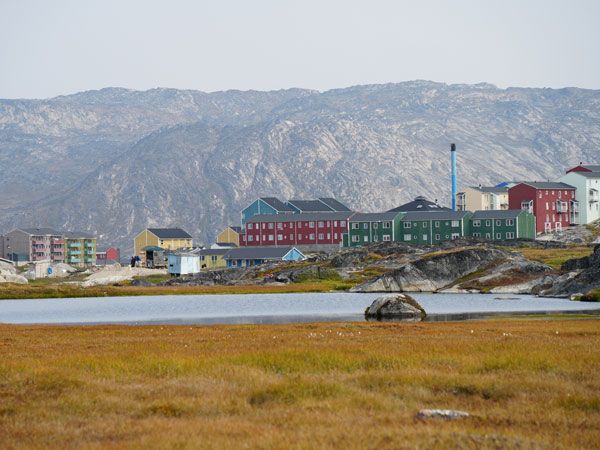
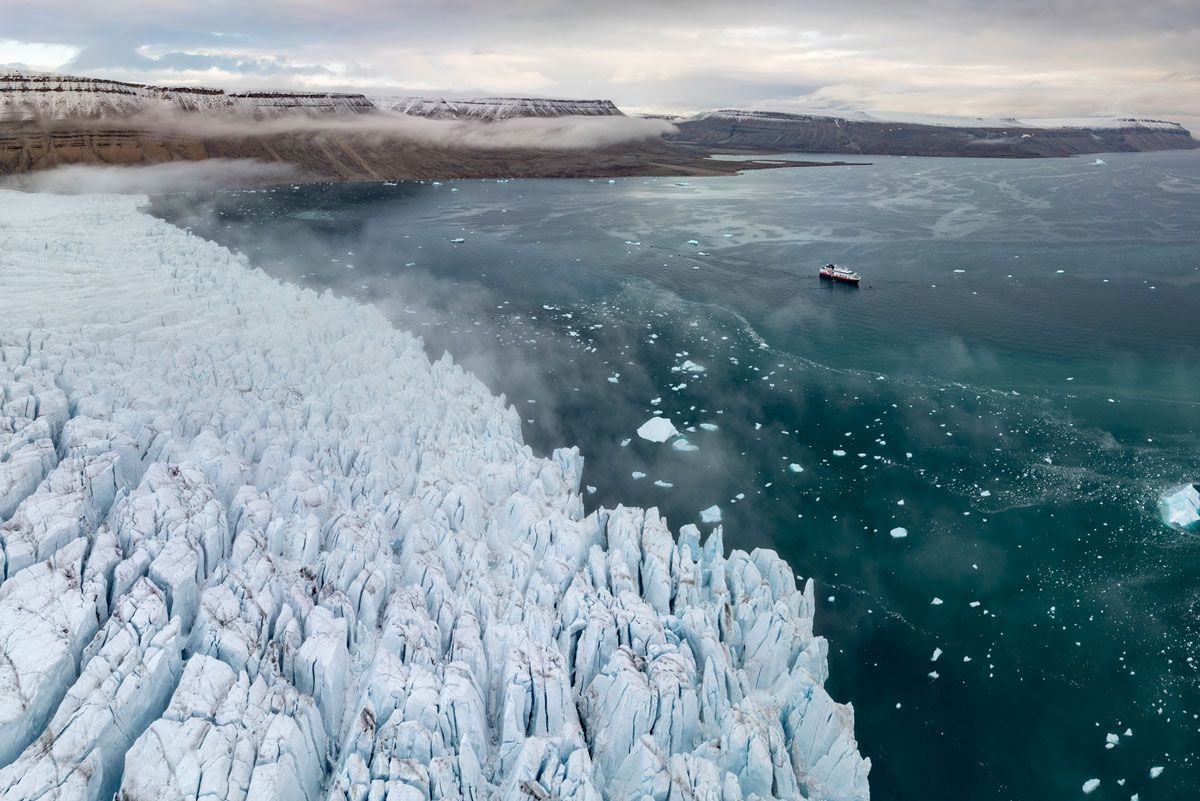
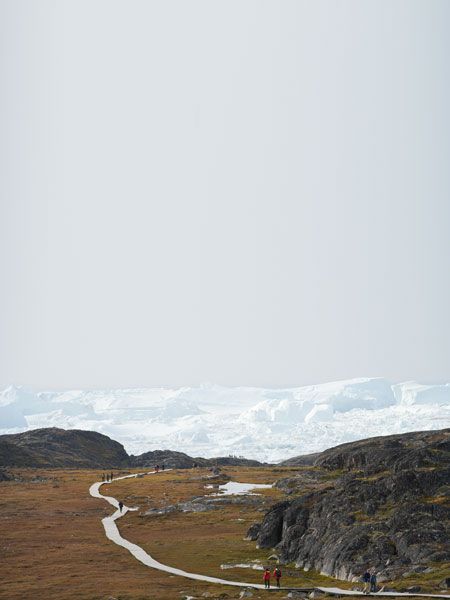
For visitors, Ilulissat is an ice empire. A boardwalk from the groovy Kangiata Illorsua (Icefjord Centre) leads to a 180-degree life-changing vista of singing, shifting ice. Later, lifting off from the soon-to-be-international airport, my joy flight skirts the 70-kilometre Sermeq Kujalleq (Jakobshavn) Glacier. The now-retreating Viennetta-esque colossus reportedly shed the Titanic-sinking iceberg.
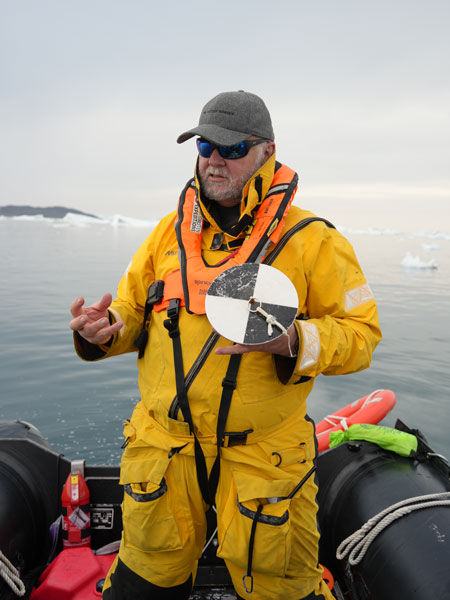
Environmental scientist Dominic Barrington zooms out among Disko Bay’s icebergs on the HX ‘science boat’ zodiac. We perform tests like the ‘plankton tow’, where the samples we collect are sent to a US-based research institute for further studies on the effect of climate change on iceberg ecosystems. My citizen science efforts are briefly interrupted by a passing pod of humpback whales.
From spa days to science lessons
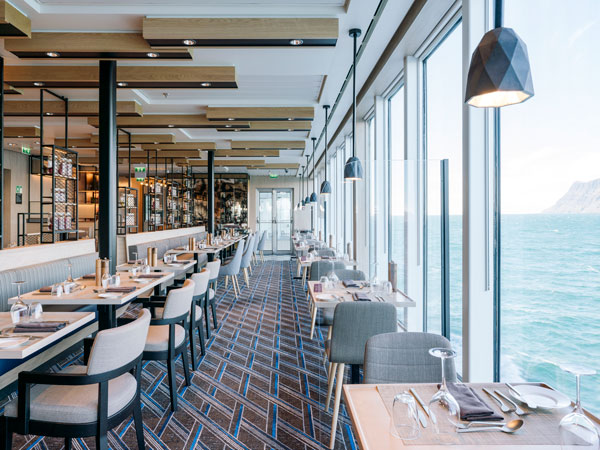
MS Fridtjof Nansen rolls north-west across vast Baffin Bay; two ‘sea days’ of sloth, pampering and nerdery. I remain cocooned in my bed nook well past sun-up (4:30am) and tuck into self-imposed ‘three-course’ buffet breakfasts at excellent Aune restaurant. I nod off in the Wellness Centre just as the face mask is being applied (during a 75-minute HX Signature treatment).
I hit the gym’s exercise bikes and implement a stairs-only policy to thwart my consumption of cookies and strawberry milkshakes crowned with whipped cream from Fredheim restaurant. By the early afternoon, FOMO and curiosity drag me down to the Science Centre, where eminent humans bring the Arctic to life in the lecture theatre.
Peter Ittinuar Freuchen, Canada’s first Inuit MP, unwinds the complex Indigenous culture with a storyteller’s flair and academic transparency. Peter, who’s not offended by being called an ‘Eskimo’ – believed to come from a Cree word meaning ‘raw-meat eaters’ – covers subjects ranging from supernatural beliefs to the ‘residential schooling’ of Inuits, Canada’s Stolen Generation.
Aleq Peary of Qaanaaq, north Greenland, explains why his community hunts narwhals, seals and polar bears, aware of the subject’s divisiveness. “When someone shoots a gun in your country, it’s scary," he says. “For us, it means we’re going to eat."
“Narwhals are our best vitamin source. Polar bears and seals are our clothes, protection against minus-40-degree cold. We’ve survived because of these animals, which we respect." Aleq says he is proud of his 15-year-old son who now hunts narwhals from a kayak and can “feed himself like the elders did".
Even in inclement weather, the decks beckon. I lap the walking track up top. I swig cocktails in the rear hot tubs. I bury my eyes in binoculars alongside Colombian ocean conservationist Daniela Tamayo, surveying the Northwest Passage’s “highly understudied" whales, seals and dolphins. Daniela notes behaviour and logs locations for ORCA (Ocean Research & Conservation Association). Today’s highlights? Three seal species and an Atlantic puffin.
A pit stop in Pond Inlet
To celebrate crossing the Arctic Circle, I’m ceremonially dowsed in ice water by (crew dressed as) a Norse god and Inuit deity, then revived with a shot of Akvavit. Nearing Canadian soil, the captain hoists the Nunavut territorial flag. We zodiac into Pond Inlet (Mittimatalik), a 1300-strong settlement in the north of Baffin Island, a place mantled in darkness by November.
On this “hot [nine-degree Celsius] day", we visit two churches (Anglican and Catholic) and a supermarket selling everything from quad bikes to an expensive ($15) Beaver Buzz energy drink.
The guided tour also stops at a ‘sod’ house – a traditional earth dwelling with whale-bone roof struts and caribou-skin insulation. We witness a local woman skin a seal, legs splayed on the floor, with a well-whetted ulu (rounded knife). She skins up to four a day; for meat (boiled with onions and potatoes) and boots (three pairs per seal).
The Pond Inlet community also gathers to perform rituals and games like the high-kick and try-to-pull-fingers-apart competitions (helps to carry more fish). The drum dance is uplifting, spiritual. The ‘lip pull’ and face-to-face throat-singing duels are intentionally hysterical.
What it’s really like to sail the Northwest Passage
The ship snakes-and-ladders into the passage, at the whim of wind and waves. The sun sets at 10pm, our body clocks perplexed because we wind clocks back an hour on five consecutive days. We also set off during a fogless weather window to kayak close to Dalí-esque sea ice.
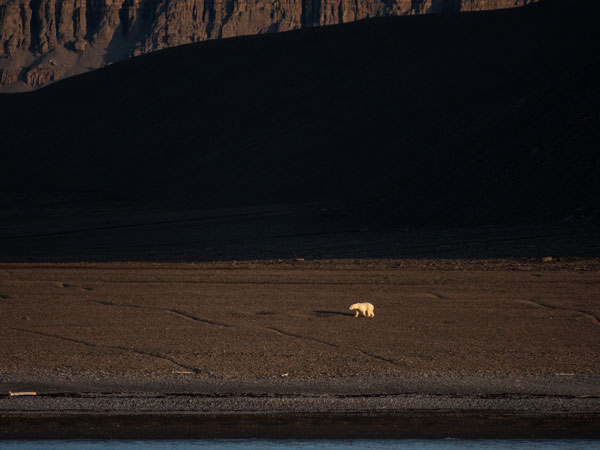
Binoculars confirm an off-white spot on the mist-layered shore of Maxwell Bay, an amphitheatre of snow-dusted alluvial cliffs and vaporising waterfalls, to be our first polar bear sighting. The sedentary far-off dot sniffs the air, contemplating bearded seals in the storm-milky waters below. We skirt Devon Island, the largest uninhabited island on Earth, a polar semi-desert reportedly used by NASA for astronaut testing.
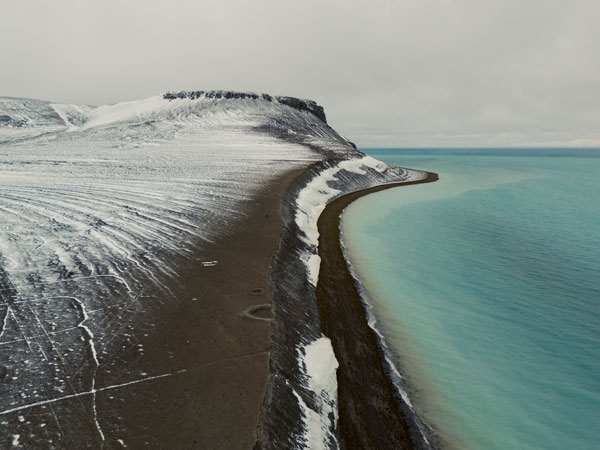
We face four forlorn headstones on Beechey Island’s curved snow-streaked, dark-stone shoreline – memorials to members of Sir John Franklin’s ‘lost’ Northwest Passage expedition. An outlying, rifle-bearing guard spots a polar bear, kilometres away, advancing slowly.
It’s apparently hard to scare away a hungry bear so we swiftly decamp, catching sight of it from the pool deck with our binoculars. MS Fridtjof Nansen doesn’t approach the bear, as per Association of Arctic Expedition Cruise Operators (AECO) guidelines.
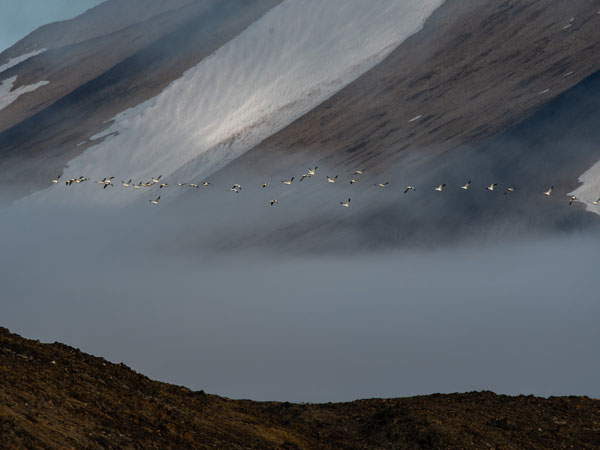
The Northwest Passage scenery shows why expedition ships don’t have extraneous entertainment. The abrupt Prince Leopold Island ‘bird cliff’ is a phenomenal natural cabaret; snow falls, rocks crack sharply and black guillemots (birds) play in the mist.
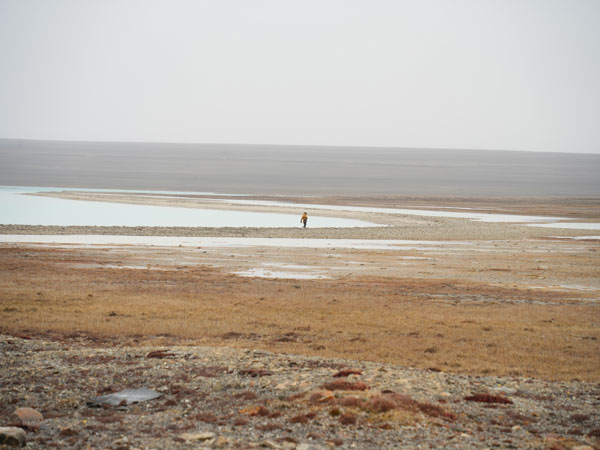
Pasley Bay’s shore seems like a wind-whisked moonscape from afar, but up close it’s a spectacle of vitality and history: hyper-orange lichen on frost-shattered rock bearing traces of an Arctic fox. Rocks that ‘could be’ remnants of a Thule house.
The ship threads Bellot Strait in ‘true expedition weather’: four-metre swell, 35-knot winds. Strategically placed sick bags remain unsullied and, as becomes habit, I retire to the centre of the ship’s social galaxy: the Explorer Lounge. Today, I scoff a Saskatoon berry pie, spot a musk ox onshore and try two kinds of classic cocktails.
Weekly travel news, experiences
insider tips, offers, and more.
Experiencing the Arctic like a local
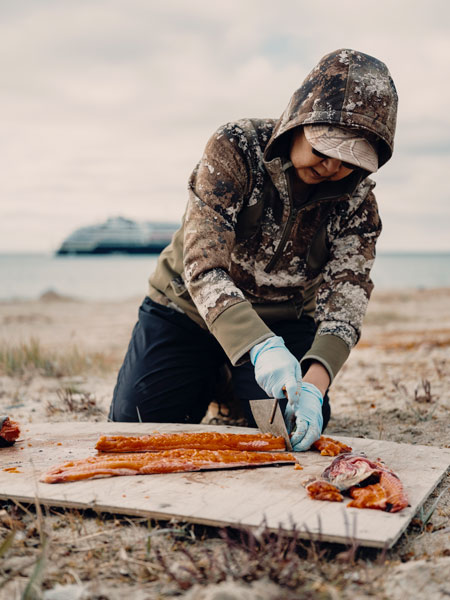
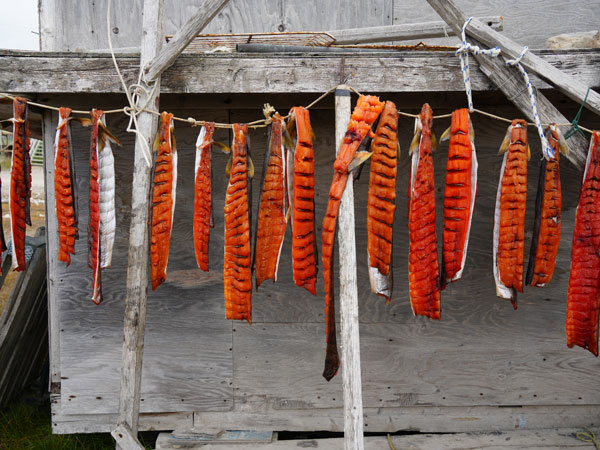
My last stop, Gjoa Haven, population 1400, is big enough for an airport but small enough to see with a head swivel (I fly home, as the ship continues to Alaska via the Beaufort Sea). Our guide Nicole leads us along dirt roads, past boxy houses festooned with caribou antlers; orange Arctic char fillets curing in the breeze.
We bingo with elders and visit a large bronze bust of Roald Amundsen, alongside merch from the town’s pride and joy, the Snowy Owls ice hockey team. I fixate on eerie soapstone carvings of Inuit shamans at Nattilik Heritage Centre.

Nicole says the biggest challenge of living above the Arctic Circle is a profound housing shortage. The carpenter works 12-hour days, even in the caliginous winter, to do her bit. Finding fresh food is another trial, partly remedied by a non-profit-backed community-led greenhouse within a shipping container, which delivers carrots, strawberries, jalapeños and more all year-round.
The best part about living here? Family, she says, as Grandad rides past on a quad bike on his way to work as a ‘bear guard’ at the site where the Franklin expedition’s ships, HMS Erebus and HMS Terror, were abandoned. Yes, in the Arctic, when winter approaches, the strongest, sometimes the only, light and warmth radiate from its people.
A Traveller’s Checklist
Getting there
Air Canada flies from Sydney to Reykjavík, Iceland, via two stops: Vancouver and Toronto. Pre- and post-cruise flights from Reykjavík to Nuuk and Nome to Seattle are included in the cruise price.
Playing there
Prices for the 26-day Northwest Passage – Through the Arctic Labyrinth (Greenland to Alaska) cruise onboard HX Expeditions’ MS Fridtjof Nansen are from $37,094 per person for a Polar Outside cabin. Expedition Suites start at $52,105 per person. Prices include pre- and post-cruise flights, overnight accommodation in Reykjavík and Seattle, most meals, drinks, water-resistant jacket and water bottle.
Need to know
Australians don’t require a visa for Greenland (up to 90 days), but need an ESTA to enter Alaska, USA.
Want to see more stories from International Traveller in your Google search results?
- Click here to set International Traveller as a preferred source.
- Tick the box next to "International Traveller". That's it.