hero media

International Traveller competition terms and conditions

International Traveller
Terms and Conditions of entry for Australian Traveller Media competitions and giveaways.

1. Instructions on how to enter and prize information forms part of these Terms and Conditions. Participation in any competition is deemed as acceptance of these Terms and Conditions.

2. The promoter is Australian Traveller Media Pty Ltd (A.B.N. 29 113 975 438). of Suite 101, 15 Belvoir Street, Surry Hills NSW 2011 (Promoter).

3. Competitions are games of skill and as such, winning entries are selected based on the creativity or accuracy of entries submitted.

4. Entry is open to residents of Australia aged eighteen years or over only. Employees of the Promoter and their immediate families, suppliers, associated companies and agencies are ineligible to enter. Persons under the age of 18 years are not considered adults and therefore are not able to enter. If a winner is discovered to be under 18, they will automatically be disqualified.

5. Promotion commences and closes on the dates shown. Only the winner(s) will be notified by email and must respond within 48 hours or the prize may be re-allocated. Relocation will be based on remaining competition entrants.

6. Australian Traveller Media reserves the right to share entry data with the prize promoter. On the occasion that this occurs, Australian Traveller Media will clearly specify this for privacy reasons.

7. To enter, entrants must follow the entry instructions and answer all competition questions. Entries must be received by 11.59pm on the closing date. Incomplete or automated entries will be disqualified. Multiple entries from the same IP address, same email address or from automated competition entry services are invalid.

8. One entry per person and per household. Multiple entries from the same person or same household will be disqualified.

9. The promoters’ decision is final and no correspondence will be entered into.

10. Prize is not transferable or exchangeable and cannot be taken as cash. No responsibility is accepted for any variation in the value of the prize. Transport to and from an event and all other ancillary costs are the responsibility of the winner.

11. All competition entrants must reside in Australia. Winners entering from outside Australia will be disqualified.

12. The Promoter reserves the right to, at any time, verify an entry or entrant and disqualify an entrant the Promoter has reason to believe has submitted an entry not in accordance with these Terms and Conditions.

13. All entries in the competition become the property of the Promoter. The Promoter collects personal information from entrants to conduct the competition and may, in the course of business, disclose the personal information to third parties, as required. Entry in this competition is conditional on provision of the personal information requested. Entries may be entered into a database and the Promoter may use the entrants’ names and addresses for future promotional, marketing and publicity in various forms by the Promoter, and the entrant consents to such use. Entrants may direct any request to access their personal information to the Promoter. Additionally, all literary works submitted as part of an entry become the property of the Promoter and it is a condition of entry that those literary works may be used by the Promoter for their own promotional, marketing and publicity purposes without restriction. The promoter may share the entry details with the prize provider.

14. The Promoter reserves the right to modify, suspend or terminate the competition without notice.

15. The Promoter is not liable for any loss (including loss of opportunity) or damage (including, but not limited to, direct, indirect or inconsequential loss) or personal injury in relation to this competition or the use of, or participation in, the prize.

16. Terms and conditions of any prize tickets must be adhered to. Some events have age restrictions and these must also be adhered to.

17. Prizes can only be sent to addresses in Australia and any tickets are only valid in or from Australia.

18. These Terms and Conditions will bind this and any future entry by you into a competition on an Australian Traveller Media site and may be updated from time to time.

Want to see more stories from International Traveller in your Google search results?

  1. Click here to set International Traveller as a preferred source.
  2. Tick the box next to "International Traveller". That's it.
hero media

China is nothing like I expected – and now is the best time to visit

Credit: Unsplash/Denys Nevozhai

    Natasha Bazika Natasha Bazika
    China has long been a destination many foreign travellers are curious about, but few actually visit. 

    For a place we hear so much about, China still isn’t somewhere many Australian travellers have actually been.

    We know the landmarks. We know the food. We recognise the Shanghai skyline and the sweep of the Great Wall. We’ve seen photos of the Forbidden City and eaten some version of Chinese cuisine, yet, 60 per cent of Australians have never visited mainland China, according to a report from Cathay Pacific.

    Until recently, I was one of them. Not because I wasn’t curious; China had always fascinated me. It was just one of those destinations that lived permanently in the ‘one day’ category. Somewhere I’d eventually get to, after the bigger trips had been ticked off.

    Then I spent four days in Beijing and started wondering whether Australian travellers are making the same mistake. 

    What to expect when visiting Beijing

    The Forbidden City
    The Forbidden City is one of Beijing’s most popular attractions. (Credit: Unsplash/Ling Tang)

    Before arriving, I expected language barriers, complicated logistics, and the frustration of navigating a digital ecosystem built on apps I didn’t know how to use. I’m not alone in that thinking. Cathay’s research notes that safety concerns (32.7 per cent) and language barriers (26.8 per cent) remain primary deterrents for Australians.

    But somewhere between my first bowl of braised beef noodles and a morning walk in the city, those assumptions unravelled.

    Beijing is surprisingly easy to settle into because of its automation. The language barrier doesn’t matter when the entire city operates on a frictionless digital grid. You order, navigate and pay via local apps without needing to speak a word. It’s a level of digital convenience that is uncomfortable at first, then strangely intuitive.

    beijing laneway
    Beijing is surprisingly easy to navigate for tourists. (Credit: Unsplash/Zhang Kaiyv)

    And for a capital of 20 million people, Beijing is deceptively empty, or at least it can feel that way. When wandering through the hutongs (traditional residential laneways) I expected it to be chaotic and dense with people, but for majority of the morning, it was empty. 

    That’s not to say Beijing lacks spectacle (our 48-hour Beijing guide is proof). The Forbidden City is every bit as impressive as you’d hope. Tiananmen Square’s scale is difficult to comprehend until you’re standing in it, and the big-ticket attractions, like the Great Wall of China are where you’ll find the crowds you imagined.

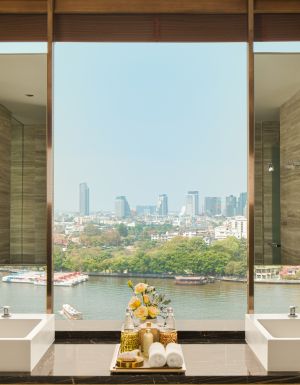
    But some of my favourite memories happened in the time between the major sights and my luxe hotel, when I wasn’t doing anything beyond wandering around. And eating. Lots of eating.

    braised beef noodles, Beijing
    Savour braised beef noodles. (Credit: Natasha Bazika)

    The great joy of Beijing is that Peking duck isn’t considered a special occasion dinner. My first proper duck feast arrived glistening and lacquered, carved tableside at Li Qun Roast Duck Restaurant, served with the usual duck pancake condiments, and crispy eggplant.

    One morning, I joined Garth, an expatriate Australian who arrived on a gap year a decade ago and never left, for a breakfast tour through the alleyways. Over four hours, he took us through the city’s breakfast staples, including jianbing (a crisp, savoury crepe), dumplings, soups and local sweet treats.

    Why China is an emerging tourist destination

    shanghai skyline
    China is investing in making travel more accessible. (Credit: Unsplash/Ralf Leineweber)

    Having watched the country evolve firsthand, Garth says one of the biggest changes has been China’s investment in making travel easier and more accessible. The country already operates the world’s largest high-speed rail network, with plans to add a further 160 trains by 2030.

    And while Australians might still be hesitating, the rest of the world has already caught on. International visitor numbers topped 68 million in 2025 (a 15.5 per cent jump, year-on-year), putting China on track to overtake the USA as the world’s leading travel economy.

    great wall of china
    The country’s visitor numbers are on the rise. (Credit: Unsplash/Hanson Lu)

    So, the question is no longer whether China has enough to offer travellers. It clearly does. The bigger question is whether travellers are ready to look beyond the assumptions that have kept them away.

    Getting to China is easier than ever

    Qing Dynasty gowns at Summer Palace, Beijing
    Qing Dynasty gowns at Summer Palace. (Credit: Natasha Bazika)

    The bureaucratic barriers are falling, too. The visa paperwork that used to deter casual travellers has been replaced by a 30-day visa-free entry policy for citizens of 50 countries, including Australia.

    Even the journey home offered a glimpse of how quickly China’s travel infrastructure is evolving. Flying with Cathay Pacific, I passed through the airline’s newly renovated Beijing business lounge before my flight home. While more compact than Cathay’s flagship lounges in Hong Kong, it delivers the signature service the airline is known for, including the famous Noodle Bar, dishing steaming bowls of wonton soup and dan dan noodles that are considerably better than most airport meals have any right to be.

    China isn’t a monoculture, and it isn’t for everyone. No destination is. But for Australians who say they want history, culture, food and the jolt of discovering somewhere that feels distinct from the West, it may be time to question why China is still sitting on the ‘maybe one day’ list.

    Because after finally going, it feels a lot more like a ‘why-not-now’ destination.