hero media

Experiencing Peru through the lens of a local

Exploring Peru and its famous sites is even more meaningful when the moments are shared with members of the local community.

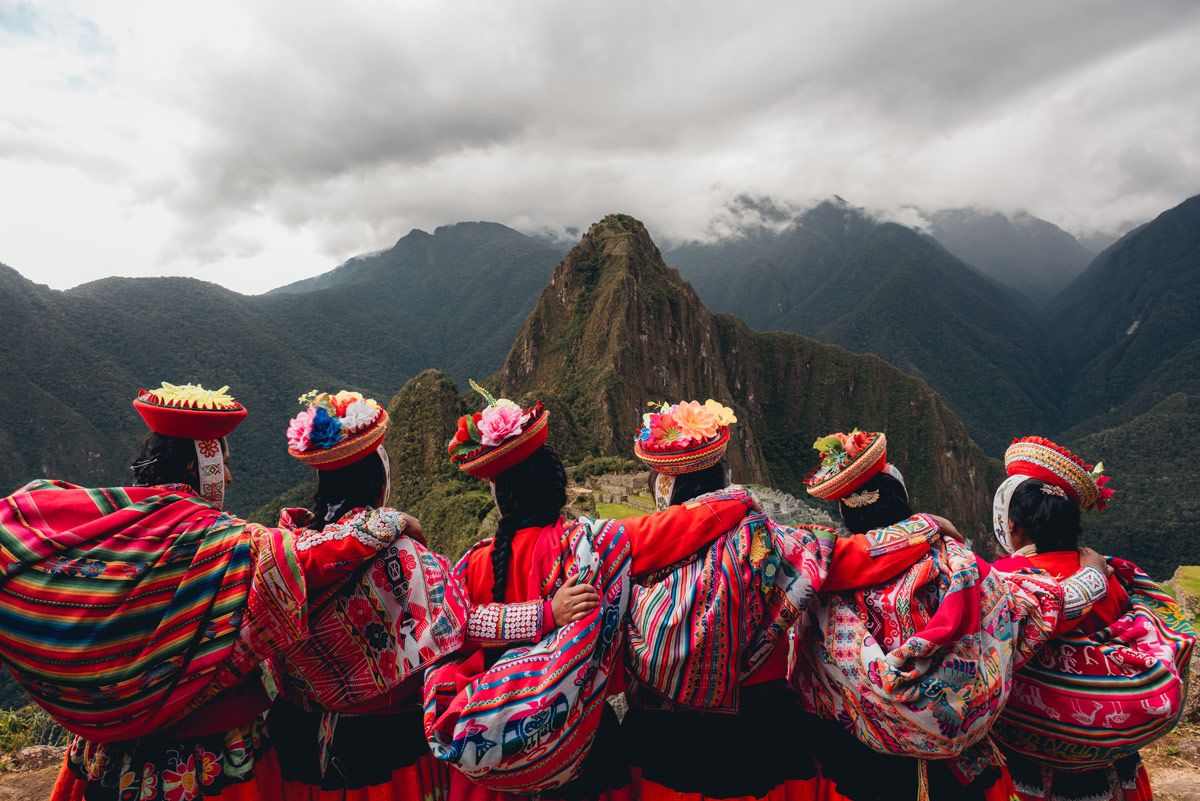
Arms linked, they stand together, a bright blaze of colour unfurled like a ribbon amid the muted green tones and ethereal mist of the cloud forest. A low rumble of thunder reverberates through the jungle-coated mountains, bouncing off Machu Picchu’s vertiginous terraces and threatening to shake the 15th-century fortress off its improbable perch and send it crumbling into the frothing brown Urubamba River, 600 metres below. But the 16 women from Huilloc Alto, a tiny mountain village high in Peru’s Sacred Valley, look completely at peace, gazing down silently – almost defiantly – on the famous citadel their ancestors built, a place they never thought they’d see with their own eyes. Today is their ultimate homecoming.

“The mamas were so happy when they learned they were going to Machu Picchu, they were jumping," says our Intrepid Travel guide Norma Caller who, like the ‘mamas’, speaks Quechua, the Indigenous language of the Inca Empire. It’s been almost 500 years since the Spanish conquest of Peru, but the cultural dislocation caused by colonisation is still felt acutely, especially here in the highlands. Machu Picchu is special because the Conquistadors never found it, so could never destroy it.

Managing the surging numbers of tourists wanting to visit the UNESCO World Heritage site is a hot-button topic in Peru. Daily visitor capacity has been raised to 5600 during peak season, but the cruel irony is that the Indigenous people to whom Machu Picchu means the most will likely never be able to afford to go there.
women from Peru’s Sacred Valley at Machu Picchu
Women from Peru’s Sacred Valley connect with their ancestry at Machu Picchu on an Intrepid Travel itinerary. (Image: Intrepid Travel/Ryan Bolton)

This is the first time Intrepid Travel has invited members of a local community to join a tour to Machu Picchu, but it won’t be the last. Experiencing Peru through the lens of the locals is at the heart of Intrepid’s nine-day Classic Peru itinerary, which takes in everything from cosmopolitan Lima to the remote, floating reed islands of the Uros people on Lake Titicaca.

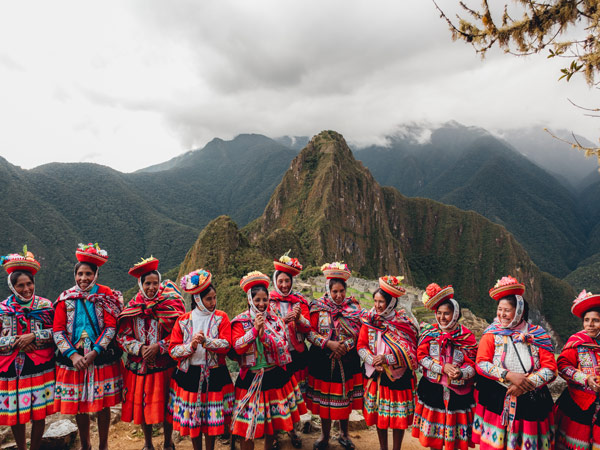
Standing together at Machu Picchu, the mamas already feel like old friends. We met them the day before in their village above the town of Ollantaytambo, dressed as they are today in bright red jobona jackets, pollera skirts embroidered with patterns, hand-woven shawls called lliklla and basket-like montera hats filled with fabric flowers.

Everything they wear they’ve made themselves, woven on a backstrap loom with the aid of condor bones and wooden pegs, an ancient technique that’s been part of Andean culture for more than 5000 years.
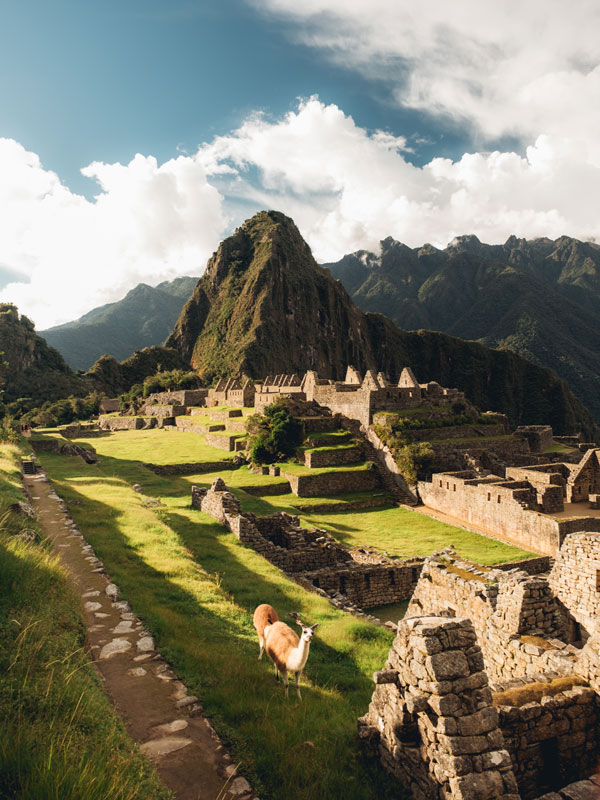
a scenic view of Machu Picchu citadel ruins Peru
An Incan citadel set high in the Andes Mountains. (Image: Intrepid Travel/Ryan Bolton)

The universal language of a mother’s love

We disembark our minivan to a soundtrack of roosters and donkeys, followed by a startling BANG! Norma glances casually over her shoulder. “Exploding stone," she explains. “Someone put the wrong rock in the pachamanca."
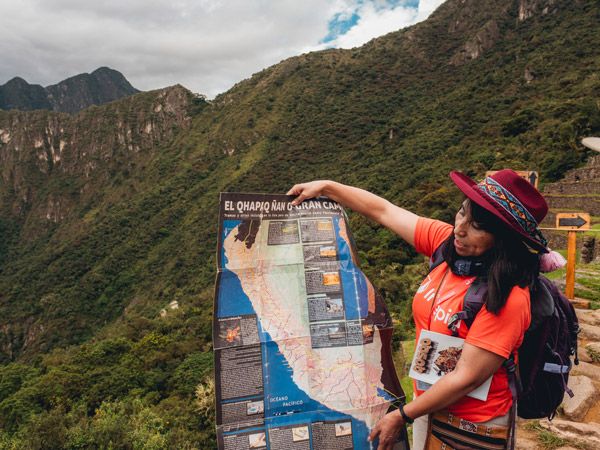
Guide Norma Caller at Machu Picchu
Guide Norma Caller speaks the Indigenous Quechua language of the region. (Image: Intrepid Travel/Ryan Bolton)

A pachamanca is an earth oven, similar to the Māori hangi I grew up with in New Zealand/Aotearoa. Chicken, potatoes, plantain and lima beans are arranged among fire-heated stones, covered with banana leaves and hessian, then left to cook while we get to know the mamas, who are part of a weaving collective run by a social enterprise called Awamaki, an Intrepid Foundation partner.
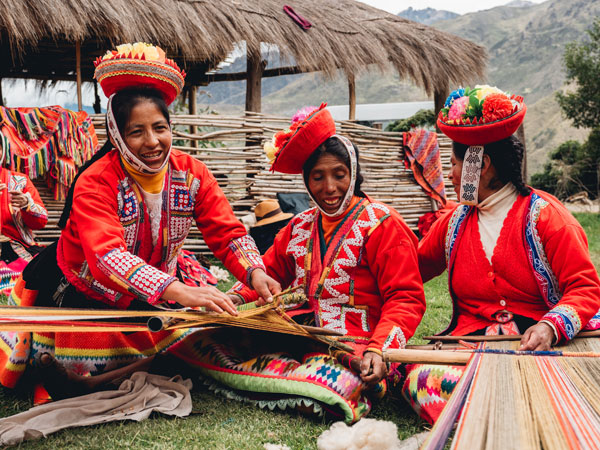
the Indigenous women of Huilloc weaving in Peru
Weaving with the Indigenous women of Huilloc. (Image: Intrepid Travel/Ryan Bolton)

The onomatopoeic word for children in Quechuan is wawa, and the mamas introduce themselves by declaring proudly how many wawas they have (some boast up to eight). Our tour group’s tallies are pathetic in comparison.

To secure the best possible future for their children, the mamas weave exquisite garments and textiles such as chumpi (a type of belt) bags, ponchos, rugs and more. A demonstration on how to spin alpaca wool into yarn, using a hand-held spindle called a pushka, follows. I’m terrified we’ll be asked to have a go, and of course we are. My efforts at spinning are predictably woeful, but my instructor Benita is patient (or at least amused) and waits at least two minutes before mercifully confiscating my pushka.

The colours of the textiles are rich and earthy, created from dyes derived entirely from natural sources such as flowers, minerals, moss and roots. The vivid red that dominates Peruvian patterns comes from the cactus-dwelling cochineal insect, which, once collected, is dried, ground into a fine powder and mixed with lemon, salt or fermented urine to tweak the tint. The little bugs don’t come cheap, either, with the mamas paying 280 sols (about $115) per kilogram. A simple scarf can take up to a month to make.

One of the mamas, Josefina Cruz, tells us that all the money she earns goes directly towards her children and her house. “I am so thankful you have come," she says, “because it’s making a huge difference to our lives."
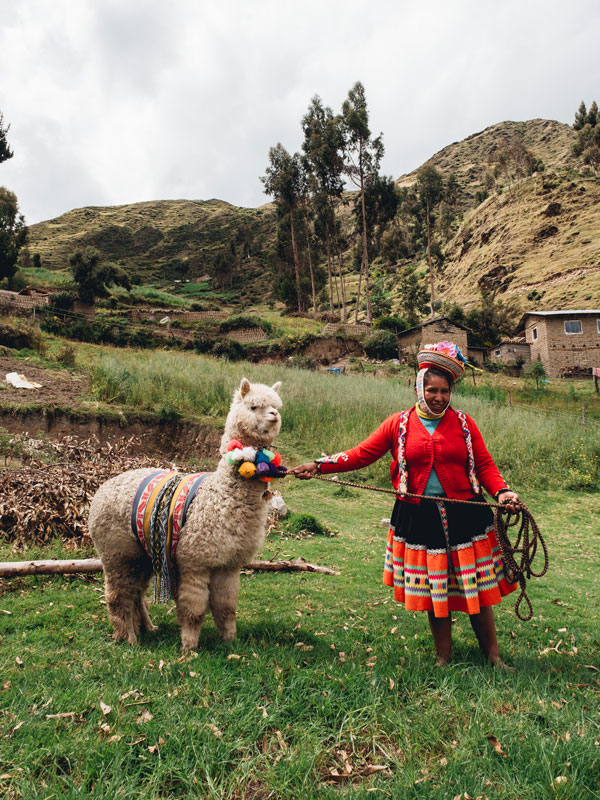
an Indigenous woman of Huilloc standing beside an alpaca
The Peruvian community express their appreciation of the natural world through textiles. (Image: Intrepid Travel/Ryan Bolton)

A new era for travel and tourism in Peru

A concerted effort by the Peruvian government is also being made to integrate locals and tourists in a more collaborative way and to provide opportunities for Peruvians to discover the wonders of their own country. We experience an unscripted example of this on the road from Cusco to Puno, at the archaeological site of Raqch’i, home to the ruins of the Temple of Wiracocha, built in the 1400s as a monument to the pre-Inca deity and creator of the universe. A battered stone wall 92 metres long stands behind a few crumbling columns, all that’s left after the Spanish destroyed the temple in the 16th century.
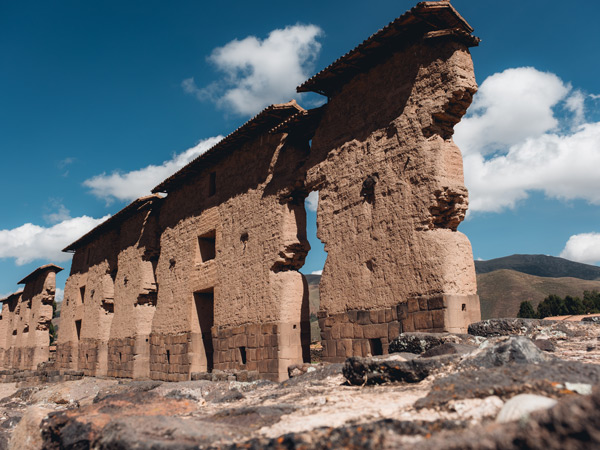
the Raqch’i archaeological site, Inca, Peru
Raqch’i is an Inca archaeological site in Peru. (Image: Intrepid Travel/Ryan Bolton)

As we stand around contemplating the ruins, a group of Peruvian women dressed in traditional clothing approaches us shyly but inquisitively. We learn they’re from an Indigenous community in Altiplano, the high plateau region near Puno, and are visiting tourist sites as part of a program run by the Ministry of Social Development and Inclusion.

The sight of ‘gringos’ is clearly a novelty to them, and they politely ask to take photos with us. It’s a charming reversal of the usual tourism routine and so fitting on a trip like this, where tourism norms and cultural barriers are being continually broken.
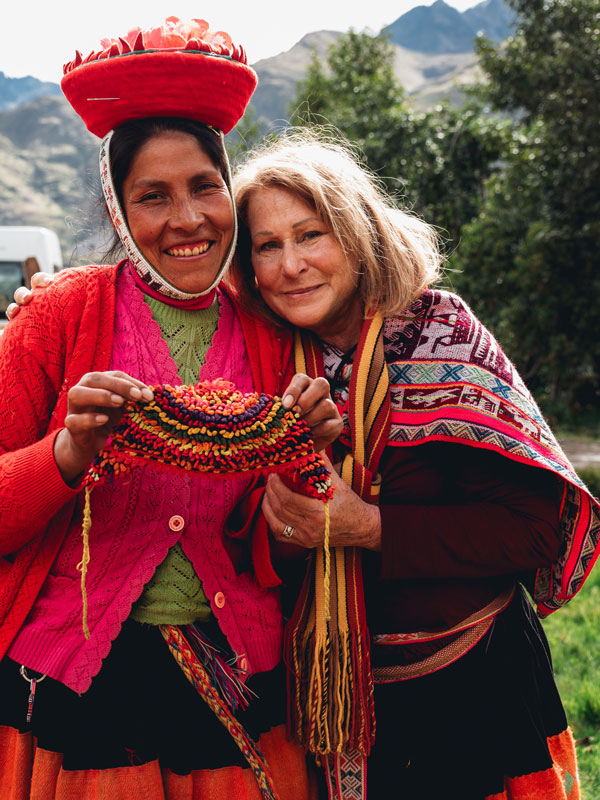
the Indigenous women of the Huilloc community
The Intrepid Travel tour weaves in a visit to the Huilloc community. (Image: Intrepid Travel/Ryan Bolton)

Connecting through cuisine: A homestay in Llachon

We leave the women to their sightseeing and continue south to the shores of Lake Titicaca for an overnight homestay with families from the village of Llachon. It’s a rewarding – and very hands-on – insight into the daily lives of the locals, as we help them harvest potatoes and prepare meals, which begin with a ritual offering to Mother Earth.
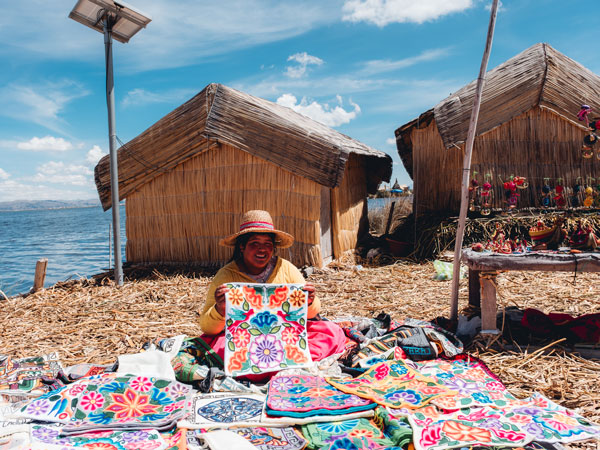
a woman sitting with textile art on display at Lake Titicaca
Lake Titicaca is known for its textile art. (Image: Intrepid Travel/Ryan Bolton)

Vegetables, tubers and cereals are the staple foods, supplemented by fish from the lake, and perhaps a llama sacrificed for a special occasion. We sit down for semolina soup with our host families as a full moon rises above the lake, casting a silver shimmer across the water, and life suddenly seems so simple.
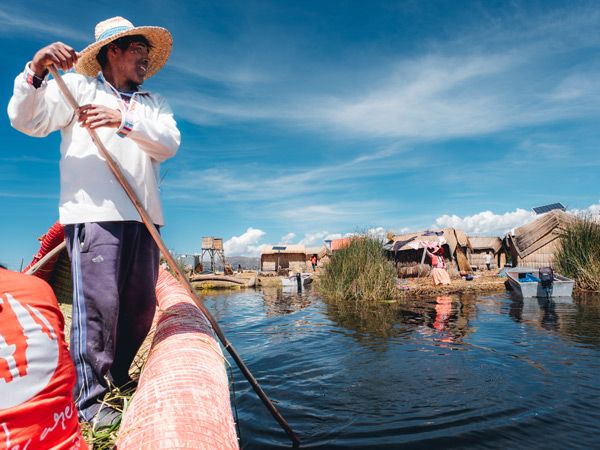
taking a reed boat at Lake Titicaca, Peru
The Intrepid Travel tour includes a ride in a reed boat. (Image: Intrepid Travel/Ryan Bolton)

Eating responsibly is a huge part of the Intrepid ethos. Back in Cusco, we enjoy a meal at Nuna Raymi, a restaurant that sources all its produce from family farms within 13 nearby provinces.
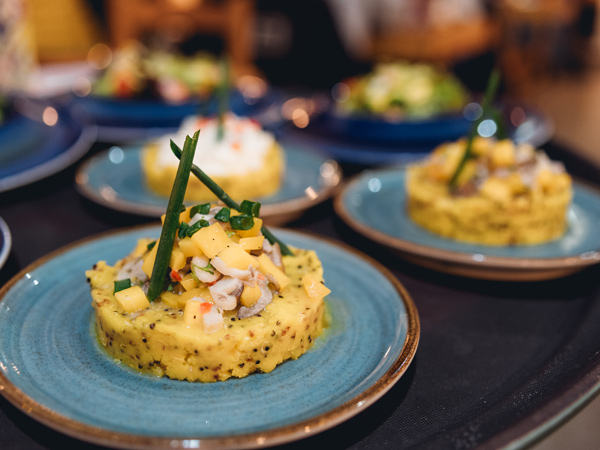
the dinner at Nuna Raymi
And dinner at Nuna Raymi which supports local Cusco farmers. (Image: Intrepid Travel/Ryan Bolton)

Chef Eric brings out four different types of potatoes as appetisers (there are more than 4000 varieties of potatoes in Peru), served with wild tomato and uchucuta, a spicy pepper sauce made from ground chillies. He explains how these organic potatoes, high in antioxidants and bursting with flavour, have been championed by top restaurants and chefs, leading to a surge in demand. “Fifteen years ago, you couldn’t find these potatoes in the markets in Cusco. Now they’re everywhere."
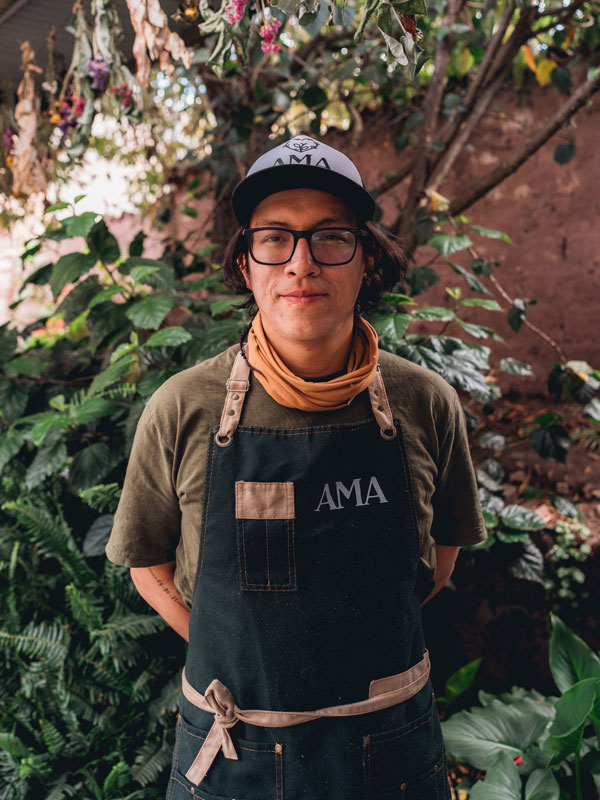
the Founder of Ama, Julio Chemi Sanchez Hernandez
Founder of Ama, Julio Chemi Sanchez Hernandez. (Image: Intrepid Travel/Ryan Bolton)

Eric introduces us to one of the farmers, Julio Cruz, who arrives at our table wearing a traditional poncho, handmade by his mother and embroidered with the ancient iconography of the area – llamas, flamingos, hummingbirds and pumas. He explains how partnerships with restaurants such as Nuna Raymi help ensure that farmers are paid a fair price for their produce, and that communities have a sustainable future.

the scenic Urubamba mountains in the Sacred Valley, Peru
The eatery is in Urubamba in the mountainous Sacred Valley. (Image: Intrepid Travel/Ryan Bolton)

Our time at Machu Picchu comes to an end. Justina takes a final look over her shoulder at the wondrous, mysterious city in the cloud forest. “Coming here reminds us that we are Incas," she says, on behalf of the mamas. “We feel even more connected to our ancestors."

Back in Ollantaytambo we give a final hug to the mamas and watch them head off back into the mountains, where their wawas are waiting. It feels like goodbye, but it can’t be, because in Quechuan no such word exists. Instead, the mamas’ parting word is tupananchiskama. “Until life makes us meet again."
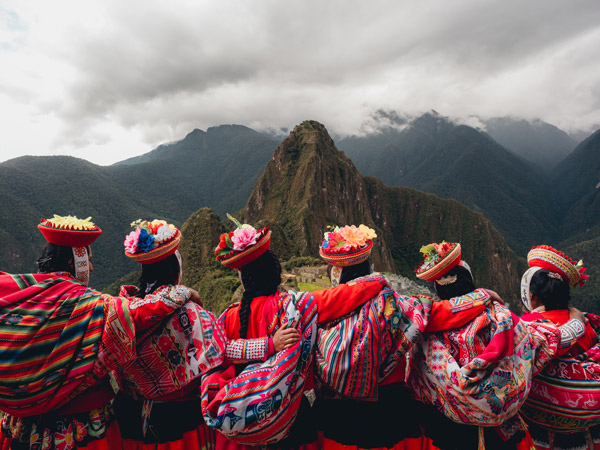
Quechua women from the Sacred Valley with arms linked
Quechua women from the Sacred Valley witness Machu Picchu for the first time as special guests on an Intrepid Travel tour of Peru. (Image: Intrepid Travel/Ryan Bolton)

Weekly travel news, experiences
insider tips, offers,
and more.

Want to see more stories from International Traveller in your Google search results?

  1. Click here to set International Traveller as a preferred source.
  2. Tick the box next to "International Traveller". That's it.
Ricky French
Ricky French is a journalist and photographer who began as a freelance feature writer for the Weekend Australian Magazine, and is a former senior writer for Bauer Media and contributing editor to Wilderness magazine. A hunger for discovery saw Ricky morph into travel writing, and he loves bringing home stories and images that unlock the heart of a destination. Adventure travel – especially skiing, hiking or kayaking – are his passions, and his ultimate trip would be to retrace Shackleton's footsteps crossing South Georgia Island.
View profile and articles
hero media

5 things every hotel needs for a more restorative stay

    Kate Bettes Kate Bettes
    Wellbeing means different things to different travellers. Here’s how to pick a hotel that gets it right for you.

    The best wellness holidays aren’t necessarily spent wrapped in a spa robe. Sometimes they’re found around a dinner table in Cambodia, on a hiking trail in New Zealand or after finally beating jet lag on the other side of the world. The hotel you choose is what makes them happen.

    1. Easy access to good food

    meals from Novotel Bangkok Sukhumvit 20
    Taste delicious meals at Novotel Bangkok Sukhumvit 20.

    One of the quickest ways to derail healthy habits on holiday is to spend half of it working out where to eat instead of digging into the culture around you. Thankfully, Novotel has done much of the hard work already, with chefs building menus that lean into the flavours, ingredients and traditions of each destination.

    In Sihanoukville, Cambodia, Korkor soup – often dubbed ‘Cambodian ratatouille’ – sits alongside raw blue crab dressed with lime and chilli, best enjoyed with views across the Gulf of Thailand.

    In the lovingly chaotic city of Bangkok, the presence of food cranks up the sociability. At Novotel Bangkok Sukhumvit 20, you can settle in with mango sticky rice and stranger-turned-friends beside the pool at Sky on 20 rooftop bar, or bring them along to tackle river prawns and stir-fried crab with holy basil at the buzzing Crab Paradise Dinner Buffet.

    Then Novotel Dubai Al Barsha welcomes you with a laidback twist on the level of indulgence the Middle Eastern city is best known for up on Deck Se7en. Looking towards Burj Al Arab, the rooftop lounge has everything from Mediterranean-style dishes like seabass ceviche to Italian prosecco sundowners.

    At the other end of the scale, in the hills that surround the Novotel Bali Ubud Resort, calm comes from nature. At Siralada restaurant, Balinese traditions shape the menu while thunder rumbles over the surrounding jungle – proving the setting is as nourishing as the food itself.

    While at Novotel Nha Trang, chef Kieu Thi My Hanh and her team showcase Vietnam’s knack for balancing freshness, texture and fragrant herbs. Pho remains a favourite, while seafood salad with pomelo and mango brings those flavours together in one bright dish.

    It’s all an approach backed by partnerships with expert food creators such as Alfie Steiner, whose plant-forward recipes prove healthy food should never taste plain.

    2. Better sleep options

    Novotel Bali Ubud Resort room
    Sleep deeply with Novotel.

    There are few travel experiences more disappointing than arriving in a new country, determined to seize the day, only to fall asleep fully clothed by 3pm.

    For Australian travellers, jet lag is often an unavoidable part of the journey. That’s one reason Novotel runs sleep-focused initiatives that help guests adjust quickly without compromising on health. We’re talking partnerships with Sydney-based sleep specialist Olivia Arezzolo, known for her advice on everything from better sleep habits to beating jet lag, alongside features like pillow menus, in-room yoga content and tailored sleep guidance.

    The sooner you’re operating on local time, the sooner you can get back to more pressing matters – like deciding which spa treatment to book.

    3. More ways to move

    woman hiking around queenstown new zealand
    Stay at Novotel Queenstown Lakeside and explore local hiking trails. (Credit: GettyI mages/ naruedom)

    Every place in the world has its own way of getting you moving: whether that’s hiking up ice-bitten mountains before a sauna or gentle stretching by the pool before a facial. From fitness centres to spas, Novotel recognises that wellbeing rarely looks the same.

    At Novotel Queenstown Lakeside, activity is inescapable. Here, hiking trails, ski fields, bungee jumps, and white-water rafting have made the region famous. The hotel’s location on the shores of Lake Wakatipu means less time spent organising yourself and more time out there experiencing them. To top it all off, you can book a private hot tub for the evening before heading back into the wilderness tomorrow.

    Bali, of course, takes a softer approach. At Novotel Bali Ubud Resort or Novotel Bali Nusa Dua, movement is less about conquering a mountain and more about a dance class between the tropical gardens and lagoon pools. Afterwards, the spa takes over, with traditional treatments like a Lulur body scrub: a combination of rice, turmeric, sandalwood, ginger and jasmine that’ll soothe muscles already relaxed by the Balinese heat.

    4. Better connections

    Novotel Sharm El Sheikh
    Kids will love a stay at Novotel Sharm El Sheikh.

    One of the best things about travel is that it gives your family stories you’ll be telling for years. Novotel helps create them with activities that bring everyone together, whether that’s trying something new, learning a local skill, or simply spending more time together.

    Go for a distinctly Thai twist at Novotel Phuket Vintage Park, where many of the family activities draw on local culture. Kids can try everything from beginner Thai boxing and language lessons to umbrella painting and – a pastime beloved by children the world over – pool foam parties. Everyone is welcome to join in, whether that’s getting splashed, covered in paint, or simply watching their children discover a new side of Thailand during the dedicated Family & Kids Day.

    A different adventure awaits at Novotel Sharm El Sheikh. Kids could be perfectly content with discos, drawing classes and new holiday friends, but the Red Sea has other ideas. Sitting on the edge of Naama Bay, days here might involve snorkelling colourful reefs, taking a boat trip to Ras Mohammed National Park or heading into the desert by quad bike or camel for a Bedouin-style dinner beneath the stars.

    5. Location is everything

    Surin Beach, Choeng Thale, Thalang District, Phuket, Thaiföld
    Explore Phuket’s gorgeous beaches. (Credit: Bence Biczo)

    Everyone’s idea of wellness looks a little different. With more than 600 hotels across 65 countries, Novotel gives guests the freedom to choose the destination that suits them best. Whether that’s a beachside escape in Phuket, an alpine expedition in Queenstown or a city break in Bangkok, there’s a good chance a Novotel isn’t far away.

    All that’s left? Choosing your version of wellbeing.

    Discover stays to inspire your everyday at novotel.accor.com.