hero media

A must-read guide to 48 hours in Singapore

The fabric of this eternal city is stitched together by a mélange of cultures, where traditional food stalls are UNESCO-protected and colonial buildings share space with cutting-edge architecture.

Indonesian Prince Sang Nila Utama founded the settlement of Singapura (Malay for ‘Lion City’) on the island of Temasek in 1299. The city was a crucial trading hub between East and West, facilitating the exchange of goods such as spices, textiles and porcelain.

These transactions only increased from 1819, when the ‘founder of modern Singapore’, Sir Stamford Raffles, signed a treaty with Temenggung Abdul Rahman and Sultan Hussein Shah of the ruling Johor empire to establish a British trading post on the island. He had a vision that Singapore would be “a place of considerable magnitude and importance".

His Town Plan allotted parcels of land to each segment of society: Europeans would reside along the seafront; the Chinese were designated a kampong (village) on the south-west bank of the river; Bugis settlers and Arab merchants would be settled around the Sultan’s residence; and Indians were placed upstream.

Today, these distinct neighbourhoods retain their heritage, from Little India and its markets filled with spices and silks to Kampong Gelam’s mosques and Chinatown’s temples and hawker stalls. In the 1960s, to make the industrialised city more liveable, then Prime Minister Lee Kuan Yew had an ambitious vision to transform Singapore into a ‘Garden City’.

Some 60 years on, the country was recognised as the world’s first Sustainable Destination in 2023 – and today, between the stratospheric skyscrapers, you’ll find respite in some 400 parks and nature reserves. Indeed, while still a crossroads for Australian travellers en route to Europe and beyond, Singapore is a destination to linger longer.
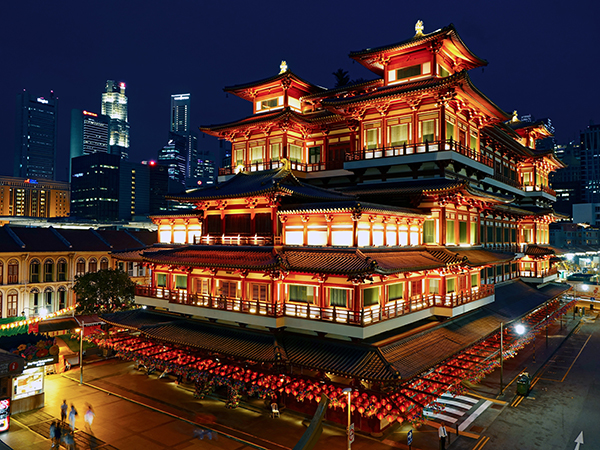
The Buddha Tooth Relic Temple was built during the Tang Dynasty, considered a golden age for Chinese arts. (Image: Getty)

Day one: Experiencing the highlights

8am

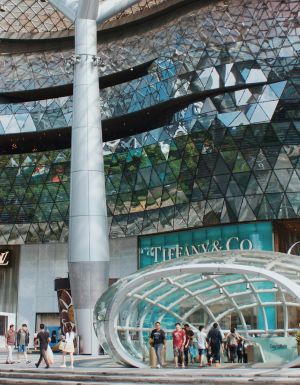
Wake up in your cosy abode, JEN Singapore Orchardgateway by Shangri-La. This modern hotel is in the heart of Singapore, with the flurry of world-renowned shopping strip Orchard Road playing out below. It’s also a short walk to Somerset MRT (railway) station, which is the cheapest way to get around the city.

9am

An architectural and horticultural feat, Gardens by the Bay pushed the boundaries of innovation in green design when it opened in 2012. The 101-hectare park houses more than 1.5 million plants, conserving many rare and critically endangered species.

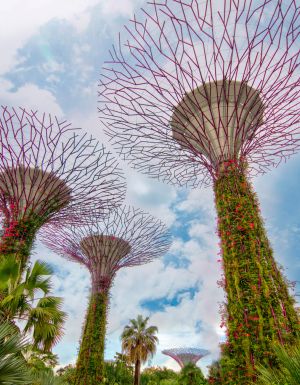
The now-famous solar-powered Supertrees – which look as though they’ve been planted top-down with their spindly roots exposed – double as vertical gardens each comprising more than 200 species of plants.
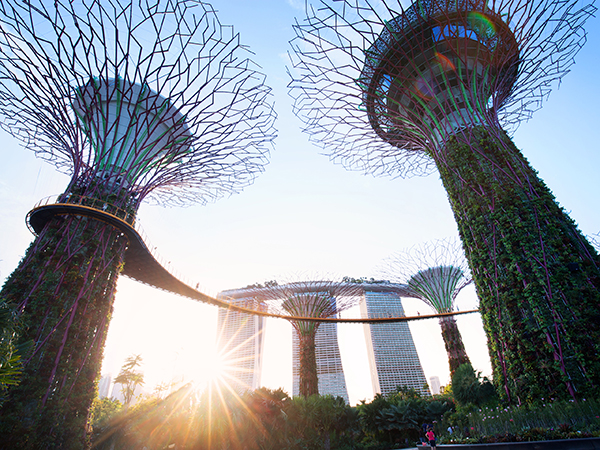
Towering Supertrees in Gardens by the Bay.
Towering Supertrees. (Image: Getty)

The Flower Dome is the largest glass greenhouse in the world, holding flora from the Mediterranean to the South African savannah under one roof. The ethereal Cloud Forest, meanwhile, is a mist-filled enclosure with aerial walkways that wind around a ‘mountain’ covered with plants, including carnivorous species and an indoor waterfall. There is an interactive digital art experience at the end that has our kids chasing light projections on the floor while we enjoy respite from the humidity outside.
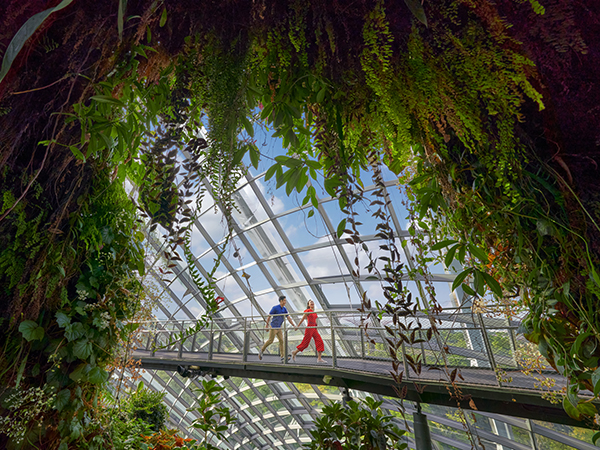
The Cloud Forest in Gardens by the Bay, Singapore.
The Cloud Forest. (Image Nicky Loh)

Noon

Sir Stamford Raffles originally divided Chinatown into zones for different Chinese communities and trades. Today, it is also characterised by Malay and Indian influences.
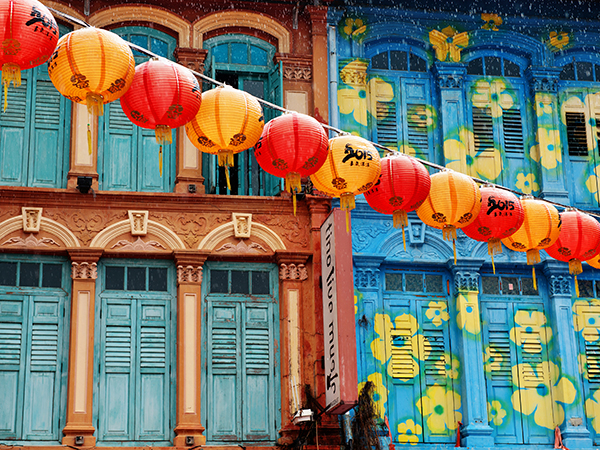
The colorful Chinatown in Singapore.
Singapore’s Chinatown is known for its vibrant atmosphere. (Image: Getty)

Come here to browse the street markets and experience hawker culture, which was inscribed on UNESCO’s list for Intangible Cultural Heritage of Humanity.
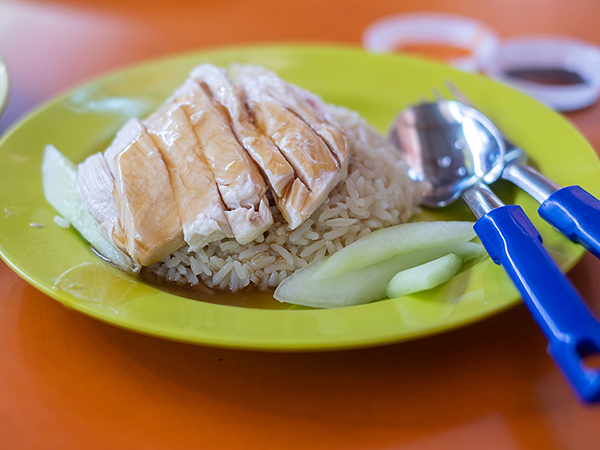
Delicious Singapore chicken rice, Hainanese Asian food style.
Try Hainanese chicken rice. (Image: Panuwat Dangsungnoen)

Within walking distance of each other, you’ll find Singapore’s largest hawker centre, Chinatown Complex Food Centre, where Bruce Lee makes an appearance in a mural, and Maxwell Food Centre, home to Michelin Bib Gourmand stalls Lian He Ben Ji Claypot and Tian Tian Hainanese Chicken Rice respectively.
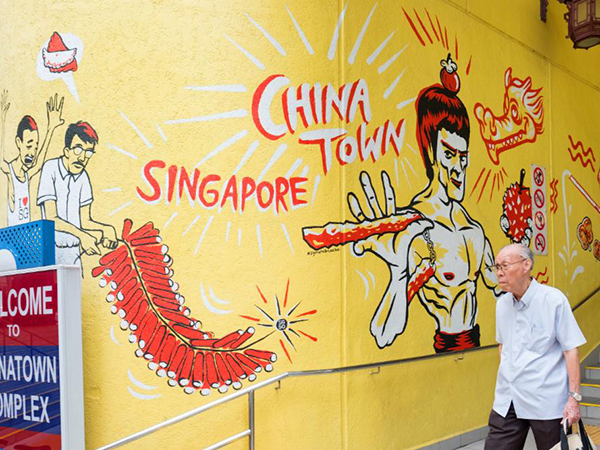
A mural of Bruce Lee in Singapore.
A mural of Bruce Lee. (Image: Getty)

3pm

From one cultural institution to another; try to nab a table at Long Bar within legendary hotel, Raffles Singapore. The 1920s plantation-style bar is where national drink the Singapore Sling was invented.
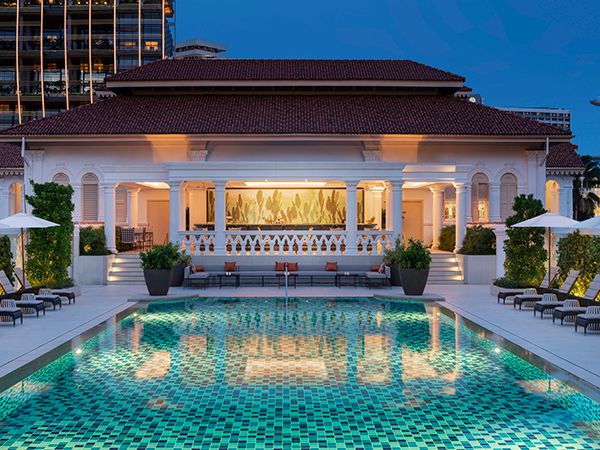
The pool in Raffles Hotel Singapore.
Raffles pool. (Image: Ralf Tooten)

7pm

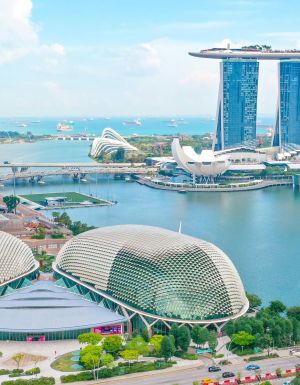
The three vertiginous towers of Marina Bay Sands, straddled by the world’s largest rooftop pool, have become a modern icon of the city. Only those with a room key can take a sky-high dip, but you can still make your way to the 57th floor by booking a table at Lavo Italian Restaurant.

The menu features brick-oven pizzas, hearty pastas, and supersized dishes such as a one-pound meatball and a one-kilogram tomahawk. But the real scene-stealer is the sparkling city below.
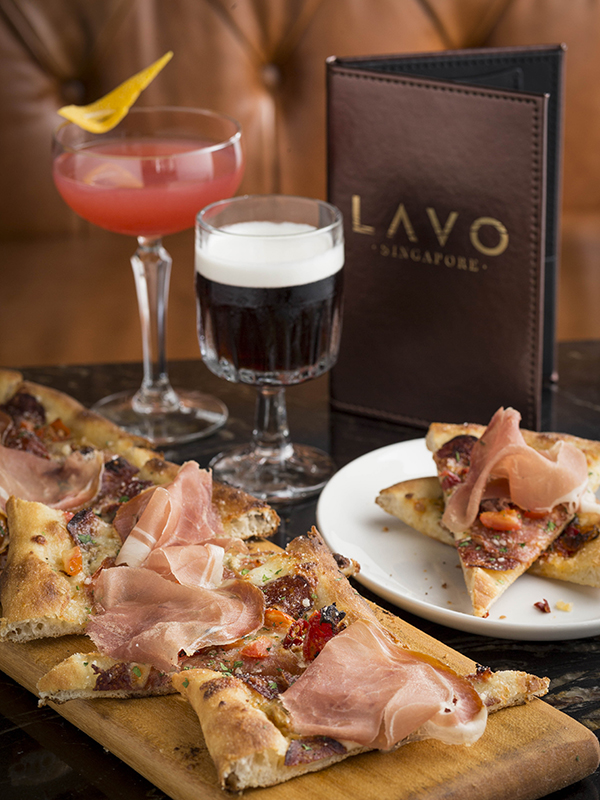
LAVO's Carne Brick Oven Pizza.
LAVO in Marina Bay Sands is popular for pizza. (Image: Getty)

Day two: Immersing in the local culture

9am

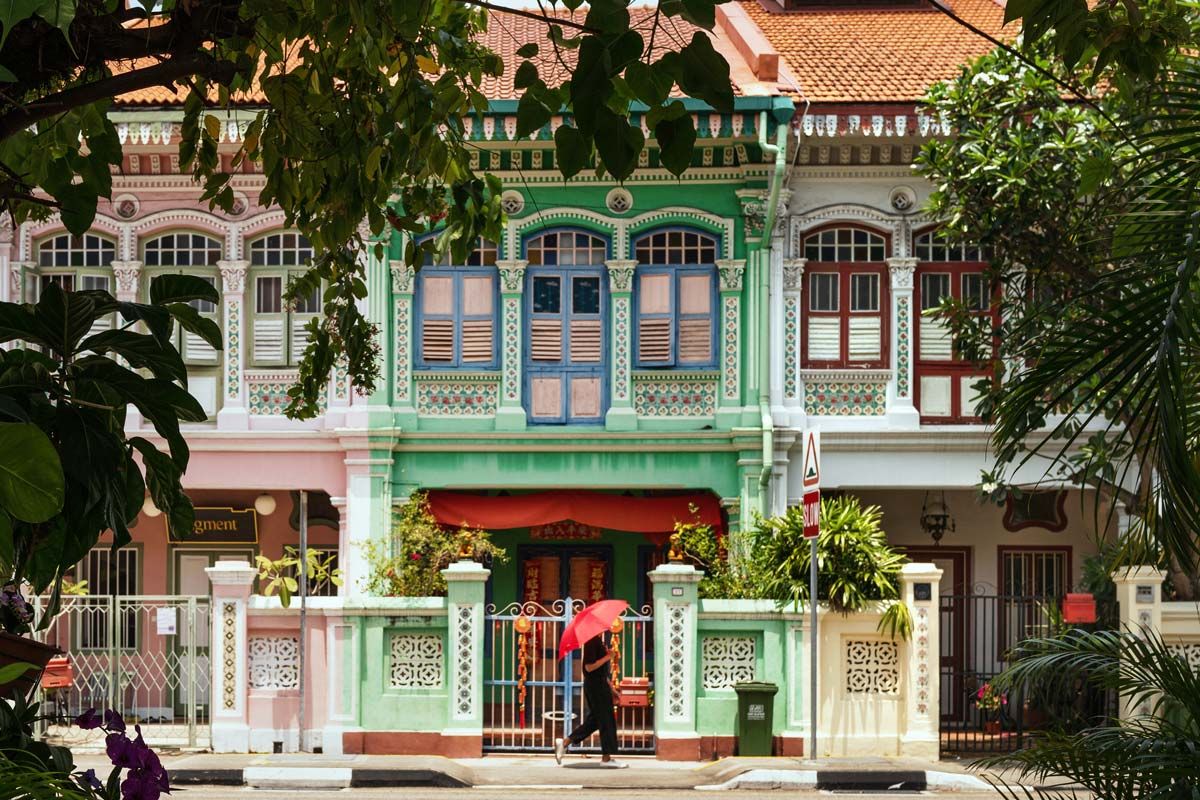
Spend the morning strolling in Katong-Joo Chiat, traditionally a Peranakan (people of Chinese and Malay/Indonesian heritage) neighbourhood. Take a snap of the pastel-hued shophouses on Koon Seng Road, which dates to the 1920s. Grab a traditional kopi (coffee) and toast with kaya (coconut jam) from Chin Mee Chin Confectionery, a family-run institution since 1925.
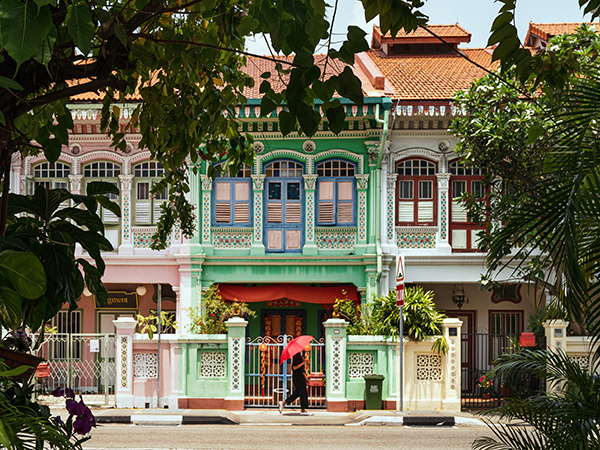
Colorful Peranakan shophouses in Singapore.
Pretty Peranakan shophouses. (Image: Getty)

Weekly travel news, experiences
insider tips, offers,
and more.

Noon

Former Arab quarter Kampong Gelam is also full of historical and cultural richness. It’s home to the golden-domed Sultan Mosque, built in 1824 by the first Sultan of Singapore.

Haji Lane – named after the ‘Hajj’ Muslim pilgrimage to Mecca – and lined with shophouses turned boutiques, bars and cafes. Stop at Fatt Choy Eating House for streetstyle food and at brewery Good Luck for Singapore’s freshest microbrews on tap.
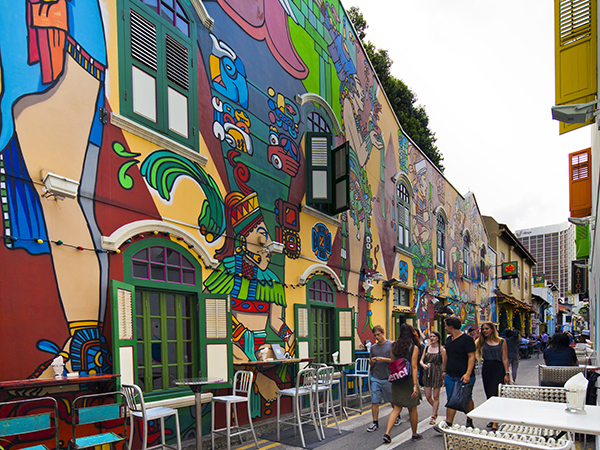
People walking along Haji Lane.
Step into the buzz of Haji Lane. (Image: Getty)

2pm

Return to JEN Singapore Orchardgateway for a languid afternoon in the 47-metre-long rooftop infinity pool.

5pm

Make your way to Clarke Quay, a bustling waterfront dining precinct that recently underwent a $62 million rejuvenation. Musos will love Swee Lee Cafe & Bar. Order the pasta with Singaporean chilli crab, a craft beer or cocktail, and settle in at one of the vinyl listening stations.

The interiors of Swee Lee Cafe & Bar in Clarke Quay, Singapore.
Swing into a listening station at Swee Lee Cafe & Bar in Clarke Quay. (Image Getty)

7:30pm

Board a traditional bumboat for the Singapore River Experience. Cruise past Parliament House, the famous Merlion statue and Marina Bay, where the Spectra light and water show tells a story inspired by Singapore’s complex history as a multicultural trading hub turned modern nation.
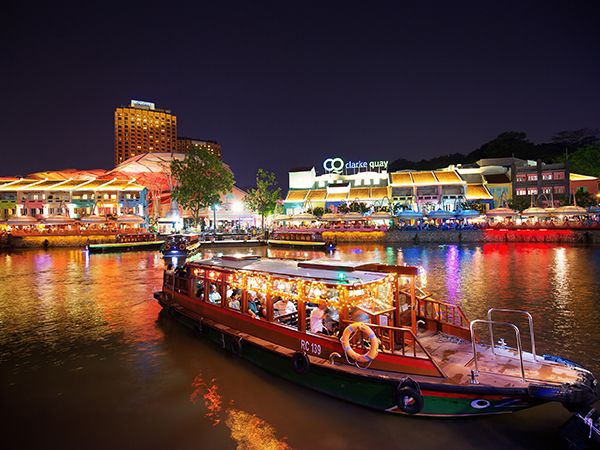
A bumboat in Singapore River at night.
Board a bumboat to cruise the Singapore River. (Image: Mark Lin)

9pm

Finish your evening at ATLAS, a luxe Art Deco bar with a curated cocktail menu and extensive gin and Champagne collection that’s worth settling in for.

Want to see more stories from International Traveller in your Google search results?

  1. Click here to set International Traveller as a preferred source.
  2. Tick the box next to "International Traveller". That's it.
Megan Arkinstall
Megan Arkinstall is a freelance travel writer who you’ll often find at the beach, bushwalking or boating with her young family. She loves reliving travel memories through writing, whether that be sipping limoncello in a sun-drenched courtyard of Monterosso or swimming with green turtles in the aquamarine waters of Tropical North Queensland.
View profile and articles
hero media

5 things every hotel needs for a more restorative stay

    Kate Bettes Kate Bettes
    Wellbeing means different things to different travellers. Here’s how to pick a hotel that gets it right for you.

    The best wellness holidays aren’t necessarily spent wrapped in a spa robe. Sometimes they’re found around a dinner table in Cambodia, on a hiking trail in New Zealand or after finally beating jet lag on the other side of the world. The hotel you choose is what makes them happen.

    1. Easy access to good food

    meals from Novotel Bangkok Sukhumvit 20
    Taste delicious meals at Novotel Bangkok Sukhumvit 20.

    One of the quickest ways to derail healthy habits on holiday is to spend half of it working out where to eat instead of digging into the culture around you. Thankfully, Novotel has done much of the hard work already, with chefs building menus that lean into the flavours, ingredients and traditions of each destination.

    In Sihanoukville, Cambodia, Korkor soup – often dubbed ‘Cambodian ratatouille’ – sits alongside raw blue crab dressed with lime and chilli, best enjoyed with views across the Gulf of Thailand.

    In the lovingly chaotic city of Bangkok, the presence of food cranks up the sociability. At Novotel Bangkok Sukhumvit 20, you can settle in with mango sticky rice and stranger-turned-friends beside the pool at Sky on 20 rooftop bar, or bring them along to tackle river prawns and stir-fried crab with holy basil at the buzzing Crab Paradise Dinner Buffet.

    Then Novotel Dubai Al Barsha welcomes you with a laidback twist on the level of indulgence the Middle Eastern city is best known for up on Deck Se7en. Looking towards Burj Al Arab, the rooftop lounge has everything from Mediterranean-style dishes like seabass ceviche to Italian prosecco sundowners.

    At the other end of the scale, in the hills that surround the Novotel Bali Ubud Resort, calm comes from nature. At Siralada restaurant, Balinese traditions shape the menu while thunder rumbles over the surrounding jungle – proving the setting is as nourishing as the food itself.

    While at Novotel Nha Trang, chef Kieu Thi My Hanh and her team showcase Vietnam’s knack for balancing freshness, texture and fragrant herbs. Pho remains a favourite, while seafood salad with pomelo and mango brings those flavours together in one bright dish.

    It’s all an approach backed by partnerships with expert food creators such as Alfie Steiner, whose plant-forward recipes prove healthy food should never taste plain.

    2. Better sleep options

    Novotel Bali Ubud Resort room
    Sleep deeply with Novotel.

    There are few travel experiences more disappointing than arriving in a new country, determined to seize the day, only to fall asleep fully clothed by 3pm.

    For Australian travellers, jet lag is often an unavoidable part of the journey. That’s one reason Novotel runs sleep-focused initiatives that help guests adjust quickly without compromising on health. We’re talking partnerships with Sydney-based sleep specialist Olivia Arezzolo, known for her advice on everything from better sleep habits to beating jet lag, alongside features like pillow menus, in-room yoga content and tailored sleep guidance.

    The sooner you’re operating on local time, the sooner you can get back to more pressing matters – like deciding which spa treatment to book.

    3. More ways to move

    woman hiking around queenstown new zealand
    Stay at Novotel Queenstown Lakeside and explore local hiking trails. (Credit: GettyI mages/ naruedom)

    Every place in the world has its own way of getting you moving: whether that’s hiking up ice-bitten mountains before a sauna or gentle stretching by the pool before a facial. From fitness centres to spas, Novotel recognises that wellbeing rarely looks the same.

    At Novotel Queenstown Lakeside, activity is inescapable. Here, hiking trails, ski fields, bungee jumps, and white-water rafting have made the region famous. The hotel’s location on the shores of Lake Wakatipu means less time spent organising yourself and more time out there experiencing them. To top it all off, you can book a private hot tub for the evening before heading back into the wilderness tomorrow.

    Bali, of course, takes a softer approach. At Novotel Bali Ubud Resort or Novotel Bali Nusa Dua, movement is less about conquering a mountain and more about a dance class between the tropical gardens and lagoon pools. Afterwards, the spa takes over, with traditional treatments like a Lulur body scrub: a combination of rice, turmeric, sandalwood, ginger and jasmine that’ll soothe muscles already relaxed by the Balinese heat.

    4. Better connections

    Novotel Sharm El Sheikh
    Kids will love a stay at Novotel Sharm El Sheikh.

    One of the best things about travel is that it gives your family stories you’ll be telling for years. Novotel helps create them with activities that bring everyone together, whether that’s trying something new, learning a local skill, or simply spending more time together.

    Go for a distinctly Thai twist at Novotel Phuket Vintage Park, where many of the family activities draw on local culture. Kids can try everything from beginner Thai boxing and language lessons to umbrella painting and – a pastime beloved by children the world over – pool foam parties. Everyone is welcome to join in, whether that’s getting splashed, covered in paint, or simply watching their children discover a new side of Thailand during the dedicated Family & Kids Day.

    A different adventure awaits at Novotel Sharm El Sheikh. Kids could be perfectly content with discos, drawing classes and new holiday friends, but the Red Sea has other ideas. Sitting on the edge of Naama Bay, days here might involve snorkelling colourful reefs, taking a boat trip to Ras Mohammed National Park or heading into the desert by quad bike or camel for a Bedouin-style dinner beneath the stars.

    5. Location is everything

    Surin Beach, Choeng Thale, Thalang District, Phuket, Thaiföld
    Explore Phuket’s gorgeous beaches. (Credit: Bence Biczo)

    Everyone’s idea of wellness looks a little different. With more than 600 hotels across 65 countries, Novotel gives guests the freedom to choose the destination that suits them best. Whether that’s a beachside escape in Phuket, an alpine expedition in Queenstown or a city break in Bangkok, there’s a good chance a Novotel isn’t far away.

    All that’s left? Choosing your version of wellbeing.

    Discover stays to inspire your everyday at novotel.accor.com.

    A must-read guide to 48 hours in Singapore